You can test a knock sensor with a scanner by checking stored codes, freeze-frame data, live data, and sensor-related operating conditions.
If you are diagnosing a check engine light on a vehicle sold or driven in the United States, an OBD-II scanner is a useful first step for a suspected knock sensor problem. A scanner can identify fault codes and, on supported vehicles, show live engine data that helps you decide whether the problem is likely in the sensor, wiring, connector, or engine itself.
However, a scanner does not automatically prove that the knock sensor itself has failed. Codes such as P0325, P0326, P0327, and P0328 describe different types of knock sensor circuit or performance faults. The exact diagnostic procedure and expected readings depend on the vehicle, engine, sensor design, and factory service information.
The safest approach is to scan the vehicle first, record every relevant code and freeze-frame value, inspect the sensor circuit, and then perform the vehicle-specific electrical or functional tests. Do not replace the sensor simply because a knock sensor code appears.
Source: toolsweek.com
What Does a Knock Sensor Do?
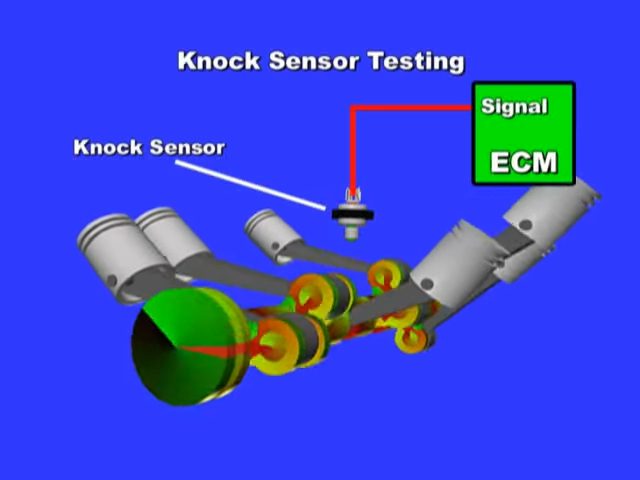
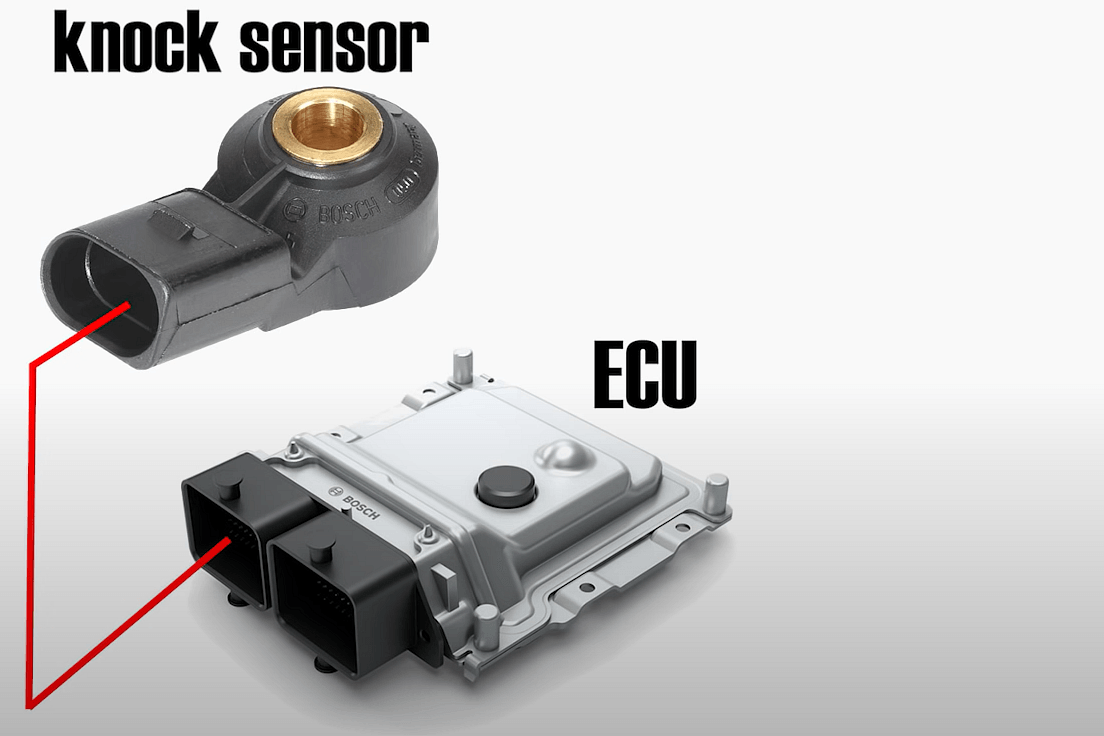
A knock sensor detects vibrations associated with abnormal combustion and sends a signal to the engine control module. The control module uses that information to adjust ignition timing and help protect the engine when knock is detected.
Many automotive knock sensors use a piezoelectric element. Engine vibration creates an electrical signal that the control module evaluates within a calibrated frequency range. Because the signal and diagnostic strategy vary by vehicle, there is no single scanner reading that proves every knock sensor is good or bad.
A fault in the sensor circuit can therefore affect more than the sensor itself. Damaged wiring, poor connections, incorrect installation, excessive mechanical noise, or other engine problems can produce a knock-related diagnostic code.
Source: unikeyic.com
Knock sensor
The component that detects engine vibration associated with knock.
ECM or PCM
The engine computer that interprets the sensor signal and controls engine operation.
Scan tool
A diagnostic device that communicates with the vehicle computer to retrieve codes, data, and supported tests.
Can You Test a Knock Sensor With a Scanner?
Yes, but a scanner normally tests the knock sensor system rather than directly declaring the sensor mechanically good or bad. The scanner can retrieve diagnostic trouble codes, display freeze-frame information, monitor supported live data, and sometimes access manufacturer-specific tests.
A basic code reader may only show a generic trouble code. A more capable diagnostic scanner may provide additional data such as engine speed, calculated load, ignition timing, coolant temperature, fuel trims, and manufacturer-specific knock-related parameters. The available data depends on the vehicle and scanner.
This distinction matters because a knock sensor code can identify a problem in the circuit without identifying the exact failed part. Use the code as a starting point for diagnosis rather than as a replacement instruction.
Source: carbuzz.com
Code scan
Confirms whether the control module has detected a knock sensor-related fault.
Freeze-frame data
Shows operating conditions recorded when a qualifying fault occurred.
Live data
Allows supported sensor and engine parameters to be monitored while conditions change.
Bi-directional testing
Some professional scanners can run manufacturer-supported active or functional tests that are unavailable on basic readers.
What You Need Before Testing
Before testing, gather the vehicle identification information and the correct factory service information for the engine. Knock sensor locations, wiring, voltage specifications, torque requirements, diagnostic conditions, and scan-tool data can differ substantially between vehicles.
Use a scan tool that supports the vehicle’s diagnostic system. A generic OBD-II reader can be useful for generic powertrain codes, but enhanced or manufacturer-level diagnostics may be needed to view additional parameters or run specific tests.
Park the vehicle safely before connecting equipment. If a test requires the engine to run, keep clothing, hands, cables, and tools away from moving belts, fans, pulleys, and hot components.
Source: safetywish.com
Required
Compatible OBD-II or manufacturer-capable scan tool, vehicle service information, and a safe work area.
Helpful
Digital multimeter and wiring diagram for follow-up electrical diagnosis.
For advanced diagnosis
A suitable oscilloscope may help evaluate the actual sensor waveform when factory procedures call for waveform testing.
How to Test Knock Sensor With Scanner Step by Step
The most useful scanner-based test starts with a complete scan before any parts are replaced. Follow the sequence below, then use the vehicle’s service manual for the exact confirmation procedure.
Step 1: Connect the scanner. Turn the ignition on and connect the scan tool to the vehicle’s diagnostic connector. Follow the scanner’s instructions and select the correct vehicle when required.
Step 2: Perform a complete code scan. Read engine and powertrain codes before clearing anything. Record current, pending, and manufacturer-specific codes when the scanner supports them. Look for other engine or electrical faults that could affect the diagnosis.
Step 3: Record freeze-frame data. If a knock-related code has freeze-frame information, save the engine speed, coolant temperature, calculated load, vehicle speed, throttle position, and other available values. These conditions can help explain when the fault occurred.
Step 4: Check the exact code definition. Do not treat all knock sensor codes as identical. For example, P0325 generally identifies a knock sensor circuit fault, P0326 indicates a range or performance condition, P0327 indicates low input, and P0328 indicates high input. Manufacturer-specific definitions and diagnostic criteria can differ.
Step 5: Check live data. If the scanner provides knock-related parameters, monitor them according to the manufacturer’s procedure. Some vehicles may expose knock retard, ignition timing, knock counts, or other manufacturer-specific information. Other vehicles may not provide a direct knock sensor PID at all.
Step 6: Compare the data with operating conditions. Look for a logical response rather than chasing a universal number. Engine speed, load, temperature, ignition timing, and the vehicle’s control strategy all affect the displayed data.
Step 7: Inspect the physical circuit. If the code or live data suggests a circuit problem, inspect the sensor connector and wiring. Look for broken insulation, corrosion, loose terminals, damaged shielding, oil contamination, or wiring that has been pinched or pulled.
Step 8: Follow the factory confirmation test. If the scanner confirms a fault but does not identify its cause, use the manufacturer’s voltage, resistance, continuity, waveform, and installation specifications. This is the point where a multimeter or oscilloscope may be required.
Step 9: Repair the confirmed fault. Repair the wiring, connector, mounting issue, sensor, or other identified cause rather than replacing components based only on the trouble code.
Step 10: Clear codes only after recording the original information. Complete the manufacturer’s verification procedure or an appropriate road test. Rescan the vehicle and confirm that the fault does not return under the required conditions.
Source: safetyfic.com
Start with all codes
A companion code may explain why the knock sensor code appeared and should be diagnosed in the correct order.
Save freeze-frame data
The recorded conditions can help reproduce an intermittent fault.
Use supported live data
Only interpret parameters that the specific vehicle and scanner actually provide.
Confirm before replacing
A scan code identifies a monitored fault condition, not necessarily the failed physical component.
How to Read Common Knock Sensor Codes
The common generic knock sensor codes can narrow the diagnostic direction. P0325 is associated with a knock sensor circuit fault, P0326 with range or performance, P0327 with low input, and P0328 with high input. Related bank 2 codes can include P0330, P0331, P0332, and P0333 on engines equipped with a second bank sensor.
The code description should always be checked against the vehicle-specific service information. The same generic code can lead to different diagnostic procedures depending on the manufacturer and engine.
P0325
Knock sensor circuit fault. Inspect the circuit, connector, wiring, sensor, and applicable control-module inputs.
P0326
Knock sensor range or performance condition. Consider sensor operation, installation, wiring, and abnormal mechanical vibration.
P0327
Knock sensor low input. Check for circuit problems, sensor faults, and vehicle-specific low-signal causes.
P0328
Knock sensor high input. Check for signal-circuit faults, sensor problems, and conditions that can create an excessive signal.
How to Use Freeze-Frame Data
Freeze-frame data can show the operating conditions present when the control module stored a fault. For example, a code recorded under load may point the technician toward a condition that cannot be reproduced during a stationary idle check.
Record the available values before clearing the code. Compare them with the symptoms and the manufacturer’s diagnostic conditions instead of assuming that one parameter proves a sensor failure.
Engine speed
Shows whether the fault occurred at idle, during acceleration, or at higher engine speed.
Engine load
Helps indicate whether the fault occurred during a low-load or higher-load operating condition.
Coolant temperature
Shows whether the engine was cold, warming up, or operating near normal temperature when the code set.
What Scanner Readings Suggest a Knock Sensor Problem?
There is no universal scanner value that means a knock sensor is good or bad on every vehicle. The diagnostic system may use filtered sensor signals, calculated values, knock counts, ignition timing changes, or manufacturer-specific parameters that are not interchangeable between engines.
A useful diagnostic pattern is a combination of a relevant trouble code, repeatable operating conditions, abnormal supported data, and physical inspection findings. For example, a circuit code combined with damaged wiring provides stronger evidence of a wiring fault than the code alone.
Do not create a fault by deliberately forcing severe engine knock just to see whether the scanner responds. If the manufacturer’s test procedure requires a controlled functional test, follow that procedure exactly.
Source: apogeeweb.net
Relevant fault code
A knock-related code establishes that the control module detected a condition within its monitoring strategy.
Abnormal live data
Supported manufacturer-specific data can provide additional evidence when interpreted under the correct conditions.
Physical evidence
Damaged wiring, poor connector condition, improper installation, or sensor damage can confirm a likely fault path.
Repeatability
A fault that consistently returns under documented conditions is easier to diagnose than a one-time historical code.
Why There Is No Universal Knock Sensor PID
OBD-II provides standardized diagnostic information, but manufacturers can also use enhanced data and proprietary diagnostic strategies. A generic scanner therefore may not show a direct knock sensor voltage or knock level even when the engine computer monitors the sensor internally.
If the scanner does not show a useful knock parameter, that does not mean the sensor cannot be tested. It means the next diagnostic step may require manufacturer service information and separate electrical or waveform testing.
Basic scanner
Usually provides generic diagnostic trouble codes and selected standardized data.
Enhanced scanner
May provide manufacturer-specific data, tests, and additional control-module information.
Factory-level information
Provides the vehicle-specific specifications and test conditions needed for deeper diagnosis.
Scanner Test vs. Multimeter Test vs. Oscilloscope Test
A scanner is usually the best starting point because it quickly shows whether the control module has detected a monitored fault. It is not always the final test because the control module may only report that the signal is outside an expected range.
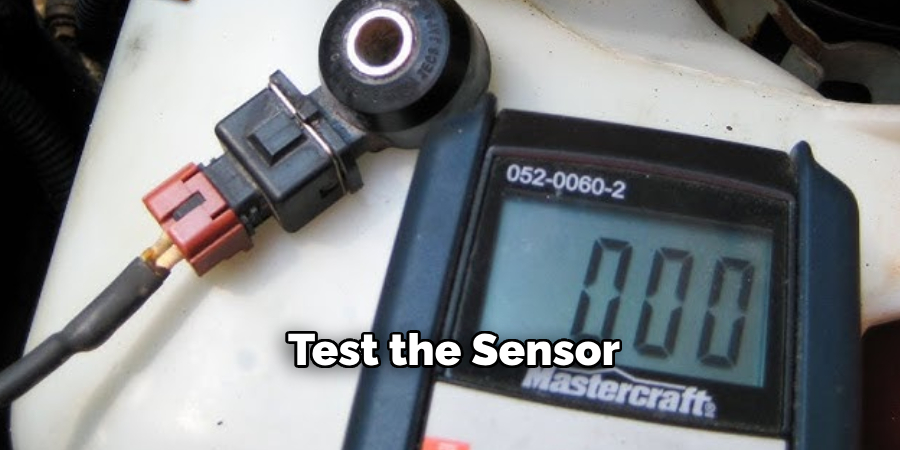
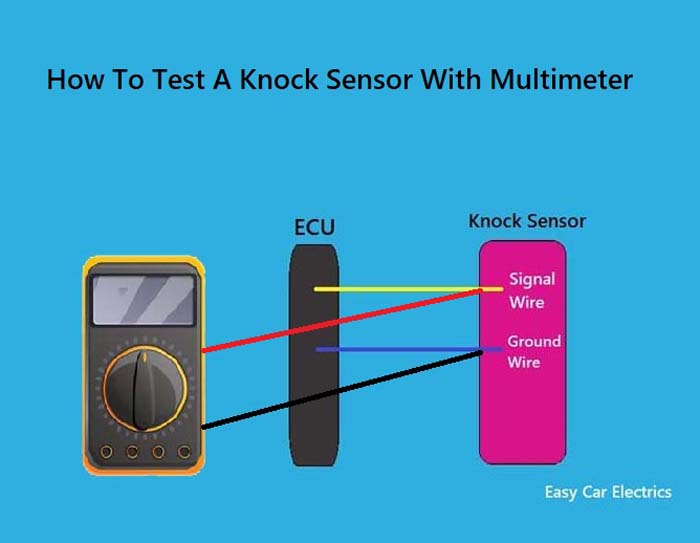
A multimeter can help check circuit voltage, continuity, resistance, or other values specified by the manufacturer. Some knock sensor procedures use an AC voltage or frequency measurement during a controlled test, but the correct test method depends on the sensor and vehicle.
An oscilloscope can show changes in the sensor’s electrical waveform and may be useful for advanced diagnosis. It requires appropriate equipment, connection methods, and interpretation. Never apply a generic waveform specification to a different vehicle without supporting service information.
Source: youtube.com
Scanner
Best for retrieving codes, freeze-frame information, live data, and supported diagnostic functions.
Multimeter
Useful for vehicle-specific circuit and electrical checks after a scanner identifies a diagnostic direction.
Oscilloscope
Useful when waveform behavior must be observed or when a more advanced signal analysis is required.
Common Reasons a Knock Sensor Code Appears
A knock sensor code does not automatically mean the sensor has failed. The fault may be caused by the circuit, connector, installation, abnormal engine vibration, or the sensor itself.
Factory diagnostic procedures for knock sensor codes commonly require circuit checks and inspection of sensor installation before component replacement. A loose, damaged, incorrectly installed, or improperly torqued sensor can affect the signal.
Source: carbuzz.com
Damaged wiring
An open, short, high-resistance, or damaged signal circuit can cause a knock sensor code.
Connector problems
Corrosion, loose terminals, contamination, or incomplete connector engagement can interfere with the signal.
Sensor installation
Incorrect mounting, improper torque, contamination between the sensor and mounting surface, or physical damage can affect operation.
Mechanical noise
Excessive engine or accessory noise can sometimes create conditions that complicate knock sensor diagnosis.
Failed sensor
The sensor itself can fail electrically or mechanically and may require replacement after the circuit and installation have been verified.
Do Not Confuse Engine Noise With a Sensor Failure
A knock-related code can sometimes appear when the engine has an actual abnormal combustion or mechanical noise condition. The sensor may be reporting what it detects rather than causing the problem.
If the engine has a persistent metallic rattle, severe misfire, overheating, low oil pressure, or another serious mechanical symptom, avoid aggressive test driving. Diagnose the underlying engine condition before attempting to reproduce the fault.
Listen for abnormal noise
Pay attention to unusual rattles, knocks, or accessory noises that may affect diagnosis.
Check related codes
Misfire, timing, fuel, or other powertrain codes may provide important context.
Common Mistakes When Testing a Knock Sensor With a Scanner
The most common mistake is treating the trouble code as a direct parts diagnosis. A code tells you what the control module detected. It does not always identify the failed component.
Another mistake is comparing a scanner reading with an arbitrary value found for a different vehicle. Knock sensor circuits and diagnostic strategies vary, so use the exact specification for the vehicle being tested.
Source: safetywish.com
Clearing codes too early
Clearing codes before recording freeze-frame and related information can remove useful diagnostic evidence.
Replacing the sensor immediately
A wiring or connector problem can produce the same general code as a failed sensor.
Using another vehicle’s specifications
Voltage, resistance, frequency, torque, and live-data expectations are not universal.
Ignoring companion codes
Other stored codes can change the diagnostic sequence and may point to the actual cause.
Forcing severe knock
Deliberately creating damaging combustion conditions is not a safe substitute for a controlled factory test.
When to Stop Testing and Get Professional Help
Stop DIY testing when the required procedure involves unsafe access, advanced electrical diagnosis, difficult engine disassembly, or a running-engine test that you cannot perform safely. A qualified automotive technician can use manufacturer-level diagnostic equipment and service information when a basic scanner cannot isolate the fault.
Professional diagnosis is especially appropriate when the vehicle has severe engine noise, repeated knock under load, overheating, major drivability problems, or multiple unexplained powertrain codes. Continuing to operate an engine with a serious unresolved problem can increase repair risk.
If you are unsure which wires to probe or which test condition to use, do not guess. Incorrect probing can damage terminals or electronic control modules. Follow the manufacturer’s wiring diagram and test procedure.
Source: toolsweek.com
Unsafe access
Get professional assistance when reaching the sensor requires hazardous access around hot or moving components.
Complex electrical fault
Professional diagnosis can help with intermittent wiring, shielding, circuit loading, and control-module problems.
Serious engine symptoms
Persistent knocking, severe misfires, overheating, or other major symptoms should be investigated before further road testing.
Frequently Asked Questions
Q
Can an OBD2 scanner tell if a knock sensor is bad?
An OBD2 scanner can identify a knock sensor-related fault, but it usually cannot prove that the sensor itself is the failed component. Codes such as P0325, P0326, P0327, and P0328 must be followed by vehicle-specific circuit and component testing.
Q
What code indicates a bad knock sensor?
Common generic codes include P0325 for a knock sensor circuit fault, P0326 for range or performance, P0327 for low input, and P0328 for high input. These codes identify monitored fault conditions and do not automatically prove that the sensor needs replacement.
Q
Can a scanner show knock sensor voltage?
Some vehicles and advanced scanners provide manufacturer-specific knock sensor or related data, but a direct sensor voltage value is not universally available through a generic scanner. If the parameter is unavailable, the service procedure may require a multimeter or oscilloscope.
Q
Should I replace the knock sensor after getting P0327?
Not immediately. P0327 indicates a low-input condition, so inspect the sensor circuit, connector, wiring, sensor installation, and vehicle-specific specifications before replacing the component.
Q
Can a bad knock sensor cause poor acceleration?
It can contribute to reduced performance because the engine control system may alter ignition timing when it cannot reliably use knock sensor information. However, poor acceleration has many possible causes, so the complete code and diagnostic data should be evaluated.
Q
Can a loose knock sensor cause a trouble code?
Yes. Knock sensor installation and mounting can affect the signal, and manufacturer diagnostic information may specifically require inspection of sensor mounting or torque. Use the exact factory specification rather than a generic torque value.
✦ Wrapping Up
Conclusion
The most reliable way to test a knock sensor with a scanner is to treat the scan as the beginning of the diagnosis. Read every code, save freeze-frame information, review supported live data, and then inspect the sensor circuit and installation before replacing parts.
Because knock sensor systems vary between vehicles, there is no universal live-data number or scanner procedure that applies to every engine. When the scanner cannot identify the cause, follow the manufacturer’s electrical and functional testing procedure with the appropriate equipment.
💡 Key Takeaway
Scan the vehicle first, record all knock-related codes and freeze-frame data, then use the exact factory diagnostic procedure to confirm whether the fault is the sensor, wiring, connector, installation, or another engine condition.
Ethan Brooks is an automotive writer at Auto News 7, covering car news, vehicle maintenance, new model updates, recalls, and practical buying guides. He focuses on clear, useful information that helps drivers understand their vehicles and make better ownership decisions.
Learn whether camshaft and crankshaft sensors are interchangeable, how they differ, common symptoms of failure, compatibility concerns, and the correct replacement approach.
Can a car start without a crankshaft sensor? Learn whether the engine can start, what happens when the sensor fails, symptoms to check, and safe troubleshooting steps.
Learn how to check camshaft position sensor operation, wiring, voltage, and signal output. Follow this practical step-by-step guide to diagnose common camshaft sensor problems.