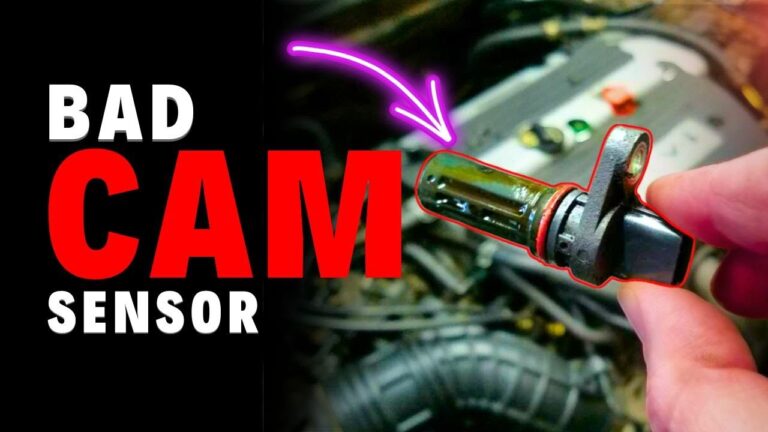
You may be able to drive briefly with a failing camshaft position sensor, but continuing to drive is not recommended because the engine can hesitate, lose power, stall, misfire, or eventually refuse to restart.
For drivers in the United States, a failing camshaft position sensor can become more than an inconvenient Check Engine Light. A car that hesitates while entering an interstate, stalls at a busy intersection, or suddenly loses acceleration in fast-moving traffic can create a serious safety problem. If your vehicle is already stalling, misfiring heavily, struggling to accelerate, or becoming difficult to start, arranging a tow is safer than attempting to drive it across town.
The answer also depends on what has actually failed. A diagnostic trouble code such as P0340 does not automatically prove that the sensor itself is defective. Damaged wiring, a loose electrical connector, a reluctor or trigger-wheel problem, low system voltage, or mechanical timing trouble can produce similar symptoms. The safest approach is to treat the warning as a diagnostic starting point rather than immediately replacing a sensor.
If the engine currently runs smoothly and the only symptom is a steady Check Engine Light, a very short trip to a nearby repair facility may sometimes be possible. That does not make continued everyday driving a good idea. Symptoms can become intermittent without warning, and a car that starts normally at home may stall or fail to restart after you stop.
Source: detroitchinatown.org
Can You Drive With a Bad Camshaft Sensor?
Yes, some vehicles can still move with a bad camshaft position sensor, but that is different from saying they are safe or reliable to drive. Modern engine computers may use substitute information from the crankshaft position sensor or a fallback operating strategy when the camshaft signal becomes unreliable. Depending on the vehicle, this can allow the engine to continue running with reduced performance.
The problem is unpredictability. A sensor may fail gradually, become intermittent when the engine gets hot, or stop producing a usable signal without warning. One vehicle may run almost normally for several days, while another may stall, crank for a long time, enter reduced-power operation, or refuse to restart.
There is therefore no dependable mileage limit such as 10, 50, or 100 miles that applies to every vehicle. Engine design, software strategy, the type of sensor failure, wiring condition, temperature, and whether other timing-related faults are present all change the outcome.
If you only have a steady Check Engine Light and the vehicle starts, idles, accelerates, and shifts normally, driving directly to a nearby diagnostic facility may be reasonable in some circumstances. Avoid unnecessary trips, high-speed driving, heavy traffic, towing, and situations where a sudden loss of power could put you or other road users at risk.
Source: storage.googleapis.com
Usually lower immediate risk
A steady Check Engine Light with otherwise normal starting, idle, acceleration, and engine operation.
Higher risk
Intermittent stalling, long cranking, hesitation, rough running, reduced power, or repeated misfires.
Do not continue driving
A flashing Check Engine Light, severe shaking, repeated stalling, major power loss, overheating, or another warning indicating an immediate mechanical problem.
When a Tow Is the Better Choice
Choose towing rather than driving when the engine has already stalled in traffic, repeatedly shuts off, will not restart reliably, or runs badly enough that you cannot maintain traffic speed. Towing is also appropriate if you are unsure whether the fault is only electrical or could involve the timing chain, timing belt, reluctor wheel, or another internal timing component.
Repeated stalling
An engine that has stalled once from a signal problem may do it again without much warning.
Flashing Check Engine Light
This commonly accompanies an active misfire severe enough to warrant stopping rather than continuing the trip.
Severe loss of acceleration
Poor throttle response can make merging, crossing intersections, and maintaining highway speed unsafe.
What a Camshaft Position Sensor Does
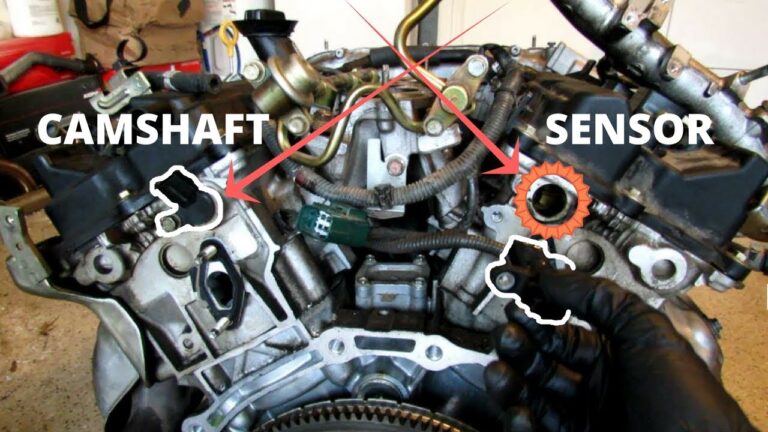
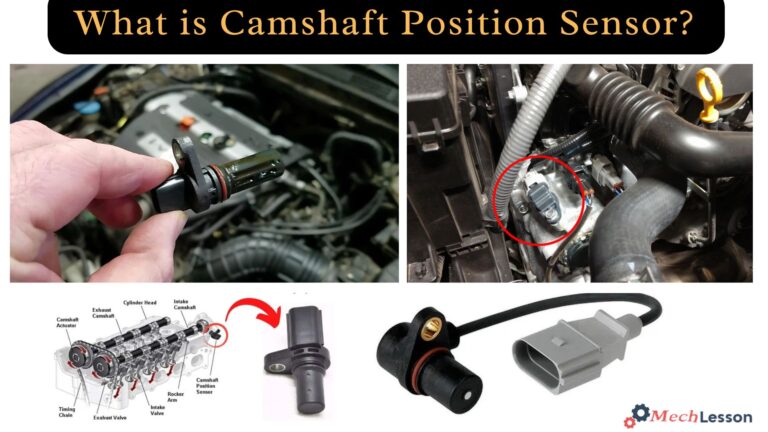
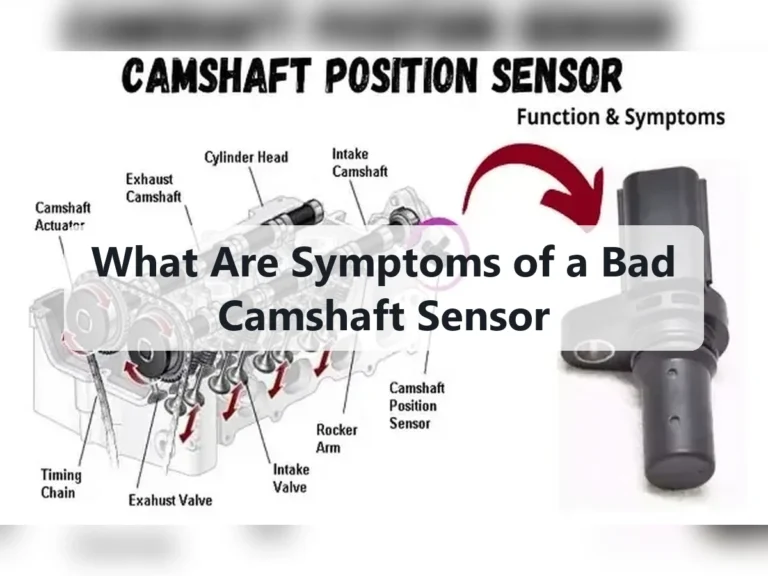
The camshaft position sensor tells the engine control module where the camshaft is in its rotation. The computer compares this information with crankshaft position data so it can identify engine position and coordinate functions such as sequential fuel injection, ignition strategy, and variable valve timing on engines equipped with those systems.
The exact strategy varies by manufacturer and engine. Some engines can continue operating when the camshaft signal disappears because the computer can fall back on other information. Others become difficult to start or may not start at all because the control module cannot establish the synchronization it needs.
This explains why two drivers can report very different experiences with apparently similar sensor failures. The presence of a camshaft position sensor fault alone does not tell you exactly how the vehicle will behave.
Source: hitchesguide.com
Camshaft position
The sensor provides information about the rotational position of the camshaft.
Engine synchronization
The control module compares camshaft and crankshaft signals to determine engine position.
Fuel and ignition control
Camshaft information can help the computer coordinate injector operation, ignition strategy, and related engine controls.
Variable valve timing
Engines with variable valve timing may also use camshaft position feedback to monitor and control cam timing.
Camshaft Sensor Versus Crankshaft Sensor
The camshaft and crankshaft sensors have related but distinct jobs. The crankshaft sensor primarily identifies crankshaft speed and position, while the camshaft sensor helps identify the phase of the engine cycle and the position of the camshaft. Because the computer compares the two signals, a problem with one signal can sometimes produce symptoms or diagnostic codes that appear related to the other.
Symptoms That Make Driving With a Bad Camshaft Sensor Risky
A bad camshaft sensor does not always create every symptom at once. Intermittent failures are especially confusing because the vehicle may run normally when cold and begin acting up after heat builds under the hood.
The symptoms also overlap with ignition, fuel, charging-system, wiring, crankshaft sensor, and mechanical timing problems. Treat them as reasons to investigate rather than proof that the camshaft sensor itself needs replacement.
Source: autovfix.com
Check Engine Light
Camshaft position circuit or performance faults commonly illuminate the malfunction indicator lamp.
Long cranking
The engine may take longer than normal to start while the control module attempts to establish engine position.
Intermittent no-start
A vehicle may start normally at one moment and refuse to start later, particularly with an intermittent electrical failure.
Engine stalling
Loss of a critical position signal can cause some engines to shut off unexpectedly.
Hesitation
The engine may stumble or respond slowly when you press the accelerator.
Rough idle
Poor synchronization or an associated fault can cause unstable or uneven engine operation.
Misfire
Some camshaft signal or timing problems can contribute to incomplete or poorly timed combustion.
Reduced power
The engine computer may limit performance when it cannot trust camshaft position information.
Why a Flashing Check Engine Light Matters
A flashing Check Engine Light deserves more urgency than a steady light. It commonly indicates an active misfire severe enough that continued operation could overheat the catalytic converter. If the light is flashing and the engine is shaking or running poorly, reduce your exposure to traffic and stop in a safe location rather than continuing a normal trip.
What Can Happen If You Keep Driving?
The most immediate concern is not that the sensor itself will mechanically destroy the engine. The bigger concern is what an unreliable position signal or the underlying fault can make the engine do.
Unexpected stalling can be particularly hazardous. If an engine shuts off while moving, the vehicle can become harder to steer or brake depending on the design of its assist systems. Hydraulic power steering assistance can disappear when the engine stops, and vacuum-assisted brakes have only limited stored assistance after the engine is no longer producing vacuum. Vehicles with electric systems behave differently, which is another reason not to assume every car will react the same way.
Repeated misfiring creates a different risk. Unburned fuel can enter the exhaust, where it may raise catalytic-converter temperatures. Continuing to operate a severely misfiring engine can therefore turn an electrical or timing-related problem into a more expensive exhaust-system repair.
A weak or intermittent sensor can also leave you stranded. The car may restart several times before eventually reaching a point where the computer cannot establish synchronization well enough to start the engine.
Source: outdoordriving.com
Unexpected shutdown
The engine may stall at an intersection, during a turn, or while traveling in traffic.
No restart
An intermittent fault can become a complete failure after the engine is shut off.
Catalytic-converter stress
Severe or sustained misfiring can send unburned fuel into the exhaust and create excessive catalyst temperatures.
Poor fuel economy
Fallback engine strategies and inefficient combustion can increase fuel consumption on some vehicles.
Reduced drivability
Acceleration, idle quality, and overall engine response may become progressively worse.
Could the Engine Itself Be at Risk?
A failed electrical sensor by itself is different from a mechanical camshaft timing problem. However, some camshaft-related trouble codes can also appear when a timing chain, timing belt, tensioner, reluctor, variable valve timing component, or wiring circuit is faulty. If there are unusual mechanical noises, multiple camshaft-to-crankshaft correlation codes, low oil pressure warnings, or evidence that valve timing is incorrect, do not assume the problem is merely a replaceable sensor.
How to Confirm Whether the Camshaft Sensor Is Actually Bad
Start with diagnosis rather than replacing the sensor based only on a warning light. Diagnostic trouble codes identify the circuit or operating condition the computer detected; they do not necessarily identify the failed part.
For example, P0340 generally indicates a camshaft position sensor A circuit malfunction. Related P0341 through P0344 codes can describe range, performance, low-signal, high-signal, or intermittent conditions. Depending on the vehicle, other camshaft sensor codes can identify another bank or sensor.
The correct diagnostic procedure varies by vehicle, so factory service information or a reputable repair manual should guide electrical measurements and component locations.
Source: hitchesguide.com
1. Read all diagnostic codes
Record every stored, pending, and permanent code instead of focusing on the first camshaft-related code.
2. Check freeze-frame information
Note engine speed, temperature, vehicle speed, and operating conditions present when the fault was recorded.
3. Inspect the connector
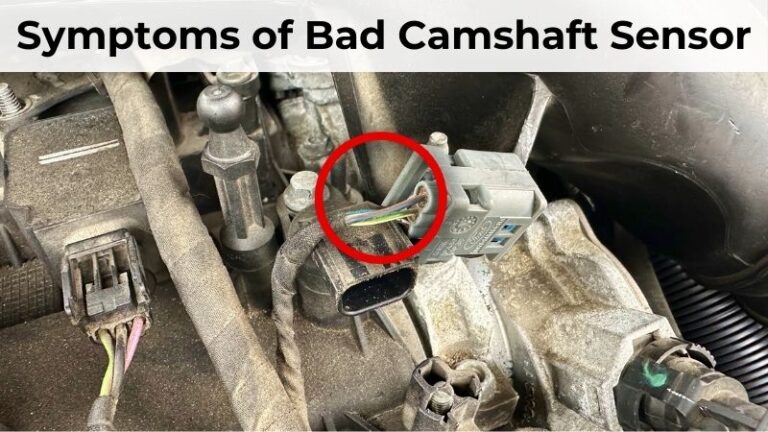
Look for loose terminals, broken locking tabs, corrosion, moisture, oil contamination, or damaged pins.
4. Inspect the wiring
Check for chafing, heat damage, stretched wiring, previous repairs, or insulation worn through against engine components.
5. Verify power, ground, and signal correctly
Follow the manufacturer’s test procedure because sensor design and expected voltage or waveform vary by vehicle.
6. Consider mechanical timing
Correlation codes, unusual noises, or inconsistent camshaft readings may require checking timing components rather than simply installing another sensor.
7. Repair and confirm
After correcting the fault, clear applicable codes as directed and confirm that the engine starts, idles, accelerates, and completes the required monitor or drive-cycle checks normally.
Why Replacing the Sensor First Can Waste Money
A replacement sensor cannot repair an open wire, corroded terminal, damaged reluctor wheel, low supply voltage, or mechanical timing problem. If a new sensor immediately produces the same code, return to circuit and timing diagnosis instead of repeatedly replacing parts.
Code does not equal failed component
The code describes what the computer detected, not necessarily which physical part caused it.
Intermittent wiring can mimic sensor failure
Heat, vibration, and engine movement can temporarily open or distort an electrical signal.
What Should You Do If the Sensor Fails While Driving?
If the engine begins hesitating, losing power, or running roughly while you are on the road, prioritize getting out of moving traffic. Do not continue toward your original destination simply because the engine is still running.
If the engine stalls, keep control of the vehicle and move toward a safe stopping area when conditions allow. Steering and braking assistance may feel different after the engine stops, so be prepared to use more effort. Turn on the hazard lights when appropriate and avoid standing near active traffic lanes.
Once safely stopped, decide whether the vehicle should be towed. Repeated stalling, a flashing Check Engine Light, severe misfire, major power loss, an unreliable restart, abnormal mechanical noise, overheating, or an oil-pressure warning are strong reasons not to resume driving.
If the vehicle runs normally and only a steady Check Engine Light remains, arrange diagnosis promptly. A stable symptom today does not guarantee that an intermittent sensor or wiring fault will remain stable tomorrow.
Source: hitchesguide.com
Move out of traffic
Your first priority is a safe stopping location rather than diagnosing the problem from the driver’s seat.
Watch the warning lights
A flashing Check Engine Light, oil-pressure warning, or overheating warning requires more urgency than a steady Check Engine Light alone.
Do not repeatedly test-drive a stalling vehicle
Repeated road tests expose you to another unpredictable shutdown and do not substitute for diagnosis.
Arrange professional diagnosis
If electrical or timing-system testing is beyond your tools or experience, have a qualified technician inspect the vehicle.
Is a Short Drive to a Repair Shop Ever Reasonable?
A short drive may be possible when the engine starts immediately, idles smoothly, accelerates normally, shows no severe misfire, and has only a steady Check Engine Light. Even then, there is no guarantee that an intermittent fault will not return. If the route involves interstate speeds, dense traffic, long distances, or locations where stopping safely would be difficult, towing provides a larger safety margin.
Common Mistakes to Avoid
Camshaft position sensor problems are often straightforward once properly diagnosed, but several common shortcuts can lead to unnecessary parts replacement or continued drivability problems.
Source: detroitchinatown.org
Replacing the sensor because of P0340 alone
Inspect the circuit and consider other causes before concluding that the sensor itself has failed.
Ignoring an intermittent stall
A vehicle that restarted after one stall has not necessarily repaired itself.
Continuing to drive with a severe misfire
Repeated misfiring can expose the catalytic converter to excessive heat.
Buying the wrong sensor
Some engines use multiple camshaft sensors identified by bank, intake or exhaust position, or sensor designation.
Ignoring wiring and connectors
A damaged harness or poor terminal connection can produce the same symptoms after a new sensor is installed.
Assuming all camshaft codes are electrical
Camshaft-to-crankshaft correlation faults can involve mechanical timing or variable valve timing components.
How to Know the Repair Worked
A successful repair should correct the original drivability complaint rather than merely turn off the warning light temporarily. Starting should be consistent, idle should remain stable, hesitation or stalling should be gone, and the relevant diagnostic code should not return after the vehicle completes appropriate operating conditions.
If the same fault returns, inspect the complete circuit and related engine systems instead of assuming the replacement part is defective.
Frequently Asked Questions About Can You Drive With a Bad Camshaft Sensor
Q
How long can you drive with a bad camshaft position sensor?
There is no reliable mileage or time limit. One vehicle may continue running for a while, while another can stall or fail to restart quickly. Because the failure can be intermittent, the practical goal should be getting the vehicle diagnosed rather than calculating how long you can postpone the repair.
Q
Will a bad camshaft sensor cause the car to shut off while driving?
It can on some vehicles. Loss of a usable camshaft position signal may cause stalling, hesitation, or reduced performance depending on the engine-management strategy. Because other faults can also cause stalling, the sensor and its circuit should be diagnosed before replacement.
Q
Can a bad camshaft sensor cause a no-start condition?
Yes. Some engines may crank for a long time or fail to start when the control module cannot determine the required engine position. Other engines can start using fallback strategies, so a no-start is possible but not universal.
Q
Does code P0340 always mean the camshaft sensor is bad?
No. P0340 indicates a problem involving the camshaft position sensor circuit. The cause can include the sensor, wiring, connector terminals, power or ground problems, a damaged trigger or reluctor component, control-module issues, or mechanical timing problems. Proper diagnosis is necessary before replacing parts.
Q
Can a bad camshaft sensor damage the catalytic converter?
A failed sensor does not automatically damage the catalytic converter. However, if the underlying fault causes sustained misfiring and unburned fuel reaches the exhaust, converter temperature can rise substantially. A flashing Check Engine Light combined with severe misfiring is a reason to stop driving and address the problem promptly.
Q
Can I replace a camshaft position sensor myself?
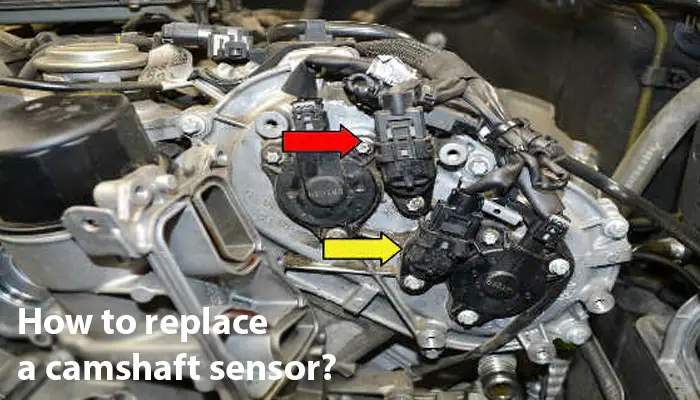
On some vehicles the sensor is easy to access and held by a connector and one or two fasteners. On others it may be difficult to reach or there may be several similar sensors. Confirm the exact location, sensor designation, torque specification, electrical connector procedure, and any required relearn process using service information for your exact year, make, model, and engine before attempting the job.
✦ Wrapping Up
Can You Drive With a Bad Camshaft Sensor? Final Answer
So, can you drive with a bad camshaft sensor? A vehicle may continue running when the sensor signal is weak or intermittent, but relying on it for normal transportation is not a good plan. Hard starting, hesitation, reduced power, misfires, and unexpected stalling can appear or worsen without much warning.
A steady Check Engine Light with completely normal drivability is different from an engine that is stalling, shaking, losing power, or displaying a flashing warning light. In the first situation, a short trip for diagnosis may sometimes be practical. In the second, stop driving when safe and arrange towing.
Most importantly, diagnose the cause before buying a replacement sensor. Camshaft-related codes can result from wiring, connectors, electrical supply problems, trigger components, variable valve timing faults, or mechanical timing issues as well as a failed sensor.
💡 Key Takeaway
If you suspect a bad camshaft sensor, scan the vehicle for codes, inspect the sensor circuit, avoid unnecessary driving, and have the problem diagnosed promptly. Tow the vehicle if it stalls, misfires severely, loses substantial power, will not restart reliably, or shows other serious engine warnings.
Ethan Brooks is an automotive writer at Auto News 7, covering car news, vehicle maintenance, new model updates, recalls, and practical buying guides. He focuses on clear, useful information that helps drivers understand their vehicles and make better ownership decisions.