A vehicle may sometimes run without a working camshaft position sensor, but you should not depend on it for normal driving. Depending on the vehicle, the engine may enter a reduced-performance strategy, become difficult to start, stall unexpectedly, or refuse to start at all.
For drivers in the United States, a failed camshaft position sensor can quickly turn an ordinary commute, freeway trip, or drive through heavy traffic into a breakdown risk. Modern gasoline and diesel vehicles use electronic engine controls that depend on accurate camshaft and crankshaft position information. When the camshaft signal disappears, some powertrain control modules can temporarily estimate engine position from other information, while others cannot operate normally without the missing signal.
The important question is therefore not simply whether the car can move. It is whether it can continue operating predictably and safely. A vehicle that starts and drives today with a camshaft sensor fault may hesitate, lose power, stall at an intersection, or fail to restart after you shut it off. The safest approach is to diagnose the fault promptly instead of treating continued operation as proof that the sensor is unnecessary.
This guide explains what happens when the camshaft position signal is lost, why some vehicles still run while others do not, the warning signs that should make you stop driving, common diagnostic trouble codes, and the checks that can distinguish a failed sensor from wiring, connector, timing, or engine-management problems.
Source: storage.googleapis.com
Can You Drive Without a Camshaft Sensor?
You may be able to drive a vehicle with a missing or failed camshaft position sensor, but there is no universal answer for every engine. Some engine control modules can use the crankshaft position signal and a programmed fallback strategy to keep the engine operating. Other vehicles may crank for an unusually long time, enter reduced-power mode, run poorly, stall, or fail to start.
That distinction matters because being able to drive a few miles does not mean the vehicle is operating normally. Once the powertrain control module loses reliable camshaft position information, it may no longer be able to control sequential fuel injection, ignition events, variable valve timing, cylinder identification, or other engine functions in the normal manner.
If your vehicle is currently running with a suspected camshaft sensor problem, avoid assuming that it will restart after you turn the engine off. An intermittent sensor can work when cold and fail when hot, or the engine computer may successfully establish synchronization during one start but struggle during the next.
A short movement to reach a safe parking area can be different from choosing to continue a highway commute or long-distance trip. If the car is hesitating, stalling, misfiring, or losing significant power, continuing to drive creates an unnecessary traffic and breakdown risk.
Source: volgenpower.com
Possible to run
Some vehicles can operate using a fallback engine-management strategy when the camshaft signal is unavailable.
Not guaranteed to restart
A vehicle that remains running after the fault occurs may become difficult or impossible to restart after being switched off.
Drivability can deteriorate
Reduced power, hesitation, rough idle, poor acceleration, and stalling may develop as the signal becomes intermittent or disappears.
Vehicle design matters
The consequences depend on the engine, control software, number of camshaft sensors, fuel-injection strategy, and variable valve timing system.
Can an engine keep running after the sensor fails?
Yes, some engines can keep running if the camshaft position signal disappears after the engine has already started. The powertrain control module may continue operation using crankshaft position information and stored synchronization data. This should be considered a fault-tolerant operating mode rather than proof that the camshaft sensor is optional.
Other vehicles react differently. Losing the signal may trigger limp mode, disable variable valve timing, extend cranking time, or shut the engine down. Manufacturer-specific control strategies are the reason two vehicles can show very different behavior with apparently similar sensor faults.
Will a car start with the camshaft sensor unplugged?
Some cars will eventually start with the sensor disconnected, while others will not. During cranking, the engine computer must identify the engine’s rotational position so it can correctly coordinate fuel injection and ignition. Losing the camshaft reference can make that synchronization slower or impossible depending on the engine-management design.
What Does the Camshaft Position Sensor Actually Do?
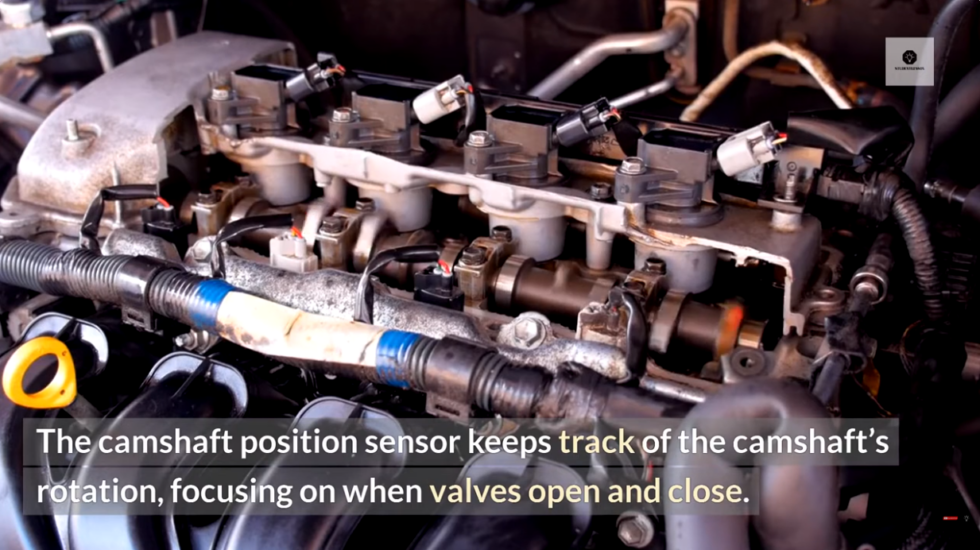
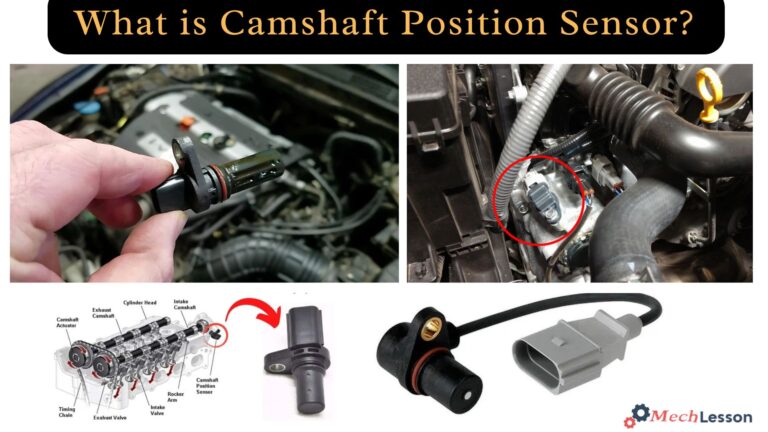
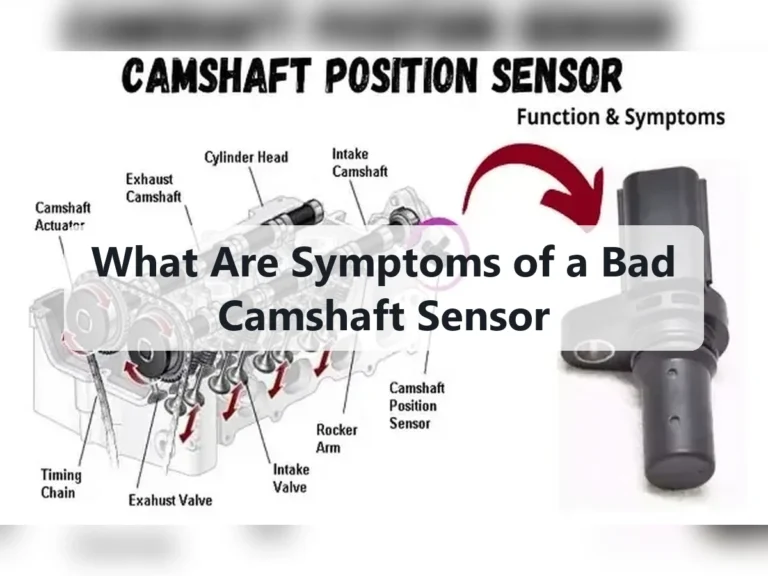
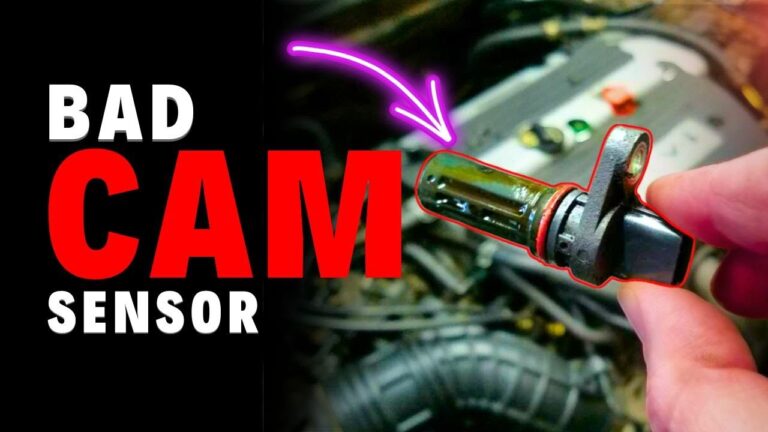
The camshaft position sensor monitors the rotational position of a camshaft and sends an electrical signal to the engine control unit. The computer compares this information with the crankshaft position signal to determine where the engine is in its operating cycle.
In a four-stroke engine, the crankshaft rotates twice for each complete camshaft rotation. Crankshaft information tells the computer where the pistons are, while camshaft information helps identify which cylinders are on the appropriate stroke. This distinction is particularly useful for sequential fuel injection, cylinder-specific ignition strategies, variable valve timing, and other modern engine-control functions.
Many camshaft position sensors use Hall-effect electronics, although sensor technology varies by application. As a target or reluctor passes the sensing element, the sensor produces a repeating electrical signal that the computer interprets as camshaft position.
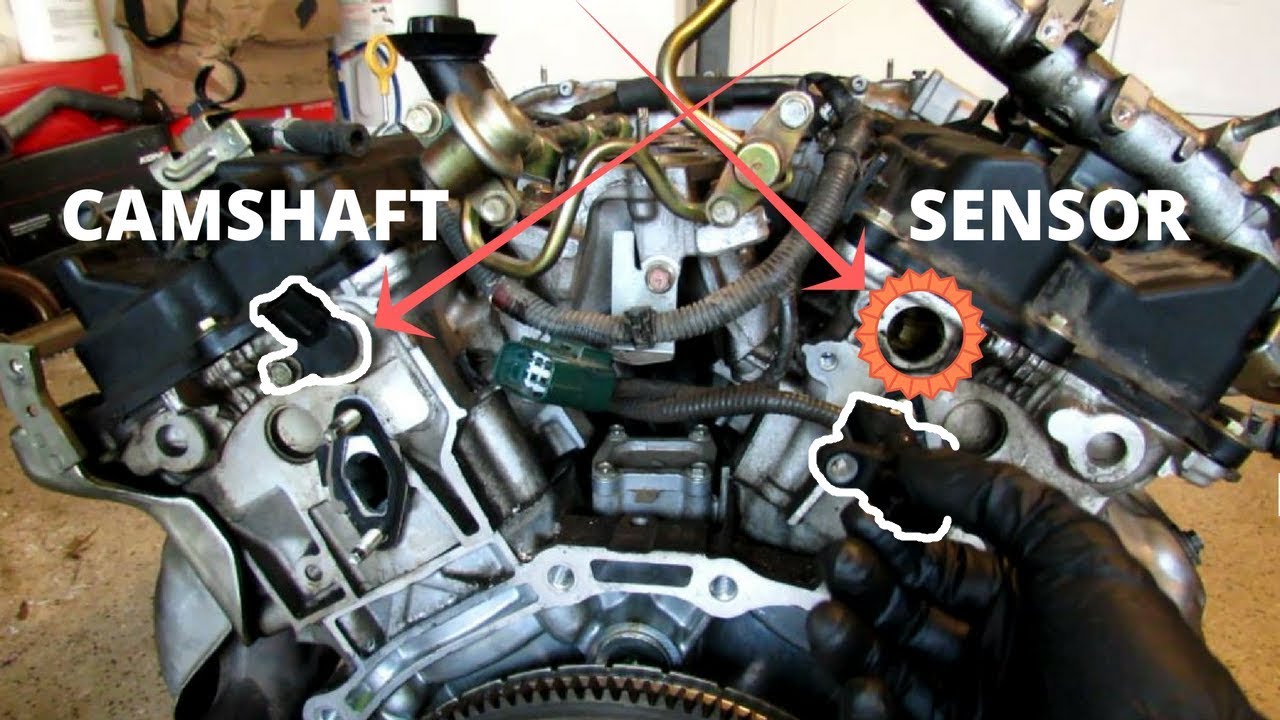
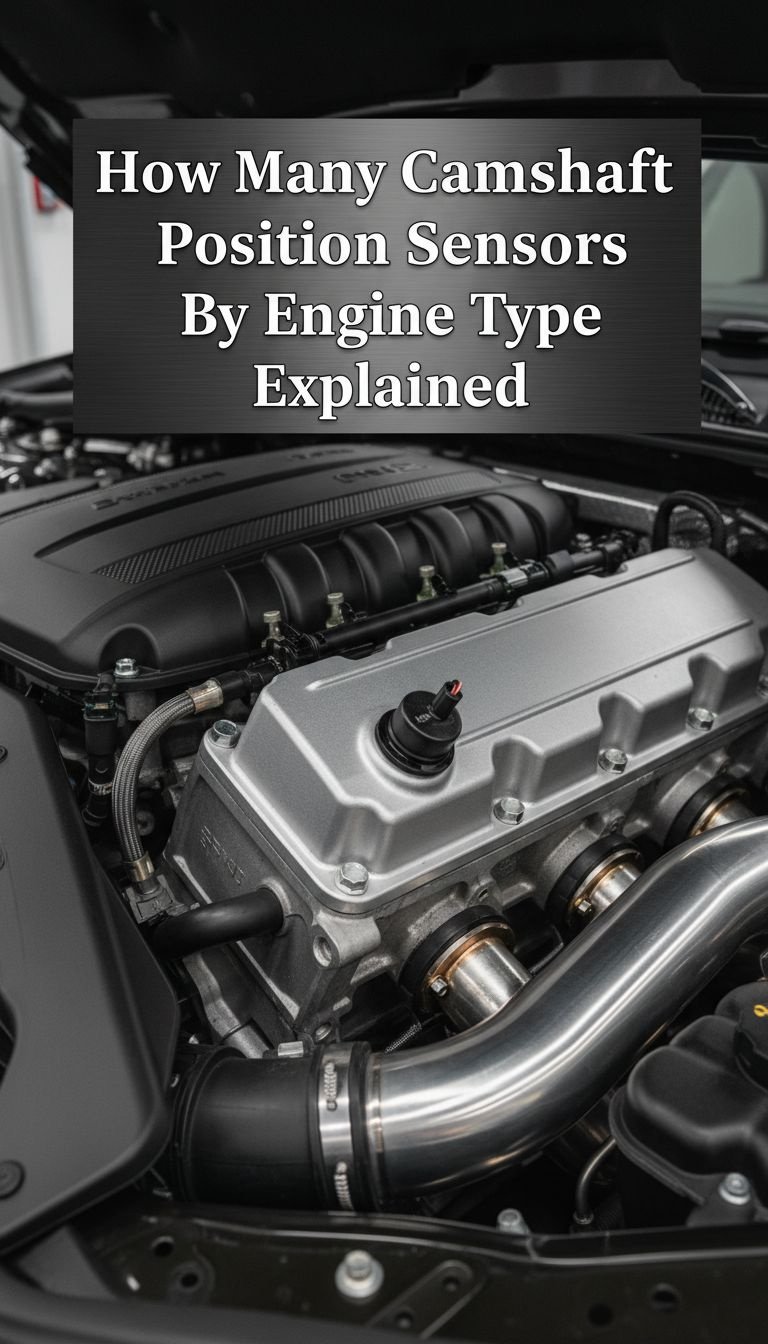
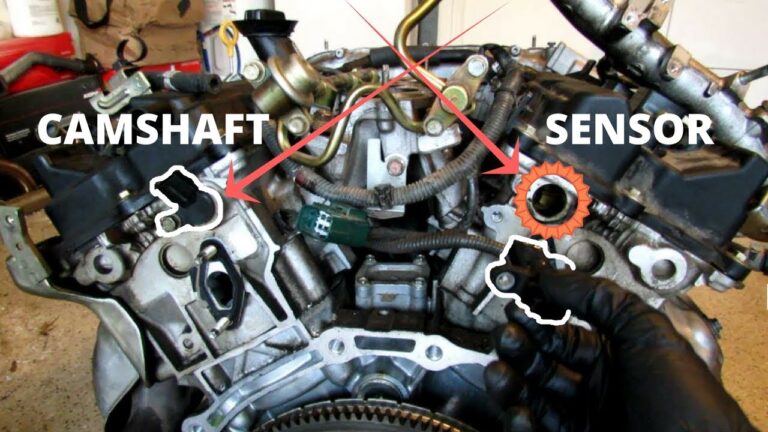
Modern engines may have more than one camshaft position sensor. A dual-overhead-cam V6 or V8, for example, can have sensors associated with different camshafts or cylinder banks. A trouble code for one circuit therefore does not necessarily mean every camshaft signal has been lost.
Source: hitchesguide.com
Cylinder identification
Camshaft position information helps the control module determine the correct phase of the engine cycle.
Fuel injection
The signal can help the computer determine when individual fuel injectors should operate.
Ignition control
Camshaft and crankshaft information can contribute to accurate ignition synchronization.
Variable valve timing
Engines equipped with VVT may use camshaft position feedback to monitor and control commanded valve timing.
Camshaft sensor versus crankshaft sensor
The two sensors perform related but distinct jobs. The crankshaft position sensor generally provides information about crankshaft position and engine speed, while the camshaft position sensor supplies camshaft phase information. Engine-management software compares the signals to establish synchronization.
Because they work together, symptoms and diagnostic codes involving one sensor can sometimes be caused by problems elsewhere in the timing system. A correlation code, for example, deserves broader diagnosis than simply installing a new sensor.
What Happens When You Drive With a Bad Camshaft Sensor?
The most noticeable effects usually involve starting, idle quality, acceleration, engine power, fuel economy, and stalling. The exact symptoms depend on whether the signal is completely missing, electrically intermittent, inaccurate, or merely outside the range expected by the engine computer.
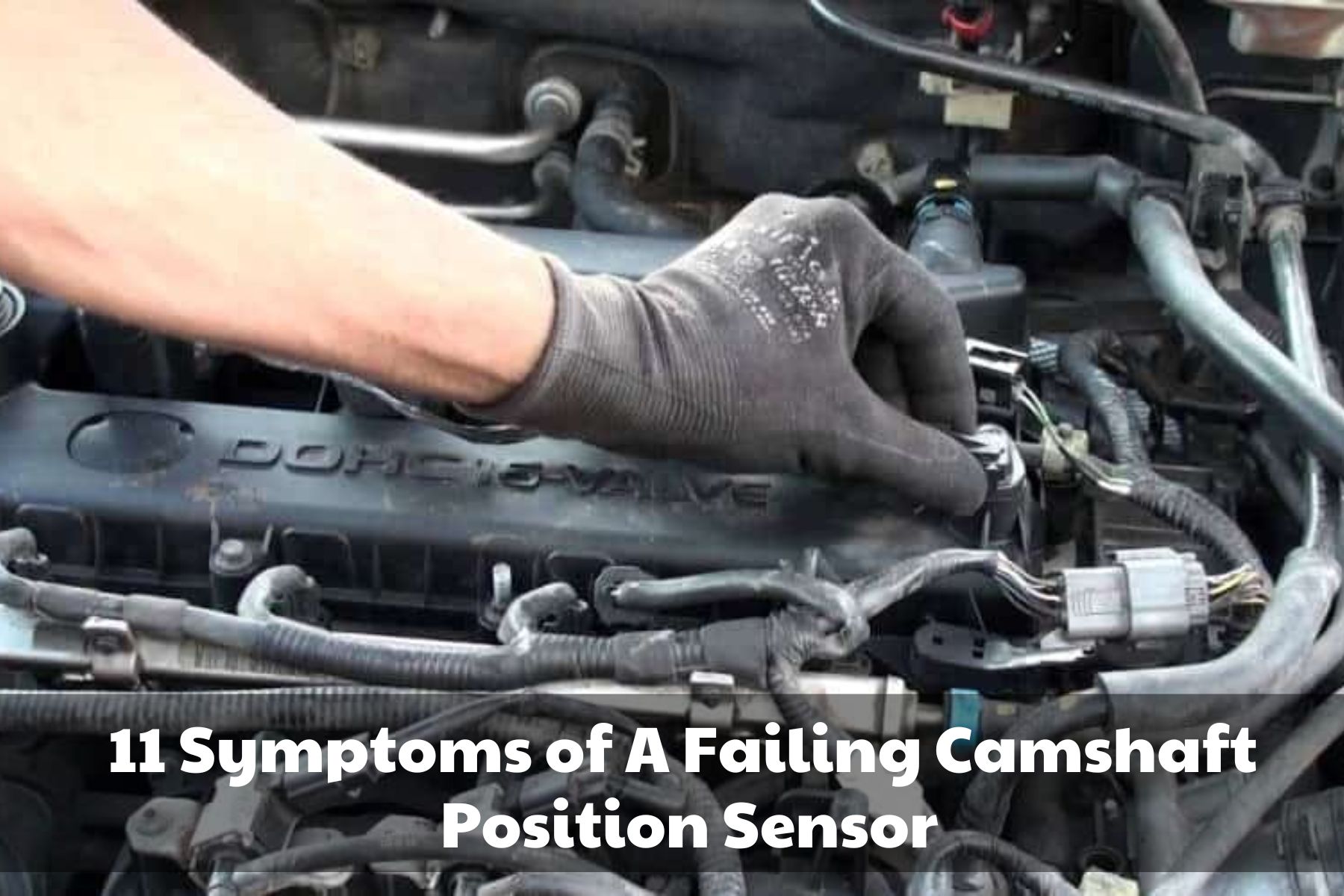
A sensor can also fail intermittently. Heat, vibration, damaged wiring, moisture, corrosion, or internal electronic faults may cause a signal to appear and disappear. This can create confusing symptoms because the vehicle may run normally during one trip and behave very differently during the next.
A check engine light is common when the computer detects a camshaft position circuit or signal problem. However, the warning light alone does not tell you whether the sensor, wiring harness, connector, timing components, or another part of the system is responsible.
Source: storage.googleapis.com
Long cranking
The starter may need to turn the engine longer before the computer establishes enough synchronization for the engine to start.
Rough idle
An unreliable position signal can contribute to unstable or uneven engine operation.
Poor acceleration
The engine may hesitate or feel noticeably weaker when you press the accelerator.
Reduced fuel economy
Fallback operating strategies and poor combustion control can reduce efficiency.
Stalling
An intermittent or lost signal can be associated with an engine that shuts off unexpectedly.
Limp mode
Some vehicles deliberately limit performance after detecting a serious engine-management fault.
No-start condition
Certain engine-management systems may be unable to start the engine without a usable camshaft position signal.
Why unexpected stalling is the biggest driving concern
Unexpected engine shutdown is especially important from a safety standpoint. If the engine stalls while entering traffic, crossing an intersection, climbing a grade, or traveling at freeway speed, acceleration disappears immediately and the driver must move to a safe location.
Steering and braking systems differ among vehicles, but an engine shutdown can also change the amount of steering or brake assistance available. That is why repeated stalling should be treated as a reason to stop driving rather than a symptom to tolerate until a convenient repair date.
When Should You Stop Driving?
Stop driving and arrange roadside assistance or towing when the vehicle cannot operate predictably. A check engine light with otherwise normal operation may give you time to arrange diagnosis, but severe drivability symptoms change the situation.
Repeated stalling, severe misfiring, a flashing check engine light, major loss of power, overheating, unusual mechanical noises, or an engine that struggles to stay running are reasons not to continue a normal trip. A flashing check engine light commonly indicates a fault serious enough that continued operation may damage the catalytic converter, so it should not be treated like an ordinary steady warning light.
If the engine has already stalled once and restarted, do not assume it is safe because it currently sounds normal. Intermittent electrical faults can return without warning.
Source: carxplorer.com
Tow the vehicle
Choose towing when the engine repeatedly stalls, will not restart reliably, misfires severely, or has substantially reduced power.
Move only to safety
If a fault begins while driving, prioritize getting out of active traffic rather than completing the original trip.
Avoid highway driving
A vehicle with unpredictable stalling or acceleration should not be intentionally driven onto high-speed roads.
Do not ignore mechanical noise
A camshaft-related code combined with rattling or other unusual engine noise may indicate a mechanical timing problem requiring prompt inspection.
What if the car seems to drive normally?
Even if the car appears normal, a stored camshaft position fault deserves diagnosis. A sensor or circuit can fail intermittently before symptoms become obvious. There is also a possibility that the diagnostic code was triggered by a wiring or timing-related problem rather than a permanently failed sensor.
If you must decide whether to move the car a very short distance, consider whether it starts normally, idles smoothly, accelerates normally, and has only a steady warning light. Those observations do not prove the car is safe for extended driving, but they help distinguish an immediately unstable vehicle from one that can be moved cautiously to a nearby safe location.
How to Diagnose a Suspected Camshaft Sensor Problem
Diagnosis should begin with the fault information and basic electrical checks rather than automatically replacing the sensor. Camshaft position codes identify a problem detected in the monitored system, but they do not always identify the failed component.
Start by connecting an OBD-II scan tool and recording all stored, pending, and permanent trouble codes before clearing anything. Freeze-frame information can also be useful because it shows operating conditions recorded when a fault was detected.
Common camshaft position circuit codes include members of the P0340 family, although the exact code depends on the vehicle and fault. Correlation and variable valve timing codes may point toward different problems, including mechanical timing or oil-control issues.
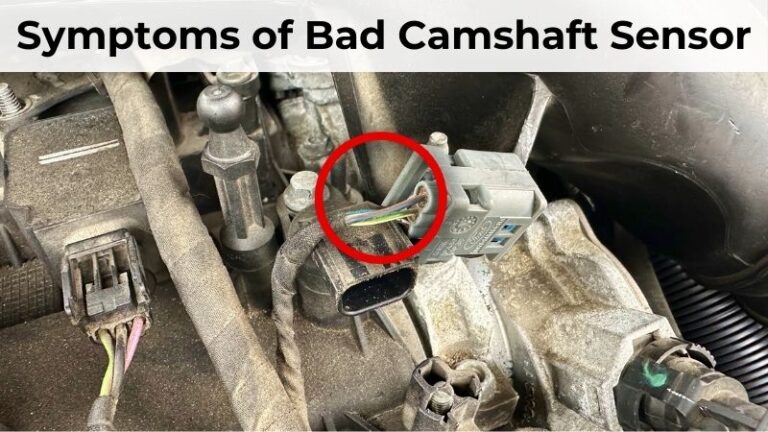
Next, visually inspect the sensor, connector, and accessible wiring. Look for damaged insulation, loose terminals, bent pins, corrosion, oil contamination, water intrusion, or wiring that has rubbed against brackets or hot components.
Electrical testing must follow the correct wiring diagram because sensor designs vary. A technician may verify the sensor’s supply voltage and ground and evaluate its output with a multimeter or, preferably for many signal faults, an oscilloscope. Manufacturer specifications should determine the expected voltage and waveform.
Source: troubleshootinglab.com
Step 1
Scan for diagnostic trouble codes and save the codes and freeze-frame data.
Step 2
Inspect the sensor body, electrical connector, terminals, and surrounding harness.
Step 3
Check the appropriate power supply, ground, and circuit continuity using model-specific service information.
Step 4
Evaluate the position signal with the correct test equipment when necessary.
Step 5
Investigate mechanical timing or cam-to-crank correlation if electrical tests do not explain the fault.
Does code P0340 mean the camshaft sensor is definitely bad?
No. P0340 generally identifies a problem involving the camshaft position sensor circuit, but a trouble code is not equivalent to a confirmed component diagnosis. An open circuit, short circuit, poor connector contact, inadequate supply voltage, damaged reluctor or trigger components, and other faults can produce similar results.
Replacing the sensor without testing can therefore waste money and leave the original problem unresolved.
Why cam and crank correlation codes require extra attention
A camshaft-to-crankshaft correlation fault can indicate that the two signals do not agree as expected. Depending on the vehicle, possible causes can extend beyond a position sensor to timing chain stretch, timing belt or chain installation errors, damaged trigger components, variable valve timing problems, or other mechanical conditions.
If a correlation code is accompanied by abnormal mechanical noise, poor running, or recent timing-system repairs, diagnosis should include the mechanical timing system rather than focusing only on the sensor.
What Causes a Camshaft Position Sensor Fault?
Age is only one possible cause. The sensor lives in a demanding environment where heat, vibration, engine oil, water, road contamination, and repeated temperature cycles can affect electronic components and wiring.
Electrical connections deserve particular attention because a perfectly functional sensor cannot send useful information through a damaged circuit. Connector corrosion, loosened terminals, broken conductors, damaged insulation, or poor ground connections can mimic sensor failure.
Mechanical conditions can also influence the signal that reaches the computer. A damaged target wheel, excessive timing-chain wear, incorrectly installed timing components, or variable valve timing faults may create a signal that appears implausible even when the sensor itself is capable of operating.
Source: hitchesguide.com
Internal sensor failure
Heat cycles, age, and electronic deterioration can eventually cause the sensor to stop producing a reliable signal.
Connector contamination
Oil, moisture, corrosion, or damaged terminals can interrupt communication with the engine computer.
Harness damage
Chafed, stretched, pinched, or broken wiring can create intermittent or permanent circuit faults.
Trigger component damage
A damaged reluctor or target can prevent the sensor from producing the signal pattern expected by the control module.
Mechanical timing problems
Timing-system wear or incorrect camshaft-to-crankshaft alignment can create correlation faults that should not be mistaken for a simple sensor failure.
Should You Replace the Camshaft Sensor Yourself?
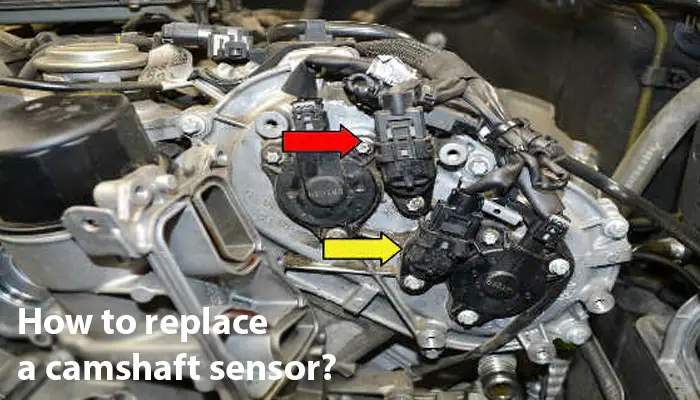
Camshaft position sensor replacement can be straightforward on some vehicles and considerably more involved on others. Accessibility, engine layout, the number of sensors, connector design, required disassembly, and manufacturer procedures determine whether it is a realistic DIY repair.
Before buying a replacement, identify the correct sensor and bank if the engine has multiple camshafts or cylinder banks. Bank 1 and Bank 2 designations refer to specific sides of an engine, and intake and exhaust camshaft sensors may also be distinguished separately.
Disconnecting a sensor and installing a new one does not correct damaged wiring, an incorrect power supply, poor ground, timing-chain wear, or a mechanical correlation problem. Diagnosis remains important even when the physical replacement appears easy.
After a confirmed repair, verify that the engine starts normally, idles smoothly, responds properly to acceleration, and does not immediately restore the same diagnostic trouble code. Some vehicles may require manufacturer-specific procedures or drive cycles before all readiness information is updated.
Source: volgenpower.com
Confirm the fault first
Do not replace the sensor solely because a code contains the words camshaft position sensor.
Match the exact application
Verify engine size, sensor location, bank, and intake or exhaust designation before ordering parts.
Inspect the connector
A damaged connector should be repaired rather than hidden by installing a new sensor.
Follow torque specifications
Use vehicle-specific service information when tightening the sensor fastener and reinstalling removed components.
Recheck operation
Confirm that the original starting or drivability problem has actually been corrected.
When professional diagnosis makes sense
Professional diagnosis is particularly useful when the vehicle has multiple related codes, intermittent stalling, a cam-to-crank correlation code, recent timing-system work, unusual mechanical noise, or a replacement sensor that did not solve the problem.
An automotive technician with wiring information and an oscilloscope can compare camshaft and crankshaft signals directly, which is often more informative than replacing components one at a time.
FAQs About Can You Drive Without a Camshaft Sensor
Q
How long can you drive with a bad camshaft sensor?
There is no reliable mileage or time limit. A vehicle might continue running for some time, fail during the next start, or stall unexpectedly. Because the behavior depends on the engine-management system and the type of failure, continued normal driving is not a dependable strategy.
If the sensor fault has been confirmed, arrange repair promptly. If the engine is already stalling, misfiring severely, or losing substantial power, towing is the safer choice.
Q
Will a bad camshaft position sensor cause a no-start?
Yes, it can. Some engines need a usable camshaft signal during startup and may not start when the signal is missing. Others can eventually establish enough synchronization using crankshaft information to start, although cranking may take longer than normal.
Q
Can you unplug a camshaft sensor to test it?
Unplugging the sensor may change engine behavior, but that alone is not a reliable diagnostic test. Disconnecting it intentionally creates an open circuit and can store additional trouble codes. Proper diagnosis uses scan data, visual inspection, wiring checks, manufacturer specifications, and signal testing where appropriate.
Q
Can a bad camshaft sensor cause the engine to stall while driving?
Yes. Stalling is one recognized symptom of a failing camshaft position sensor or its circuit. An intermittent electrical connection can make this especially unpredictable because the signal may disappear only under heat, vibration, or particular operating conditions.
Repeated stalling should be treated as a significant drivability problem. Move the vehicle to safety and arrange diagnosis rather than deliberately continuing a normal trip.
Q
Can a bad camshaft sensor reduce fuel economy?
It can. When accurate camshaft position information is unavailable, the engine-management system may no longer use its normal control strategy. Rough running, poor combustion control, reduced performance, or fallback operation can contribute to increased fuel consumption.
Q
Can a faulty camshaft sensor cause poor acceleration?
Yes. Hesitation and reduced engine power are common symptoms associated with camshaft position signal problems. The vehicle may also enter a reduced-power or limp mode that deliberately limits performance until the fault is repaired.
✦ Wrapping Up
Conclusion
So, can you drive without a camshaft sensor? Some vehicles can continue running without a valid camshaft position signal, but others may be difficult to start, enter limp mode, stall, or refuse to start. The fact that an engine still runs does not make the fault safe to ignore.
A camshaft position sensor is an important part of modern engine management because its signal helps the computer identify camshaft position and coordinate functions such as fuel injection, ignition control, and variable valve timing. When that information becomes unreliable, engine behavior can become unpredictable.
Do not assume that a camshaft-related trouble code proves the sensor itself has failed. Check the diagnostic codes, connector, wiring, power and ground circuits, and mechanical timing when appropriate. If the vehicle stalls, misfires severely, loses substantial power, or cannot restart reliably, avoid further driving and have it transported for diagnosis.
💡 Key Takeaway
If your vehicle has a suspected camshaft sensor fault but still runs, scan the trouble codes and arrange diagnosis promptly. Treat repeated stalling, severe misfiring, major power loss, or unreliable starting as reasons to stop driving rather than trying to reach your destination.
Ethan Brooks is an automotive writer at Auto News 7, covering car news, vehicle maintenance, new model updates, recalls, and practical buying guides. He focuses on clear, useful information that helps drivers understand their vehicles and make better ownership decisions.