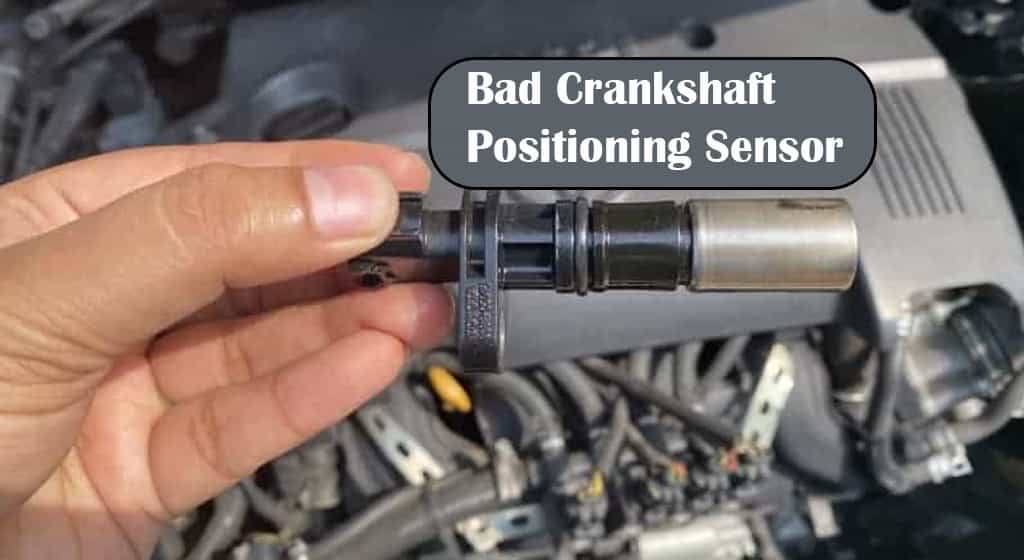
Yes, a faulty crankshaft position sensor can cause transmission-related symptoms, especially on electronically controlled automatic transmissions.
For drivers in the United States, a bad crankshaft position sensor can sometimes look like a transmission failure even when the transmission itself is mechanically sound. Modern vehicles use electronic control modules to coordinate engine operation and automatic transmission behavior. If the crankshaft position signal becomes weak, intermittent, or inaccurate, the vehicle may lose information needed to manage engine speed and power delivery.
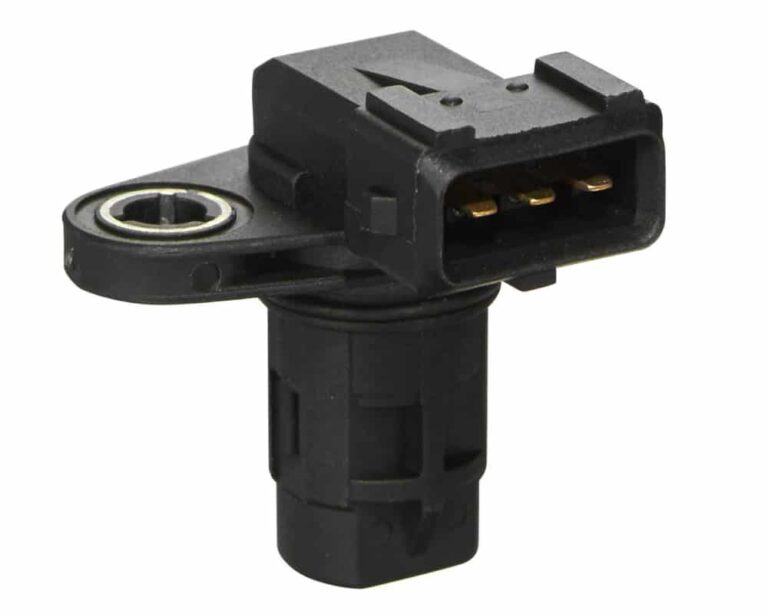
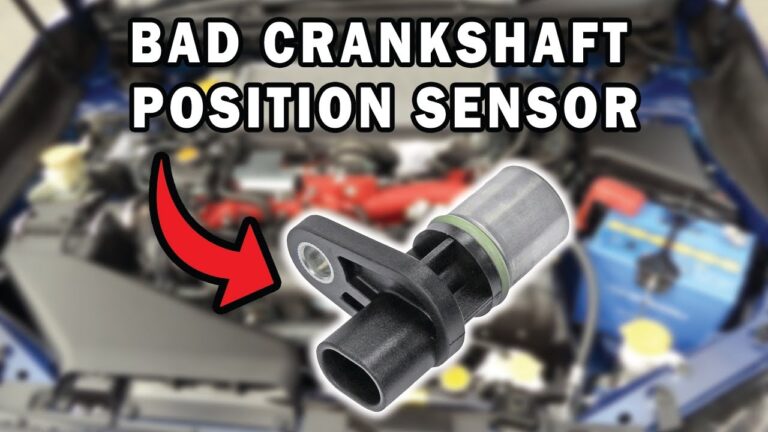
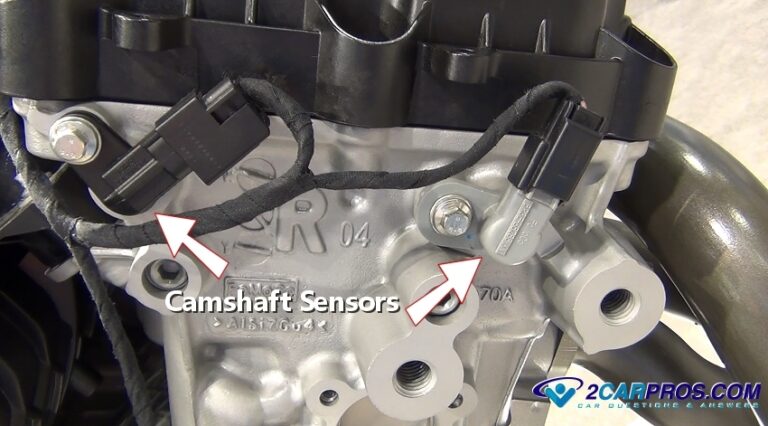
The crankshaft position sensor, commonly called the CKP sensor, does not normally control transmission gears directly. Instead, it provides the engine control system with information about crankshaft position and speed. Depending on the vehicle design, that information can be shared with or used by the powertrain or transmission control system. This means a CKP problem can contribute to harsh, delayed, erratic, or missing shifts without being the root cause of a mechanical transmission defect.
The key is to avoid replacing the transmission based only on symptoms. A proper diagnosis should check stored diagnostic trouble codes, live engine-speed data, the CKP sensor circuit, wiring, connectors, and transmission-specific inputs before expensive transmission repairs are considered.
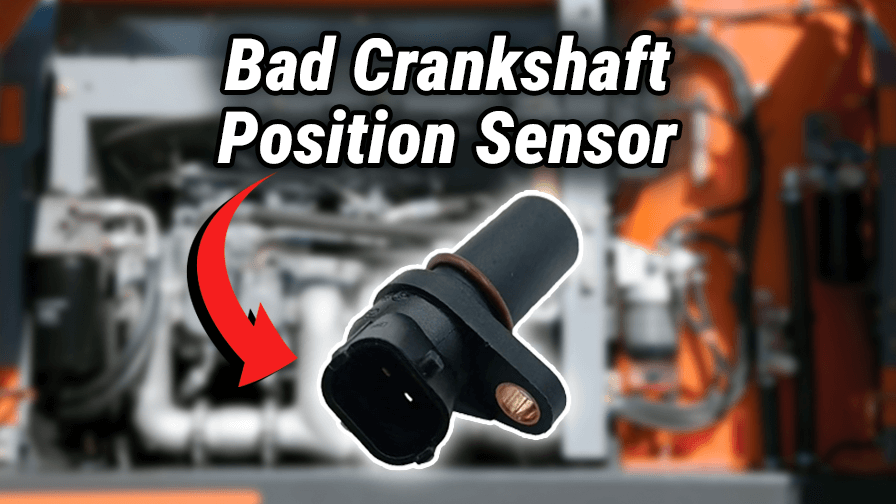
Source: mechlesson.com
How the Crankshaft Position Sensor Affects the Powertrain
The crankshaft position sensor monitors the position and rotational speed of the crankshaft. The engine control system uses this information to coordinate functions such as fuel injection and ignition timing. In many modern vehicles, accurate engine-speed information is also relevant to transmission control and overall powertrain coordination.
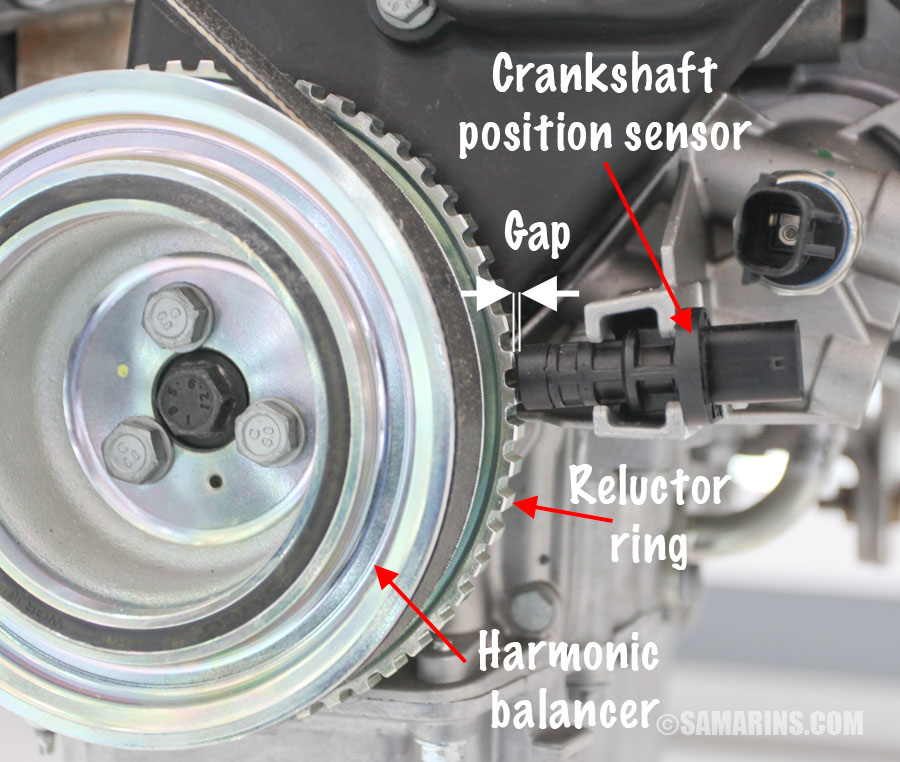
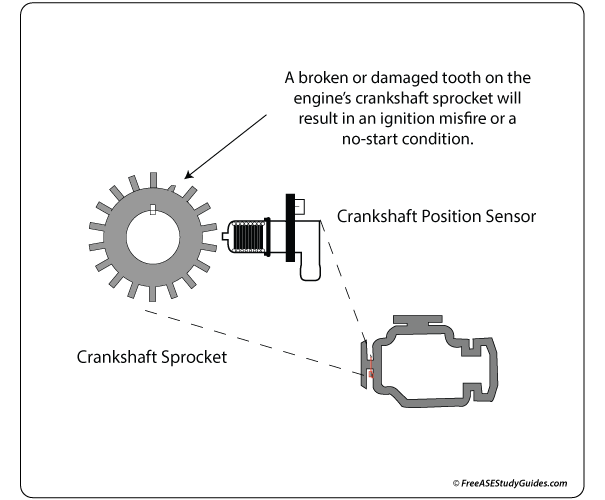
The sensor typically reads a toothed or specially shaped target wheel attached to or associated with the crankshaft. As the target passes the sensor, it produces an electrical signal. The control module interprets that signal to determine where the crankshaft is and how quickly it is turning.
Transmission control is also electronic in many U.S. vehicles with automatic transmissions. Depending on the vehicle, the control system uses engine speed, vehicle speed, throttle demand, transmission speed, temperature, pressure, and other information when determining shift behavior. Because these systems interact, an engine sensor fault can sometimes produce symptoms that seem to originate in the transmission.
Source: samarins.com
Engine speed information
The CKP sensor provides information about crankshaft rotation that helps the control system determine engine speed.
Crankshaft position
The signal helps the engine controller establish crankshaft position for precise engine management.
Powertrain coordination
On vehicles where engine and transmission controls share information, an unreliable CKP signal can interfere with coordinated powertrain operation.
Does the CKP Sensor Control the Transmission Directly?
Usually, no. The crankshaft position sensor is primarily an engine-management sensor. The transmission may have its own input and output speed sensors, pressure sensors, position sensors, and other components. However, the engine and transmission control systems can exchange information, so a CKP fault can indirectly affect transmission behavior.
The exact relationship depends on the vehicle’s electrical architecture. Some vehicles use a powertrain control module for both engine and transmission functions, while others use separate engine and transmission control modules that communicate over the vehicle network.
Direct control
The CKP sensor generally does not operate transmission shift solenoids by itself.
Indirect effect
An unreliable crankshaft signal can affect the information available to the control system and may contribute to abnormal transmission behavior.
What Transmission Problems Can a Bad CKP Sensor Cause?
A bad crankshaft position sensor can be associated with transmission-like symptoms, but the exact symptoms vary by vehicle. Some vehicles may experience abnormal shifting when the control system receives an unreliable engine-speed signal. Other vehicles may set fault codes or enter a protective operating mode.
A CKP fault can also cause the engine to stall, hesitate, misfire, or fail to start. When the engine is not producing or reporting power normally, the resulting driving behavior can feel like a transmission problem. This distinction matters because replacing a transmission will not correct an underlying crankshaft-sensor or wiring fault.
Transmission symptoms alone do not prove that the CKP sensor is defective. A transmission speed sensor, throttle-position signal, shift solenoid, wiring problem, low battery voltage, software issue, fluid problem, or internal transmission fault can create similar complaints.
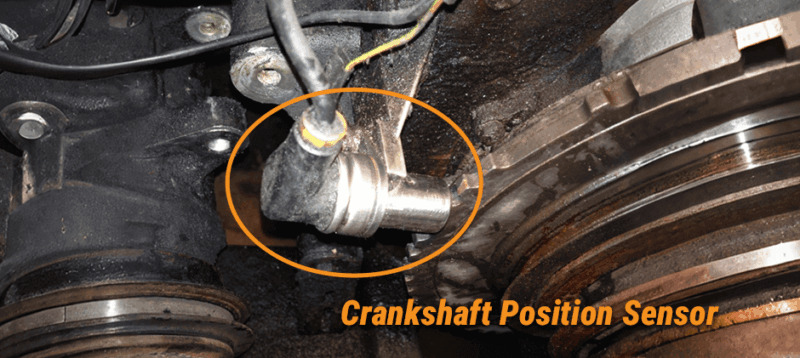
Source: newkidscar.com
Harsh or unusual shifting
The vehicle may shift differently when powertrain control information is missing or unreliable.
Delayed or inconsistent shifting
An electronic control problem can interfere with normal shift decisions or powertrain coordination.
Limp or restricted operation
Some vehicles may enter a protective mode when important powertrain signals or related faults are detected.
Stalling during driving
A severe CKP signal failure can cause the engine to lose the information required for normal operation, which can make the vehicle feel as though the transmission suddenly stopped working.
Why a Sensor Problem Can Feel Like a Transmission Failure
Imagine an automatic vehicle that suddenly loses its crankshaft-speed signal. The engine controller may no longer have reliable information about engine rotation. Depending on the vehicle, this can change how the powertrain controller responds to the engine or can trigger a protective strategy.
The driver may notice a hard shift, loss of normal acceleration, an unexpected downshift, or a vehicle that will not operate normally. Those symptoms can understandably be blamed on the transmission, but the original fault may be an engine sensor or its circuit.
Symptom is not diagnosis
A harsh shift identifies a symptom, not the failed component.
Control systems interact
Modern engine and transmission systems exchange information, so a fault in one area can affect another.
Signs That Point to a Crankshaft Position Sensor Problem
The strongest clue is usually a combination of symptoms rather than one transmission complaint. A failing CKP sensor can cause engine-related symptoms along with unusual powertrain behavior. Intermittent failures can be especially difficult because the vehicle may operate normally for part of a drive and then develop symptoms after the sensor or wiring becomes affected by heat, vibration, or movement.
A diagnostic scan is more useful than guessing from symptoms. The presence of a crankshaft-position-related trouble code can support the diagnosis, but a code does not automatically prove that the sensor itself needs replacement. The sensor, wiring, connector, target wheel, power supply, ground, and control-module inputs may all need to be checked.
Source: freeasestudyguides.com
Check engine light
A CKP or related engine-control fault may illuminate the malfunction indicator lamp.
Hard starting or no-start condition
A missing crankshaft signal can prevent the engine control system from determining crankshaft position correctly.
Engine stalling
An intermittent or lost CKP signal can cause the engine to stop running on some vehicles.
Tachometer behavior
On some vehicles, loss of the crankshaft signal can cause unusual or missing engine-speed readings.
Erratic driveability
Hesitation, rough running, loss of power, or unusual shifting may occur when the underlying CKP signal problem affects powertrain control.
How to Diagnose a CKP Sensor Before Blaming the Transmission
Start with a complete diagnostic scan rather than replacing parts based on the driving symptom. The goal is to determine whether the vehicle has a crankshaft signal problem, a transmission-specific fault, or two separate problems occurring at the same time.
A professional diagnosis should consider both stored and pending diagnostic trouble codes. It should also look at live data when the fault can be reproduced. On an intermittent problem, the technician may need to inspect the wiring and connector carefully and compare the crankshaft signal with other engine-speed information.
If the vehicle has transmission codes, those codes should be diagnosed according to the manufacturer’s service information. A transmission-related code does not automatically mean that the transmission itself has failed.
Source: fridayparts.com
1. Scan all relevant modules
Read the engine, powertrain, and transmission control systems when the vehicle architecture supports separate modules.
2. Record the codes
Write down active, stored, and pending codes before clearing them because they can provide useful clues about the timing and nature of the fault.
3. Check live engine-speed data
Compare scan-tool engine-speed information with the actual operating condition and look for a signal that drops out or behaves abnormally.
4. Inspect the CKP circuit
Check the sensor connector, wiring, power or reference circuits where applicable, grounds, and signs of damage or contamination.
5. Check related mechanical components
If the sensor signal appears incorrect, the technician may need to inspect the target wheel or reluctor and confirm that the sensor is positioned correctly.
6. Diagnose transmission-specific faults
If transmission codes remain after the CKP system checks out, investigate transmission speed sensors, solenoids, fluid condition, hydraulic problems, control modules, and internal mechanical issues as appropriate.
Why Replacing the Sensor Without Testing Can Fail
A crankshaft position sensor is only one part of the signal path. Damaged wiring, a poor electrical connection, an incorrect air gap, a damaged trigger wheel, or a control-module problem can produce similar symptoms. Replacing the sensor without checking those possibilities may leave the original fault in place.
The same caution applies to transmission repairs. If the vehicle has an intermittent CKP fault, installing a transmission because the car shifts badly can result in an expensive repair that does not address the cause.
Avoid parts swapping
Use scan data and electrical testing to identify the failed component instead of replacing several components based only on symptoms.
Follow vehicle-specific procedures
Sensor testing, relearn procedures, wiring checks, and replacement requirements vary by make, model, engine, and model year.
CKP Sensor Symptoms vs. True Transmission Problems
The easiest way to separate the two is to look for evidence that involves the engine as well as the transmission. A CKP problem becomes more plausible when transmission-like symptoms occur alongside stalling, hard starting, engine-speed signal loss, or crankshaft-related diagnostic codes.
A transmission problem becomes more plausible when the engine runs normally but the vehicle consistently has gear-specific symptoms, transmission speed-sensor faults, hydraulic problems, abnormal transmission fluid, slipping, or mechanical noises associated with the transmission. Even then, electronic diagnosis should come before a major repair.
The table below is a practical starting point, not a substitute for manufacturer-specific diagnostics.
Source: mechstudies.com
More suggestive of a CKP or engine-control issue
Stalling, hard starting, intermittent no-start conditions, engine-speed signal loss, rough running, or crankshaft-related fault codes occurring with the shifting complaint.
More suggestive of a transmission issue
Persistent gear-specific slipping, abnormal transmission fluid, transmission speed-sensor codes, solenoid faults, or mechanical symptoms that remain while the engine operates normally.
Could be either
Harsh shifts, delayed shifts, unexpected downshifts, reduced power, warning lights, and restricted operating modes can result from several powertrain faults.
Can a Bad CKP Sensor Cause a Transmission Code?
It can, depending on the vehicle and how its control modules communicate. A loss of crankshaft information can be associated with faults in other modules or with implausible-data conditions. Some vehicles can also store multiple codes when one underlying signal failure affects several systems.
For that reason, technicians should look at the complete code set and the order in which faults occurred. A transmission code stored alongside a CKP-related code does not automatically establish that the transmission is defective.
Read the complete code set
Related codes can show whether several control modules lost or received inconsistent information.
Check the sequence
The first fault or the fault that consistently returns may provide a stronger diagnostic clue than a secondary code.
Can You Drive With a Bad Crankshaft Position Sensor?
Driving with a suspected CKP sensor problem is not something to treat as a routine transmission issue. The risk depends on the exact failure and the vehicle. If the engine stalls unexpectedly, refuses to restart, loses power, or behaves unpredictably, continuing to drive can create a safety problem, particularly in traffic or at highway speeds.
If the vehicle is running normally but has a warning light and a suspected intermittent sensor problem, arrange diagnosis as soon as practical. Avoid assuming that the vehicle is safe simply because it continues to move.
If the engine stalls, the transmission may stop receiving normal engine power because the engine has stopped. That can make the vehicle feel as though the transmission failed even though the original problem is upstream in engine control.
Source: fridayparts.com
Stop driving if the vehicle becomes unpredictable
Unexpected stalling or major loss of power can make normal driving unsafe.
Do not ignore repeated symptoms
Intermittent sensor failures can become more frequent or cause a no-start condition.
Get the system scanned
A diagnostic scan can help distinguish a CKP problem from a transmission fault before further driving or repairs.
Common Mistakes When Diagnosing This Problem
The biggest mistake is treating a transmission symptom as proof of transmission failure. Modern vehicles contain interconnected electronic systems, so the visible symptom may appear somewhere other than the component that originally failed.
Another common mistake is clearing codes before recording them. Clearing the codes can remove useful information about what the vehicle detected. It can also make an intermittent problem harder to reproduce.
Finally, replacing a CKP sensor without checking the wiring and signal can lead to repeated repairs. A proper diagnosis considers the complete circuit and the mechanical target that the sensor reads.
Source: mechstudies.com
Mistake: assuming harsh shifting means a bad transmission
Harsh shifting can have electronic, hydraulic, fluid-related, or mechanical causes, including problems outside the transmission itself.
Mistake: replacing the CKP sensor from a code alone
A fault code identifies a detected condition or circuit area and does not always identify the exact failed part.
Mistake: ignoring wiring
A damaged connector, broken wire, poor ground, or electrical interference can imitate a failed sensor.
Mistake: ignoring vehicle-specific procedures
Some vehicles require sensor learning, calibration, or other procedures after related repairs.
Frequently Asked Questions
Q
Can a crankshaft position sensor cause shifting problems?
Yes. A faulty CKP sensor can contribute to shifting problems on some vehicles because engine speed and crankshaft position information can be used by the powertrain control system. The sensor does not usually control the transmission directly, so the exact effect depends on the vehicle’s control architecture.
A transmission-related symptom should therefore be diagnosed with the engine and transmission systems considered together.
Q
Can a bad crankshaft sensor cause an automatic transmission to go into limp mode?
It can contribute to a restricted operating strategy on some vehicles if the control system detects a critical powertrain signal problem. The exact response varies by make, model, engine, transmission, and software.
If limp mode occurs, scan the relevant modules and diagnose the stored faults rather than assuming the transmission has suffered an internal failure.
Q
Can a bad crankshaft position sensor cause hard shifting?
It can be associated with hard or unusual shifting when the CKP signal affects powertrain control. However, hard shifting also has many other possible causes, including transmission sensors, solenoids, fluid or hydraulic problems, control-module faults, and mechanical wear.
The combination of diagnostic codes and live data is more useful than the shifting symptom alone.
Q
Will replacing the crankshaft position sensor fix transmission problems?
Only if the CKP sensor or its circuit is actually causing the transmission-related symptom. Replacing the sensor will not repair a worn clutch pack, failed solenoid, damaged transmission component, incorrect fluid level, or unrelated electrical fault.
Diagnosis should confirm the CKP problem before replacement whenever practical.
Q
What codes can indicate a crankshaft position sensor problem?
The exact codes depend on the vehicle. Crankshaft position sensor and crankshaft signal faults can be represented by different diagnostic trouble codes, including codes associated with crankshaft position, missing signals, correlation, or circuit faults.
Always interpret the code using the service information for the specific vehicle because a code alone does not prove which physical component has failed.
Q
Can a crankshaft position sensor cause a car not to move?
A severe CKP problem can cause the engine to stall or fail to run, which means the vehicle cannot be propelled normally even though the transmission itself may still be mechanically capable of engaging a gear.
If the engine runs normally but the vehicle will not move when a gear is selected, a transmission, driveline, control, or hydraulic problem should also be investigated.
✦ Wrapping Up
Conclusion
A crankshaft position sensor can cause transmission-like problems, and on some vehicles it can contribute directly to abnormal electronically controlled shifting. The important distinction is that the CKP sensor normally provides engine position and speed information rather than mechanically operating the transmission.
If a vehicle has harsh shifting, delayed shifts, limp mode, stalling, or other transmission symptoms, do not assume the transmission needs replacement. Check the complete diagnostic code set, evaluate CKP sensor data and wiring, and then diagnose transmission-specific systems according to the vehicle manufacturer’s procedures.
When engine and transmission symptoms occur together, diagnosing the shared electronic control system can prevent an unnecessary transmission repair and help identify the actual source of the problem.
💡 Key Takeaway
If you suspect a CKP sensor is causing transmission problems, scan the engine and transmission systems first, verify the crankshaft signal and wiring, and confirm the fault before replacing major transmission components.
Ethan Brooks is an automotive writer at Auto News 7, covering car news, vehicle maintenance, new model updates, recalls, and practical buying guides. He focuses on clear, useful information that helps drivers understand their vehicles and make better ownership decisions.
Learn how much a camshaft position sensor costs, typical replacement prices in the USA, labor charges, symptoms of failure, and when replacement makes sense.
Learn how long to replace camshaft position sensor components, what affects repair time, labor costs, common symptoms, and whether you can do the job yourself.
Learn whether camshaft sensors are interchangeable, how to identify compatible sensors, common mistakes to avoid, and how to choose the correct replacement for your vehicle.