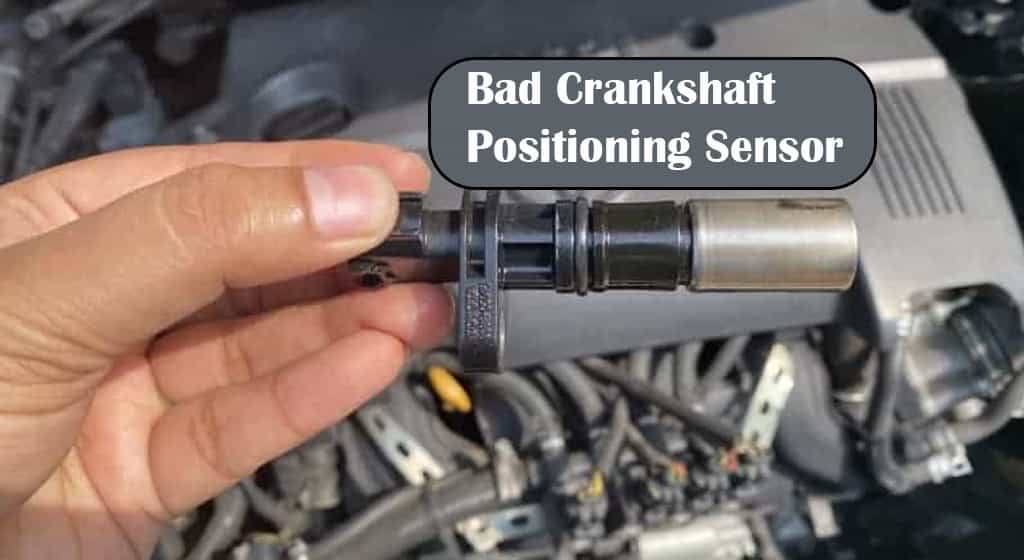
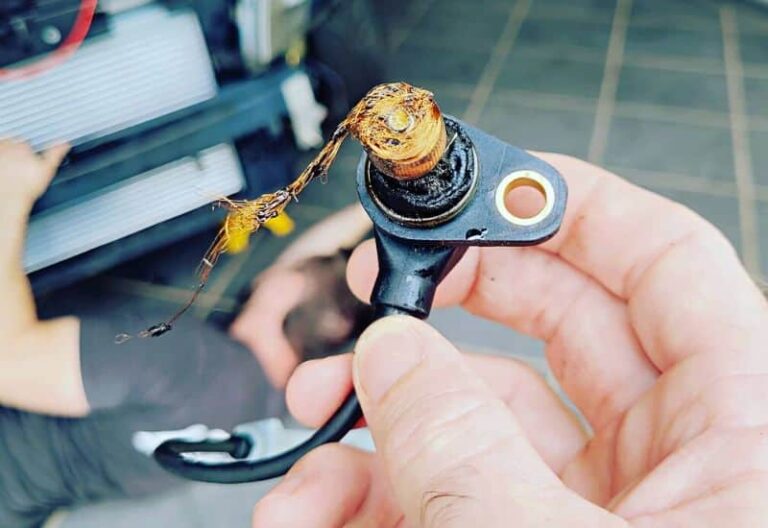
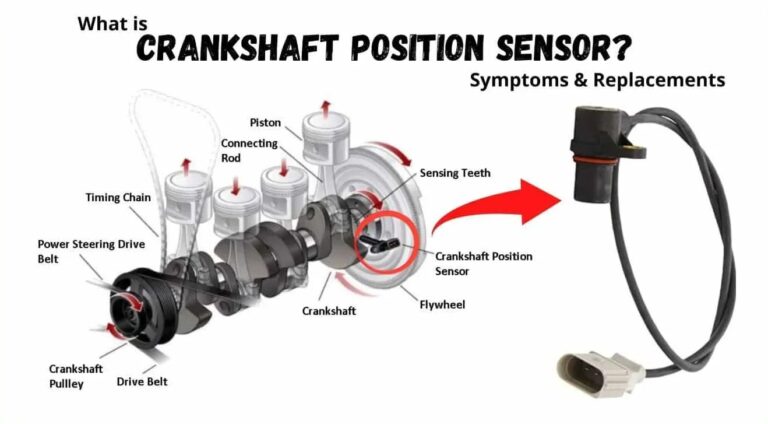
Yes, a bad crankshaft position sensor can cause misfires by sending inaccurate or missing engine-position signals to the computer.
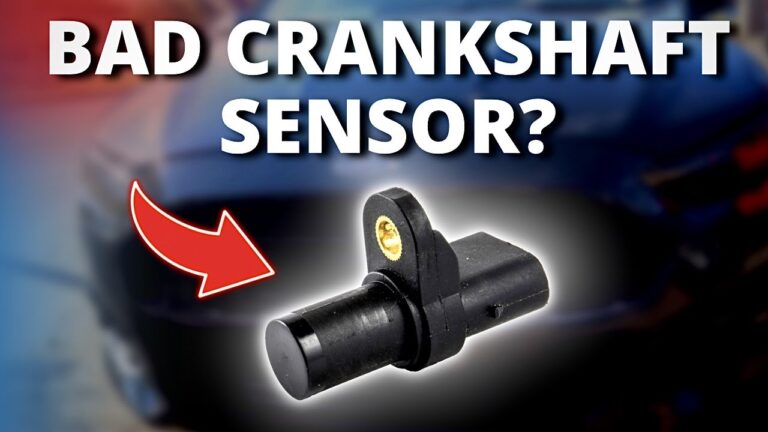
For drivers in the United States, a crankshaft position sensor is a key part of modern engine management. The sensor tells the engine control module how fast the crankshaft is turning and where it is positioned. The computer uses that information to coordinate ignition and fuel delivery.
If the sensor signal becomes weak, erratic, or disappears, the engine may lose accurate timing information. That can produce misfires, rough running, hesitation, stalling, hard starting, or a no-start condition. However, a misfire does not automatically mean the crankshaft sensor is bad. Ignition, fuel, compression, wiring, camshaft timing, and other faults can create similar symptoms.
Source: youtube.com
How Can a Bad Crankshaft Sensor Cause a Misfire?
A bad crankshaft position sensor can cause a misfire because the engine computer depends on its signal to understand crankshaft position and speed. That information helps the control module determine when engine events should occur.
When the signal is missing or inaccurate, the computer may lose reliable synchronization between the crankshaft and other engine-management events. Depending on the vehicle and the type of sensor failure, the result can range from an occasional misfire to severe rough running, stalling, or an engine that will not start.
The exact behavior varies by vehicle. Some systems may use additional position information and strategies to keep the engine running when a crankshaft signal becomes unreliable. Other vehicles may shut down or fail to start when the signal is lost.
Source: mechstudies.com
Incorrect position information
An inaccurate sensor signal can make it harder for the engine control module to determine the crankshaft’s actual position.
Unstable engine-speed information
A damaged or intermittent signal can cause the computer to receive an unreliable representation of crankshaft speed.
Timing disruption
Because crankshaft position is central to engine synchronization, a faulty signal can interfere with ignition and fuel-control decisions.
Intermittent misfire
A sensor that fails only under heat, vibration, or certain engine speeds may cause a misfire that appears and disappears.
What Does the Crankshaft Position Sensor Do?
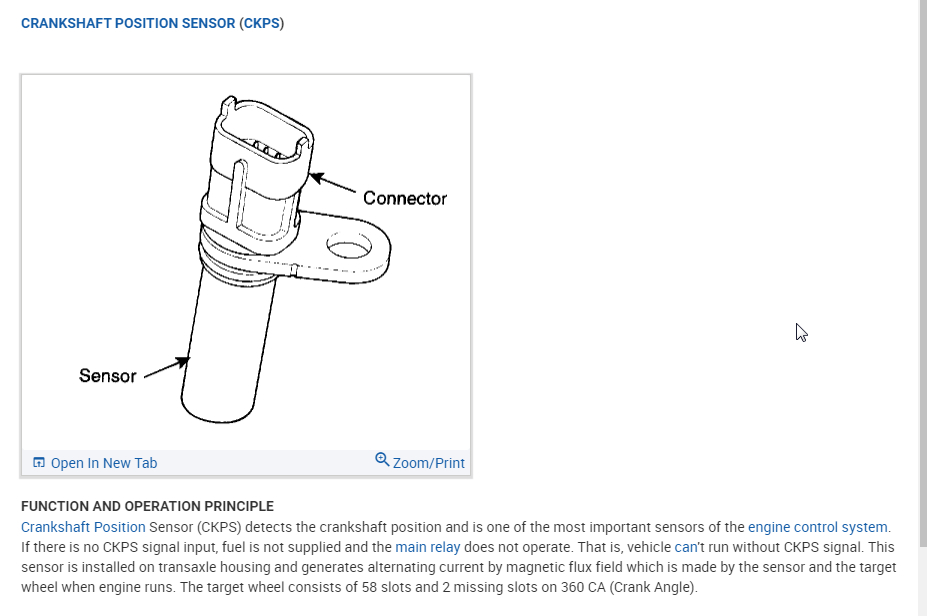
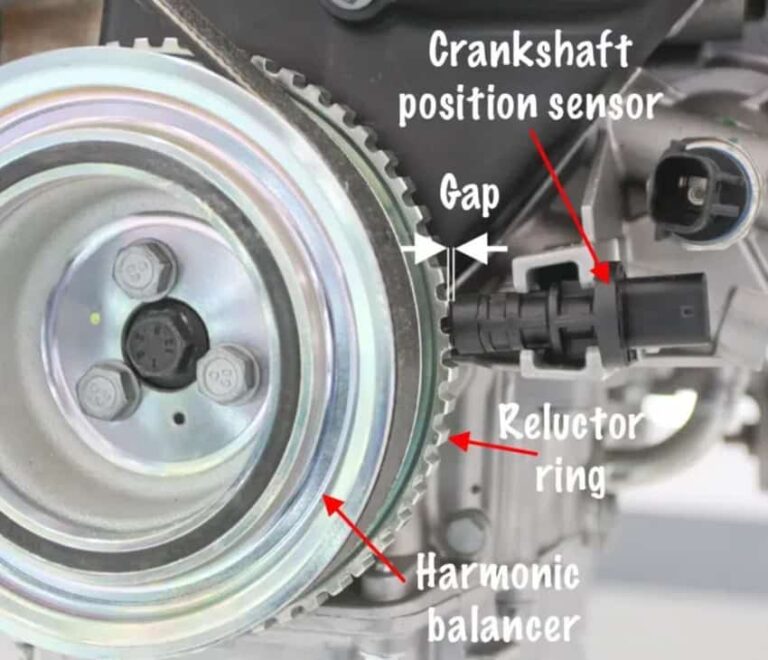
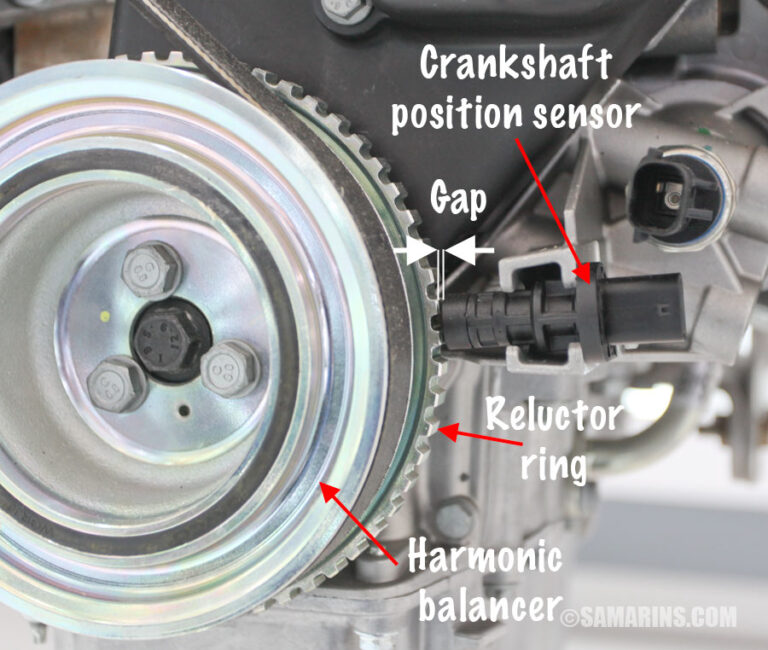
The crankshaft position sensor detects the position and rotational speed of the crankshaft. It typically reads a toothed wheel, reluctor, or similar target connected to the rotating crankshaft and produces an electrical signal for the engine control module.
The computer uses this signal as part of its engine-speed and position calculations. The exact sensor design varies. Some crankshaft sensors use Hall-effect technology, while others use inductive sensing.
Crankshaft position
The signal helps the engine computer determine where the crankshaft is during rotation.
Engine speed
The signal also provides information about how quickly the crankshaft is rotating.
Engine synchronization
Crankshaft information works with other engine-management signals to coordinate combustion events.
What Does a Crankshaft Sensor Misfire Feel Like?
A misfire caused by a crankshaft sensor problem can feel similar to many other engine faults. You may notice hesitation, stumbling, jerking, rough idle, reduced power, or an engine that briefly cuts out.
Some drivers may notice the problem during acceleration or at a particular engine speed. Others may experience hard starting or intermittent stalling instead of a clearly identifiable single-cylinder misfire.
A flashing check engine light deserves particular attention. A flashing warning can indicate an active misfire severe enough to potentially damage the catalytic converter. Avoid continued driving and have the vehicle diagnosed promptly when the warning is flashing or the engine is running very poorly.
Source: 2carpros.com
Rough idle
The engine may shake or run unevenly when the vehicle is stopped.
Hesitation
The engine may stumble when accelerating or changing engine speed.
Stalling
A severe or intermittent sensor signal problem can contribute to engine shutdown.
Hard starting
The engine may crank normally but struggle to start when the computer cannot obtain a reliable crankshaft signal.
Reduced performance
Unreliable engine-position information can interfere with normal engine control.
Can a Bad Crankshaft Sensor Cause a Single-Cylinder Misfire?
It can contribute to misfire behavior, but a single-cylinder misfire code does not by itself prove that the crankshaft sensor is responsible. A faulty crankshaft signal generally affects engine synchronization rather than acting like a conventional component dedicated to one cylinder.
If a scan tool reports a cylinder-specific misfire, such as a code identifying cylinder 3, the diagnosis should also consider that cylinder’s spark plug, ignition coil, injector, compression, wiring, and mechanical condition.
Cylinder-specific code
Investigate the affected cylinder and its ignition, fuel, compression, and wiring systems.
Multiple-cylinder symptoms
Widespread or irregular misfire behavior can make an engine-speed or synchronization problem more relevant.
What Other Symptoms Can a Bad Crankshaft Sensor Cause?
A failing crankshaft sensor can cause more than a misfire. Depending on the vehicle and failure mode, common symptoms include hard starting, stalling, poor acceleration, rough running, an illuminated check engine light, or a complete no-start condition.
An intermittent sensor problem can be especially confusing. The engine may start and drive normally when the sensor is cool, then develop symptoms after the engine compartment becomes hot. Wiring or connector problems can create similar intermittent behavior.
Source: mechanicsdiary.com
Check engine light
The engine control module may store a diagnostic trouble code when it detects an abnormal crankshaft position signal or circuit condition.
Engine stalling
A loss of reliable crankshaft information can interfere with continued engine operation.
No-start condition
A complete loss of the required crankshaft signal can prevent some engines from starting.
Jerking or hesitation
An intermittent signal can produce unstable engine operation.
Poor engine performance
Unreliable position information can interfere with normal engine management.
Can Code P0335 Mean a Bad Crankshaft Sensor?
Yes, P0335 can indicate a crankshaft position sensor circuit problem, but the code does not automatically prove that the sensor itself has failed. The exact diagnostic definition and test procedure depend on the vehicle.
Possible causes can include a failed sensor, an open or shorted circuit, damaged wiring, a damaged connector, a problem with the crankshaft sensing or reluctor ring, or in some cases a control-module fault. Vehicle manufacturers can specify different diagnostic procedures and circuit designs.
This distinction matters because replacing the sensor without checking the circuit can leave the original problem unresolved. A damaged connector or wiring fault can produce symptoms that look like a failed sensor.
Source: vehiclefreak.com
P0335
This generic diagnostic trouble code is associated with a crankshaft position sensor circuit malfunction.
Sensor failure
The sensor itself can be the source of the abnormal signal.
Wiring or connector fault
Open circuits, short circuits, corrosion, loose terminals, or damaged wiring can interfere with the sensor signal.
Reluctor or sensing-ring problem
A damaged or incorrectly positioned target can prevent the sensor from producing the expected signal.
Why You Should Not Replace the Sensor Based on P0335 Alone
A diagnostic trouble code identifies a system or condition that the vehicle detected. It does not always identify the exact failed component. Manufacturer diagnostic procedures commonly require checking sensor data, wiring, connectors, signal patterns, and related components before the final repair.
For example, manufacturer service information for P0335 diagnostics can require checking live crankshaft data and the sensor waveform, then inspecting the harness and related components. The correct test depends on the specific vehicle.
Read all stored codes
Additional codes can provide clues about synchronization, ignition, fuel, or other engine problems.
Check freeze-frame information
When available, this data can show the operating conditions present when the fault was recorded.
Follow vehicle-specific testing
Use the service information for the exact year, make, model, engine, and sensor system.
How to Diagnose a Crankshaft Sensor Related Misfire
The most useful approach is to diagnose the signal and the engine system rather than immediately replacing the sensor. Start with a scan tool, then inspect the electrical and mechanical causes that can produce the same symptoms.
If you are comfortable performing basic automotive checks, you can gather useful information without removing the sensor. More advanced signal testing may require a multimeter, oscilloscope, back-probing equipment, or manufacturer-specific diagnostic tools. Follow the vehicle service manual because sensor circuits and test values vary.
Source: 2carpros.com
1. Scan for diagnostic trouble codes
Record every relevant code before clearing anything. Look for crankshaft, camshaft, synchronization, and misfire codes.
2. Review live data
When supported, check engine RPM and crankshaft-related data while cranking and running. An implausible or disappearing RPM signal can be an important clue.
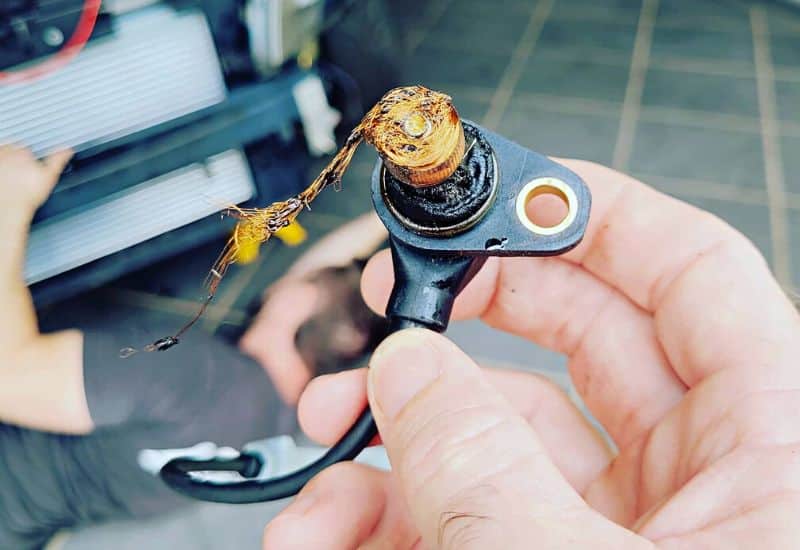
3. Inspect the wiring
Look for damaged insulation, loose terminals, corrosion, oil contamination, or wiring routed too close to sources of heat or interference.
4. Inspect the connector
Check that the connector is fully seated and that its terminals are not bent, loose, contaminated, or damaged.
5. Test the sensor signal
Use the vehicle manufacturer’s specified procedure. Some systems can be evaluated with a multimeter, while waveform analysis with an oscilloscope may be needed for intermittent or pattern-related faults.
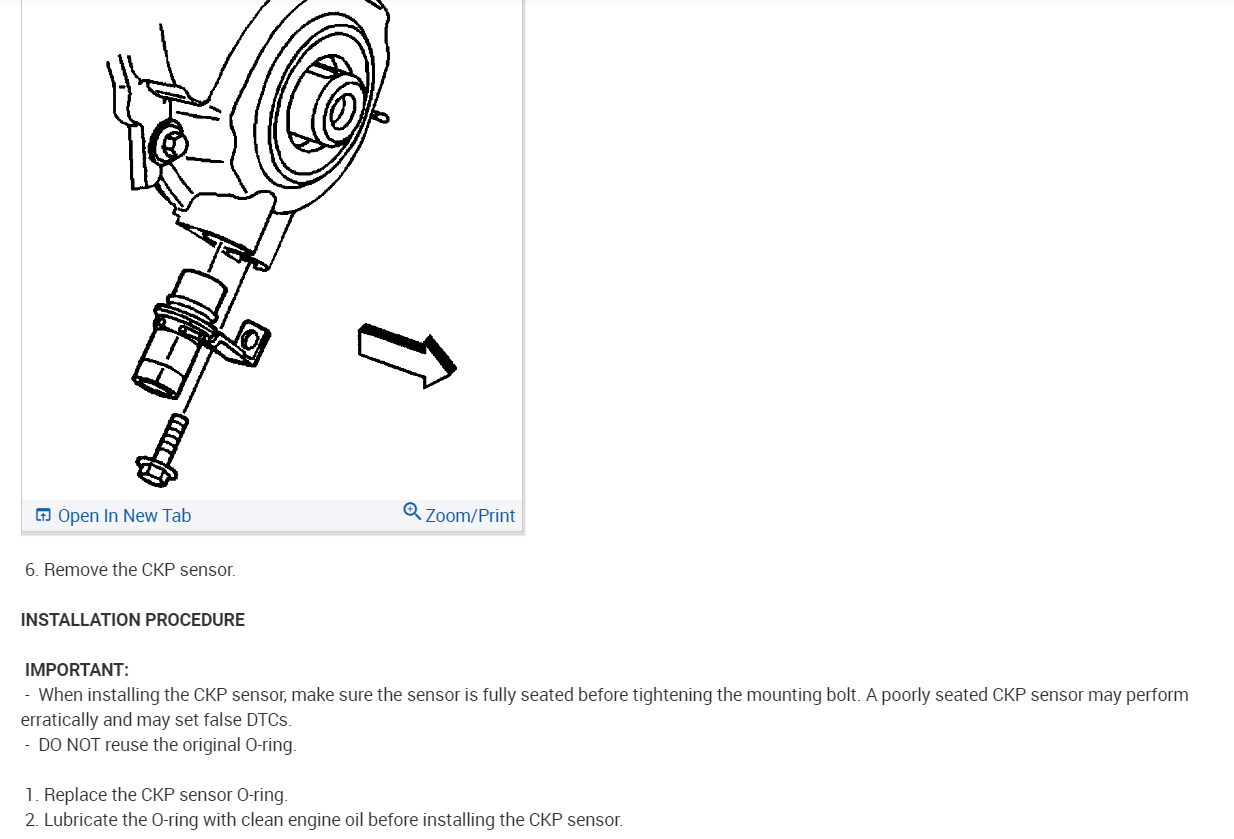
6. Check related mechanical components
Inspect the crankshaft sensing target or reluctor when the service procedure calls for it, especially if the electrical circuit checks correctly.
7. Check other misfire causes
Inspect ignition, fuel delivery, air leaks, compression, valve timing, and other systems before assigning the misfire to the crankshaft sensor.
What Does a Good Diagnostic Result Look Like?
A useful diagnosis connects the observed symptom to a verified fault. For a suspected crankshaft sensor problem, that might mean a documented abnormal signal, a confirmed circuit fault, or a vehicle-specific test that identifies the sensor or its circuit as the cause.
After the repair, the vehicle should be tested according to the applicable service procedure. Stored codes should be rechecked, and the original symptoms should be confirmed as resolved rather than assuming that replacing a part fixed the problem.
Signal is verified
The sensor output is compared with the manufacturer’s expected signal or diagnostic criteria.
Circuit is verified
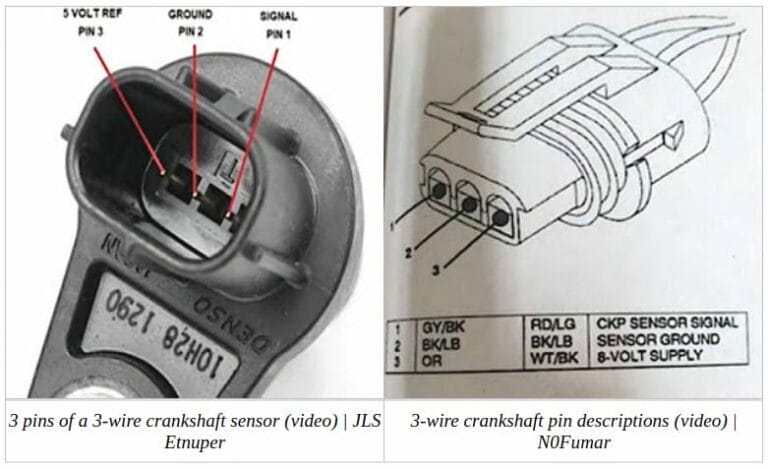
Power, ground, signal wiring, and connector integrity are checked as applicable.
Symptoms are reproduced
Intermittent problems are easier to confirm when the diagnostic test is performed under the conditions that trigger the fault.
Bad Crankshaft Sensor vs Other Common Misfire Causes
A misfire has many possible causes, so comparing the symptoms and diagnostic evidence is more reliable than assuming the crankshaft sensor is responsible. Ignition faults are especially common possibilities, but fuel and mechanical problems must also be considered.
The pattern of the misfire can provide a useful clue. A cylinder-specific misfire may point toward a component associated with that cylinder, while irregular engine-wide symptoms combined with crankshaft signal faults can make sensor or synchronization problems more relevant.
Source: hitchesguide.com
Spark plug problem
A worn, fouled, damaged, or incorrectly gapped spark plug can cause a cylinder to misfire.
Ignition coil problem
A weak or failed coil can prevent proper ignition on the affected cylinder.
Fuel injector problem
A restricted, electrically faulty, or otherwise malfunctioning injector can cause poor combustion.
Vacuum or intake leak
Unmetered air can create an air-fuel imbalance and contribute to rough running or misfire.
Low compression
Mechanical problems involving valves, piston rings, or other engine components can prevent normal combustion.
Camshaft or timing problem
Incorrect valve timing or a camshaft position problem can disrupt engine synchronization and produce misfire symptoms.
When Is It Safe to Drive With a Suspected Crankshaft Sensor Problem?
Driving with a suspected crankshaft sensor fault depends on the symptoms and severity. A vehicle that is stalling, losing power, or misfiring severely should not be treated as a normal daily driver because unpredictable engine behavior can create a safety risk.
A flashing check engine light, repeated stalling, severe shaking, or major loss of power is a reason to stop driving when it can be done safely and arrange professional diagnosis or towing. A vehicle with a steady warning light and mild symptoms still needs diagnosis, but the appropriate next step depends on the vehicle and the exact fault.
Do not work around a running engine or rotating components unless you have the proper tools, knowledge, and safe working conditions. Disconnecting electrical components incorrectly can also damage vehicle electronics.
Source: mechanicsdiary.com
Stop and seek help
Consider stopping when the engine repeatedly stalls, the vehicle becomes difficult to control, or the check engine light is flashing.
Arrange diagnosis
A qualified technician can test the sensor circuit, signal, and related engine systems when the cause is unclear.
Avoid guessing with parts
Replacing multiple sensors or ignition parts without testing can increase repair costs without identifying the original fault.
Frequently Asked Questions
Q
Can a bad crankshaft sensor cause a misfire code?
Yes, a crankshaft sensor problem can contribute to misfire behavior and may also trigger a crankshaft-related diagnostic code. The exact codes depend on the vehicle and the nature of the failure.
A misfire code alone does not prove that the crankshaft sensor is the cause. The sensor signal, wiring, ignition system, fuel system, and engine condition may all need to be checked.
Q
Can a bad crankshaft sensor cause multiple cylinder misfires?
It can contribute to multiple-cylinder or irregular misfire symptoms because the crankshaft signal is used for engine-wide position and speed information. A synchronization problem can therefore affect more than one combustion event.
However, multiple-cylinder misfires can also result from fuel pressure problems, ignition faults, air-fuel issues, valve timing, or other engine-management problems.
Q
Will a bad crankshaft sensor always cause code P0335?
No. P0335 is associated with a crankshaft position sensor circuit malfunction, but sensor failures can present differently depending on the vehicle and fault conditions. Other crankshaft, camshaft, synchronization, or misfire codes may also be stored.
A vehicle can also have a crankshaft-related physical or electrical problem without producing exactly the code you expect. Use the diagnostic procedure for the specific vehicle.
Q
Can a bad crankshaft sensor cause rough idle?
Yes, an unreliable crankshaft position signal can contribute to rough or unstable engine operation. The effect depends on how the vehicle’s engine control system responds to the faulty signal.
Rough idle has many other possible causes, including ignition problems, vacuum leaks, fuel issues, throttle problems, and mechanical faults.
Q
How do I know if the crankshaft sensor or camshaft sensor is bad?
The two sensors have different roles, and symptoms can overlap. The most reliable approach is to scan the vehicle, review the stored and pending codes, inspect the wiring, and test the relevant signals according to the manufacturer’s procedure.
Do not replace one sensor simply because the symptoms sound similar to a generic online symptom list. The exact vehicle system and diagnostic evidence should determine the repair.
Q
Can a bad crankshaft sensor cause a car not to start?
Yes. If the engine control module cannot obtain the crankshaft position information it requires, the engine may crank without starting. A completely failed signal can be more disruptive than an intermittent fault.
A no-start condition still has many possible causes, including battery, starter, fuel, ignition, immobilizer, wiring, timing, and compression problems.
✦ Wrapping Up
Conclusion
A bad crankshaft position sensor can cause a misfire because the engine control module relies on crankshaft position and speed information to manage engine operation. A faulty signal can also contribute to rough running, hesitation, stalling, hard starting, and a no-start condition.
The key point is that a misfire does not automatically mean the crankshaft sensor needs replacement. Wiring, connectors, the crankshaft sensing target, ignition components, fuel delivery, compression, valve timing, and other sensors can create similar symptoms.
💡 Key Takeaway
If your vehicle is misfiring and you suspect the crankshaft sensor, scan for codes first, inspect the sensor circuit, review live data when available, and follow the vehicle-specific diagnostic procedure before replacing the sensor.
Ethan Brooks is an automotive writer at Auto News 7, covering car news, vehicle maintenance, new model updates, recalls, and practical buying guides. He focuses on clear, useful information that helps drivers understand their vehicles and make better ownership decisions.
Learn how to install crankshaft position sensor correctly with step-by-step instructions, tools, safety tips, troubleshooting advice, and signs of a successful installation.
Learn how to test a GM crankshaft position sensor with a multimeter, scan tool, and visual checks. Find bad sensors, wiring faults, and signal problems safely.
Can a crankshaft position sensor cause transmission problems? Learn how a faulty CKP sensor can affect shifting, symptoms to watch for, and how to diagnose it.