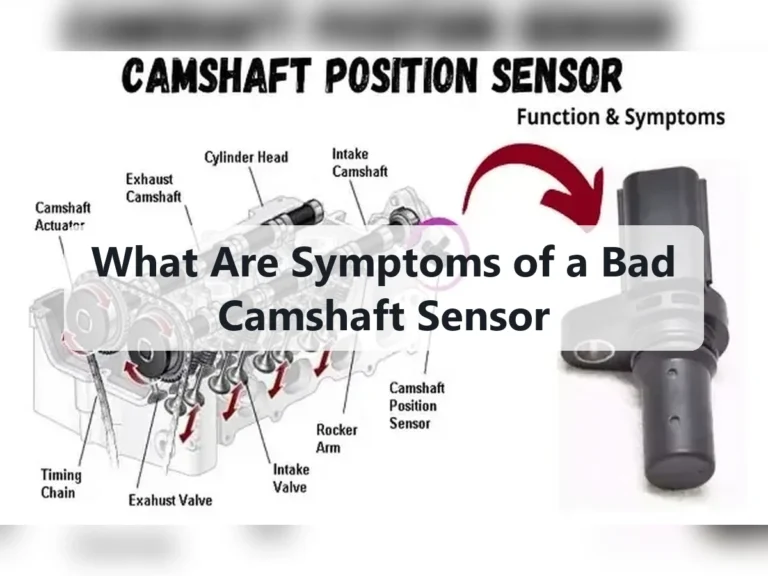
Yes. A faulty camshaft position sensor can contribute to an engine misfire when its signal becomes inaccurate, intermittent, or completely unavailable to the engine computer.
For drivers in the United States, especially those troubleshooting a 1996-or-newer OBD-II vehicle, a misfire may appear along with a Check Engine Light, rough idle, hesitation, hard starting, stalling, or trouble codes related to the camshaft position sensor. The sensor itself does not create the spark or inject fuel, but the engine control module relies on its signal to determine camshaft position and coordinate important engine-management functions.
The important point is that a misfire does not automatically prove the camshaft position sensor is bad. Worn spark plugs, failing ignition coils, fuel injector problems, vacuum leaks, low compression, incorrect valve timing, damaged wiring, and crankshaft position sensor faults can produce similar symptoms. A good diagnosis therefore checks the sensor circuit and engine timing information before replacing parts.
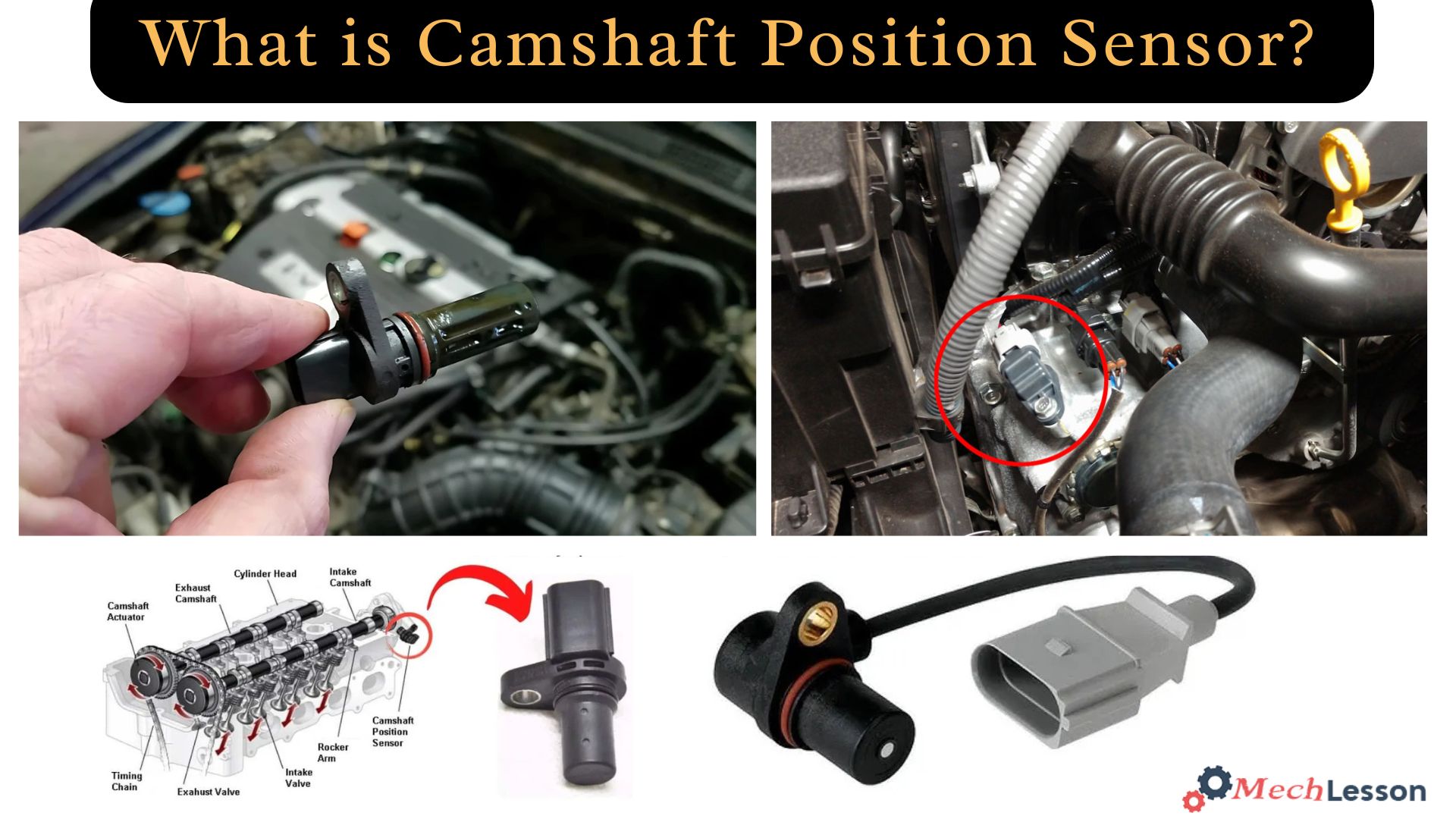
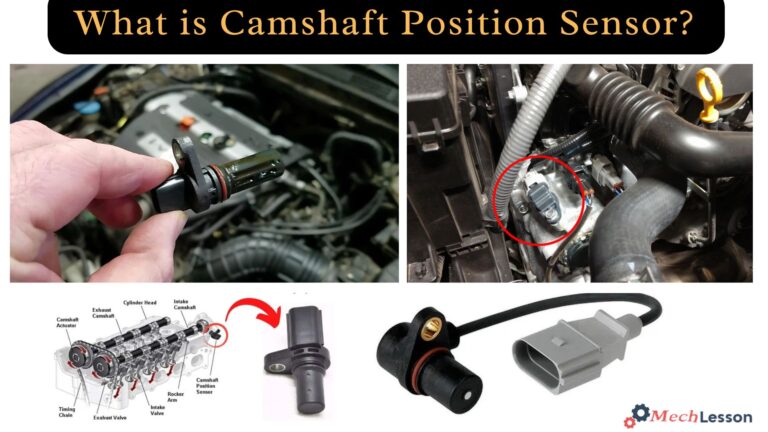
Source: mechlesson.com
Can a Camshaft Position Sensor Cause Misfire?
Yes, a camshaft position sensor can cause a misfire under certain conditions. The sensor monitors the rotational position of the camshaft and sends that information to the engine control module, commonly called the ECM or PCM. The computer combines the camshaft signal with information from the crankshaft position sensor and other inputs to manage combustion events.
When the camshaft position signal becomes inaccurate, disappears intermittently, or no longer agrees with the crankshaft signal, the computer may have difficulty identifying the correct cylinder position. Depending on the vehicle and engine-management strategy, that can disturb sequential fuel injection, ignition synchronization, variable valve timing control, or the computer’s ability to correctly recognize combustion events.
The result may be rough running that feels like a conventional ignition misfire. Some engines continue running by using a substitute strategy when the camshaft signal fails, while others may become difficult to start, stall, lose power, or refuse to start altogether.
This is why the answer to can a camshaft position sensor cause misfire is yes, but with an important qualification: the sensor is only one of many possible causes. The symptoms and diagnostic codes must be evaluated together.
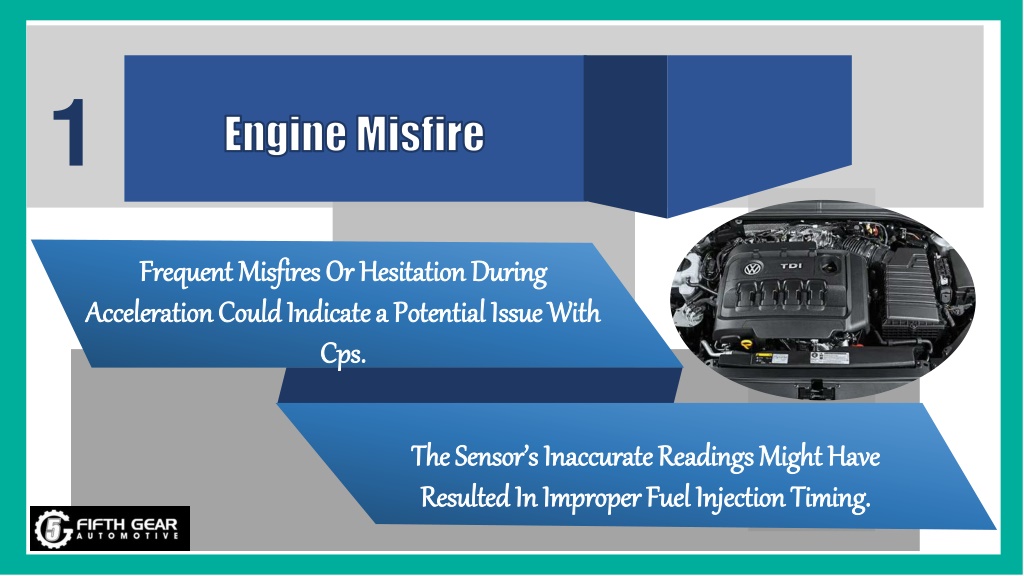
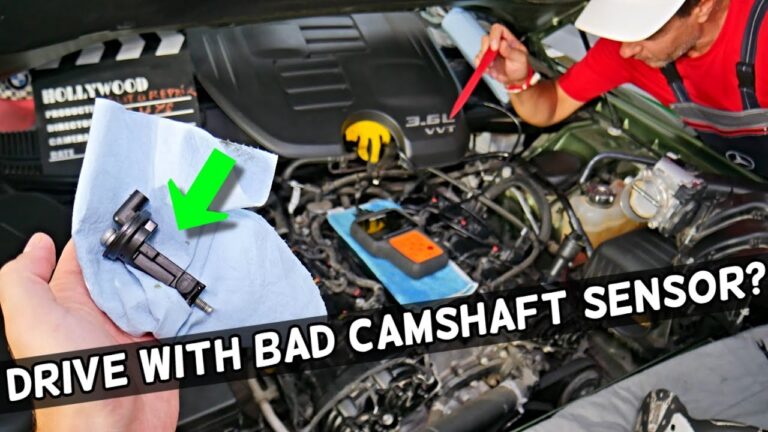
Source: slideserve.com
Incorrect timing information
An inaccurate camshaft signal can prevent the PCM from determining cylinder position as precisely as intended.
Intermittent signal loss
A sensor that cuts in and out may cause sporadic hesitation, stumbling, stalling, or misfire-like operation.
Cam and crank disagreement
If camshaft and crankshaft signals are no longer properly synchronized, the underlying problem may be electrical or mechanical.
Why the Camshaft Signal Matters
The camshaft turns at half crankshaft speed on a four-stroke engine. Its position tells the computer which stroke a particular cylinder is on. That information is especially useful for identifying the compression stroke so the control system can coordinate cylinder-specific events.
Modern engines may also use camshaft information to control variable valve timing. A bad sensor signal can therefore affect more than one operating strategy, depending on engine design.
How a Bad Camshaft Position Sensor Can Lead to a Misfire
A camshaft position sensor usually does not cause a misfire by directly stopping a spark plug from firing. Instead, it supplies position information that the engine computer uses as part of its synchronization strategy.
A healthy sensor produces a predictable electrical signal as a reluctor or trigger wheel moves past the sensing element. The PCM compares that pattern with the crankshaft position signal. If the cam signal becomes distorted, delayed, intermittent, or absent, engine synchronization can become less reliable.
On some vehicles, the computer may enter a fallback strategy and continue operating. That can create longer cranking, reduced performance, rough idle, poor throttle response, or occasional misfires. Other vehicles may stall or fail to start when the signal is lost.
The exact behavior varies considerably by manufacturer, model year, engine family, sensor type, and PCM programming. That variation is one reason a symptom alone should never be treated as proof that the sensor needs replacement.
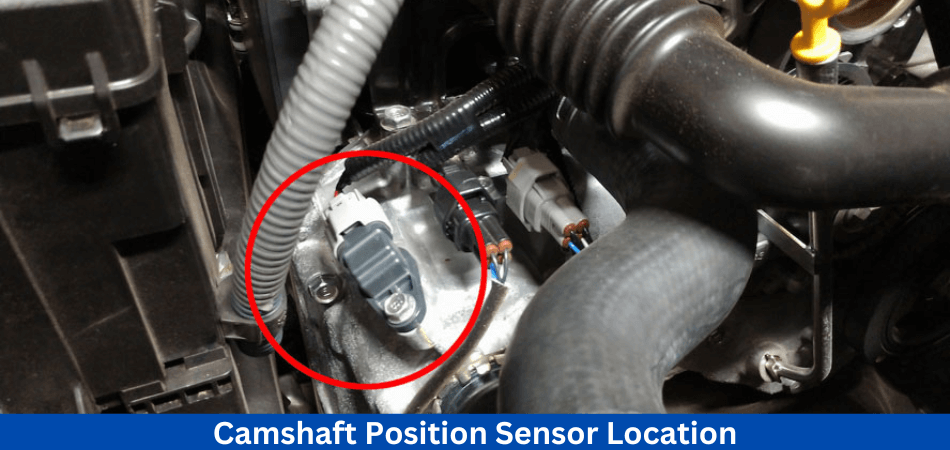
Source: smartvehiclecare.com
Fuel injection synchronization
Camshaft information can help the PCM identify individual cylinders for sequential fuel delivery.
Ignition coordination
The PCM may use cam and crank information together when determining engine position and combustion timing.
Variable valve timing
On engines with variable cam timing, camshaft position feedback helps the computer monitor commanded versus actual camshaft movement.
An Intermittent Sensor Can Be Harder to Diagnose
A completely failed sensor may produce a consistent no-start condition or a persistent diagnostic code. An intermittent sensor or damaged connector can be more difficult because the vehicle may run normally for long periods and misfire only when hot, during acceleration, after hitting a bump, or during certain engine-speed ranges.
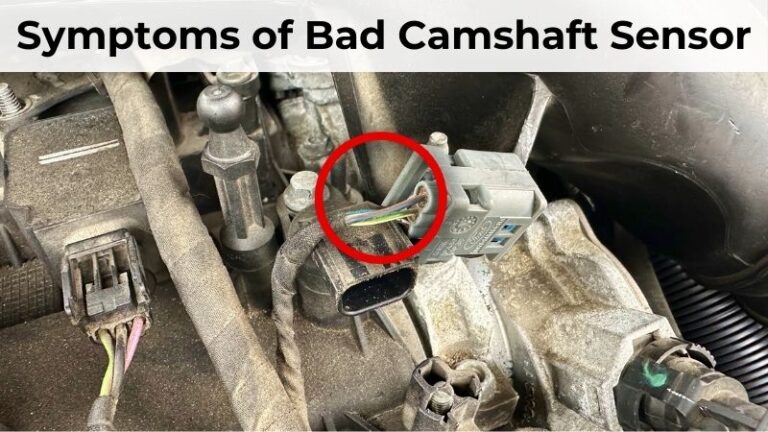
Heat-sensitive internal electronics, loose terminals, oil contamination, damaged insulation, corrosion, and wiring movement can all create intermittent faults.
Symptoms of a Bad Camshaft Position Sensor
Misfiring is only one possible symptom of a faulty camshaft position sensor. Looking for a combination of symptoms is more useful than focusing on a single sign.
A vehicle may develop an extended crank because the PCM needs additional engine revolutions before it can determine position using alternative information. Rough idle or hesitation may appear when the cam signal becomes unstable. Complete signal loss can sometimes cause stalling or a no-start condition.
A Check Engine Light is also common. Codes in the P0340 family generally point toward camshaft position sensor circuit or performance problems, although their exact definitions and diagnostic procedures vary by vehicle.
Source: nextgentechtrends.com
Engine misfire
The engine may stumble, shake, hesitate, or run unevenly.
Hard or extended starting
The starter may crank longer than normal before the engine begins running.
Rough idle
Engine speed may fluctuate or the vehicle may shake while stopped.
Hesitation
Acceleration may feel delayed, uneven, or interrupted.
Reduced engine power
The PCM may use a backup strategy that limits normal performance.
Stalling
An intermittent loss of synchronization information may cause the engine to shut off.
No-start condition
Certain engine-management systems may not start normally if the camshaft position signal is unavailable.
Check Engine Light
A sensor circuit or correlation fault may store a diagnostic trouble code.
What Does the Misfire Feel Like?
A camshaft-sensor-related misfire can feel similar to many other engine faults. The vehicle may shake at idle, stumble when accelerating, surge at steady speed, or temporarily lose power.
That overlap is important because ignition coil failures and worn spark plugs are common causes of cylinder-specific misfires. Do not assume the camshaft sensor is responsible simply because the engine is shaking.
Camshaft Position Sensor Codes That May Appear With a Misfire
Diagnostic trouble codes can narrow the investigation, but a code describing the camshaft position sensor circuit does not mean the sensor itself is automatically defective.
P0340 is a generic OBD-II code indicating a camshaft position sensor circuit malfunction. The fault may be caused by the sensor, wiring, a connector, an open or short circuit, another engine-position input, or a less common control-module problem.
P0341 generally indicates that the camshaft position signal is outside the expected range or performance pattern. A damaged reluctor, electrical interference, poor connection, timing issue, or incorrect signal can potentially cause this condition.
Many engines also use separate codes for different banks and camshafts. For example, a dual-overhead-cam V6 or V8 may have multiple camshaft position sensors. Always identify the bank and sensor designation from vehicle-specific service information before replacing anything.
Source: storage.googleapis.com
P0340
Camshaft position sensor circuit malfunction on vehicles using the generic OBD-II definition.
P0341
Camshaft position sensor circuit range or performance fault.
P0300
Random or multiple-cylinder misfire detected.
P0301 through P0308 and similar codes
These normally identify a misfire associated with a specific cylinder number on applicable engines.
Cam and crank correlation codes
These may indicate that the relationship between crankshaft and camshaft position is outside the expected range.
A Camshaft Code Can Be a Symptom of Another Problem
One of the most important diagnostic cautions is that the presence of a camshaft code does not prove the sensor caused the misfire. Mechanical timing problems can produce abnormal cam-to-crank relationships even when the sensor is operating correctly.
A stretched timing chain, incorrectly installed timing belt or chain, damaged trigger wheel, faulty variable valve timing actuator, oil-pressure problem affecting cam phasing, or wiring interference can all change what the PCM sees.
How to Diagnose a Camshaft Sensor Misfire
The most reliable approach is to diagnose the misfire systematically rather than replacing the camshaft position sensor first. Start with information the vehicle has already recorded, then inspect simple electrical causes before moving into deeper mechanical testing.
Diagnostic procedures differ by vehicle, so factory service information or a reputable repair database should be used for connector pinouts, expected voltages, waveform specifications, resistance checks when applicable, and sensor-to-reluctor clearances.
Some camshaft position sensors are Hall-effect sensors that require a power supply, ground, and signal circuit. Other designs operate differently. Testing the wrong type with an inappropriate procedure can lead to a false diagnosis.
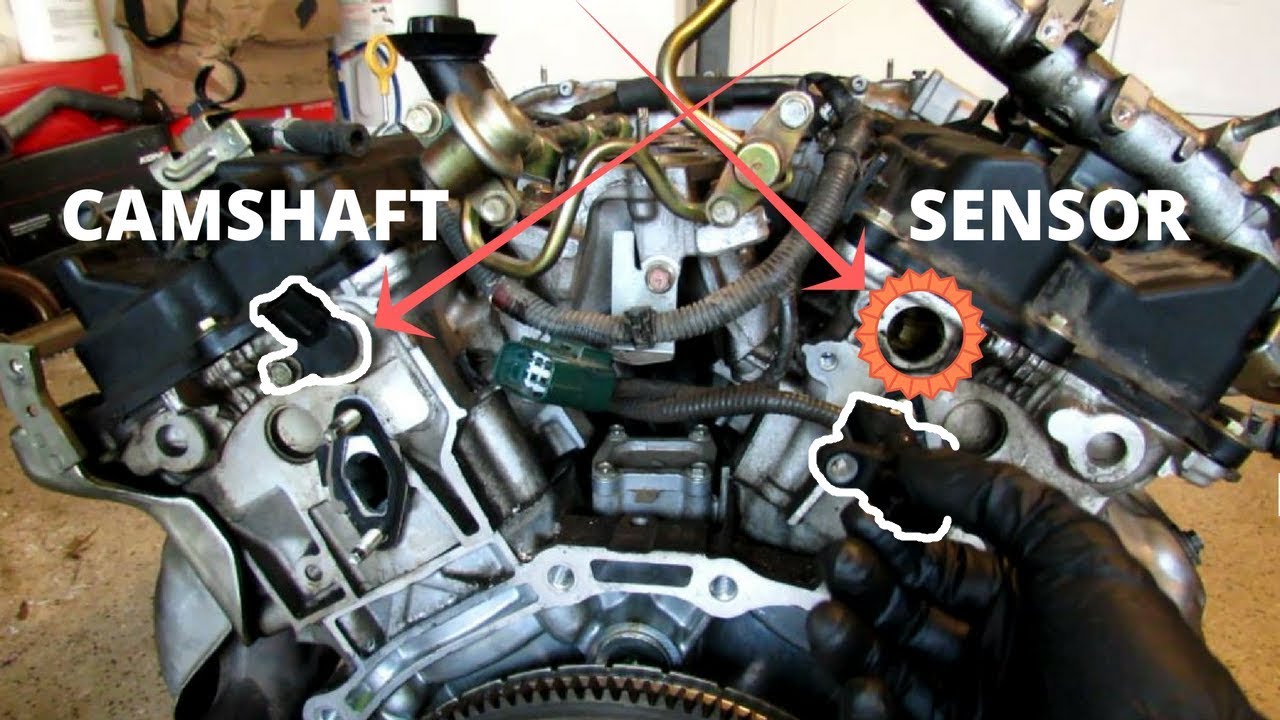
Source: youtube.com
Step 1: Scan all modules for trouble codes
Record all stored, pending, and permanent codes before clearing anything. Note whether you have misfire codes, camshaft circuit codes, crankshaft codes, or correlation codes.
Step 2: Check freeze-frame information
Look at engine speed, load, coolant temperature, vehicle speed, and other available data captured when the fault occurred. This can reveal whether the problem happens cold, hot, under load, or at a particular RPM.
Step 3: Inspect the sensor connector and harness
Check for loose terminals, broken locks, corrosion, oil contamination, melted insulation, rubbed-through wires, or wiring routed near sources of electrical interference.
Step 4: Verify power and ground
Use vehicle-specific specifications and an appropriate digital multimeter to confirm the sensor has the correct supply voltage and a sound ground circuit.
Step 5: Check the sensor signal
A scan tool or oscilloscope may be used to determine whether the camshaft signal remains stable while cranking and running.
Step 6: Compare camshaft and crankshaft signals
When correlation is suspected, waveform comparison can help distinguish an electrical sensor problem from incorrect mechanical timing.
Step 7: Test other common misfire causes
Inspect spark plugs, coils, injectors, air leaks, fuel delivery, compression, and valve timing before concluding that the sensor is responsible.
What If the Misfire Is Limited to One Cylinder?
A persistent misfire on only one cylinder often makes a cylinder-specific problem more likely than a global camshaft sensor failure. Inspect the spark plug, ignition coil, injector, wiring, compression, and possible intake leak affecting that cylinder.
A camshaft position problem can still be relevant if other camshaft or timing codes are present, but a single-cylinder fault deserves focused testing before replacing a shared engine-position sensor.
What If Multiple Cylinders Misfire?
A random or multiple-cylinder misfire can broaden the list of suspects. Common possibilities include incorrect valve timing, low fuel pressure, major vacuum leaks, shared ignition or electrical faults, contaminated fuel, camshaft or crankshaft position problems, and other engine-management issues.
The presence of a camshaft circuit or correlation code alongside a multiple-cylinder misfire makes camshaft signal diagnosis more relevant.
Camshaft Sensor Misfire vs Other Common Misfire Causes
Misfire symptoms overlap heavily, so comparing accompanying signs can prevent unnecessary sensor replacement. The following patterns are diagnostic clues rather than proof.
For example, a vehicle with P0340, extended cranking, intermittent stalling, and a damaged camshaft sensor harness presents a stronger case for a camshaft signal problem than a vehicle with only P0302 and a worn spark plug on cylinder 2.
Likewise, a correlation code combined with abnormal mechanical noise or known timing-chain wear deserves a mechanical timing inspection rather than automatically installing a new camshaft position sensor.
Source: mechlesson.com
Camshaft sensor or circuit
More likely when misfires occur with camshaft sensor codes, hard starting, stalling, intermittent signal loss, or obvious connector and wiring faults.
Spark plug
More likely when a cylinder-specific misfire is present and the plug is worn, fouled, cracked, incorrectly gapped, or contaminated.
Ignition coil
Often suspected when a cylinder-specific misfire follows the coil after coils are swapped between cylinders where that procedure is appropriate.
Fuel injector
Possible when ignition is healthy but one cylinder has abnormal fuel delivery or injector electrical operation.
Vacuum leak
Often produces lean operation and may affect idle more severely than operation under heavier load.
Mechanical timing
More likely when cam-to-crank correlation codes, low compression across related cylinders, timing noise, or abnormal camshaft data are present.
Compression problem
A burned valve, worn rings, damaged piston, valve-train fault, or head-gasket problem can produce a persistent misfire even when spark and fuel are available.
Important Correction: A Sensor Code Does Not Always Mean a Bad Sensor
Replacing a camshaft position sensor solely because a P0340 or P0341 code appears is a common diagnostic mistake. These codes describe what the PCM has detected in the circuit or signal behavior, not necessarily which physical component has failed.
A broken wire can eliminate the signal from a perfectly good sensor. A loose connector terminal can create an intermittent open circuit. A damaged reluctor can change the expected signal pattern. Incorrect mechanical timing can make a valid camshaft signal disagree with the crankshaft position signal.
There is also an important reverse possibility: severe engine misfiring can sometimes interfere with diagnostic interpretation and may contribute to abnormal position-sensor-related codes on certain applications. The entire code set and operating symptoms should therefore be considered together.
The practical rule is simple: test the system represented by the code rather than treating the code as a direct parts-replacement instruction.
Can a Bad Camshaft Sensor Cause a Random Misfire?
Yes, it can contribute to random or multiple-cylinder misfires if the faulty signal disrupts an engine-management function shared across cylinders. However, P0300 or another random-misfire indication has many possible causes, so the camshaft sensor should not be singled out without supporting evidence.
A random misfire accompanied by a camshaft circuit code, intermittent stalling, long cranking, and unstable camshaft data is more suggestive of a camshaft position problem than P0300 by itself.
If no camshaft-related codes or signal abnormalities are present, common causes such as ignition faults, lean air-fuel mixtures, fuel-pressure problems, intake leaks, contaminated fuel, and mechanical issues may deserve attention first.
Can a Bad Camshaft Sensor Cause a Misfire on One Cylinder?
It is possible, but a consistent misfire isolated to one cylinder more often directs diagnosis toward something specific to that cylinder. That includes the spark plug, ignition coil, injector, injector wiring, compression, valve operation, or an intake leak near that cylinder.
If the vehicle has multiple camshaft position sensors and the affected bank shows additional camshaft-related codes, the sensor or associated timing system becomes more relevant. The engine layout matters, so bank and sensor identification should be verified before testing.
Will Replacing the Camshaft Position Sensor Fix the Misfire?
Replacing the sensor will fix the misfire only when testing shows that the sensor itself is the cause. A new sensor cannot repair damaged wiring, a corroded connector, a broken reluctor, incorrect mechanical timing, a failing crankshaft sensor, a bad ignition coil, or low compression.
If a known-good signal is restored after sensor replacement, the relevant codes remain cleared through the appropriate drive cycle, and the engine no longer misfires, the repair was successful. If the same fault immediately returns, further diagnosis is necessary.
Using the correct sensor for the exact year, make, model, engine, and sensor position is also important. Some engines use several physically similar camshaft sensors that are assigned to different banks or camshafts.
Replace the sensor when
Testing confirms correct power and ground, intact wiring, proper mechanical timing, and an incorrect or missing sensor output.
Do not replace it blindly when
The only evidence is a generic fault code without circuit testing.
Continue diagnosis when
The new sensor does not correct the code, waveform, starting problem, or misfire.
Is It Safe to Drive With a Camshaft Sensor Misfire?
Driving should be minimized until the cause is identified. A failing camshaft position signal can lead to unpredictable stalling, difficult restarting, poor performance, or worsening misfires.
The Check Engine Light behavior matters. A steady light generally means the PCM has detected a fault that should be diagnosed soon. A flashing Check Engine Light commonly indicates an active misfire serious enough that unburned fuel may overheat and damage the catalytic converter.
If the Check Engine Light is flashing, the engine is shaking severely, power drops suddenly, the vehicle repeatedly stalls, or you smell excessive raw fuel, stop driving when it is safe to do so and arrange diagnosis or towing.
Drivers should also avoid attempting electrical measurements around moving belts, pulleys, fans, or hot exhaust components unless they have the equipment and experience to work safely.
Steady Check Engine Light
Schedule diagnosis promptly and avoid unnecessary driving if the engine is running poorly.
Flashing Check Engine Light
Treat the condition as urgent because an active misfire can damage the catalytic converter.
Stalling in traffic
Discontinue driving because sudden engine shutdown can create a safety hazard.
What to Do After Replacing a Camshaft Position Sensor
After a confirmed faulty sensor has been replaced, verify the repair instead of assuming the job is complete. Make sure the connector is fully locked, wiring is routed away from hot or moving components, and any removed seals or O-rings are properly installed.
Clear diagnostic trouble codes only after recording the original information. Start the engine and observe whether hard starting, rough idle, hesitation, or misfires return. A scan tool can then be used to check pending codes and misfire data during a controlled test drive.
Some vehicles may require a manufacturer-specific relearn, synchronization, or adaptation procedure after certain engine-position or timing repairs. Follow service information for the exact vehicle rather than performing a generic relearn unnecessarily.
Confirm normal starting
The engine should start consistently without the previous extended cranking behavior.
Monitor misfire data
Check that cylinder misfire counts do not continue increasing during normal operation.
Rescan for codes
Look for returning sensor, correlation, or misfire codes after the repair.
Investigate persistent symptoms
If the misfire remains, continue testing ignition, fuel, compression, wiring, and mechanical timing.
FAQs About Can a Camshaft Position Sensor Cause Misfire
Q
Can a bad camshaft position sensor cause rough idle?
Yes. An inaccurate or intermittent camshaft position signal can contribute to unstable engine operation, including rough idle. However, vacuum leaks, dirty or faulty fuel injectors, ignition problems, incorrect valve timing, and compression issues can produce the same symptom.
Q
Can a camshaft position sensor cause P0300?
It can contribute to conditions that result in a P0300 random or multiple-cylinder misfire code, but P0300 alone does not identify the camshaft sensor as the cause. Look for supporting camshaft sensor codes, signal problems, hard starting, stalling, or correlation faults.
Q
Can a bad camshaft sensor cause the car not to start?
Yes. Some vehicles may experience extended cranking or a no-start condition when the PCM cannot obtain the camshaft position information it requires. Other vehicles can start using a fallback strategy, so behavior varies by engine-management system.
Q
Can a bad camshaft position sensor cause loss of power?
Yes. Incorrect camshaft position information may cause hesitation, poor acceleration, reduced power, or fallback operation. Loss of power can also result from ignition, fuel, airflow, exhaust, or mechanical engine problems.
Q
How do I know if the camshaft sensor or ignition coil is causing the misfire?
A cylinder-specific misfire that follows an ignition coil when the coil is moved to another cylinder strongly points toward the coil on vehicles where that test is appropriate. A camshaft sensor problem is more likely when the misfire accompanies camshaft circuit codes, hard starting, stalling, abnormal camshaft data, or a confirmed sensor signal fault.
Do not swap coils or components unless the engine design and service procedure allow it. Some ignition systems require different diagnostic methods.
✦ Wrapping Up
Conclusion
So, can a camshaft position sensor cause misfire? Yes. A faulty, intermittent, or inaccurate camshaft position signal can disrupt engine synchronization and contribute to rough running, hesitation, hard starting, stalling, loss of power, and misfires.
However, a misfire or P0340-family trouble code is not enough to condemn the sensor. The same symptoms can come from damaged wiring, ignition coils, spark plugs, injectors, vacuum leaks, crankshaft position problems, low compression, variable valve timing faults, or incorrect mechanical timing.
The most reliable repair strategy is to scan the vehicle, record the codes and freeze-frame information, inspect the sensor circuit, verify power and ground, evaluate the signal, check cam-to-crank correlation when needed, and rule out other common misfire causes before installing a new sensor.
💡 Key Takeaway
If your vehicle has both a misfire and a camshaft-related trouble code, inspect and test the camshaft position sensor circuit before replacing parts. If the Check Engine Light is flashing, the engine stalls unpredictably, or the misfire is severe, stop driving and have the vehicle diagnosed promptly.
Ethan Brooks is an automotive writer at Auto News 7, covering car news, vehicle maintenance, new model updates, recalls, and practical buying guides. He focuses on clear, useful information that helps drivers understand their vehicles and make better ownership decisions.