What Are Symptoms of a Bad Camshaft Sensor: Explained Clearly
Common signs include hard starting, stalling, rough running, poor acceleration, reduced fuel economy, and a check-engine light.
A failing camshaft position sensor can make a vehicle feel unreliable before it leaves a clear pattern. One day the engine may crank longer than usual; the next, it may hesitate, stall at a stop, or restart only after cooling down.
The uncertainty is understandable because many faults can create similar symptoms. A weak crankshaft sensor, ignition problem, fuel-delivery issue, wiring failure, or low battery can imitate a camshaft sensor problem, so replacing the sensor based on one symptom alone can waste money. This guide examines “what are symptoms of a bad camshaft sensor” and explains the details that matter in practice.
This guide explains what are symptoms of a bad camshaft sensor why each symptom occurs which diagnostic trouble codes matter and how to separate a sensor fault from.
- ✓A bad camshaft sensor commonly causes starting trouble, stalling, misfires, hesitation, and a check-engine light.
- ✓Symptoms can overlap with crankshaft sensors, ignition components, fuel problems, timing faults, and damaged wiring.
- ✓An OBD-II code points toward a circuit or timing issue but does not automatically prove the sensor itself is defective.
- ✓Inspecting the connector and wiring, checking live data, and comparing camshaft and crankshaft signals can prevent unnecessary parts replacement.
- ✓Repeated stalling, severe misfires, or an engine that will not start should be diagnosed promptly.
What Are Symptoms of a Bad Camshaft Sensor?
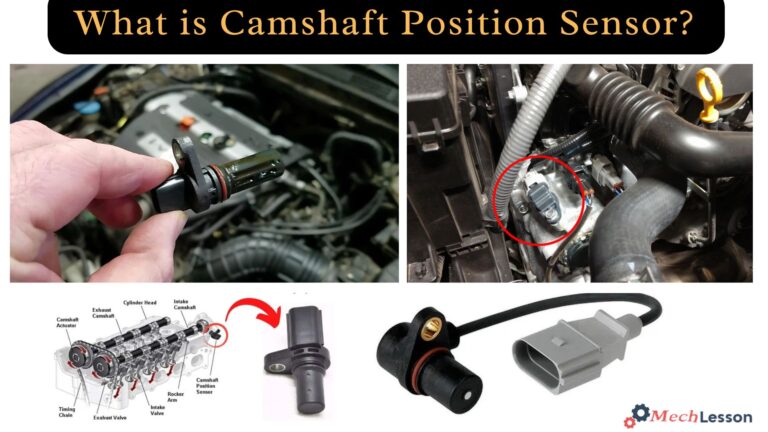
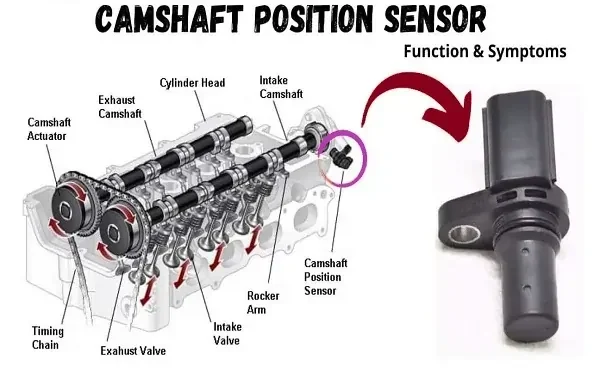
The camshaft position sensor monitors the camshaft s position and speed then sends that information to the engine control module ECM or powertrain control module PCM The computer.
When the signal becomes inaccurate intermittent or disappears the computer may switch to a backup strategy The engine may continue running but it can lose precise timing control.
- Starting changes: Longer cranking, intermittent no-start conditions, or starting only after several attempts.
- Engine behavior: Rough idle, hesitation, reduced power, misfires, or unexpected stalling.
- Warning indicators: A check-engine light, traction-control warning, or reduced-power message on some models.
- Fuel and emissions: Poor fuel economy, increased emissions, or an emissions-test failure.
Hard starting or intermittent no-start
A vehicle with a weak camshaft signal may crank normally but take several seconds to start. The problem can be worse when the engine is hot because internal sensor electronics or a cracked solder connection may fail with temperature changes.
Some vehicles will start using crankshaft information alone, while others require a valid camshaft signal for synchronization. That is why two cars with the same general sensor fault can behave differently: one may run poorly, and another may crank without starting.
Stalling and hesitation
If the signal drops out while driving, the computer may lose track of valve timing or injector sequencing. The result can be a brief stumble, a sharp hesitation when accelerating, or a complete stall as the vehicle approaches a stop.
Stalling in traffic deserves particular attention. A vehicle that restarts immediately may still have an intermittent electrical fault, and the condition can become a no-start without much warning.
How a Camshaft Sensor Failure Changes Engine Performance
The camshaft sensor does not mechanically control the camshaft. Instead, it reports what the camshaft is doing. The computer compares that information with the crankshaft signal and uses the relationship to determine when each cylinder is ready for fuel injection and ignition.
A degraded sensor may produce a signal that is weak, noisy, delayed, or missing only at certain engine speeds. Because the failure is not always constant, the engine can feel normal during one drive and then develop several symptoms during the next.
- Signal loss: A missing signal can cause hard starting, stalling, or a no-start condition.
- Incorrect synchronization: A disagreement between camshaft and crankshaft signals can cause timing-related fault codes.
- Backup operation: The computer may use a substitute strategy that keeps the engine running but reduces performance.
- Intermittent faults: Heat, vibration, moisture, and damaged wiring can make the problem appear and disappear.
Rough idle and engine misfires
Unstable camshaft information can cause fuel injection or ignition events to occur less precisely. At idle, where the engine has little momentum to smooth out irregular combustion, this may feel like shaking, surging, or a repeated stumble.
Misfires can also trigger a flashing check-engine light. A flashing light generally indicates that continued driving may damage the catalytic converter, especially when the engine is running very poorly. Reduce load and seek diagnosis rather than treating the warning as a minor sensor issue.
Weak acceleration and reduced power
Drivers often describe the vehicle as sluggish, flat, or unwilling to rev. The computer may deliberately limit power if it detects a synchronization problem, and variable valve timing may not operate correctly when camshaft position data is unreliable.
Reduced power is not proof of a bad sensor. A restricted catalytic converter, low fuel pressure, turbocharger problem, throttle fault, or mechanical timing issue can produce the same impression. The diagnostic process must compare the symptom with codes and measured data.
Poor fuel economy and unusual exhaust behavior
If injection timing becomes less accurate, the engine may use more fuel to produce the same work. Some drivers notice a fuel-economy drop, fuel smell, darker exhaust, or an emissions warning, although these signs are not present in every failure.
Fuel economy can change for many ordinary reasons, including cold weather, tire pressure, short trips, and driving style. Treat it as supporting evidence, not as a standalone test of the camshaft sensor.
Warning Lights and Diagnostic Trouble Codes
The check-engine light is one of the most common clues. The ECM turns it on when it identifies a problem with the camshaft sensor circuit, the signal, or the expected relationship between camshaft and crankshaft position.
An OBD-II scanner can retrieve the stored code and freeze-frame information. The code may identify a specific sensor bank or circuit, but it usually describes the system where the fault was detected—not necessarily the part that must be replaced.
- Circuit codes: These can indicate an open circuit, short, poor connection, damaged wiring, or a failed sensor.
- Performance codes: These suggest that the signal is implausible, unstable, or outside expected operating behavior.
- Correlation codes: These indicate disagreement between camshaft and crankshaft position signals and may involve mechanical timing.
- Multiple codes: A group of unrelated codes may point to low voltage, a shared ground, or a broader wiring problem.
Common code families
Depending on the vehicle, codes in the P0340-series often relate to camshaft position sensor circuits, while codes in the P0016 through P0019 range commonly concern camshaft-to-crankshaft correlation. Exact meanings vary by manufacturer, engine, bank, and sensor designation, so the vehicle-specific service information matters. This distinction matters when answering “what are symptoms of a bad camshaft sensor”.
A code such as “camshaft position sensor circuit malfunction” does not establish that the sensor is defective. The same code can result from corrosion in a connector, an open power supply, a poor ground, a broken signal wire, or a timing problem.
Why clearing the code is not a diagnosis
Clearing a code turns off the warning temporarily, but it does not repair the cause. If the fault is intermittent, the vehicle may seem fixed for several days before the light returns.
Stored and pending codes, freeze-frame data, and readiness monitors can provide more useful information than a simple code erase. Write down the code before clearing anything, particularly if another person will perform the diagnosis.
What Else Can Mimic a Bad Camshaft Sensor?
Many symptoms associated with a bad camshaft sensor are shared by other engine and electrical faults This is the central reason a parts-swapping approach can become expensive A.
Comparing the conditions under which the symptom appears can narrow the possibilities. A hot-only failure suggests a heat-sensitive electronic or wiring issue, while a constant rattle with a correlation code may raise concern about timing-chain wear or a variable valve timing fault.
- Crankshaft position sensor: It can cause similar stalling, no-start, and tachometer symptoms because the computer needs both engine-speed signals.
- Ignition faults: Worn spark plugs, failing coils, or poor grounds can create rough running and misfire codes.
- Fuel problems: Low fuel pressure, clogged injectors, or a failing pump can cause hesitation and hard starting.
- Mechanical timing: A stretched chain, damaged reluctor, or incorrect installation can create camshaft-correlation faults.
Camshaft sensor versus crankshaft sensor
The crankshaft sensor reports crankshaft position and engine speed. A failure may cause a sudden stall, a no-start condition, loss of the tachometer signal, or an engine that stops running once the sensor becomes hot.
The two sensors work as a coordinated pair. A scan tool may show that the camshaft signal is missing, but the underlying issue could be a weak crankshaft signal that prevents the computer from establishing synchronization.
Timing-chain and variable valve timing faults
Mechanical timing problems can move the camshaft out of its expected relationship with the crankshaft. A worn chain tensioner, jumped chain, damaged camshaft reluctor, or incorrect repair can create symptoms that resemble an electronic sensor failure.
Variable valve timing systems add another layer. Low oil level, incorrect oil viscosity, a sticking control solenoid, blocked oil passages, or a failed actuator can cause camshaft-position codes and poor performance without a defective position sensor.
Battery voltage and wiring faults
Low battery voltage during cranking can interfere with sensor readings and computer operation. Loose battery terminals, poor engine grounds, or charging-system problems may produce multiple warning lights and unrelated codes at the same time.
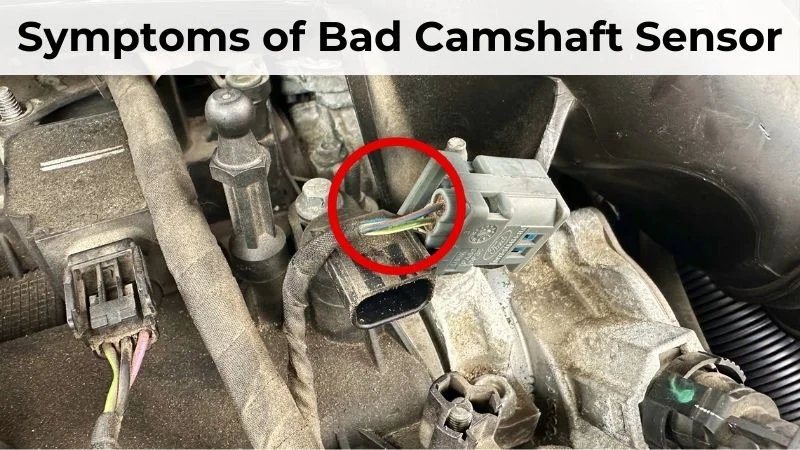
Inspect the harness near the sensor for oil contamination, chafing, melted insulation, stretched wires, and evidence of contact with hot exhaust components. A connector that looks attached may still have backed-out terminals or corrosion inside.
How to Diagnose the Problem Before Replacing the Sensor
Diagnosis should begin with basic evidence and progress toward electrical or waveform testing The exact procedure depends on the engine but the goal is consistent verify the complaint.
Do not probe wiring randomly with a test light or force a meter lead into a small terminal. Some circuits are low-voltage computer inputs, and careless testing can spread terminals or damage sensitive components.
- Record symptoms: Note whether the problem occurs cold, hot, during acceleration, at idle, or after rain.
- Scan first: Retrieve current, pending, and stored codes before disconnecting the battery.
- Inspect closely: Check the connector, harness routing, sensor mounting, oil leaks, and visible mechanical damage.
- Verify basics: Confirm battery condition, charging voltage, engine grounds, and the correct sensor location for the vehicle.
1. Confirm the symptom and scan the vehicle
Ask whether the engine cranks at normal speed, whether the tachometer moves during cranking, and whether the problem changes with engine temperature. These details can help distinguish a synchronization fault from a starter, battery, or fuel issue.
Scan for all relevant codes, not just the first one displayed. Record freeze-frame data such as engine speed, coolant temperature, and vehicle conditions when the code set.
2. Inspect the sensor and harness
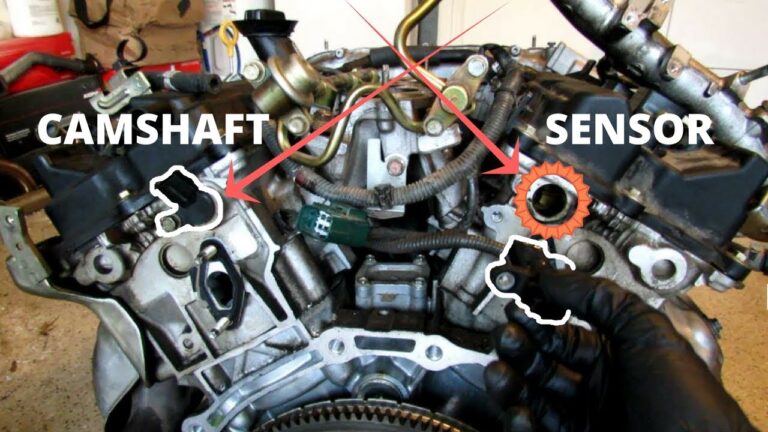
Locate the sensor using the vehicle’s repair information rather than assuming that the visible sensor is the only camshaft sensor. Some engines use more than one sensor, particularly engines with multiple banks or variable valve timing. Keep these limitations in mind when considering “what are symptoms of a bad camshaft sensor”.
Look for a damaged O-ring, loose retaining bolt, metal debris, oil intrusion, or a sensor that is not fully seated. A sensor installed too far from its trigger wheel may produce a weak or inconsistent signal.
3. Check power, ground, and signal circuits
Many sensors use a power supply, a ground, and a signal wire, but circuit design varies. Hall-effect sensors and magnetic sensors have different testing requirements, and the connector pinout must be identified before measurements are taken.
A voltage reading at a disconnected connector does not always prove that the circuit can carry current under operating conditions. Voltage-drop testing, terminal tension checks, and testing while the harness is gently moved can reveal faults that a static inspection misses.
4. Use live data or a scope when necessary
A capable scan tool may display camshaft synchronization camshaft position or a status such as in sync while the engine cranks or runs An oscilloscope can provide a.
Comparing camshaft and crankshaft waveforms is especially useful for correlation codes. A clean but incorrectly timed pattern may indicate mechanical timing, while a missing or erratic pattern may point toward the sensor, trigger wheel, wiring, or power supply.
5. Verify mechanical timing when evidence points there
If the signal circuits test correctly but a correlation code returns, mechanical timing deserves attention. Abnormal chain noise, low compression, recent timing work, or a code that returns immediately after replacement increases the need for mechanical inspection.
Timing-system work can require special tools and precise procedures. If the engine is an interference design, incorrect timing can cause internal damage, so avoid repeated cranking when a jumped chain is suspected.
When Is It Safe to Drive With These Symptoms?
The answer depends on how the engine is operating. A steady check-engine light with normal power and no stalling may allow a short, careful trip to a repair facility, but the vehicle can still lose power or fail to restart.
A flashing check-engine light severe shaking repeated stalling strong fuel odor backfiring or a no-start condition calls for more caution Continuing to drive during an active misfire can.
- Stop driving: Do so when the engine stalls repeatedly, the check-engine light flashes, or the vehicle has severe loss of power.
- Reduce risk: If movement is necessary, avoid highways, heavy traffic, steep grades, and towing until the problem is diagnosed.
- Protect the engine: Do not keep cranking an engine if mechanical timing failure is suspected.
- Use proper support: Have a disabled vehicle towed when it cannot restart reliably or cannot maintain safe speed.
Camshaft Sensor Replacement and Repair Considerations
Replacing the sensor is often straightforward when access is good, but the correct part and installation details matter. Some sensors are positioned near oil passages or timing components, and a damaged seal or incorrectly routed harness can cause a repeat failure.
Before installation, compare the replacement sensor with the original, confirm the connector and mounting shape, and inspect the trigger area for debris or damage. Follow the vehicle-specific tightening specification; over-tightening can damage the sensor or its mounting point.
- Find the root cause: Do not install a new sensor without checking the circuit, connector, and timing evidence.
- Protect the seal: Replace a damaged O-ring and use only the lubricant or installation method specified for that part.
- Route the harness: Keep wiring away from exhaust heat, moving belts, pulleys, and sharp brackets.
- Recheck the repair: Clear codes only after recording them, then verify starting, idle quality, road performance, and code status.
Can a sensor be cleaned?
Cleaning may remove oil or debris from the outside of a sensor or connector but it will not repair failed internal electronics a broken wire or a damaged trigger wheel Use an electronics-safe cleaner when appropriate and allow the connector.
Avoid abrasive tools and aggressive solvents that can damage plastic, seals, or the sensing element. If contamination returns, look for the oil leak or seal problem that caused it.
Does the computer need to be relearned?
Some vehicles can operate immediately after sensor replacement, while others require a camshaft or crankshaft position relearn with a scan tool. Certain engines also require procedures after timing-chain, actuator, or computer work.
Whether a relearn is necessary depends on the vehicle and the specific repair. If the warning light returns or the engine runs poorly after replacement, do not assume the new sensor is defective; check for a required relearn, wiring issue, or mechanical timing fault.
Frequently Asked Questions About Camshaft Sensor Symptoms
Can a bad camshaft sensor cause a car not to start?
Yes. Some engines can start using crankshaft information as a backup, but others need a valid camshaft signal to synchronize fuel injection and ignition. A no-start can also come from the crankshaft sensor, fuel system, ignition system, battery, or timing mechanism.
Will a bad camshaft sensor always turn on the check-engine light?
No. A fault that is intermittent, outside the computer’s detection conditions, or caused by a wiring problem may not immediately illuminate the light. Pending codes or stored data may still be present even when the warning is off.
Can I keep driving with a camshaft sensor code?
Possibly for a short distance if the light is steady the engine runs smoothly and the vehicle does not stall However the fault may worsen without warning Do.
What does a camshaft sensor problem feel like while driving?
Common sensations include hesitation, uneven acceleration, surging, rough idle, reduced power, or a sudden stall. Some failures cause no noticeable drivability symptom beyond a warning light, particularly when the computer can use a backup operating strategy.
Can low oil cause camshaft sensor symptoms?
Low oil does not necessarily damage the sensor directly, but it can interfere with variable valve timing and create camshaft-performance or correlation codes. Low oil pressure, dirty oil, a restricted passage, or a sticking control solenoid can imitate a sensor fault.
How can I tell whether the camshaft or crankshaft sensor is bad?
Symptoms alone rarely provide a dependable answer because the sensors work together. The most reliable distinction comes from vehicle-specific codes, live data, circuit tests, and comparison of the camshaft and crankshaft signals during cranking and engine operation.
Is replacing a camshaft sensor a permanent fix?
It is permanent only when the sensor is the actual cause. If the underlying problem is damaged wiring, poor power or ground, mechanical timing, oil contamination, or a faulty trigger wheel, replacing the sensor may provide no improvement or only a temporary one.
Conclusion
The most useful answer to what are symptoms of a bad camshaft sensor is that starting problems stalling rough running hesitation misfires weak acceleration poor fuel economy and.
Because an intermittent fault can become a no-start or create a hazardous stall, arrange diagnosis promptly when symptoms repeat. A flashing warning light, severe misfire, or suspected timing failure warrants stopping the vehicle and seeking professional assistance.
Scan for codes, record the conditions when the symptom occurs, inspect the sensor wiring and connector, and confirm the signal before replacing the part.