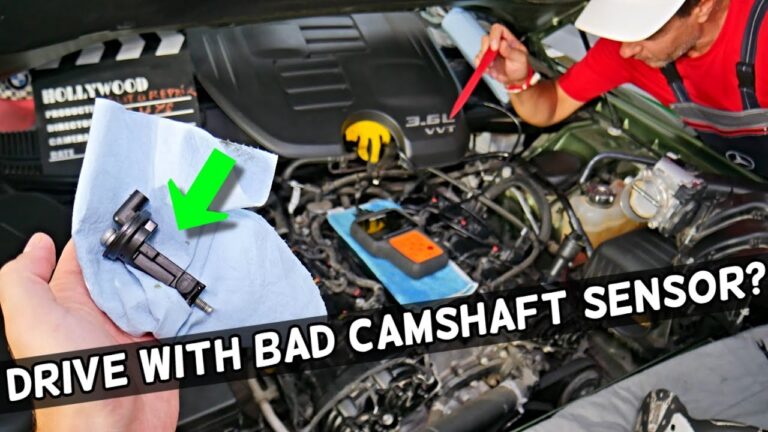
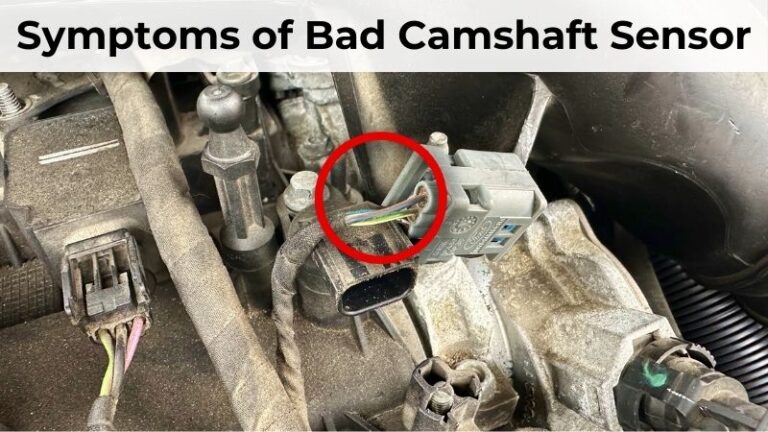
Yes, a faulty camshaft position sensor can indirectly contribute to engine knocking on some vehicles, but the sensor itself is rarely the direct source of a true knock.
For drivers in the United States, an unexpected metallic ping, rattle, or knock from the engine deserves attention because several very different problems can sound similar. A failing camshaft position sensor can disrupt information the engine control module uses for cylinder identification, ignition timing, fuel injection, and variable valve timing. Depending on the vehicle’s engine-management strategy, those disruptions may contribute to poor combustion, misfires, hesitation, or conditions that resemble or promote combustion knock.
However, replacing the camshaft sensor simply because the engine is knocking is usually a poor diagnostic shortcut. On many modern U.S.-market vehicles, the computer recognizes an unreliable camshaft signal, stores a diagnostic trouble code, and switches to a protective or fallback strategy. A timing-chain problem, incorrect variable valve timing, low oil pressure, carbon buildup, inappropriate fuel octane, overheating, a faulty knock sensor, or internal engine wear may be the real reason for the noise.
The most useful approach is therefore to determine whether the sound is true combustion knock, mechanical knocking, or timing-system rattle and then check whether camshaft position data is actually abnormal. This guide explains how the camshaft sensor can be involved, which symptoms point toward it, which problems commonly imitate sensor failure, and the safest troubleshooting order.
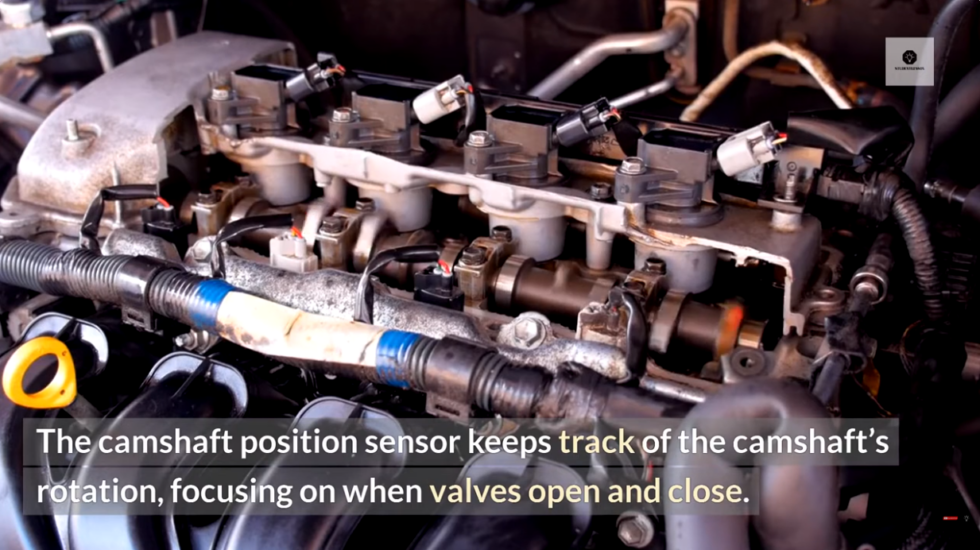
Source: volgenpower.com
Can Camshaft Sensor Cause Engine Knock Directly?
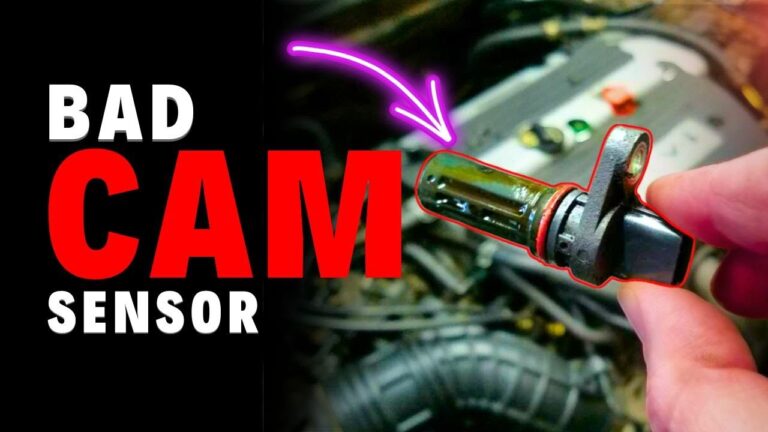
Usually, no. A camshaft position sensor is an electronic position sensor rather than a mechanical component that normally creates a knocking sound. Its job is to tell the engine control module where the camshaft is in its rotation so the computer can identify the correct cylinder and coordinate engine functions.
The important distinction is between causing the noise physically and contributing to the conditions that produce it. A defective sensor can send an incorrect, intermittent, or missing signal. Depending on the engine design, that information can affect sequential fuel injection, ignition control, variable valve timing, misfire identification, and cylinder-specific knock management.
That creates a plausible indirect path between a camshaft sensor fault and combustion problems. If engine-management calculations are disrupted, the engine may run roughly, hesitate, misfire, or operate with less precise timing. On some applications, the resulting combustion behavior may be heard as pinging or knocking.
Modern engine computers also have protective strategies. If the camshaft signal becomes implausible, the powertrain control module may substitute other information, disable certain variable-timing functions, reduce performance, or enter a failsafe mode. This is one reason a completely failed sensor does not automatically produce severe detonation.
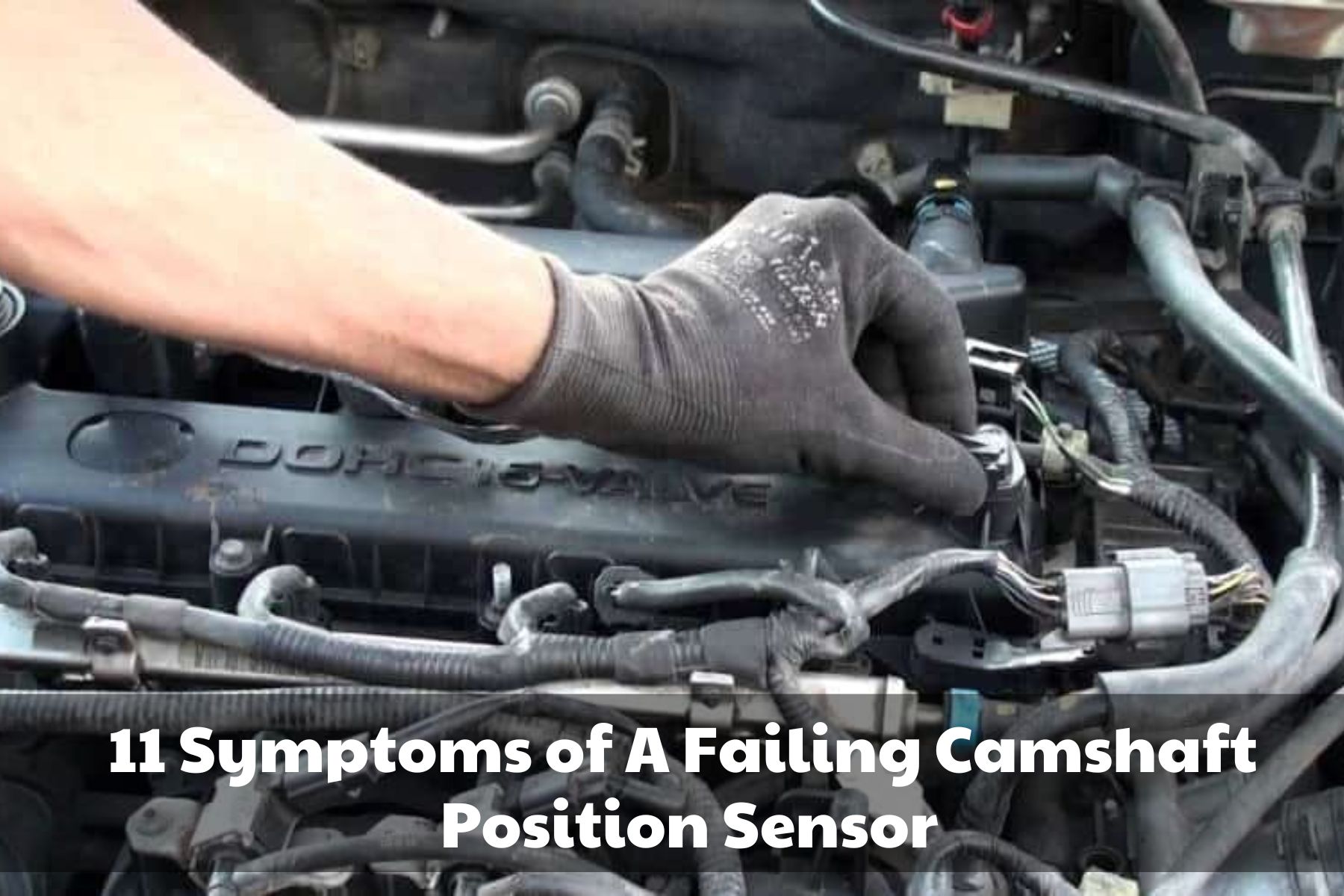
Source: storage.googleapis.com
Direct mechanical knock
The sensor normally cannot create a rod knock, bearing knock, piston slap, or timing-chain impact because it is not responsible for supporting or moving those mechanical parts.
Indirect combustion effect
Incorrect position information may interfere with engine-management decisions and contribute to abnormal combustion or rough running on certain engine designs.
Vehicle-specific behavior
Exactly what happens after signal loss depends on the engine, ECU programming, variable valve timing system, and whether redundant position information is available.
What the Camshaft Position Sensor Actually Does
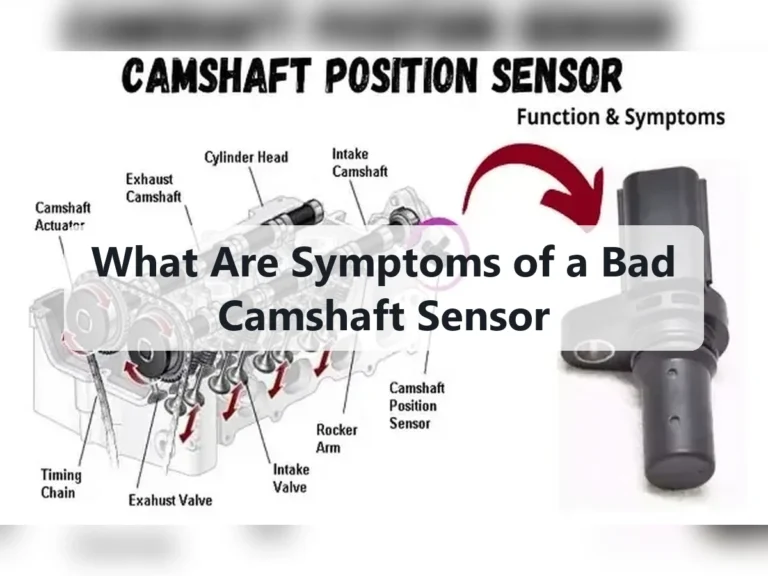
The camshaft position sensor monitors the rotational position of one or more camshafts. The ECU compares this information with the crankshaft position signal to establish engine phase and determine which cylinder is approaching its combustion event.
That synchronization helps the computer control functions such as sequential fuel injection and, on many engines, ignition timing and variable camshaft timing. Camshaft position data may also help the control system determine which cylinder is misfiring or experiencing knock.
Cylinder identification
The signal helps the ECU determine which cylinder is on the appropriate stroke.
Fuel control
Accurate engine position allows fuel injection to be synchronized with cylinder operation.
Variable valve timing
Many modern engines use camshaft position feedback to confirm commanded camshaft adjustment.
Why Camshaft Sensor Failure and Engine Knock Get Confused
The confusion often occurs because several timing-system problems can trigger camshaft sensor codes while also creating noise. A stretched timing chain, worn guide, weak tensioner, sticking camshaft phaser, incorrect oil pressure, or damaged reluctor can disturb the relationship between the camshaft and crankshaft.
The computer may then report a camshaft position or camshaft-to-crankshaft correlation fault. Replacing the sensor may not correct anything if the signal accurately reflects a mechanical timing problem.
How a Bad Camshaft Sensor Could Contribute to Knocking
A faulty camshaft sensor can potentially contribute to knocking when inaccurate camshaft information affects another system involved in combustion control. This relationship is indirect and varies substantially between engines.
The ECU normally uses several inputs rather than trusting the camshaft sensor alone. Crankshaft position, engine load, throttle position, airflow, coolant temperature, intake-air temperature, oxygen-sensor feedback, and knock-sensor information may all influence fuel and ignition strategy. Because of that redundancy, a single failed camshaft sensor often produces drivability symptoms before it produces obvious combustion knock.
The following mechanisms explain situations in which the sensor or its signal can still matter.
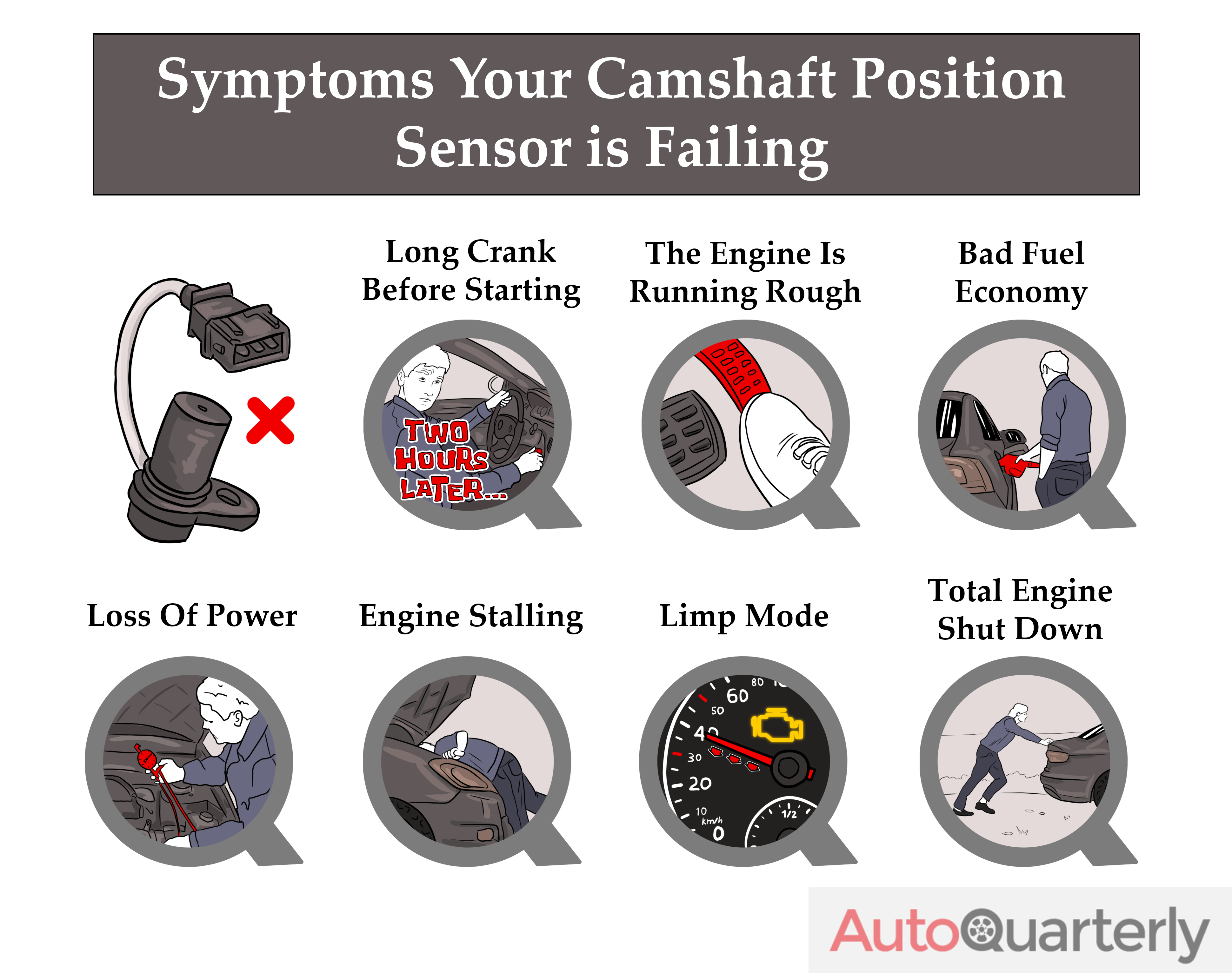
Source: autoquarterly.com
Ignition synchronization
An unreliable camshaft position reference can interfere with the ECU’s ability to identify the correct cylinder and manage combustion events accurately.
Variable valve timing
On engines with VVT, incorrect camshaft feedback can prevent proper control or confirmation of camshaft angle.
Cylinder-specific knock control
Some engine-management systems use camshaft position information with crankshaft and knock-sensor signals to determine which cylinder is knocking.
Misfire and rough combustion
Position-signal problems may cause or accompany misfires, hesitation, and unstable combustion that a driver can mistake for knock.
Incorrect Ignition Timing Versus Incorrect Camshaft Timing
Ignition timing and camshaft timing are related but different. Ignition timing describes when the spark plug fires relative to piston position. Camshaft timing describes when the valves open and close relative to crankshaft rotation.
A camshaft position sensor reports position; it does not physically move the camshaft. A failed sensor can interfere with electronic control, but a stretched chain, slipped timing component, malfunctioning cam phaser, or VVT oil-control problem can physically alter camshaft timing. Those mechanical or hydraulic faults are generally more concerning when a knock or rattle occurs together with camshaft correlation codes.
The Knock Sensor Has a Different Job
A knock sensor is specifically designed to detect characteristic engine-block vibrations associated with abnormal combustion. When the control module recognizes combustion knock, it can generally retard ignition timing or make other protective adjustments according to the vehicle’s calibration.
The camshaft position sensor and knock sensor therefore should not be treated as interchangeable components. One reports engine position; the other listens for vibration associated with knock. A vehicle can have a problem with either system, or both.
Symptoms That Make a Camshaft Sensor Problem More Likely
Engine knock alone is weak evidence of a bad camshaft sensor. Suspicion becomes stronger when the noise or poor running appears alongside symptoms normally associated with loss of camshaft position information.
A failing sensor may work intermittently as temperature, vibration, or wiring movement changes. This can create symptoms that appear only after the engine warms up or only during certain operating conditions. Electrical connector corrosion, wiring damage, oil contamination, sensor damage, and problems with the trigger wheel can produce similar signal faults.
The diagnostic pattern matters more than any single symptom. For example, a check-engine light with P0340 and repeated stalling is more consistent with a camshaft-position circuit problem than an isolated deep knock with normal engine operation.
Source: storage.googleapis.com
Check-engine light
A sensor or camshaft-position problem commonly causes the ECU to store a diagnostic trouble code.
Hard starting
The engine may crank longer because the computer has difficulty establishing engine phase.
Rough idle or misfire
Incorrect or intermittent timing information may contribute to unstable engine operation.
Hesitation during acceleration
A failing position signal can be associated with inconsistent acceleration or reduced response.
Stalling
Intermittent loss of a critical engine-position signal may cause some vehicles to stall.
Reduced power
The ECU may limit performance or disable certain functions after recognizing an unreliable signal.
Poor fuel economy
Loss of precise timing or fallback operation can reduce operating efficiency.
Camshaft Position Sensor Codes to Look For
On OBD-II vehicles, camshaft-position faults commonly appear within the P0340 through P0349 family, although the exact code depends on the circuit, sensor designation, bank, and type of failure. Variable valve timing and camshaft-to-crankshaft correlation problems may produce other codes, including members of the P0010 through P0029 range or correlation codes such as P0016 through P0019.
A code identifies the system in which the ECU detected a problem; it does not automatically identify the failed part. Wiring faults, poor connectors, incorrect mechanical timing, a damaged tone wheel, VVT faults, or another underlying problem can produce a code that mentions the camshaft position sensor.
P0340-family codes
These commonly relate to camshaft position sensor circuits or signal performance.
P0016-family correlation codes
These deserve particular attention because they may indicate that camshaft and crankshaft positions no longer agree as expected.
Multiple related codes
Several simultaneous timing or position codes can point toward a wiring, voltage, VVT, oil-pressure, or mechanical timing issue rather than one isolated sensor.
Other Causes of Engine Knock You Should Check
If an engine is knocking, several causes are more common or more dangerous than a camshaft position sensor. Identifying the type of sound is therefore one of the most valuable diagnostic steps.
Combustion knock, sometimes called spark knock or pinging, usually sounds like a metallic ping under load. Mechanical knock is generally deeper and may follow engine speed. Timing-chain or cam-phaser noise can sound more like a rapid rattle, especially during startup or at specific RPM ranges.
Those descriptions are useful clues rather than a diagnosis. Sound can travel through an engine and accessories, making its apparent location misleading.
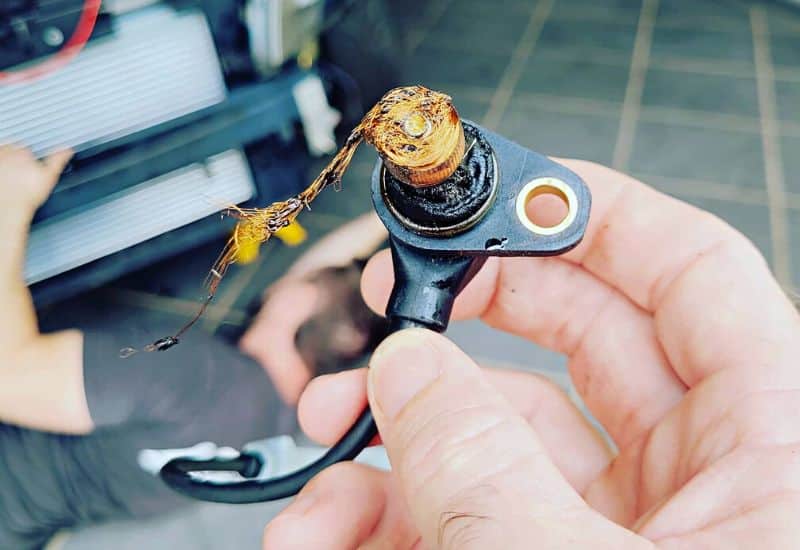
Source: safetyfic.com
Low-octane or unsuitable fuel
Fuel below the vehicle manufacturer’s required octane can make combustion knock more likely, particularly under load.
Excessive combustion-chamber temperature
Overheating, lean operation, or other abnormal conditions can increase susceptibility to detonation.
Carbon deposits
Heavy deposits can alter combustion-chamber conditions and may contribute to knock in susceptible engines.
Faulty knock detection
A knock sensor, its wiring, or associated circuitry can prevent the ECU from responding normally to combustion knock.
Variable valve timing problems
A sticking cam phaser, oil-control solenoid, contaminated oil passage, or unsuitable oil condition can interfere with camshaft control.
Timing-chain wear
A stretched chain, damaged guide, weak tensioner, or timing error may produce rattling and camshaft correlation faults.
Low oil pressure
Insufficient oil pressure can affect hydraulic tensioners and VVT components and can also signal conditions capable of causing serious internal engine damage.
Internal engine wear
Connecting-rod bearings, crankshaft bearings, pistons, wrist pins, and other mechanical parts can create knocking noises unrelated to the camshaft sensor.
Knock, Ping, Tick, and Rattle Are Not the Same
A light metallic ping heard mainly while accelerating uphill is different from a heavy lower-engine knock that becomes louder as load increases. A fast ticking sound near the cylinder head can come from valvetrain or injector operation, while a brief startup rattle may point toward chain tension or cam-phaser behavior.
If the sound began suddenly and is loud, persistent, or accompanied by low oil pressure, overheating, misfiring, or substantial power loss, avoid assuming that an inexpensive sensor is responsible.
Why a Timing Problem Can Look Like a Bad Sensor
The camshaft sensor reports what the camshaft is actually doing. If a timing chain stretches or a cam phaser fails to reach its commanded position, the ECU may see camshaft data that does not agree with crankshaft position or commanded timing.
That makes the sensor part of the diagnostic evidence without making the sensor the root cause. This distinction is particularly important when correlation codes, startup rattles, VVT codes, or abnormal camshaft-angle readings occur together.
How to Diagnose Camshaft Sensor Problems and Engine Knock
Diagnose the problem in an order that separates electronic faults from mechanical timing problems before replacing parts. For most vehicle owners, an OBD-II scan is the best starting point because it shows whether the ECU has detected camshaft, crankshaft, VVT, misfire, or knock-related faults.
U.S.-market gasoline vehicles from the OBD-II era provide standardized diagnostic access through the data-link connector, although manufacturer-specific data and test procedures vary. A basic reader can retrieve codes, while a capable bidirectional scan tool may also show camshaft angles, commanded versus actual VVT position, misfire counts, ignition correction, and other useful live data.
Do not erase codes before recording them. Freeze-frame information can show engine speed, load, temperature, and operating conditions when a fault was detected, which may help reproduce an intermittent problem.
Source: storage.googleapis.com
Step 1: Identify the noise
Determine whether the sound resembles light combustion ping, timing-system rattle, valvetrain ticking, or a deeper internal-engine knock.
Step 2: Scan for stored codes
Record all current, pending, and permanent codes where supported, along with available freeze-frame data.
Step 3: Inspect the sensor and wiring
Look for damaged insulation, loose terminals, corrosion, oil intrusion, broken connectors, poor grounds, and physical sensor damage.
Step 4: Check engine oil
Confirm the level is correct and investigate low pressure, severe contamination, or an incorrect oil condition because VVT and chain tension systems may depend on proper oil supply.
Step 5: Review camshaft and crankshaft data
A technician can compare position signals and commanded versus actual camshaft angle where the scan tool and vehicle support those parameters.
Step 6: Test the signal
When necessary, verify supply voltage, ground, wiring continuity, and sensor waveform according to the vehicle manufacturer’s procedure.
If camshaft operation appears normal, investigate fuel quality, engine temperature, mixture control, knock-sensor operation, deposits, and internal mechanical causes.
Do Not Replace the Sensor Based on a Code Alone
A trouble code is a starting point, not a parts order. The ECU knows that a signal is absent, intermittent, implausible, or out of the expected relationship; it does not necessarily know whether the sensor itself, the wiring, the trigger wheel, a VVT component, or mechanical timing caused that condition.
Replacing a sensor without checking these possibilities can temporarily clear the warning light without correcting the underlying fault, or it may make no difference at all.
When an Oscilloscope Is Useful
An oscilloscope can show whether the camshaft sensor is producing the expected electrical waveform while the engine cranks or runs. Technicians can also compare camshaft and crankshaft waveforms to evaluate synchronization.
Waveform testing is especially useful for intermittent faults that a resistance check or simple voltage measurement may miss. Correct wave shape, voltage, phase relationship, and test procedure depend on the vehicle, so manufacturer service information should be used.
Signs the Repair Was Successful
After correcting the actual fault, the engine should start and run consistently, relevant live-data values should behave normally, and the original trouble code should not return after the required drive cycle or verification procedure.
Some vehicles may require a relearn, synchronization, or manufacturer-specific procedure after sensor or timing-system work. Follow the repair information for the exact year, make, model, and engine rather than assuming every replacement is plug-and-play.
Can You Keep Driving If the Engine Knocks and a Camshaft Code Appears?
Whether driving is reasonable depends on the severity and cause of the noise, not simply on the camshaft sensor code. A mild intermittent sensor fault that causes a warning light may be very different from a timing chain that is about to jump or an internal bearing that has lost lubrication.
A flashing check-engine light usually indicates a severe misfire that can overheat and damage the catalytic converter. Likewise, an oil-pressure warning combined with knocking can indicate a lubrication failure capable of causing rapid internal engine damage.
If the engine develops a loud knock, major power loss, severe rattling, overheating, an oil-pressure warning, or a flashing check-engine light, minimize operation and arrange proper diagnosis. Continuing to drive simply to see whether the sound disappears can turn a repairable timing or lubrication problem into major engine damage.
Source: hitchesguide.com
Stop and investigate promptly
Use extra caution with a deep knock, loud timing rattle, oil-pressure warning, overheating, or sudden major change in engine behavior.
Avoid heavy engine load
Hard acceleration and high load can increase combustion pressure and may worsen genuine detonation or an existing mechanical problem.
Do not clear evidence prematurely
Record trouble codes and freeze-frame information before disconnecting the battery or clearing the ECU memory.
Use the correct repair information
Sensor wiring, expected waveforms, timing procedures, and relearn requirements vary by engine.
When Professional Diagnosis Makes Sense
Professional diagnosis is appropriate when the noise is severe, correlation codes are present, the engine has variable valve timing faults, the sensor signal needs oscilloscope analysis, or mechanical timing must be verified. Timing-system inspection can require substantial disassembly and engine-specific procedures.
A technician should also investigate promptly if the engine knock occurs with low oil pressure or if metal is found in the oil. Those findings move the problem beyond a simple position-sensor diagnosis.
What to Check After Replacing a Camshaft Sensor
If a verified faulty sensor has been replaced but the knock or trouble code remains, recheck wiring and connector condition before assuming the new part is defective. Confirm that the correct sensor was installed and seated properly, then determine whether a relearn procedure is required.
Persistent correlation or VVT codes justify checking commanded and actual camshaft position, oil supply to the VVT system, control solenoids, cam phasers, and mechanical timing. Continued knocking after normal camshaft signals are confirmed should be diagnosed as a separate combustion or mechanical problem.
Frequently Asked Questions About Camshaft Sensors and Engine Knock
Q
Can a bad camshaft sensor make an engine sound like it is knocking?
It can contribute to rough running, misfires, hesitation, or abnormal combustion that may be interpreted as knocking. However, a distinct mechanical knock should not automatically be blamed on the sensor. Timing-chain, valvetrain, bearing, piston, fuel, and knock-control problems should also be considered.
Q
Can a bad camshaft sensor change ignition timing?
Camshaft position information can be part of the data the ECU uses to identify cylinders and coordinate ignition and fuel events. When the signal fails, the effect depends on the vehicle’s engine-management strategy. Some systems use substitute information or a failsafe mode rather than continuing normal operation with unreliable timing data.
Q
Can a bad camshaft sensor cause a misfire?
Yes. A faulty camshaft position signal can be associated with misfires, rough idle, hesitation, poor acceleration, or reduced engine power. A misfire still has many other possible causes, including ignition coils, spark plugs, injectors, compression problems, vacuum leaks, and incorrect mechanical timing.
Q
Can a timing chain cause a camshaft sensor code and knocking noise?
Yes. A stretched chain, failing tensioner, worn guide, slipped timing component, or cam-phaser problem can alter the relationship between camshaft and crankshaft position. The ECU may then store camshaft or correlation codes while the timing components create a rattle or other abnormal noise. This is one reason the sensor should not be replaced solely because its name appears in a code description.
Q
Will replacing the camshaft sensor stop engine knock?
Only if testing confirms that a faulty camshaft sensor or its signal is actually contributing to the problem. Replacing it will not repair low oil pressure, worn bearings, a stretched timing chain, faulty VVT hardware, excessive combustion temperatures, unsuitable fuel, carbon deposits, or another independent source of knock.
Q
What codes are associated with a bad camshaft position sensor?
Common OBD-II camshaft position sensor faults fall within the P0340 through P0349 range, although vehicles may store additional manufacturer-specific codes. Camshaft-to-crankshaft correlation problems can produce codes such as P0016 through P0019. Always diagnose the complete code and its test criteria rather than treating the code number as proof that the sensor needs replacement.
Q
Can low oil cause camshaft-related codes and knocking?
Low oil level or inadequate oil pressure can affect engines that rely on pressurized oil for variable valve timing and hydraulic timing-chain tensioners. It can also damage lubricated engine components. If knocking occurs with an oil-pressure warning, shut the engine down as soon as it is safe and investigate the lubrication problem rather than continuing to drive.
✦ Wrapping Up
Can Camshaft Sensor Cause Engine Knock? Final Answer
So, can camshaft sensor cause engine knock? A faulty camshaft position sensor can indirectly contribute to abnormal combustion, timing-control problems, misfires, or symptoms that resemble knock on some engines. The sensor itself, however, is rarely the direct mechanical source of a knocking noise.
The more important diagnostic question is why the camshaft signal is abnormal and what kind of knock you are hearing. Scan the vehicle for codes, inspect the sensor circuit, review camshaft and crankshaft data, verify the oil and VVT system, and investigate mechanical timing when correlation codes or timing-system noises are present.
Avoid replacing the camshaft sensor simply because a code mentions it. A timing chain, cam phaser, wiring problem, fuel or combustion issue, knock-sensor problem, or internal engine fault can produce overlapping symptoms. Finding the actual cause first is both safer for the engine and more likely to prevent unnecessary repairs.
💡 Key Takeaway
If your engine is knocking and you also have a camshaft-related code, record the codes and freeze-frame data, check oil level and warning indicators, inspect the sensor and wiring, and diagnose camshaft-to-crankshaft synchronization before replacing parts. Stop driving and seek qualified diagnosis if the knock is loud, the oil-pressure warning is on, the engine overheats, or severe rattling or power loss develops.
Ethan Brooks is an automotive writer at Auto News 7, covering car news, vehicle maintenance, new model updates, recalls, and practical buying guides. He focuses on clear, useful information that helps drivers understand their vehicles and make better ownership decisions.