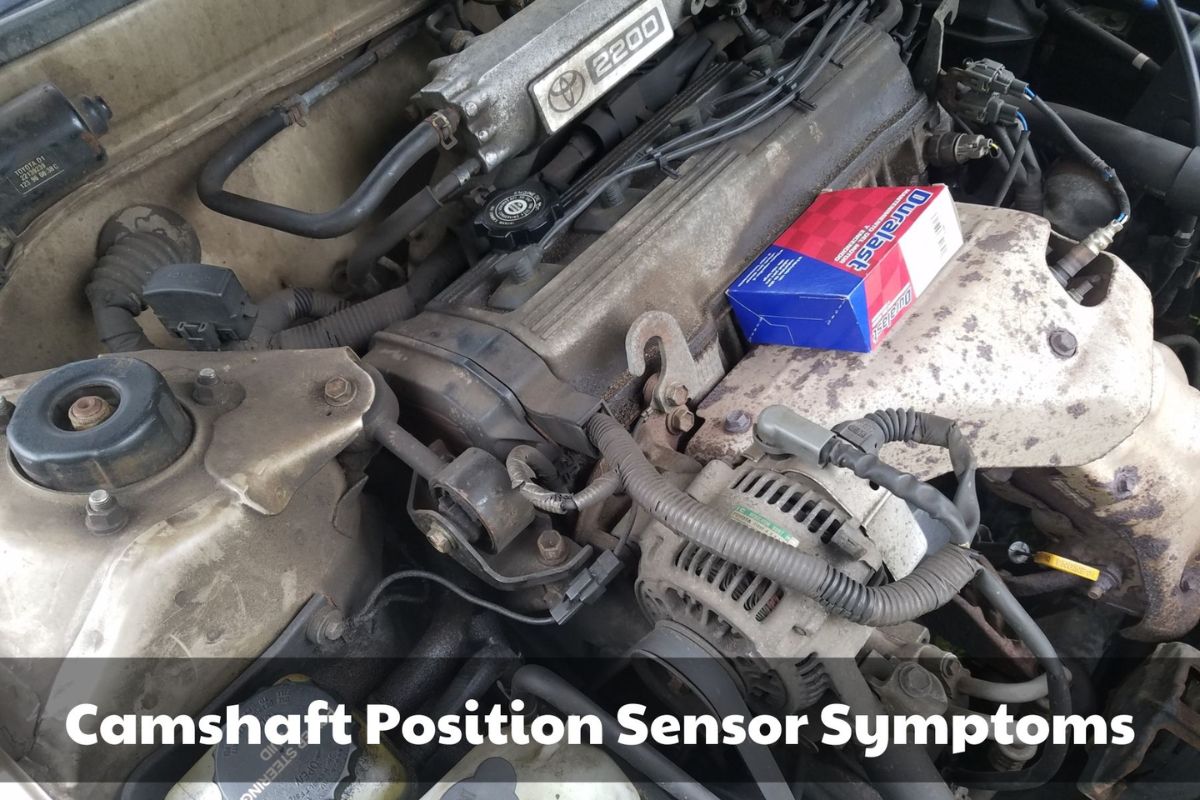
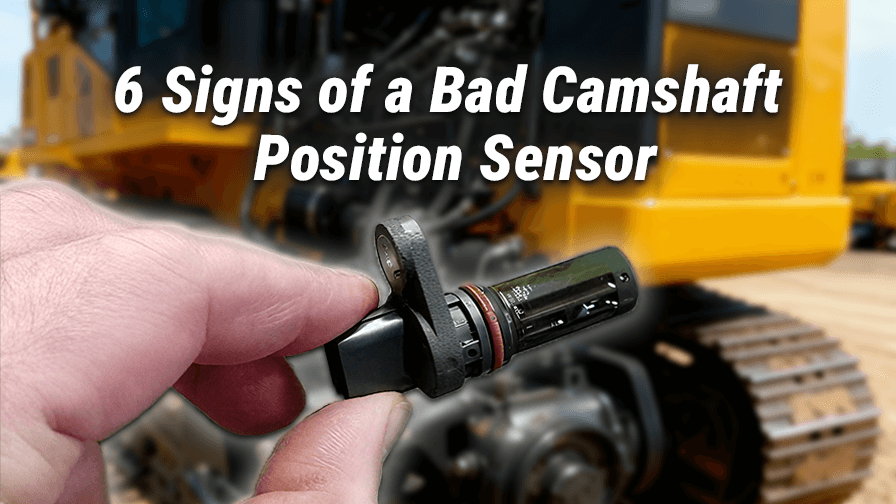
A camshaft position sensor usually goes bad because of prolonged engine heat, electrical faults, damaged wiring or connectors, oil or moisture contamination, vibration, physical damage, internal electronic wear, or problems with the sensor’s trigger wheel or timing system.
For drivers across the United States, a failed camshaft position sensor can turn an otherwise normal commute into hard starting, rough running, hesitation, stalling, or an illuminated Check Engine light. Modern gasoline and diesel vehicles depend heavily on electronic engine management, so an inaccurate camshaft signal can affect fuel injection, ignition timing, variable valve timing, and the engine computer’s ability to identify which cylinder is approaching its combustion stroke.
The important point is that a camshaft-related trouble code does not automatically prove that the sensor itself is defective. A damaged connector, broken wire, poor power or ground circuit, incorrect sensor air gap, damaged reluctor or trigger wheel, timing-chain problem, or another synchronization fault can produce similar symptoms. Understanding what causes camshaft sensor to go bad therefore means looking at both the sensor and the system surrounding it before buying replacement parts.
This guide explains the most common causes of camshaft position sensor failure, how those failures affect the signal sent to the engine control module, which symptoms deserve attention, how to diagnose the problem in a logical order, and what can help prevent a replacement sensor from failing again.
Source: hitchesguide.com
What Does a Camshaft Position Sensor Do?
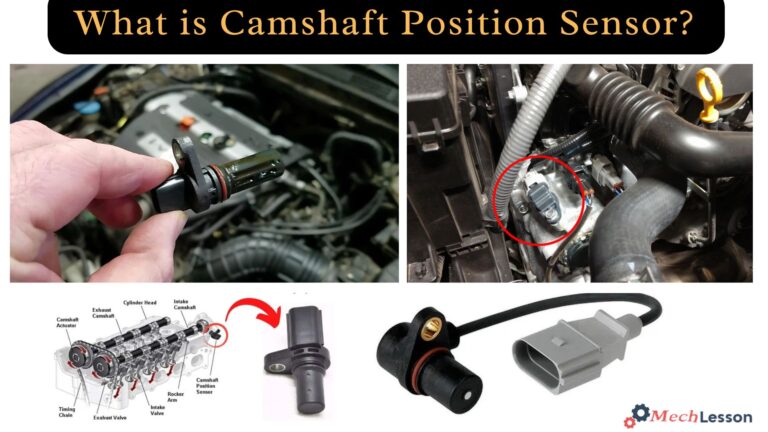
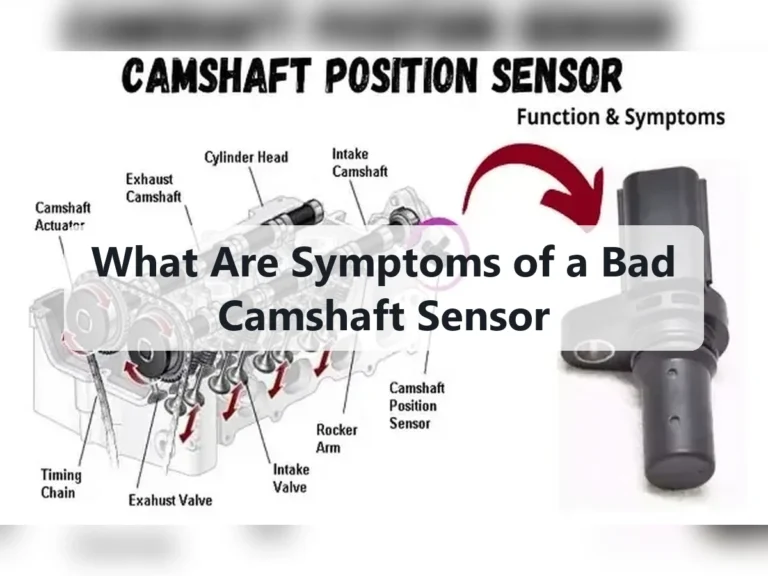
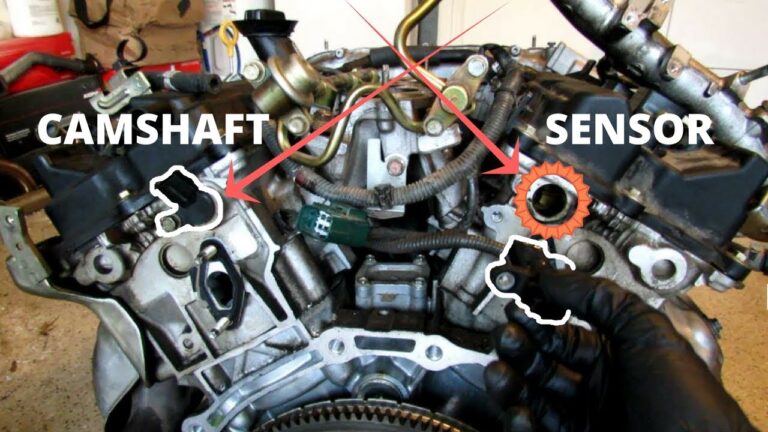
A camshaft position sensor tells the engine control module, commonly called the ECM or PCM, where the camshaft is positioned as the engine rotates. Because the camshaft controls valve operation, its position helps the computer determine which cylinder is in the correct phase of the four-stroke cycle.
Depending on the vehicle, the computer can use this information for sequential fuel injection, ignition control, variable valve timing operation, misfire monitoring, and comparison with the crankshaft position signal. Many newer engines have more than one camshaft position sensor because they use separate intake and exhaust camshafts or multiple cylinder banks.
Camshaft sensors commonly use Hall-effect or magnetic sensing principles. The sensor reads a target, tone wheel, reluctor, or other reference attached to or driven by the camshaft. As the target passes the sensor, an electrical signal is created and sent to the engine computer.
Anything that damages the sensor, alters its electrical circuit, changes its distance from the target, or causes the mechanical timing relationship to become incorrect can create a camshaft-related fault.
Source: autoquarterly.com
Sensor
Detects camshaft position or movement.
Trigger or reluctor
Provides the physical reference that the sensor reads.
Wiring and connector
Carry power, ground, and signal between the sensor and engine computer.
ECM or PCM
Interprets the signal and compares it with other engine information.
What Causes Camshaft Sensor to Go Bad?
The sensor itself can fail internally, but many apparent camshaft sensor failures begin outside the sensor. Heat, electrical problems, contamination, damaged wiring, excessive vibration, physical contact, and incorrect installation can all compromise the signal.
The causes below are worth checking because replacing the sensor without correcting the underlying problem can leave the same trouble code or cause the replacement part to fail prematurely.
Source: nextgentechtrends.com
Excessive engine heat
Repeated exposure to high underhood temperatures can age electronic components, insulation, seals, and connector materials.
Wiring damage
Broken, rubbed-through, stretched, or heat-damaged wires can interrupt the sensor’s power, ground, or signal circuit.
Connector corrosion
Moisture, contamination, loose terminals, or damaged pins can create resistance or intermittent electrical contact.
Oil or fluid intrusion
A leaking seal or damaged connector can allow oil or another fluid into electrical terminals and interfere with reliable contact.
Vibration
Constant engine vibration can stress internal electronics, mounting points, wires, and terminals over time.
Internal electronic aging
Electronic components can eventually become unstable or fail after years of heating and cooling cycles.
Physical damage
Incorrect installation, impact, contact with a rotating target, or debris can damage the sensor body or sensing tip.
Incorrect sensor gap
If the sensor is mounted too far from or too close to its target, the resulting signal can be weak, erratic, or physically damaging.
Trigger-wheel or timing problems
A damaged reluctor, incorrect mechanical timing, or excessive timing-chain movement can produce a signal that appears to indicate a sensor problem.
1. Excessive Heat and Repeated Heat Cycles
Camshaft sensors operate close to the engine, where temperatures regularly rise and fall. The sensor is designed for this environment, but years of heat cycling can gradually weaken seals, plastics, soldered connections, insulation, and electronic components.
A heat-sensitive sensor may work when the engine is cold but begin producing an erratic signal after the engine reaches operating temperature. If a car repeatedly stalls, hesitates, or sets a camshaft circuit code after warming up and then behaves normally again after cooling, temperature-related testing is especially useful.
Abnormal engine overheating can increase thermal stress. If a sensor fails soon after an overheating event, the cooling system and nearby wiring should be inspected rather than treating the sensor as an isolated problem.
2. Damaged Wiring or a Poor Electrical Connection
Wiring faults are among the most important sensor look-alikes. A camshaft position sensor may require a voltage supply, ground, and signal circuit. Damage to any of these can make a good sensor appear defective.
Wiring can rub against engine components, become brittle from heat, get stretched during previous repairs, or break internally while the insulation still looks intact. Loose terminals can also create an intermittent connection that changes with engine vibration.
This is why replacing the sensor solely because a scanner displays a camshaft sensor circuit code can lead to unnecessary parts replacement.
3. Oil, Moisture, and Connector Contamination
A camshaft position sensor may be installed in an area exposed to engine oil, depending on engine design. Oil on the exterior of a properly sealed sensor is not automatically a failure. The greater concern is contamination entering a damaged sensor body or electrical connector.
Oil, water, road contamination, or corrosion on terminals can compromise electrical contact. When inspecting the connector, look for oil saturation, moisture, green or white corrosion, pushed-back pins, bent terminals, and terminals that no longer grip securely.
Can a Timing Chain or Timing Belt Cause a Camshaft Sensor Code?
Yes. A mechanical timing problem can produce a camshaft-related diagnostic code even when the camshaft sensor is functioning normally. The engine computer compares information from the camshaft and crankshaft sensors to determine whether the shafts are synchronized as expected.
A stretched timing chain, failed tensioner, slipped belt, incorrectly installed timing components, damaged camshaft trigger wheel, or variable valve timing fault can shift the camshaft’s actual position. The computer may then detect a signal that is electrically valid but mechanically out of the expected relationship with the crankshaft.
This distinction matters because replacing the sensor will not correct incorrect mechanical timing. Correlation codes, unusual timing-chain noise, recent timing-system repairs, poor engine performance, or several related camshaft and crankshaft codes should increase suspicion of a timing or synchronization problem.
Source: storage.googleapis.com
Sensor circuit fault
The electrical signal, power supply, ground, wiring, or sensor itself is abnormal.
Correlation fault
The computer sees a disagreement between camshaft and crankshaft positions.
Mechanical timing fault
The camshaft may actually be positioned incorrectly because of a chain, belt, tensioner, phaser, or installation problem.
Why Low or Dirty Oil Can Complicate the Diagnosis
Low, contaminated, or incorrect engine oil does not necessarily destroy the electronic camshaft sensor directly. However, many modern engines use pressurized engine oil to control variable valve timing actuators and camshaft phasers.
If the variable valve timing system cannot move the camshaft as commanded, the computer can detect a timing or correlation error. A technician therefore needs to distinguish an actual sensor circuit failure from a camshaft timing problem related to oil pressure, a control solenoid, a phaser, or mechanical wear.
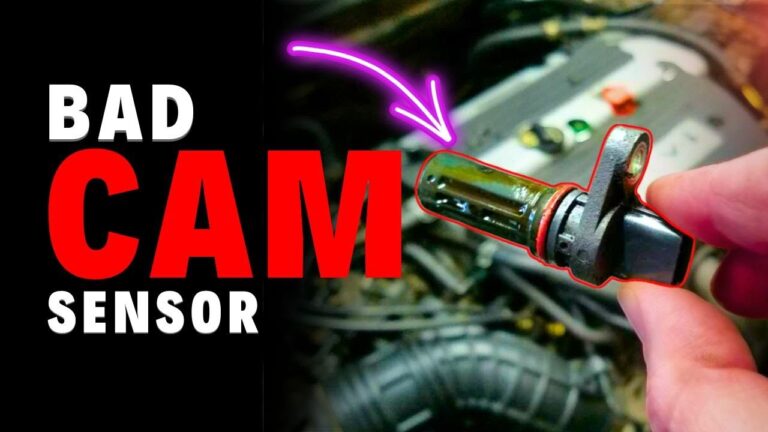
What Are the Symptoms of a Bad Camshaft Position Sensor?
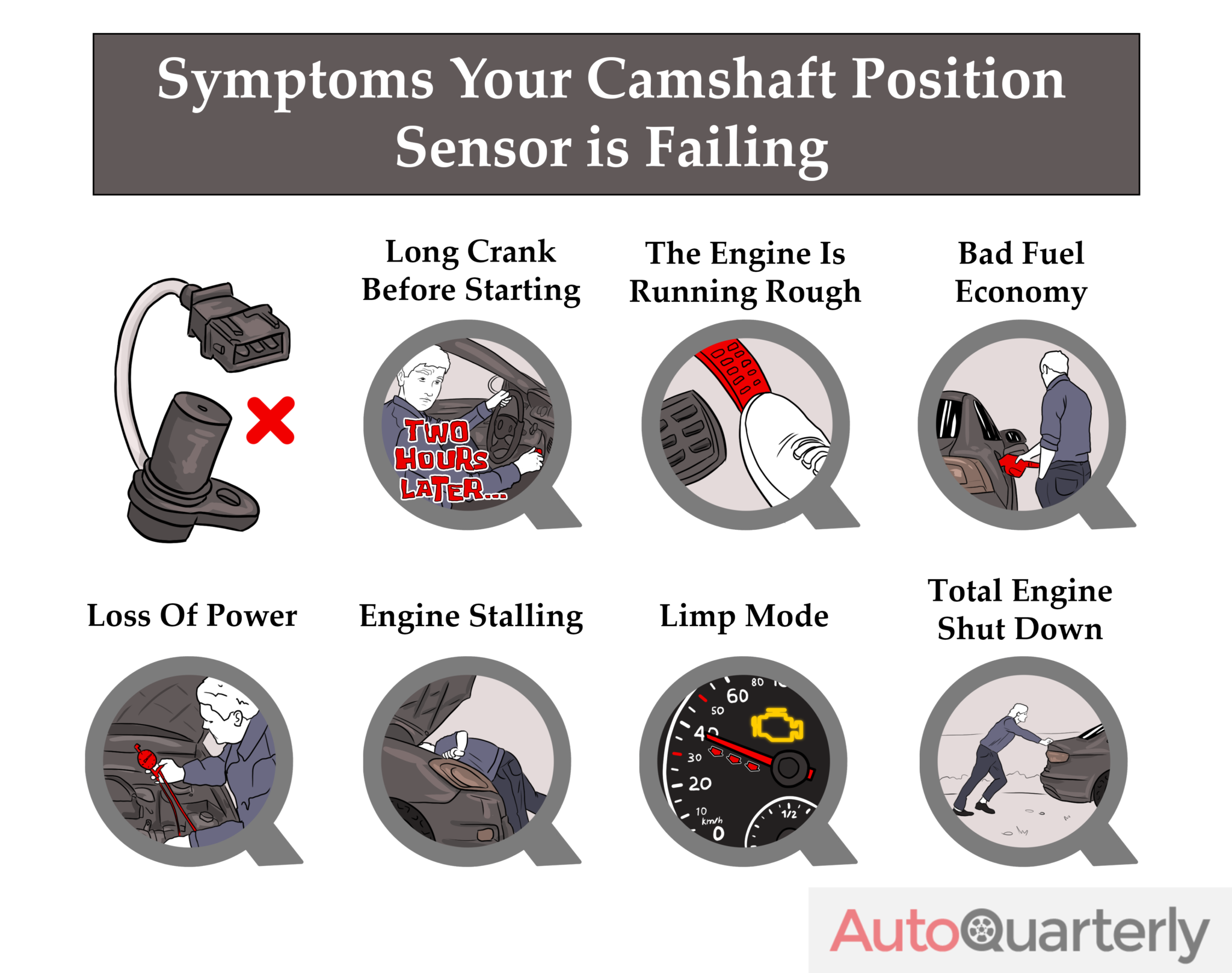
Symptoms vary by engine design and failure mode. Some vehicles continue running using substitute information from other sensors, while others may become difficult to start or stall if the camshaft signal disappears.
A failing sensor can produce intermittent symptoms before failing completely. Problems that appear only when the engine is hot, during vibration, or after hitting bumps may indicate an intermittent sensor or wiring connection.
Source: hitchesguide.com
Check Engine light
The engine computer may detect a missing, implausible, intermittent, low, or high camshaft sensor signal.
Long cranking
The computer may need additional engine revolutions to establish cylinder position.
Hard starting or no-start condition
Some engines depend more heavily on a valid camshaft signal during startup than others.
Engine stalling
An intermittent loss of position information may disrupt engine management.
Rough idle
Incorrect or unstable timing information can contribute to uneven operation.
Misfires or hesitation
Combustion control can be affected when the engine computer cannot reliably determine camshaft position.
Reduced acceleration
The computer may use a protective strategy that limits normal performance.
Poor fuel economy
An engine operating with incomplete or inaccurate timing information may run less efficiently.
Common Camshaft Sensor Trouble Codes
Generic OBD-II codes in the P0340 family are commonly associated with camshaft position sensor A circuit faults. Depending on the vehicle and exact fault, examples can include P0340, P0341, P0342, P0343, and P0344.
Do not interpret the code description as a command to replace the sensor. A circuit code identifies the system in which the computer detected an abnormal condition. The wiring, connector, power supply, ground, signal, sensor, target wheel, and mechanical timing may still need evaluation.
Engines with multiple camshafts can use additional code families for other banks or sensors, so factory service information for the exact year, make, model, engine, and code should guide diagnosis.
How to Tell Whether the Sensor Is Actually Bad
The most reliable approach is to diagnose the complete camshaft position circuit instead of guessing from symptoms. Start with the simplest checks and move toward electrical and mechanical testing only as needed.
Exact procedures and expected voltages differ by vehicle and sensor design. A repair manual or manufacturer service information is especially valuable because pin assignments and test specifications are not universal.
Source: au.fridayparts.com
Step 1: Scan the vehicle
Record all diagnostic trouble codes and freeze-frame information before clearing anything. Related crankshaft, variable valve timing, voltage, or correlation codes may change the direction of diagnosis.
Step 2: Inspect the sensor and connector
Look for cracked housings, loose mounting, oil intrusion, bent pins, corrosion, broken connector locks, damaged insulation, or wiring routed against hot or moving parts.
Step 3: Check power and ground
Use the correct wiring diagram and testing procedure for the vehicle to confirm that the sensor receives its required electrical supply and ground.
Step 4: Test the wiring
Check for opens, shorts, excessive resistance, poor terminal tension, or intermittent faults while gently moving the harness.
Step 5: Evaluate the signal
A scan tool or oscilloscope can help determine whether the sensor generates a stable and plausible signal while cranking and running.
Step 6: Compare camshaft and crankshaft information
If both sensor signals exist but their relationship is wrong, mechanical timing or a damaged trigger component deserves attention.
Step 7: Confirm the repair
After correcting the fault, clear applicable codes, run the engine through the conditions that previously caused the problem, and verify that the fault does not return.
When an Oscilloscope Helps
An oscilloscope can display the sensor waveform while the engine is operating. This can expose missing pulses, intermittent dropouts, electrical noise, or incorrect cam-to-crank synchronization that may be difficult to identify with a basic multimeter.
Waveform interpretation requires correct reference information and experience. For a persistent fault where the sensor and basic wiring checks appear normal, professional diagnostic testing can prevent expensive parts swapping.
Sensor Failure Versus Other Problems
Several engine problems can imitate a bad camshaft sensor. Separating them before replacing parts saves time and prevents the underlying fault from being overlooked.
The table below summarizes common patterns. It is a diagnostic guide rather than proof of a particular failure because symptoms vary among vehicles.
Source: detroitchinatown.org
Failed sensor
More likely when power, ground, wiring, mounting, and mechanical timing are correct but the sensor output is missing or clearly abnormal.
Wiring or connector problem
More likely when the fault changes as the harness moves or when inspection reveals damaged terminals, insulation, corrosion, or unstable electrical readings.
Mechanical timing problem
More likely with correlation codes, timing-chain noise, recent timing work, multiple related codes, or measured cam-to-crank synchronization outside specification.
Variable valve timing problem
More likely when camshaft timing fails to follow commanded movement and oil supply, control solenoids, or phasers are involved.
Charging-system or voltage problem
More likely when several unrelated electronic systems report voltage or communication faults at the same time.
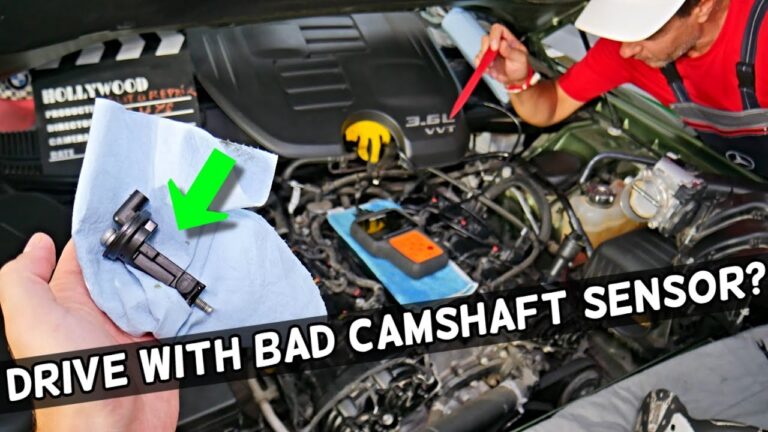
Can You Drive With a Bad Camshaft Sensor?
A vehicle may continue running with a camshaft position sensor fault, but continued driving is not a good assumption when the car is stalling, losing power, misfiring severely, or becoming difficult to restart.
Unexpected stalling or hesitation can create a traffic hazard, especially at intersections or highway speeds. Severe misfires can also send unburned fuel into the exhaust and potentially overheat the catalytic converter.
If the Check Engine light is flashing, the engine is running extremely rough, the vehicle repeatedly stalls, or you have reason to suspect a mechanical timing problem, minimize driving and arrange proper diagnosis. A steady Check Engine light with otherwise normal operation is generally less urgent than a flashing light, but the cause should still be investigated.
How to Prevent Another Camshaft Sensor Failure
You cannot prevent every electronic sensor from aging, but correcting conditions that damaged the original sensor can reduce the chance of a repeat failure.
The most valuable prevention work is not replacing sensors on a schedule. It is keeping the engine and electrical system in good condition and making sure repairs preserve correct wiring, sealing, mounting, and mechanical timing.
Repair oil leaks
Leaks around the sensor or connector should be corrected instead of repeatedly cleaning contamination.
Protect the wiring harness
Keep wires secured away from exhaust components, sharp edges, belts, pulleys, and other moving parts.
Fix overheating problems
Repeated overheating increases stress on electronic components and surrounding wiring.
Maintain the engine oil correctly
Use the oil specification and service interval required by the vehicle manufacturer, especially on engines with oil-controlled variable valve timing.
Use the correct sensor
The replacement must match the vehicle’s engine and sensor position. Similar-looking sensors are not necessarily electrically interchangeable.
Install it correctly
Clean the mounting area, inspect the seal, secure the connector, route wiring correctly, and follow vehicle-specific torque and clearance requirements.
Investigate repeat failures
If another sensor fails quickly, test the circuit, charging voltage, connector, trigger wheel, and mechanical timing instead of installing a third sensor.
Common Diagnostic Mistakes to Avoid
The most common mistake is assuming that a trouble code names the failed part. Diagnostic codes identify conditions detected by the engine computer. They do not remove the need to test the circuit and determine why that condition exists.
Another mistake is overlooking recent repairs. If a camshaft code appears immediately after cylinder-head, timing-chain, valve-cover, alternator, starter, or wiring work, inspect anything that was disconnected, moved, or replaced during that repair.
Finally, avoid replacing both camshaft and crankshaft sensors simply because their signals are related. Each component should be evaluated on its own evidence unless the manufacturer’s diagnostic procedure specifically calls for replacement.
Replacing the sensor from the code alone
A wiring, connector, timing, or trigger-wheel fault can produce the same code.
Skipping connector inspection
Oil, corrosion, loose terminals, and pushed-back pins can create intermittent problems.
Ignoring mechanical timing
Camshaft and crankshaft correlation faults cannot be solved by a new electronic sensor if the engine is mechanically out of time.
Using universal voltage specifications
Hall-effect and magnetic sensors can use different circuit designs, so testing should follow vehicle-specific information.
Clearing codes before recording them
Freeze-frame data and related codes can provide valuable clues about when the fault occurred.
Frequently Asked Questions About What Causes Camshaft Sensor to Go Bad
Q
Can heat cause a camshaft position sensor to fail?
Yes. Camshaft sensors are engineered to tolerate high engine temperatures, but repeated heat cycles and abnormal overheating can eventually damage electronic components, seals, insulation, or connections. Some failing sensors become intermittent only after warming up, which makes temperature-related testing useful.
Q
Can dirty oil cause a camshaft sensor to go bad?
Dirty oil is not automatically a direct cause of electronic sensor failure. However, oil contamination entering a damaged electrical connector can create problems, and poor oil condition can interfere with oil-controlled variable valve timing systems. That can create camshaft timing faults that may be mistaken for a bad sensor.
Q
Can a bad timing chain make it look like the camshaft sensor failed?
Yes. A stretched, slipped, or incorrectly installed timing chain can change the relationship between the camshaft and crankshaft. The engine computer may detect the resulting synchronization problem and store camshaft-related or cam-to-crank correlation codes even though the position sensor is still capable of generating a signal.
Q
Why would a new camshaft sensor still show a code?
A new sensor will not fix damaged wiring, poor terminal contact, incorrect power or ground, a damaged trigger wheel, wrong sensor clearance, mechanical timing problems, variable valve timing faults, or an incorrect replacement part. The circuit should be diagnosed if the code remains after replacement.
Q
How long does a camshaft position sensor last?
There is no universal replacement interval that applies to every camshaft position sensor. Many last for a large portion of the vehicle’s service life, while others fail earlier because of heat, contamination, wiring problems, physical damage, or internal electronic wear. Replace or diagnose the sensor based on evidence rather than mileage alone.
✦ Wrapping Up
Conclusion
Understanding what causes camshaft sensor to go bad starts with recognizing that the sensor is only one part of a larger electrical and mechanical system. Heat, internal electronic aging, vibration, oil or moisture intrusion, damaged wiring, connector corrosion, incorrect mounting, and physical damage can all cause genuine sensor failure.
However, timing-chain problems, damaged trigger wheels, variable valve timing faults, power or ground problems, and incorrect cam-to-crank synchronization can produce similar symptoms and diagnostic codes. That is why a Check Engine light or P0340-series code should begin a diagnosis rather than automatically trigger a sensor replacement.
For most drivers, the sensible next step is to record the trouble codes, inspect the sensor connector and wiring, verify the appropriate electrical circuits, and evaluate the sensor signal. If the vehicle stalls, loses power unpredictably, has a flashing Check Engine light, or shows signs of a mechanical timing problem, professional diagnosis is the safer choice.
💡 Key Takeaway
Before replacing a camshaft position sensor, confirm that its wiring, connector, power supply, ground, trigger system, and mechanical timing are functioning correctly. Fixing the root cause prevents unnecessary parts replacement and reduces the chance of the same problem returning.
Ethan Brooks is an automotive writer at Auto News 7, covering car news, vehicle maintenance, new model updates, recalls, and practical buying guides. He focuses on clear, useful information that helps drivers understand their vehicles and make better ownership decisions.