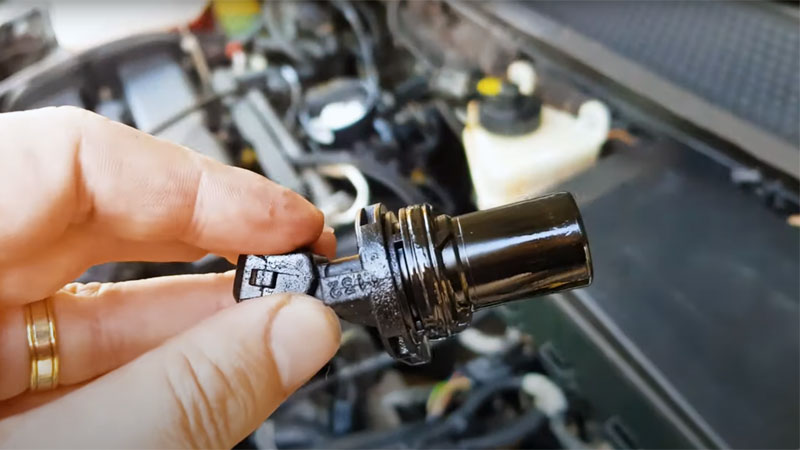
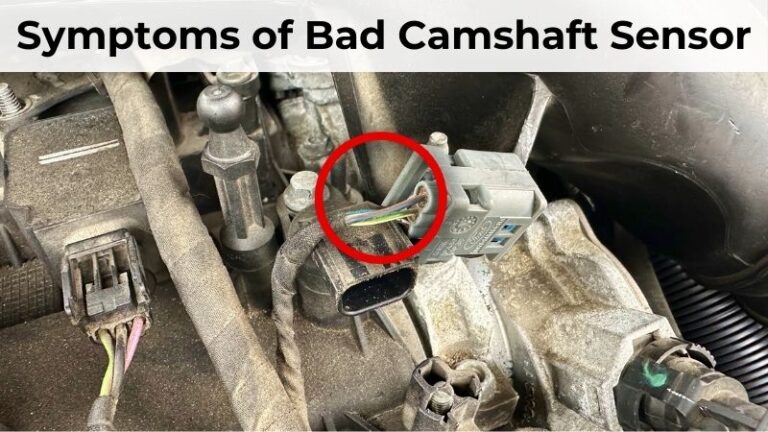
A bad camshaft position sensor may look cracked, heat-damaged, oil-soaked, corroded, chipped, or contaminated with metal debris, but many failed sensors look completely normal from the outside.
For drivers in the United States, especially those maintaining an older car, pickup, crossover, or SUV, knowing what does a bad camshaft sensor look like can help you decide whether a visual inspection is worth doing before replacing parts. The important point is that appearance alone cannot reliably confirm failure. A visibly damaged housing, broken connector, corroded terminal, oil inside the electrical plug, or debris on a magnetic sensing tip can provide useful evidence, but an internally failed electronic sensor may have no visible defect at all.
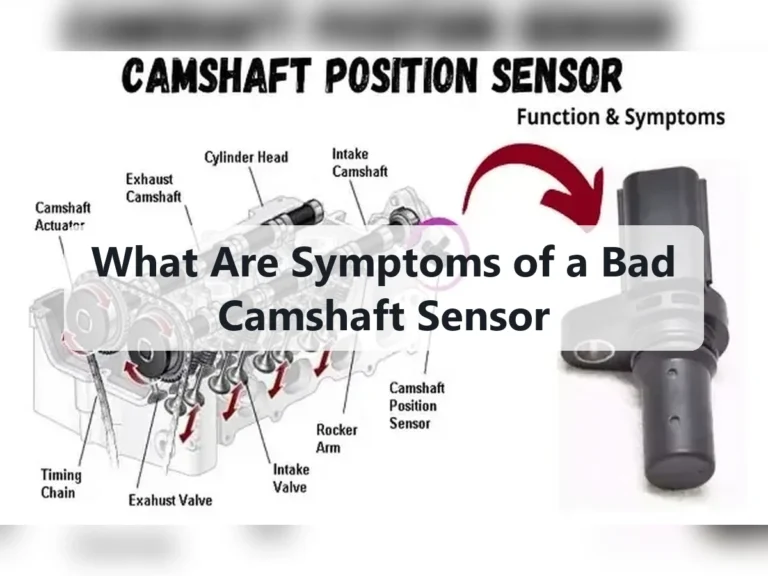
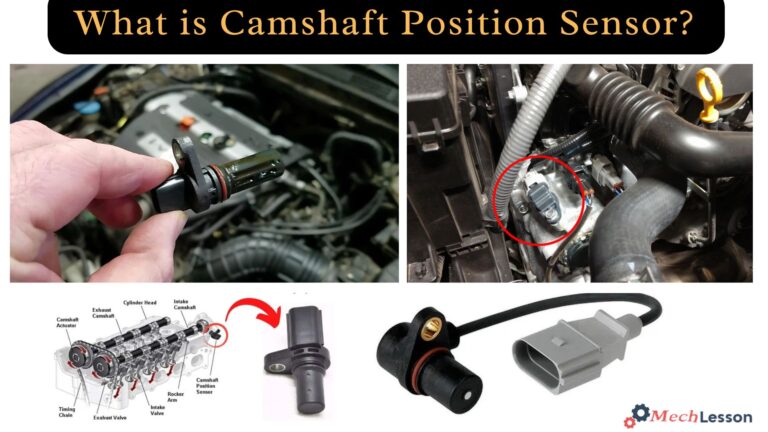
The camshaft position sensor, commonly shortened to CMP sensor, tells the engine control module where the camshaft is in its rotation. That information helps the computer coordinate functions such as fuel injection, ignition strategy, cylinder identification, and, on many modern engines, variable valve timing monitoring. When the signal becomes unreliable, a U.S. driver may notice a Check Engine Light, extended cranking, hesitation, rough running, reduced power, intermittent stalling, or a no-start condition. The safest diagnostic approach is to combine visual inspection with OBD-II trouble codes, wiring checks, and vehicle-specific electrical or signal testing rather than replacing the sensor based on appearance alone.
Source: oards.com
What Does a Bad Camshaft Sensor Look Like?
A visibly bad camshaft position sensor often shows physical damage around its plastic body, mounting flange, electrical connector, sealing area, or sensing tip. You may see cracks caused by heat and age, a chipped sensor tip, a broken connector lock, bent or greenish terminals, melted plastic, damaged insulation near the harness, or contamination that has entered the connector.
Some magnetic sensors can also collect fine metallic particles at the sensing end. A small amount of fine residue may not automatically mean the sensor has failed, but a heavy buildup can interfere with the sensor-to-target relationship or indicate another mechanical issue that deserves investigation.
Appearance has an important limitation: many electrically failed camshaft sensors look almost identical to good ones. Heat-sensitive internal electronics, broken internal connections, or an intermittent signal problem normally cannot be seen with the naked eye. A clean sensor should therefore never be assumed good solely because it looks new.
Source: manyautos.weebly.com
Cracked sensor housing
Look for fractures, splitting, distortion, or heat damage in the molded plastic body.
Damaged electrical connector
A broken locking tab, loose fit, bent terminal, backed-out pin, or corroded contact can interrupt the signal.
Oil inside the connector
Oil on an engine-facing sensor tip can be normal on some designs, but oil reaching the electrical terminals is more concerning.
Damaged sensor tip
Chipping, scraping, impact marks, or unusual wear may indicate contact or an incorrect sensor-to-trigger relationship.
Metal debris
A magnetic tip coated with excessive metallic debris should be cleaned and the source of the debris investigated.
What a Healthy Camshaft Position Sensor Usually Looks Like
A healthy sensor normally has an intact housing, a connector that locks securely, clean and straight electrical terminals, an undamaged mounting point, and a sensing end without obvious impact damage. The O-ring or sealing surface should also be intact where the sensor uses one.
Do not expect a used sensor to look spotless. Normal engine-bay dust or oil on the engine-facing portion can be present without affecting operation. The more useful distinction is whether contamination has reached areas that should remain electrically clean or whether the sensor has visible structural damage.
Normal condition
Minor exterior dirt or staining without damaged wiring, terminals, housing, or sensing surfaces.
Suspicious condition
Cracking, loose terminals, connector contamination, heavy metallic debris, melting, or obvious impact damage.
Where to Look for Damage on the Sensor and Wiring
Start with the sensor itself, but do not stop there. A camshaft position fault can originate in the electrical connector, harness, power supply, ground circuit, trigger target, or mechanical timing system. A replacement sensor will not solve a damaged wire or loose terminal.
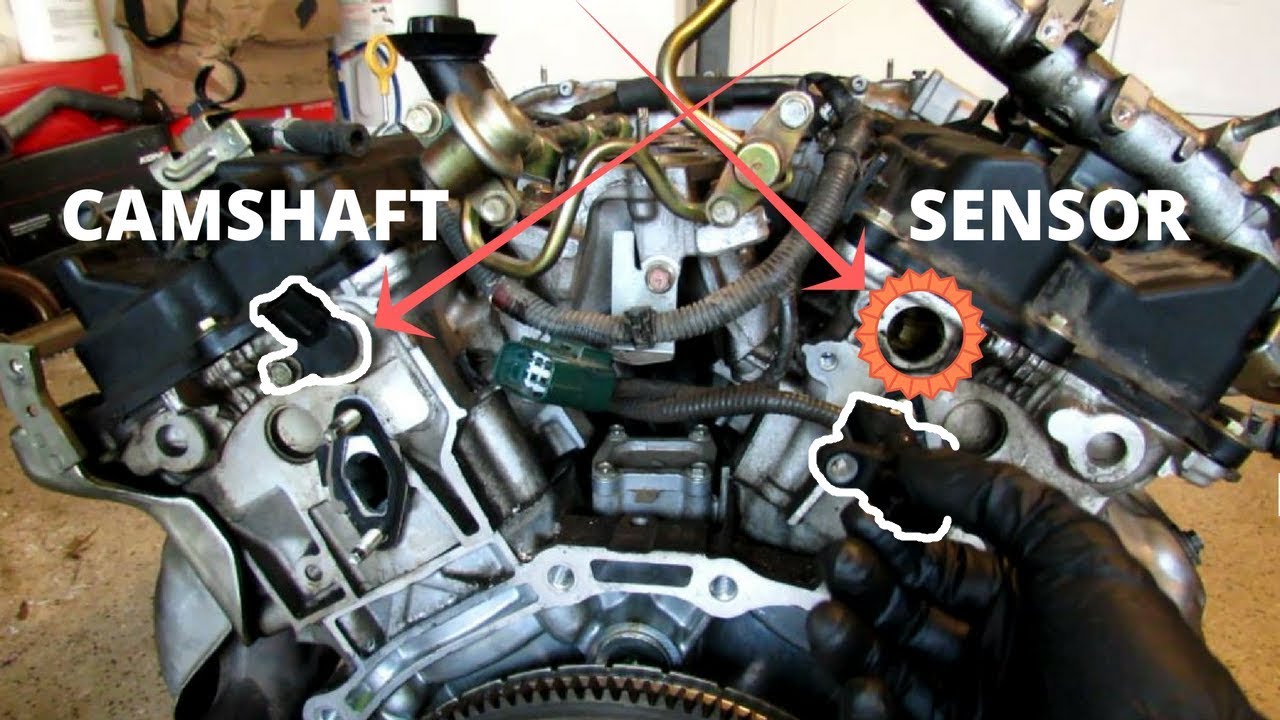
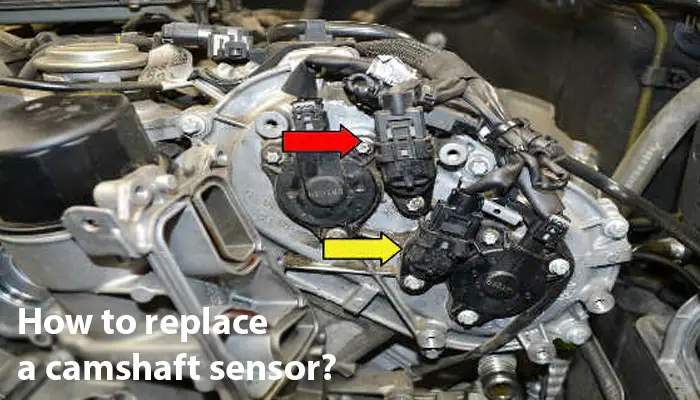
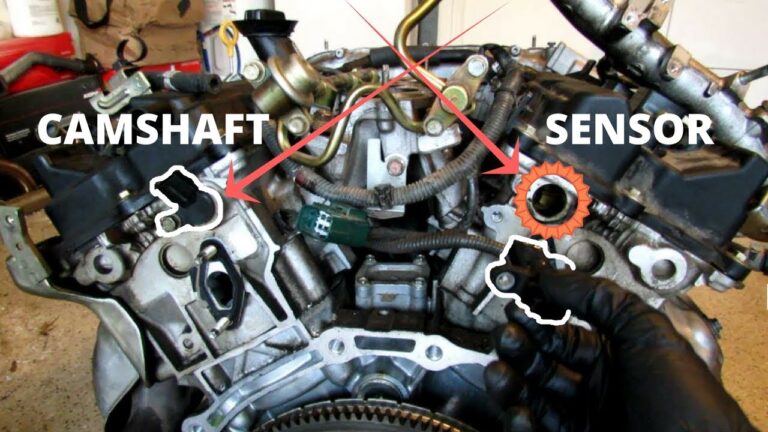
With the engine off and cool enough to work around safely, locate the correct camshaft position sensor using service information for your exact year, make, model, engine, and sensor position. Many modern engines have more than one CMP sensor, especially engines with separate intake and exhaust camshafts or two cylinder banks.
Inspect the connector before unplugging it. Look for a broken latch, a plug that is not fully seated, pulled wiring, rubbed insulation, previous repair splices, or harness sections lying against hot engine components. After disconnecting the plug with the ignition off, check the terminal area for moisture, oil, corrosion, bent contacts, spreading, or a pin that has moved backward in the connector.
Source: detroitchinatown.org
Connector lock
The plug should seat firmly and remain locked instead of moving loosely on the sensor.
Terminal condition
Terminals should not be bent, heavily corroded, pushed backward, or visibly burned.
Harness condition
Inspect for chafing, cuts, melted insulation, stretched wiring, and previous repairs.
Mounting area
Confirm that the sensor is fully seated and that its mounting tab is not cracked or distorted.
Why the Sensor Location Matters
Camshaft position sensors are typically mounted where they can detect a target associated with the camshaft, but the exact location varies widely. Depending on the engine, a sensor may be near the cylinder head, valve cover, timing cover, or rear portion of the engine.
Do not remove the first sensor-shaped component you see. Crankshaft sensors, variable valve timing solenoids, oil pressure switches, and other engine sensors can look similar. Verify the component identification before disconnecting or testing it.
Multiple CMP sensors
Some engines have separate sensors for intake and exhaust camshafts or for Bank 1 and Bank 2.
Vehicle-specific layout
Always use information that matches the exact engine rather than relying only on a generic diagram.
Can a Bad Camshaft Sensor Look Completely Normal?
Yes. A camshaft position sensor can fail internally while its housing, connector, seal, and sensing tip still look normal. This is one of the most important points when diagnosing the problem.
Many CMP sensors contain electronic circuitry or magnetic sensing components that operate in a hot, vibrating environment. Internal faults may appear only after the engine warms up. A vehicle can therefore start normally when cold, run for several minutes, then stall or become difficult to restart after heat builds under the hood.
Intermittent wiring faults can behave the same way. A wire may make contact while the vehicle is sitting but open briefly when the engine moves under acceleration or when heat causes materials to expand. Visual inspection is valuable because it can reveal obvious faults, but it cannot evaluate every internal electrical condition.
Source: nextgentechtrends.com
Heat-related failure
The sensor may work when cold and lose its signal after engine-bay temperature rises.
Intermittent connection
An internal break or loose terminal may cause temporary signal loss without visible exterior damage.
Signal quality problem
A sensor can generate a weak, distorted, or irregular output even though its housing looks intact.
Why Visual Inspection Is Only the First Check
A proper diagnosis asks whether the engine control module is receiving the correct camshaft position signal under the conditions where the problem occurs. That may require a scan tool, digital multimeter, oscilloscope, or manufacturer-specified test procedure depending on the sensor design.
Do not apply a generic resistance or voltage test to every camshaft sensor. Hall-effect, magnetoresistive, and variable-reluctance designs are not tested in exactly the same way. The vehicle’s wiring diagram and service procedure should determine which terminals and measurements are appropriate.
Appearance
Useful for finding obvious physical or contamination-related faults.
Electrical testing
Needed when the sensor looks normal but the circuit or signal is still suspect.
Symptoms That Can Accompany a Bad Camshaft Sensor
Visual damage becomes more meaningful when it appears alongside relevant drivability symptoms or diagnostic evidence. Common complaints include a Check Engine Light, long cranking, intermittent no-start, rough running, hesitation, weak acceleration, reduced-power operation, or stalling.
However, none of those symptoms belongs exclusively to the camshaft position sensor. Ignition faults, fuel delivery problems, a damaged crankshaft position sensor circuit, low compression, variable valve timing problems, wiring faults, or incorrect mechanical timing can produce overlapping symptoms.
A useful diagnosis therefore combines several clues rather than treating one symptom as proof. For example, a cracked CMP connector plus an intermittent camshaft signal code and a signal dropout during testing is much stronger evidence than poor acceleration by itself.
Source: hitchesguide.com
Check Engine Light
The engine computer may detect a missing, intermittent, or implausible camshaft position signal.
Extended cranking
The engine may take longer than normal to establish the position information needed for reliable starting.
Stalling
An intermittent signal or circuit problem may cause the engine to shut off unexpectedly on some vehicles.
Rough running
Hesitation, rough idle, or misfire-like behavior can occur but should not be attributed to the CMP sensor without diagnosis.
Reduced power
Some engine control systems use a backup strategy or limit performance when reliable camshaft information is unavailable.
What Do P0340 and Related Codes Mean?
P0340 is commonly associated with a camshaft position sensor circuit malfunction. Related codes can identify range or performance problems, low or high circuit conditions, intermittent signals, another camshaft, or another cylinder bank depending on the vehicle.
A trouble code identifies the circuit or condition the engine computer detected. It does not automatically identify the failed part. Damaged wiring, poor connector contact, an incorrect air gap, a damaged trigger target, mechanical timing problems, or other circuit faults can set camshaft-related codes even when the sensor itself is functional.
Use the complete code
Do not diagnose from the word camshaft alone; record every stored and pending code before clearing anything.
Check vehicle-specific information
The meaning and diagnostic path can differ by engine, bank, sensor position, and manufacturer.
How to Confirm Whether the Camshaft Sensor Is Actually Bad
The most reliable approach is to work from easy, low-risk checks toward more specific testing. Start by recording symptoms and diagnostic codes. Then inspect the sensor, connector, and wiring before spending money on a replacement.
If no obvious physical fault is present, use vehicle-specific diagnostic information. Depending on sensor type, testing may involve verifying a reference or supply voltage, checking ground integrity, examining the signal circuit, measuring an AC output, or observing a digital waveform. A professional oscilloscope test can be particularly useful when the problem is intermittent or when camshaft and crankshaft synchronization must be compared.
Also consider the component the sensor is reading. A good sensor cannot report correct camshaft position if the trigger wheel, reluctor, or other target is damaged, loose, contaminated, or physically out of position. Likewise, a stretched or incorrectly installed timing chain, failing cam phaser, or variable valve timing problem can create camshaft-related diagnostic symptoms without an electronically defective sensor.
If the engine stalls unexpectedly, has a persistent no-start, shows signs of a mechanical timing problem, or requires access near moving belts, chains, or other hazardous components, professional diagnosis is the safer option.
Source: storage.googleapis.com
Step 1: Record the symptoms
Note whether the problem happens cold, hot, during acceleration, at idle, or during restart.
Step 2: Scan the vehicle
Record stored, pending, and manufacturer-specific diagnostic codes before clearing them.
Step 3: Inspect visually
Check the housing, connector, terminals, wiring, mounting point, seal, and accessible sensing tip.
Step 4: Check the circuit
Follow the correct service procedure for sensor power, ground, signal, continuity, and connector condition.
Step 5: Verify the signal
Use appropriate live data or waveform testing when visual inspection and basic circuit checks do not provide an answer.
Step 6: Rule out related faults
Consider the trigger target, crankshaft signal, variable valve timing system, and mechanical timing before condemning the sensor.
Common Mistakes When Diagnosing a Camshaft Sensor
One common mistake is replacing the sensor immediately after finding a P0340-series code. Another is assuming that oil on the sensor proves failure even when that part of the sensor normally operates inside an oil-exposed area.
It is also easy to overlook a damaged harness near the sensor. Heat, vibration, previous repairs, and contact with brackets or engine components can damage wiring while leaving the sensor itself untouched. Finally, repeatedly replacing sensors without checking mechanical timing can waste money when the real fault is a chain, phaser, reluctor, or timing-related issue.
Parts swapping
A trouble code should start a diagnostic process rather than automatically trigger sensor replacement.
Ignoring the connector
Poor terminal contact can create the same electrical symptoms as a defective sensor.
Using the wrong test
Different sensor technologies require different electrical testing methods.
Ignoring mechanical timing
Camshaft and crankshaft correlation problems may originate in the timing system instead of the sensor.
Frequently Asked Questions About What Does a Bad Camshaft Sensor Look Like
Q
Can you tell if a camshaft sensor is bad just by looking at it?
Not reliably. Visible cracking, damaged terminals, corrosion, contamination, or a broken sensing tip can identify a clear problem, but many failed camshaft position sensors have no visible exterior damage.
If the sensor looks normal, diagnosis should continue with code retrieval, wiring inspection, circuit checks, and the correct signal test for the vehicle.
Q
Is oil on a camshaft position sensor a sign that it is bad?
Not necessarily. Some camshaft position sensors are installed where their engine-facing portion is exposed to engine oil, so oil on that end may be normal.
Oil inside the electrical connector or around terminals that should remain dry is more significant. It can interfere with electrical contact and may indicate a sealing problem that needs to be corrected.
Q
What does a damaged camshaft sensor connector look like?
Look for a broken locking tab, cracked connector shell, bent terminals, green or white corrosion, burned contacts, oil or moisture inside the plug, or a terminal that sits farther back than the others. The attached wiring may also appear frayed, stretched, melted, or rubbed through.
Q
Will a bad camshaft sensor always turn on the Check Engine Light?
A faulty sensor often results in a diagnostic code and Check Engine Light, but intermittent problems may not produce an obvious warning immediately under every operating condition. A pending code may also appear before the light becomes consistently illuminated.
A lack of a warning light therefore does not completely eliminate the sensor or its circuit as a possible cause of an intermittent starting or stalling problem.
Q
Should I replace the camshaft sensor if I have a P0340 code?
Do not replace it based on the code alone. P0340 identifies a problem involving the camshaft position sensor circuit, but the underlying cause can be the sensor, connector, wiring, electrical supply, trigger target, mechanical timing, or another related fault.
Inspect the circuit and follow the diagnostic procedure for your exact vehicle before buying a replacement sensor.
✦ Wrapping Up
Conclusion
When answering what does a bad camshaft sensor look like, the most useful visual clues are cracks, heat damage, a broken mounting area, connector damage, corrosion, contaminated electrical terminals, damaged wiring, a chipped sensing end, or excessive metallic debris. These signs can make a sensor or its circuit suspicious, but they are not present in every failure.
A camshaft position sensor can look perfectly normal and still produce an intermittent, weak, or missing signal. For that reason, visual inspection should be treated as the beginning of diagnosis rather than the final test. Combine what you see with OBD-II codes, wiring and connector checks, vehicle-specific electrical testing, and an inspection of the trigger and timing system when necessary.
💡 Key Takeaway
Inspect the camshaft sensor and connector carefully, record any trouble codes, and confirm the electrical signal with the correct vehicle-specific procedure before replacing the sensor.
Ethan Brooks is an automotive writer at Auto News 7, covering car news, vehicle maintenance, new model updates, recalls, and practical buying guides. He focuses on clear, useful information that helps drivers understand their vehicles and make better ownership decisions.