Yes, a crankshaft position sensor can leak oil on some U.S. vehicles when its O-ring, gasket, or mounting seal fails.
For drivers in the United States, an oil spot under the front or lower area of a vehicle does not automatically mean the crankshaft position sensor is leaking. The sensor itself is an electrical component that detects crankshaft position and speed. On engine designs where the sensor passes through an oil-exposed area, however, a damaged or improperly seated O-ring or gasket can allow engine oil to escape.
The more common challenge is identifying the true source. Oil can run along an engine before dripping, so a leak near the crankshaft position sensor may actually come from a valve cover, timing cover, crankshaft seal, oil filter housing, or another nearby sealing surface. A careful inspection is therefore more useful than replacing the sensor based only on where the oil appears.
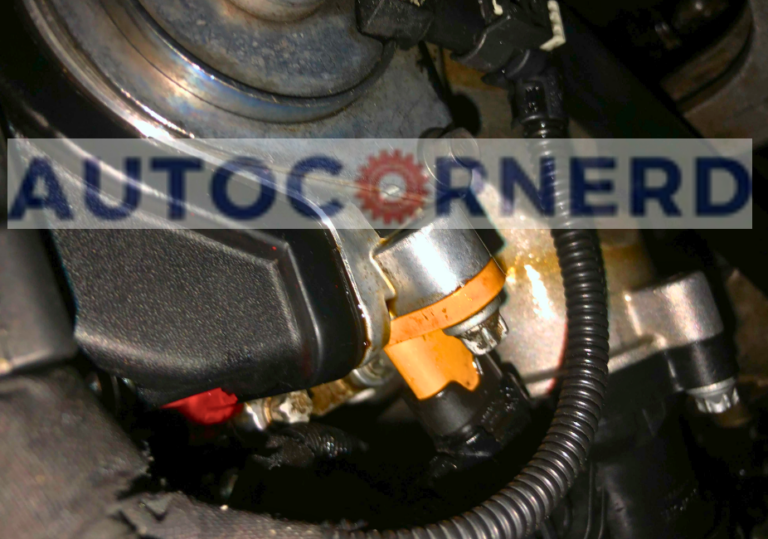
Source: autocornerd.com
Can a Crankshaft Position Sensor Leak Oil?
Yes, but it depends on how the crankshaft position sensor is mounted on the specific engine. Many sensors are installed in a bore and sealed with an O-ring or similar sealing element. If that seal becomes hard, damaged, displaced, or incorrectly installed, engine oil can seep around the sensor.
A crankshaft position sensor does not contain a supply of engine oil that it can leak like an oil filter or oil cooler. The potential leak comes from the interface between the sensor and the engine. Some sensor locations are exposed to oil or sit in areas where oil can reach the mounting bore, while other designs are positioned differently.
The distinction matters because replacing a sensor will not fix an oil leak if the actual source is a crankshaft seal, timing cover, valve cover, or another gasket. A proper diagnosis should identify the highest wet point rather than simply the place where oil eventually drips.
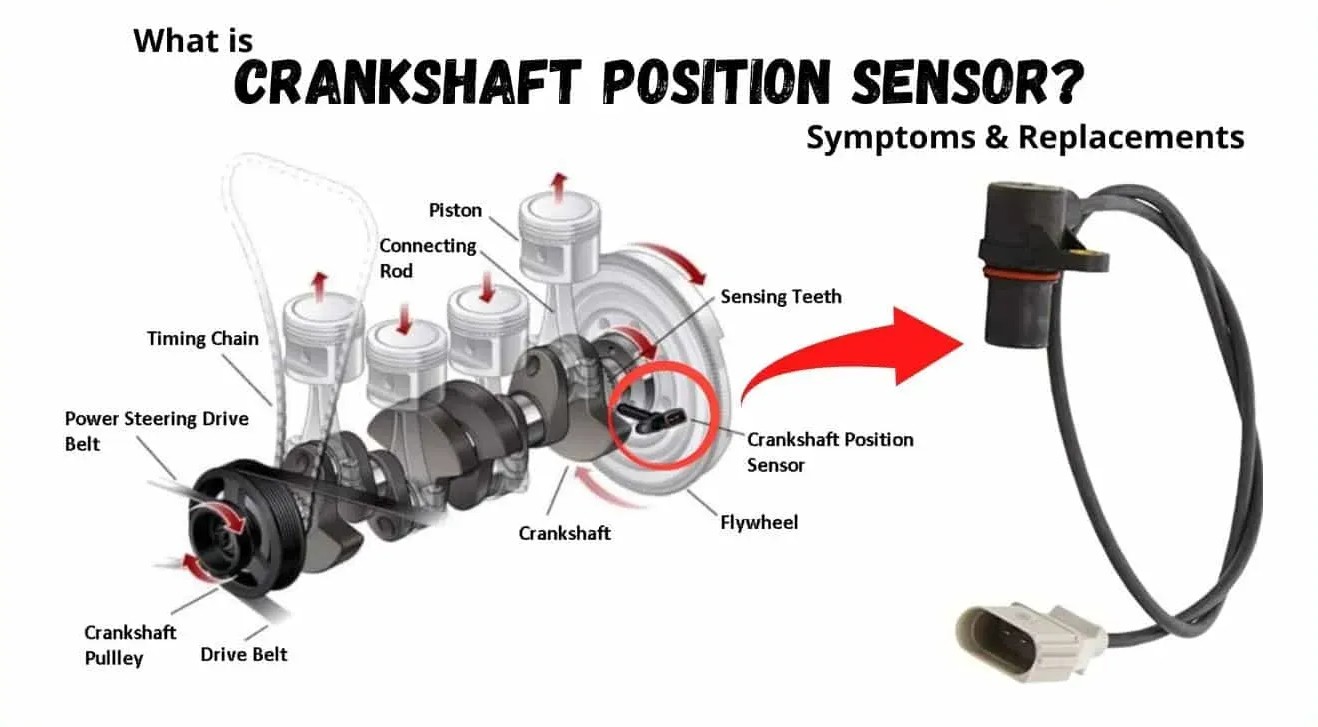
Source: mechlesson.com
Sensor seal failure
A worn or damaged O-ring or gasket can allow oil to pass around the sensor body.
Improper installation
A pinched, twisted, missing, or incorrectly seated seal can create a leak after sensor replacement.
Another nearby leak
Oil from a higher sealing surface can run down the engine and make the crankshaft position sensor look responsible.
Why the Sensor Needs a Seal
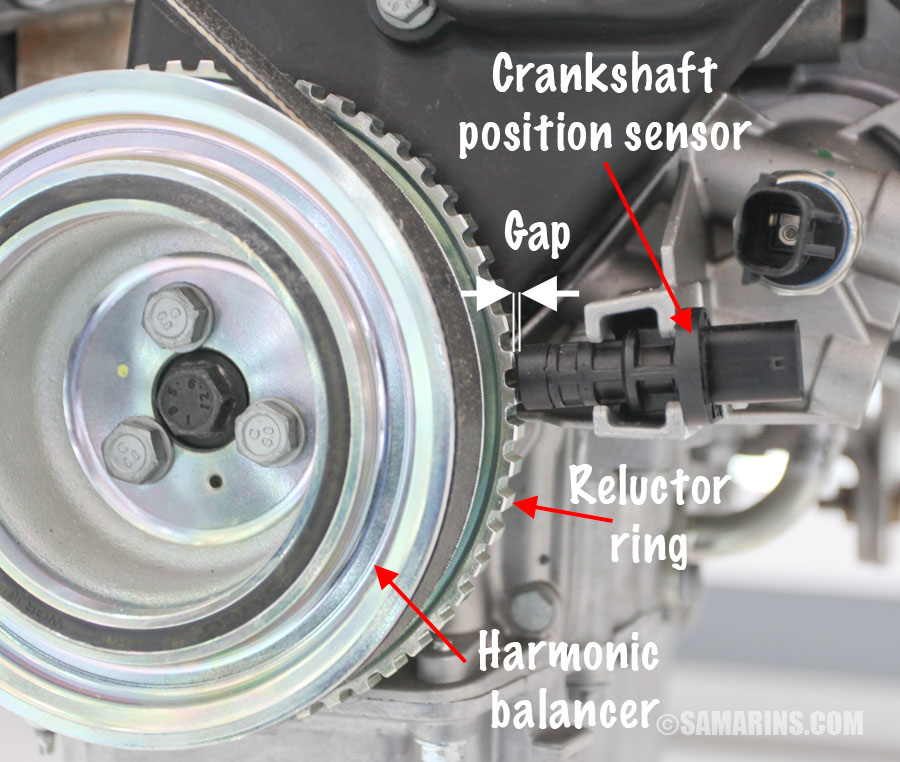
The crankshaft position sensor sends information about crankshaft position and rotational speed to the engine control computer. Depending on the engine, the sensor may sit in the engine block, timing area, bellhousing area, or near the crankshaft pulley. When its mounting point communicates with an oil-exposed part of the engine, a seal helps prevent fluid from escaping.
The exact sealing arrangement varies by vehicle. Some applications use an O-ring supplied with the sensor, while others use a gasket or a different mounting arrangement. Always use the vehicle-specific repair information rather than assuming every crankshaft position sensor seals the same way.
What Causes Oil to Leak Around a Crankshaft Position Sensor?
The most direct causes are a failed sealing ring, damaged gasket, damaged sensor housing, or an installation problem. Age and repeated engine heat cycles can make rubber seals less flexible. Removing and reinstalling a sensor can also damage a seal if it is not handled or seated correctly.
Oil can also appear around the sensor because of a completely different engine leak. This is especially important on engines where the sensor sits low on the engine or close to the timing cover. Oil can travel across cast surfaces and wiring before collecting around the sensor.
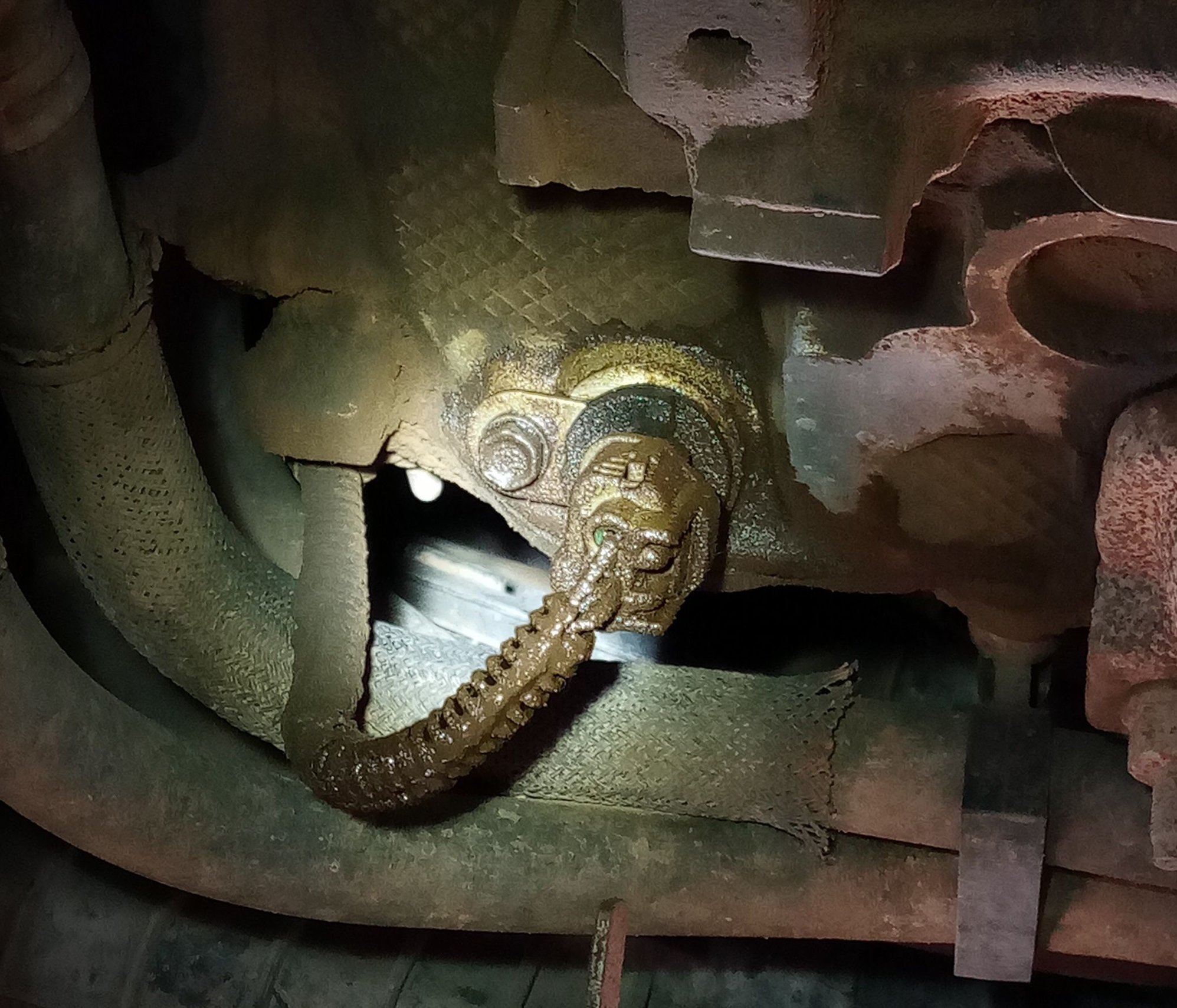
A crankshaft position sensor may also become coated with oil after another leak has developed. Oil contamination on the outside of the sensor is therefore a clue to investigate, not proof that the sensor seal is defective.
Source: obdtech.co.nz
Worn O-ring
Heat, age, and repeated service can cause an O-ring to harden, shrink, crack, or lose its ability to seal.
Damaged gasket
A gasket can tear, deform, or fail to seal if it is reused when the design requires replacement.
Pinched seal
An O-ring can roll or pinch during installation, leaving a small path for oil to escape.
Dirty mounting surface
Debris or old seal material can prevent the sensor from seating correctly.
Nearby engine leak
A valve cover, timing cover, crankshaft seal, or other sealing point can send oil toward the sensor.
Crankshaft Position Sensor Leak vs. Crankshaft Seal Leak
These two problems are easy to confuse because their names sound similar. A crankshaft position sensor is an electronic device that reports crankshaft movement to the engine computer. A crankshaft oil seal is a mechanical seal designed to keep engine oil inside the engine around the rotating crankshaft.
A leaking crankshaft oil seal can produce oil near a crankshaft pulley or between the engine and transmission, depending on whether the front or rear seal is involved. That repair is not the same as replacing a sensor O-ring. Identifying the actual leak point before ordering parts can prevent an unnecessary sensor replacement.
How to Tell If the Crankshaft Position Sensor Is the Leak Source
Start with a clean engine area and trace the oil from the highest wet point downward. Do not assume the lowest visible oil spot is the source. Oil can move along brackets, castings, wiring, and covers before it reaches the bottom of the engine.
With the engine safely cool, inspect the area around the crankshaft position sensor. Look for fresh oil at the sensor-to-engine mounting point rather than only oil on the outside of the sensor. If the surrounding area is dirty and wet, cleaning it first can make a small new leak much easier to identify.
If the source remains unclear, a professional technician can use a more controlled leak-diagnosis process. Depending on the vehicle, this may include inspecting the engine after cleaning, monitoring the area during operation, or using an approved leak-detection method.
Source: samarins.com
Check the mounting area
Look specifically at the joint between the sensor and the engine rather than assuming oil on the sensor body came from inside it.
Trace oil upward
Follow the wet trail toward the highest point because gravity can move oil away from its original leak location.
Inspect nearby seals
Check surrounding covers, gaskets, seals, and other components that could release oil above the sensor.
Check the electrical connector
Oil contamination around the connector can indicate that fluid has reached the sensor area, but it does not by itself identify the original leak.
Signs That Point Toward a Sensor Seal
A concentrated wet area directly around the sensor mounting point is more consistent with a sensor sealing problem than oil spread across the engine from a higher source. The finding becomes more useful after the area has been cleaned and the vehicle has been observed for fresh seepage.
If the sensor was recently replaced and the leak began afterward, installation should receive particular attention. A damaged or incorrectly seated O-ring can cause leakage even when the replacement sensor itself is functioning correctly.
Fresh oil at the sensor base
New oil appearing directly at the sensor mounting interface after cleaning supports further inspection of the sensor seal.
Leak began after sensor service
A leak that appears soon after sensor removal or installation warrants checking the O-ring, gasket, seating, and specified installation procedure.
Can an Oil Leak Cause Crankshaft Position Sensor Problems?
An oil leak and a crankshaft position sensor fault can occur together, but one does not automatically cause the other. The sensor’s job is to provide crankshaft position and speed information to the engine control system. Problems with the sensor, its wiring, connector, or signal can lead to hard starting, stalling, misfires, or a check engine light.
Oil around the sensor can become a separate concern if it reaches the electrical connector or contaminates components. However, an oil-covered sensor should not automatically be diagnosed as electrically failed. The electrical circuit and the sensor signal still need to be evaluated when symptoms or diagnostic trouble codes are present.
A vehicle with an active oil leak should also be checked for the leak’s effect on nearby components. The consequences depend heavily on the leak location, amount of oil, and engine design.
Source: newkidscar.com
Hard starting
A faulty crankshaft position signal can interfere with the engine computer’s ability to determine crankshaft position during starting.
Stalling
An intermittent or lost crankshaft signal can contribute to engine stalling on vehicles that depend on that signal for engine control.
Check engine light
Crankshaft position sensor circuit or signal faults can trigger diagnostic trouble codes and illuminate the malfunction indicator lamp.
Oil contamination
Oil around the sensor or connector should be investigated for its source and for possible effects on nearby components.
Oil Leak and Crankshaft Sensor Symptoms Can Overlap
A vehicle can have both an oil leak and a crankshaft position sensor problem at the same time. For example, a worn engine seal may leak oil while an aging sensor develops an intermittent electrical fault. Treating both observations as one problem can lead to an incorrect repair.
If the vehicle has an oil leak plus hard starting, stalling, or a check engine light, diagnose the fluid leak and the electronic fault separately. A diagnostic scan can help identify stored trouble codes, but a code related to the crankshaft sensor does not by itself prove that the sensor is the source of an oil leak.
How Is a Crankshaft Position Sensor Oil Leak Fixed?
The repair depends on what the inspection finds. If the sensor O-ring or gasket is leaking, the usual repair is to remove the sensor, inspect the sealing surface, install the correct replacement seal or sensor as specified for the vehicle, and reinstall it correctly. Some applications require a new sensor assembly because the seal is integrated or supplied with the replacement part.
The engine should be cool before working around the sensor, and the vehicle must be securely supported if access requires lifting it. Follow the vehicle’s service procedure for sensor removal, seal lubrication, bolt torque, alignment, and any required relearn or calibration procedure.
If the leak comes from a crankshaft oil seal, timing cover, valve cover, or another component, replacing the crankshaft position sensor will not solve the leak. That is why identifying the source before buying parts is the most important step.
Source: dodgeforum.com
Confirm the leak
Clean the area and establish that fresh oil is coming from the sensor mounting point rather than a nearby component.
Use the correct seal
Install the seal or gasket specified for the exact vehicle and engine. Do not substitute an incorrectly sized generic seal.
Inspect the bore
Check the sensor mounting area for dirt, damage, old seal material, or other conditions that could prevent proper sealing.
Follow torque specifications
Use the manufacturer’s specified fastener torque rather than guessing or relying on a generic value.
Recheck after repair
After installation, inspect for fresh oil and verify that any related engine symptoms have been resolved.
When to Have a Mechanic Handle the Repair
Professional help is appropriate when the sensor is difficult to access, the leak source cannot be identified, the repair requires major engine disassembly, or the vehicle has persistent starting or stalling problems. Some crankshaft position sensors are located in areas that require substantial component removal.
Do not work underneath a vehicle supported only by a jack. If the repair requires raising the vehicle, use properly rated stands or an appropriate lift and follow safe service procedures. If oil is leaking heavily, the oil level is dropping rapidly, or oil is reaching a hot exhaust component, arrange an inspection promptly rather than continuing to drive normally.
Heavy or rapidly worsening leak
A substantial loss of engine oil can threaten engine lubrication and should be addressed promptly.
Unknown leak source
If cleaning and inspection do not reveal the source, a technician can perform a more systematic leak diagnosis.
Persistent engine symptoms
Hard starting, stalling, or a check engine light alongside an oil leak may require both mechanical and electrical diagnosis.
Common Mistakes When Diagnosing a Crankshaft Sensor Oil Leak
The biggest mistake is replacing the crankshaft position sensor simply because oil is visible around it. The sensor may be wet because oil has traveled from another location. Replacing a working sensor can leave the actual leak untouched.
Another mistake is confusing the crankshaft position sensor with the crankshaft oil seal. They are different components with different jobs. A sensor problem is primarily related to the engine’s position signal, while a crankshaft oil seal is intended to retain engine oil around the rotating crankshaft.
It is also risky to assume that every crankshaft position sensor uses the same type of seal or installation method. Vehicle-specific service information should control the repair because sensor locations, sealing methods, torque requirements, and post-repair procedures vary.
Source: mechlesson.com
Mistake: replacing parts before tracing the leak
A visible oil spot is not enough to identify the source. Clean and trace the leak first.
Mistake: confusing sensor and crankshaft seal
The two components perform different functions and can require very different repairs.
Mistake: reusing a damaged seal
A seal that has been removed, flattened, cut, or hardened may not reseal correctly.
Mistake: ignoring the vehicle-specific procedure
Installation details can vary by engine, so generic torque or sealing advice may be inappropriate.
A Simple Diagnostic Decision Guide
If oil is visible around the crankshaft position sensor, first determine whether the oil is fresh and whether the highest wet point is actually the sensor mounting interface. If it is, inspect the sensor seal and mounting surface according to the vehicle’s service procedure.
If oil appears above the sensor, follow the trail upward and investigate the higher sealing point. If oil is coming from the crankshaft pulley area, investigate the applicable front crankshaft seal and surrounding components. If oil is coming from between the engine and transmission, a rear crankshaft seal or another rear-engine leak may need consideration.
Oil starts at sensor mounting point
Inspect the sensor, O-ring or gasket, mounting bore, and installation.
Oil starts above the sensor
Investigate higher gaskets, covers, seals, or other components before replacing the sensor.
Oil starts near crankshaft pulley
Investigate the front crankshaft seal and nearby timing or front-cover components.
Oil appears between engine and transmission
A rear-engine leak may be involved, but the exact source still needs confirmation.
Frequently Asked Questions
Q
Can a crankshaft position sensor leak oil?
Yes. On some engines, the crankshaft position sensor is installed through a sealed opening, and a failed O-ring or gasket can allow engine oil to seep around the sensor. However, oil near the sensor can also come from another nearby engine leak.
Q
Does oil come out of a crankshaft position sensor?
The sensor itself does not produce engine oil. Oil can escape around the sensor when its sealing element fails or when the sensor is mounted in an oil-exposed area. A sensor covered in oil may also have been contaminated by a leak elsewhere on the engine.
Q
What does a crankshaft position sensor leak look like?
It may appear as fresh engine oil around the point where the sensor enters the engine. The exact appearance varies by sensor location and engine design, and oil running from another component can create a similar pattern.
Q
Can a bad crankshaft position sensor cause an oil leak?
An electrical failure of the sensor does not normally create an oil leak. An oil leak can occur when the sensor’s mounting seal fails, but that is a mechanical sealing problem rather than a failure of the sensor’s electrical function.
Q
Can I drive with oil leaking around the crankshaft position sensor?
A small seep does not necessarily mean the engine will fail immediately, but the vehicle should not be treated as safe to drive indefinitely without finding the cause. If the oil level is falling, the leak is heavy, the oil reaches hot components, or the engine develops starting or stalling problems, arrange an inspection promptly.
Q
Will replacing the crankshaft position sensor stop an oil leak?
It can stop the leak when the sensor’s seal is the confirmed source and the replacement includes the correct sealing arrangement. It will not fix a leak from a crankshaft oil seal, timing cover, valve cover, or another nearby component.
Q
Is a crankshaft position sensor the same as a crankshaft seal?
No. A crankshaft position sensor is an electronic component that reports crankshaft position and speed to the engine control system. A crankshaft oil seal is a mechanical sealing component that helps keep engine oil contained around the rotating crankshaft.
✦ Wrapping Up
Conclusion
So, can a crankshaft position sensor leak oil? Yes, on vehicles where the sensor uses an O-ring, gasket, or another sealing interface that can fail. The sensor itself is not the source of engine oil, and oil around the component does not automatically prove that its seal is leaking.
The safest approach is to identify the actual source before replacing parts. Clean the area, trace fresh oil to its highest wet point, inspect the sensor mounting seal and nearby components, and use vehicle-specific service information for any repair. If the leak is heavy, difficult to locate, or accompanied by starting, stalling, or other engine problems, have the vehicle professionally diagnosed.
💡 Key Takeaway
If you find oil around the crankshaft position sensor, do not replace the sensor based on appearance alone. Trace the leak to its source first, then replace the failed seal or component using the vehicle-specific repair procedure.
Ethan Brooks is an automotive writer at Auto News 7, covering car news, vehicle maintenance, new model updates, recalls, and practical buying guides. He focuses on clear, useful information that helps drivers understand their vehicles and make better ownership decisions.
Learn how to replace intake camshaft position sensor with a detailed step-by-step guide, tools list, troubleshooting tips, safety advice, and common mistakes to avoid.
Learn how to replace camshaft position sensor Nissan Pathfinder models with a clear step-by-step guide, required tools, troubleshooting tips, and common mistakes to avoid.
Learn whether camshaft sensors are interchangeable, how to identify compatible sensors, common mistakes to avoid, and how to choose the correct replacement for your vehicle.
Learn how to replace camshaft position sensor bank 1 with a clear step-by-step process, required tools, troubleshooting tips, and safety advice for DIY vehicle owners in the USA.