A knock detonation sensor detects abnormal engine vibration and helps the ECU adjust ignition timing to protect the engine.
For drivers in the United States, a knock detonation sensor is a key part of the electronic engine management system found in many gasoline-powered vehicles. The sensor monitors vibrations in the engine and helps the powertrain control system recognize combustion knock, often called spark knock or detonation.
A knock detonation sensor normally uses a piezoelectric sensing element to convert engine vibration into an electrical signal. The engine computer evaluates that signal and can reduce ignition advance when knock is detected. This allows the engine to operate close to its intended timing while reducing the risk associated with sustained abnormal combustion.
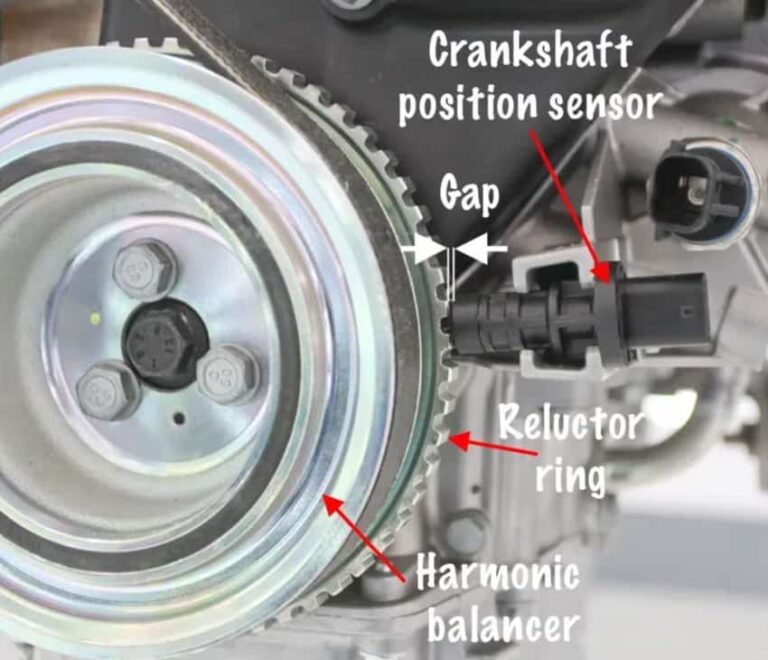
Source: bmotorsports.com
What Is a Knock Detonation Sensor?
A knock detonation sensor is an engine vibration sensor designed to help detect combustion knock. In many automotive applications, it is mounted directly to the engine block or another specified engine structure so it can detect vibrations traveling through the metal.
The term detonation sensor is commonly used interchangeably with knock sensor in automotive parts descriptions. However, the sensor does not simply hear every engine noise. Its signal is evaluated by the engine control system for vibration characteristics associated with abnormal combustion.
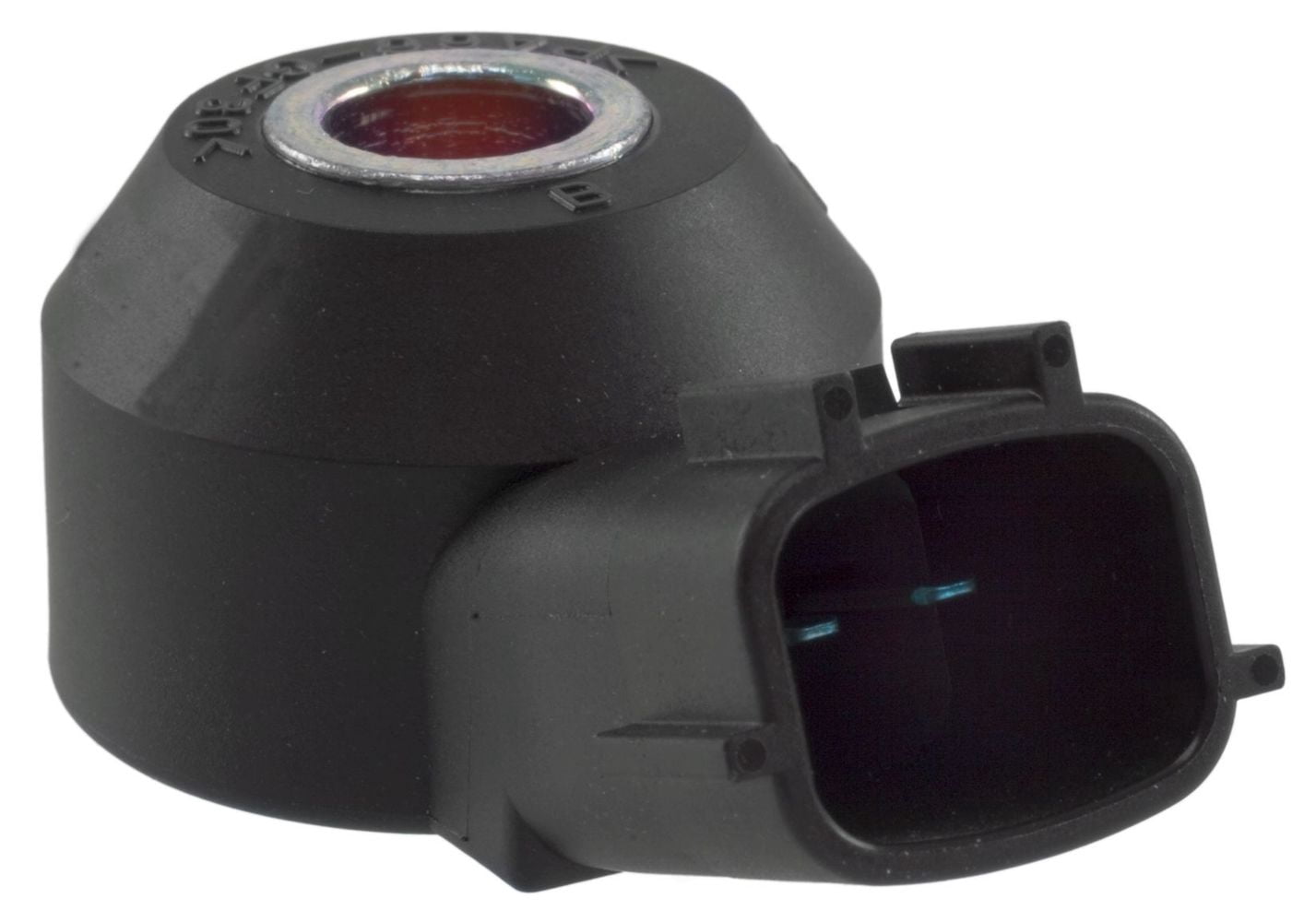
Most conventional automotive knock sensors use a piezoelectric element. When engine vibration mechanically stresses that element, it produces an electrical signal. The ECU or PCM then processes the signal to determine whether the vibration is consistent with knock.
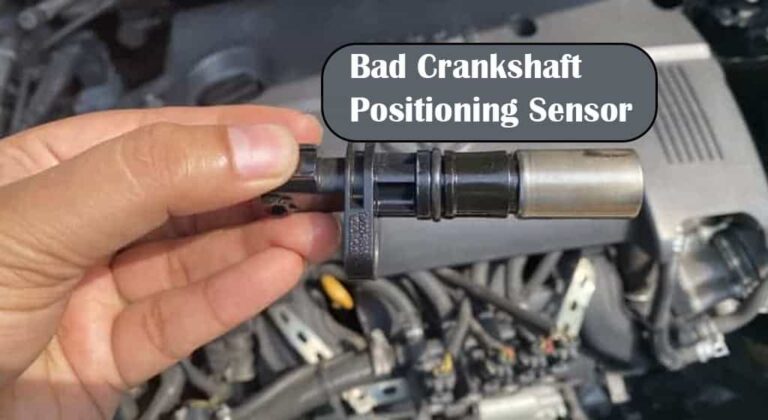
Source: walmart.com
Knock sensor
The common automotive name for a sensor that detects vibration associated with combustion knock.
Detonation sensor
Another term used for a knock sensor, especially in parts catalogs and ignition-system descriptions.
Piezoelectric element
The sensing material converts mechanical vibration into an electrical signal that the control system can analyze.
ECU or PCM
The engine or powertrain computer evaluates the sensor signal and can modify ignition timing when the system identifies knock.
Is a Knock Sensor the Same as a Detonation Sensor?
In most automotive contexts, yes. Knock sensor and detonation sensor generally describe the same type of engine-management component. The terminology can vary among manufacturers, parts suppliers, service information, and vehicle owners.
The important distinction is between the sensor and the condition it detects. The sensor detects vibration associated with abnormal combustion; it does not cause or eliminate detonation by itself.
How Does a Knock Detonation Sensor Work?
A knock detonation sensor works by detecting structure-borne vibration from the engine and converting that vibration into an electrical signal. The control system then examines the signal for characteristics that can indicate combustion knock.
During normal combustion, the engine produces predictable mechanical and acoustic activity. When abnormal combustion creates pressure oscillations, the resulting vibration can contain frequency content that the knock-control system is calibrated to recognize.
The sensor itself does not usually decide whether the engine is knocking. That decision is made by the engine control system using the sensor signal along with engine speed, load, crankshaft position, and other operating information.
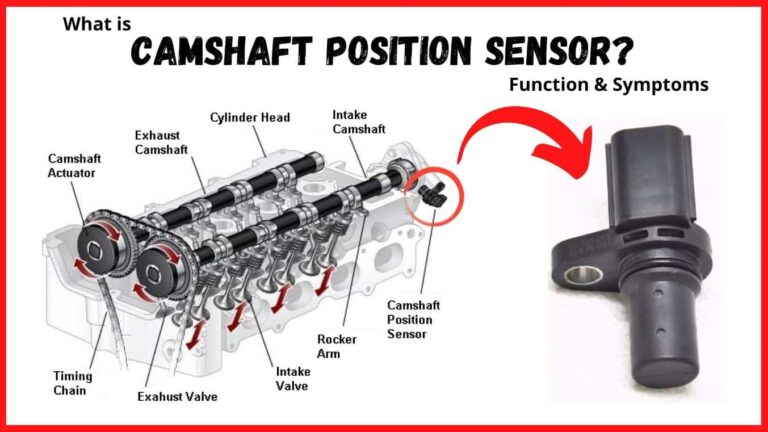
Source: gomechanic.in
Engine vibration
Combustion and mechanical activity create vibrations that travel through the engine structure.
Piezoelectric response
The sensor’s piezoelectric element responds to mechanical stress and produces an electrical signal.
Signal processing
The ECU filters and evaluates the signal using calibration appropriate for the engine.
Timing correction
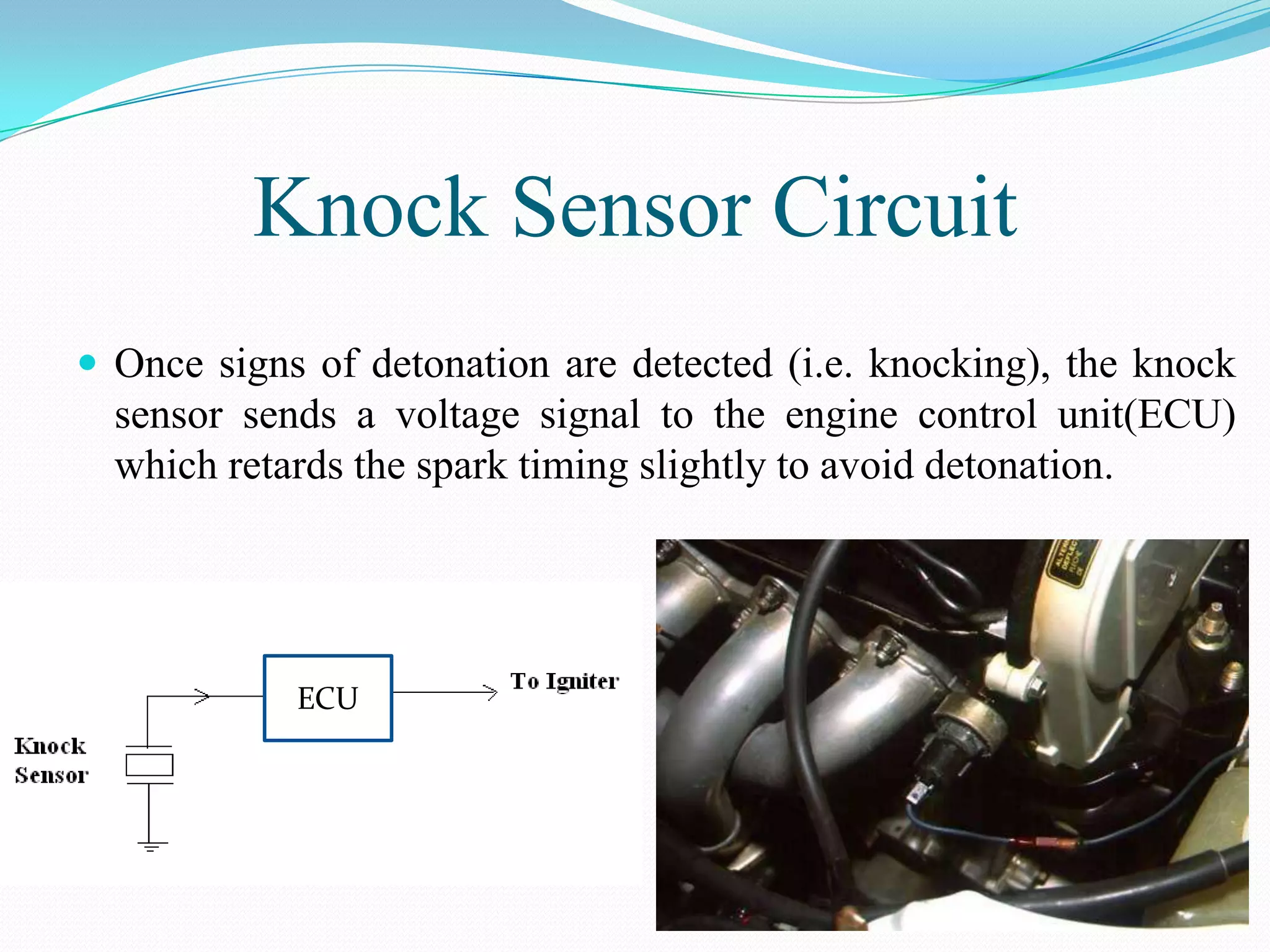
When the control system determines that knock is occurring, it can retard ignition timing to reduce the condition.
Why Does the ECU Retard Ignition Timing?
Retarding ignition timing means initiating the spark later in the engine cycle. When the control system detects knock, reducing spark advance can lower the likelihood or intensity of continued abnormal combustion.
The system can then work toward restoring the desired timing when the knock condition is no longer detected. The exact strategy differs by vehicle, engine, software calibration, and operating condition.
Resonant and Broadband Knock Sensors
Knock sensor designs are not identical. Some traditional sensors are tuned around a particular frequency associated with the engine, while broadband or non-resonant designs can respond over a wider frequency range.
This difference matters during diagnosis because a sensor designed for one engine should not automatically be assumed to work correctly on another engine simply because the connector or physical shape appears similar.
What Happens When the Sensor Detects Engine Knock?
When the control system identifies a knock signal, it can reduce ignition advance to help suppress abnormal combustion. The exact response depends on the vehicle’s calibration and may vary between engine designs.
The objective is to balance engine protection with performance. Excessive timing retard can reduce power and efficiency, while insufficient control can allow damaging levels of abnormal combustion to continue.
Knock control therefore acts as a feedback system. The engine computer monitors the sensor information, changes ignition timing when appropriate, and can continue adjusting timing as operating conditions change.
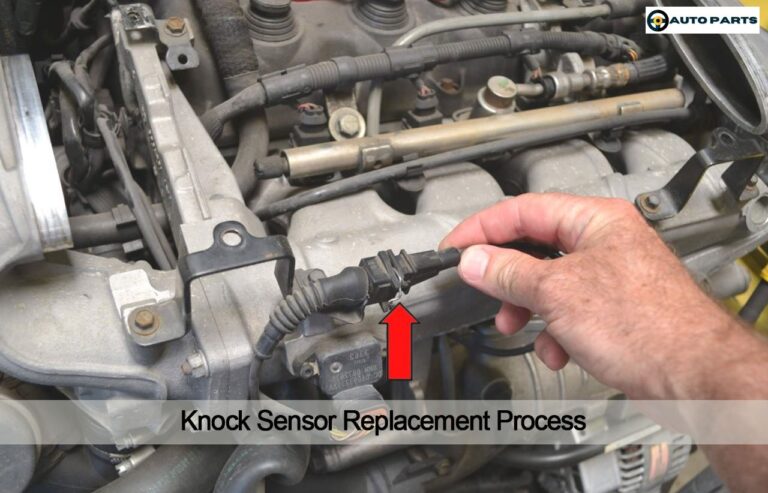
Source: storage.googleapis.com
Protection
Knock control helps reduce the risk associated with sustained abnormal combustion.
Timing control
The ECU can reduce ignition advance when its knock strategy determines that correction is needed.
Fuel and operating conditions
Fuel quality, engine load, temperature, and other conditions can affect the likelihood of knock and the system’s response.
Performance balance
The control system seeks appropriate ignition timing rather than simply keeping timing permanently retarded.
Why Is Engine Knock a Problem?
Engine knock is unwanted abnormal combustion that can produce severe pressure fluctuations inside the cylinder. Mild or occasional knock does not automatically mean an engine is about to fail, but sustained or severe knock can increase mechanical and thermal stress.
The potential consequences depend on the engine, operating conditions, severity, and duration. This is why modern engine-management systems use knock detection as part of their combustion-control strategy.
Where Is a Knock Detonation Sensor Located?
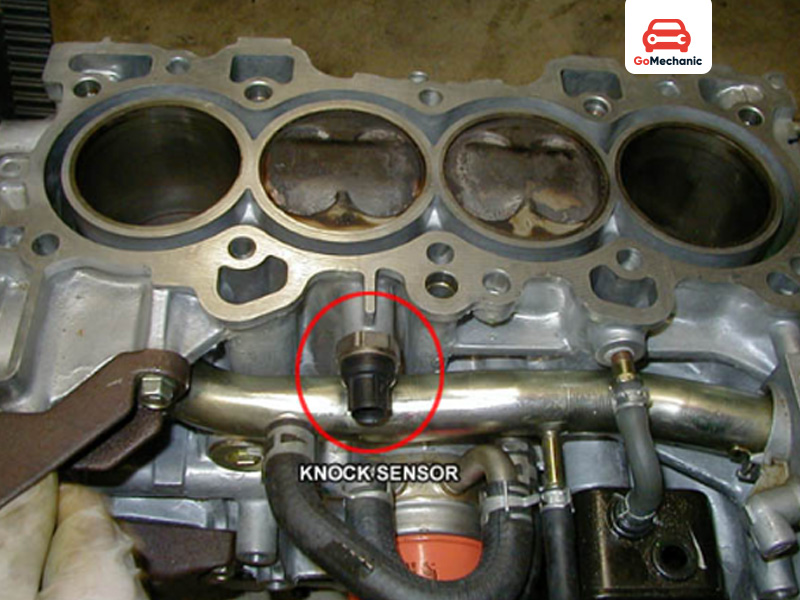
A knock detonation sensor is commonly mounted to the engine block, although the exact location depends on the engine design. Some applications place the sensor under or near the intake manifold, while others use locations specified by the manufacturer on the block or cylinder-head structure.
The location is important because the sensor must receive useful engine vibration while remaining within its specified environmental and mechanical limits. A sensor installed in the wrong location may not produce the signal characteristics expected by the engine-control system.
Vehicle-specific service information should be used before attempting replacement. On some engines, access can require removal of intake components or other parts.
Source: slideshare.net
Engine block
A common mounting location because combustion-related vibration travels through the engine structure.
Under an intake manifold
Some engines position the sensor in an area that is difficult to see without removing surrounding components.
Cylinder-head area
Certain engine designs use a specified cylinder-head or nearby structural location.
Multiple sensors
Some engines use more than one knock sensor so the control system can monitor different banks or areas of the engine.
What Are the Symptoms of a Bad Knock Detonation Sensor?
A failed knock detonation sensor can cause a check engine light, stored diagnostic trouble code, reduced engine performance, or altered ignition timing. However, these symptoms are not unique to the sensor and should not be used alone to confirm failure.
A problem in the sensor circuit can also come from damaged wiring, a poor electrical connection, corrosion, incorrect mounting, or an issue elsewhere in the engine that creates abnormal noise.
Some vehicles may enter a protective strategy when the system cannot trust the knock signal. That can result in noticeably reduced performance because the engine computer may use conservative ignition timing.
Source: walmart.com
Check engine light
The ECU may set a diagnostic trouble code when it detects a sensor or circuit problem.
Reduced performance
Conservative ignition timing can make the engine feel less responsive under some conditions.
Poor fuel economy
Incorrect ignition control can affect combustion efficiency, although many other faults can produce the same symptom.
Stored fault codes
A scan tool may identify a knock sensor circuit or performance-related fault, depending on the vehicle.
No obvious symptoms
Some sensor faults may initially produce few noticeable driving symptoms while still being recorded by the control system.
Can a Bad Knock Sensor Cause Engine Damage?
A failed knock sensor can interfere with the engine’s intended knock-control strategy, but the risk is not identical for every vehicle. Modern engine computers may use fallback strategies when the sensor signal is missing or implausible.
The underlying cause of the fault also matters. If the engine is actually experiencing severe knock because of fuel, ignition, temperature, or mechanical problems, replacing the sensor alone will not correct the cause.
How Do You Diagnose a Knock Detonation Sensor?
Diagnosing a knock detonation sensor should begin with the vehicle’s diagnostic trouble codes and service information rather than immediately replacing the sensor. The goal is to determine whether the sensor itself is faulty or whether the control system is reacting to another problem.
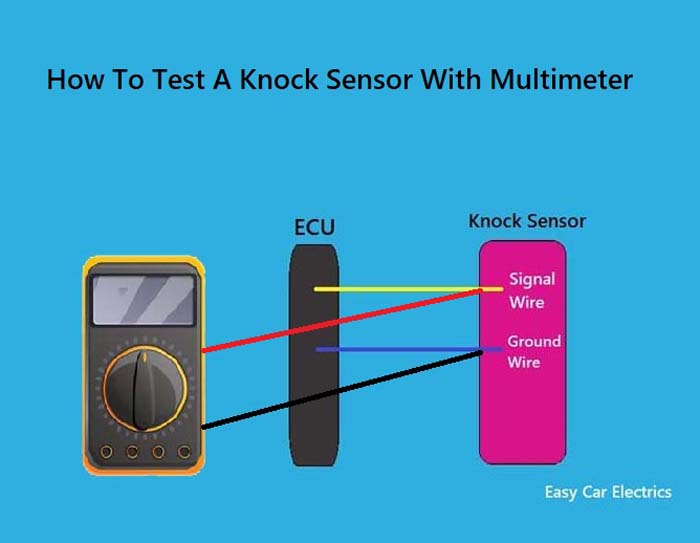
A proper diagnosis can include visual inspection, electrical testing, scan-tool data, connector inspection, and verification of the sensor’s installation. The exact tests and expected values are vehicle-specific.
Do not rely on a generic resistance value or a universal voltage test unless it is specified for the particular sensor and vehicle. Knock sensors can use different designs, circuits, and diagnostic strategies.
Source: bmotorsports.com
Read diagnostic codes
Use a compatible scan tool to identify stored or pending codes and determine which sensor circuit or engine condition is implicated.
Inspect the wiring
Check the connector, wiring harness, terminals, insulation, and routing for damage or contamination.
Check mounting
Verify that the sensor is installed at the specified location and tightened according to the manufacturer’s procedure.
Follow service specifications
Use the vehicle’s repair information for sensor testing, circuit measurements, torque specifications, and replacement procedures.
Check for other causes
Investigate genuine engine knock, poor fuel quality, overheating, ignition faults, mechanical noise, and other conditions that can affect the signal.
Why Sensor Installation Torque Matters
The mounting method can affect how vibration reaches the sensing element. For this reason, the manufacturer’s specified installation procedure and torque should be followed rather than tightening the sensor by feel.
Incorrect mounting can change sensor behavior or create an unreliable signal. Always use the service specification for the exact vehicle and sensor.
Should You Replace the Sensor Based Only on a Fault Code?
No. A diagnostic trouble code identifies a monitored fault condition, but it does not always prove that the sensor itself has failed. The wiring, connector, mounting, control circuit, or engine condition can also be responsible.
Confirming the circuit and following the manufacturer’s diagnostic procedure reduces the chance of replacing a good component while leaving the real problem unresolved.
What Can Cause Engine Knock Besides a Bad Sensor?
A knock detonation sensor does not create engine knock. If a vehicle is experiencing genuine abnormal combustion, the cause may be related to operating conditions, fuel, ignition timing, temperature, or engine condition.
Using the wrong fuel for an engine that specifies a higher octane rating can increase knock tendency in some operating conditions. Excessive engine temperature, abnormal ignition timing, deposits, or other combustion-related problems can also contribute.
The correct diagnostic path depends on the vehicle and the symptoms. If a sensor code is present along with audible knock, overheating, severe loss of power, or other serious symptoms, the underlying engine condition should be investigated rather than treating the sensor as the only possible cause.
Source: storage.googleapis.com
Fuel quality or octane
Fuel characteristics can affect knock tendency, especially when the engine is operating under high load.
Ignition timing
Ignition timing that is inappropriate for the engine’s operating condition can contribute to abnormal combustion.
High engine temperature
Excessive temperature can change combustion conditions and increase the likelihood of knock.
Carbon deposits
Deposits can alter combustion-chamber conditions and may contribute to abnormal combustion in some engines.
Mechanical noise
Loose or damaged components can create vibration that may complicate knock-sensor signal interpretation.
Common Mistakes When Dealing With a Knock Sensor
The most common mistake is treating every knock sensor code as proof that the sensor itself needs replacement. A better approach is to diagnose the complete circuit and consider whether the engine is producing abnormal vibration for another reason.
Another mistake is installing a sensor without following the manufacturer’s mounting instructions. Sensor location, contact with the engine, connector condition, and specified torque can all matter to the signal.
It is also risky to assume that knock sensors are universal. Similar-looking sensors can have different electrical characteristics, frequency responses, connectors, and calibration requirements.
Source: business.walmart.com
Replacing the sensor without testing
A code can result from wiring, connector, mounting, or control-system problems as well as sensor failure.
Using an incompatible sensor
A physically similar sensor may not have the characteristics required by the vehicle’s knock-control system.
Ignoring the mounting specification
Incorrect installation can affect how vibration reaches the sensor and may produce unreliable results.
Ignoring genuine engine knock
A new sensor will not repair a fuel, ignition, temperature, or mechanical problem that is causing abnormal combustion.
When Should You Get Professional Diagnosis?
Professional diagnosis is appropriate when the vehicle has persistent knock, severe loss of power, repeated fault codes, overheating, or symptoms that suggest an underlying engine problem. Modern engine-control systems can be complex, and manufacturer-specific diagnostic procedures may require specialized equipment.
If sensor access requires removal of major engine components, professional service may also be more practical. Follow the vehicle manufacturer’s repair information whenever sensor replacement or electrical testing is required.
Frequently Asked Questions
Q
What is a knock detonation sensor used for?
A knock detonation sensor is used to detect engine vibration associated with combustion knock. Its signal helps the ECU or PCM control ignition timing so the engine can respond to detected knock.
The sensor is part of a larger control system and does not independently determine every cause of abnormal combustion.
Q
Is a knock sensor the same as a detonation sensor?
Yes, the terms generally refer to the same automotive component. Knock sensor is the more common term, while detonation sensor appears in some parts catalogs and technical descriptions.
Both terms describe a sensor designed to detect vibration associated with abnormal combustion.
Q
Can a knock sensor stop engine knock?
A knock sensor does not directly stop engine knock. It detects vibration and sends information to the engine-control system, which can respond by changing ignition timing.
If another problem is causing severe knock, that underlying problem still needs to be diagnosed and corrected.
Q
What happens if a knock sensor fails?
A failed knock sensor or sensor circuit can trigger a check engine light and may cause the engine computer to use a protective or conservative timing strategy. Some vehicles may show reduced performance or fuel-economy changes.
The exact symptoms vary by vehicle because manufacturers use different diagnostic and fallback strategies.
Q
Can I drive with a bad knock sensor?
Whether continued driving is appropriate depends on the vehicle’s symptoms and the cause of the fault. A sensor circuit fault without other symptoms may not create an immediate drivability problem, but the engine’s knock-control capability may be affected.
If the engine is audibly knocking, overheating, losing significant power, or showing other serious symptoms, avoid continued operation until the cause is diagnosed.
Q
Where is a knock detonation sensor located?
The sensor is commonly mounted on the engine block, but the exact location varies by engine. Some vehicles place it under an intake manifold or in another manufacturer-specified position.
Use the exact service information for the vehicle because sensor location and access procedures are not universal.
✦ Wrapping Up
Conclusion
A knock detonation sensor is a vibration-sensing component that helps a modern engine control system recognize combustion knock. Most automotive designs use a piezoelectric element to convert engine vibration into an electrical signal that the ECU or PCM can evaluate.
When knock is detected, the control system can adjust ignition timing to reduce the condition. Because sensor faults, wiring problems, incorrect installation, mechanical noise, and genuine engine knock can produce related symptoms, accurate diagnosis is more useful than replacing the sensor based on a fault code alone.
💡 Key Takeaway
If your vehicle has a knock sensor fault, identify the exact code and follow the manufacturer’s diagnostic procedure before replacing the sensor; inspect the wiring, connector, mounting, and possible causes of genuine engine knock.
Ethan Brooks is an automotive writer at Auto News 7, covering car news, vehicle maintenance, new model updates, recalls, and practical buying guides. He focuses on clear, useful information that helps drivers understand their vehicles and make better ownership decisions.
Learn how to test camshaft position sensor wiring with a multimeter. Follow a safe step-by-step process to check power, ground, signal circuits, and common wiring faults.
Learn how to install crankshaft position sensor correctly with step-by-step instructions, tools, safety tips, troubleshooting advice, and signs of a successful installation.
Learn what are symptoms of a bad crankshaft position sensor, including hard starting, stalling, misfires, poor acceleration, and check engine light warnings.
Learn what the camshaft sensor controls, how it works with the engine computer, common failure symptoms, and why it is essential for fuel injection, ignition timing, and engine performance.