The coolant temperature sensor is usually located in a coolant passage near the thermostat housing, cylinder head, engine block, or coolant outlet. On many U.S.-market vehicles, the easiest starting point is to follow the upper radiator hose from the radiator to the engine and inspect the housing or coolant passage in that area.
The engine coolant temperature sensor, commonly called the ECT sensor or coolant temperature sensor, measures coolant temperature and sends an electrical signal to the engine control module. The control module can use that information for functions such as fuel control, ignition strategy, idle control, and cooling-fan operation. Exact placement is not standardized, however, so the location can vary substantially between vehicle makes, models, engines, and model years.
For a vehicle in the United States, do not assume that a picture showing the sensor on one engine applies to another vehicle from the same manufacturer. Factory service information for specific engines documents sensors installed in different places, including thermostat housings, coolant outlets, cylinder heads, intake-manifold areas, and engine coolant passages. The safest way to identify the correct component is to combine the general location clues below with the vehicle’s exact service information.
Source: carfromjapan.com
Where Is the Coolant Temperature Sensor Usually Located?
The coolant temperature sensor is usually installed in a part of the engine where coolant flows through or exits the engine. The most common area is near the thermostat housing or coolant outlet, but the exact position depends on the engine’s cooling-system design.
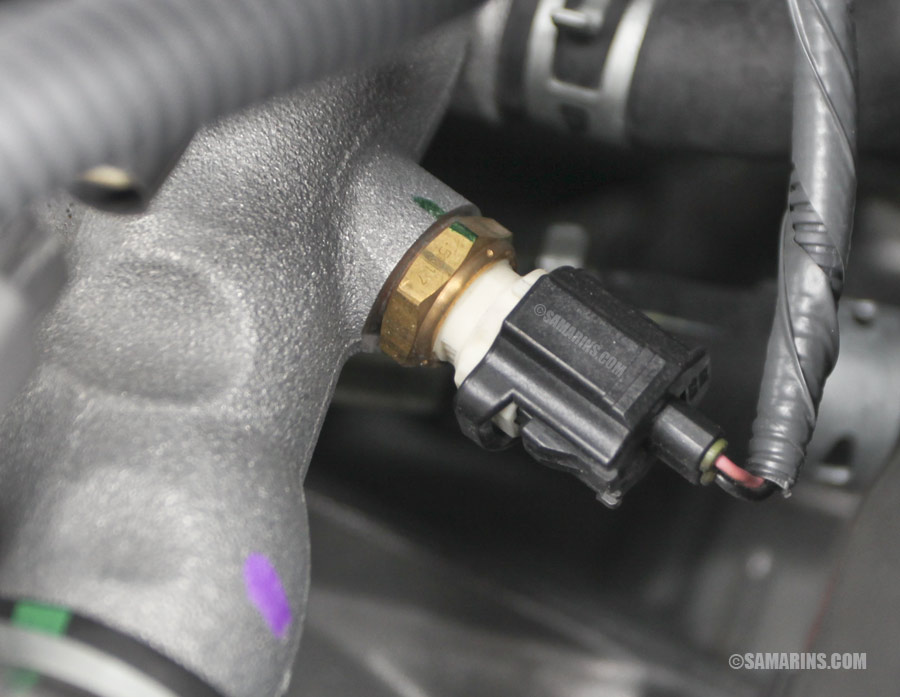
A practical first step is to locate the upper radiator hose and follow it from the radiator toward the engine. Where the hose connects to the engine is often the thermostat housing or another coolant outlet. Inspect that area for a small threaded sensor with an electrical connector. This method narrows the search considerably, although it does not guarantee that the sensor is installed at the hose connection.
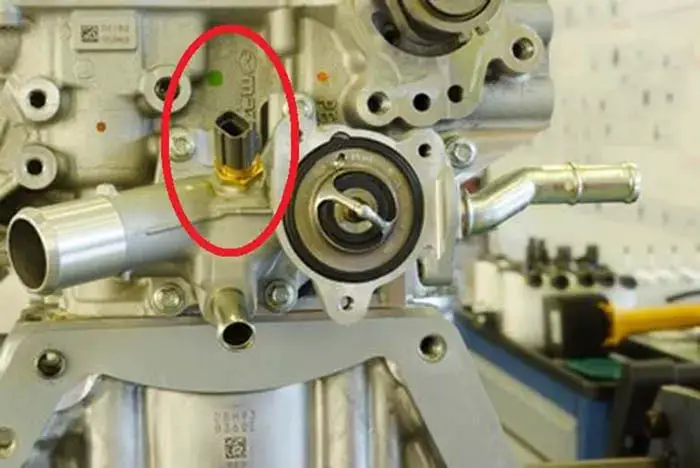
Factory documentation demonstrates why model-specific verification matters. For example, some service information places the sensor directly in a thermostat housing, while other engine designs put it in a cylinder-head or engine coolant passage near the thermostat. The same vehicle name can also be offered with multiple engines that use different component locations.
Source: samarins.com
Thermostat housing
A common location is the thermostat housing or water outlet, especially where a radiator hose connects to the engine.
Cylinder head
Some engines place the sensor directly in a coolant passage in the cylinder head.
Engine block
Certain engines use a threaded coolant passage in the engine block for the temperature sensor.
Intake manifold area
Some engine designs position the sensor in or near the intake manifold where it can access an engine coolant passage.
Why the Sensor Is Installed in These Areas
The sensor needs direct thermal exposure to engine coolant so its thermistor can respond to changes in temperature. The manufacturer chooses its position according to the coolant flow path and the information required by the engine-control system.
Because the sensor’s position is determined by the specific cooling-system design, there is no universal location that applies to every car, truck, or SUV sold in the United States.
How to Find the Coolant Temperature Sensor on Your Vehicle
You can usually narrow down the sensor’s location by tracing the cooling system and then identifying the electrical sensor installed in a coolant passage. Work only with a completely cool engine when inspecting or preparing to remove the sensor.
Start by opening the hood and identifying the radiator and its large coolant hoses. Follow the upper radiator hose toward the engine. Inspect the connection point and nearby coolant housings for a small threaded component with an electrical connector.
If the sensor is not visible there, inspect the cylinder head, coolant crossover passages, water outlet, and intake-manifold area. On some engines, the sensor can be partly hidden by wiring, brackets, ignition components, air-intake components, or the intake manifold itself.
Source: ricksfreeautorepairadvice.com
Step 1: Let the engine cool
Park the vehicle safely, switch the engine off, and allow the cooling system to cool completely before touching components or opening the system.
Step 2: Trace the upper radiator hose
Follow the large upper radiator hose from the radiator to its engine-side connection and inspect the surrounding coolant housing.
Step 3: Look for an electrical connector
Search for a small threaded sensor connected to an electrical plug rather than a large hose fitting or mechanical switch.
Step 4: Check alternative locations
If the thermostat housing does not contain the sensor, check the cylinder head, coolant crossover, engine block, water outlet, or intake-manifold area.
Step 5: Confirm before removal
Use the vehicle-specific service manual or wiring and component-location diagram before disconnecting or removing the suspected sensor.
What the Sensor Usually Looks Like
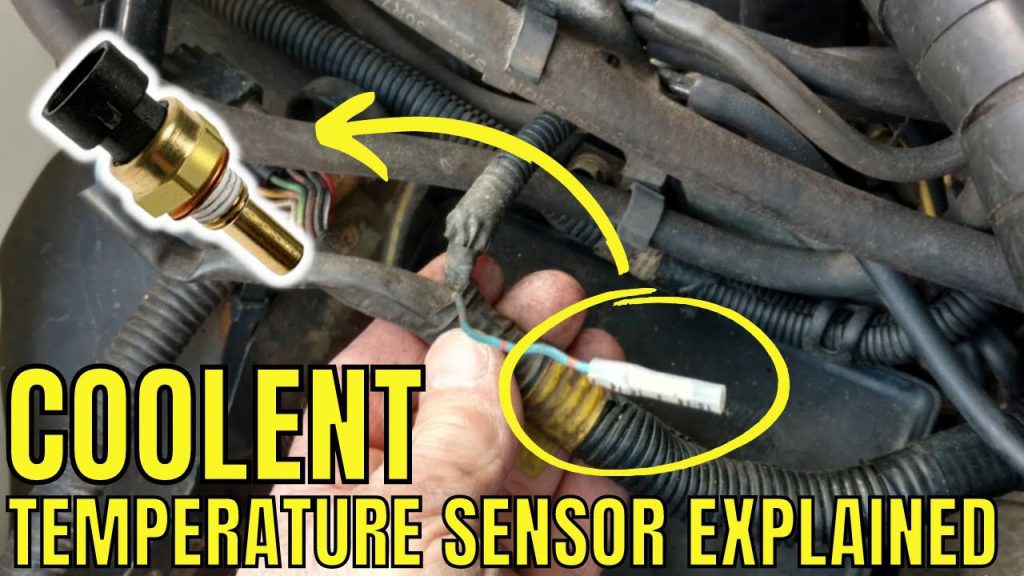
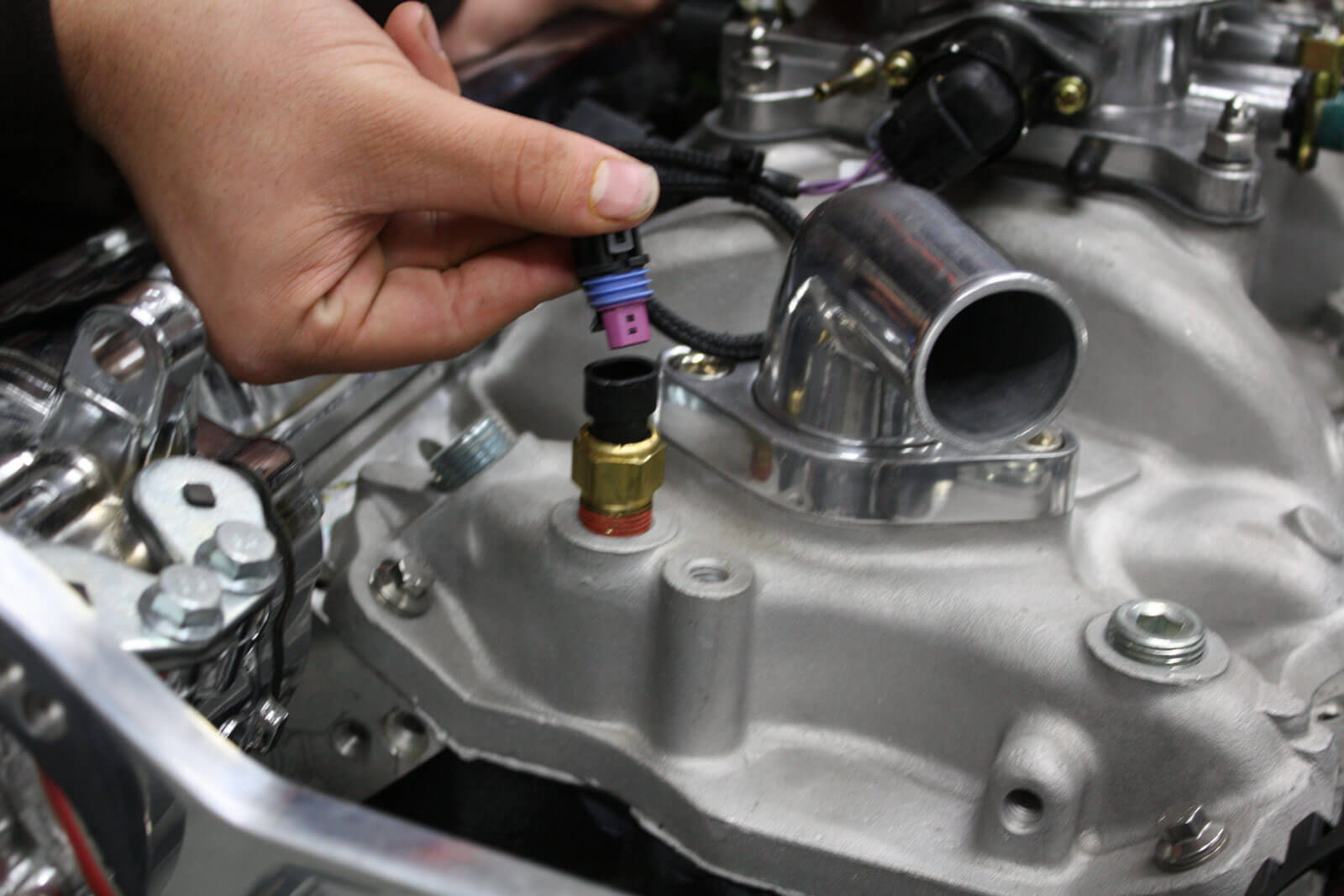
The ECT sensor is generally a compact threaded component with an electrical connector. Depending on the vehicle, the connector may contain two, three, or four terminals. The sensor body may have a metal hex section that accepts a wrench or a molded plastic section integrated with the connector.
Do not identify the sensor by color alone. Connector colors and sensor shapes vary among manufacturers, and nearby components can look similar. Confirm that the component is installed in a coolant passage and that its electrical connector matches the vehicle’s wiring information.
Electrical connector
The sensor has an electrical connection because its temperature-dependent signal is transmitted to an engine-control or gauge circuit.
Threaded mounting
Many ECT sensors screw into a threaded coolant passage, although the exact mounting arrangement varies.
Coolant exposure
The sensing portion is positioned so it can measure the temperature of the engine coolant.
How to Tell the Coolant Temperature Sensor From Other Sensors
The area around the thermostat and cylinder head can contain several sensors and switches, so appearance alone is not enough to identify the coolant temperature sensor. The key distinction is what the component is connected to and what system it measures.
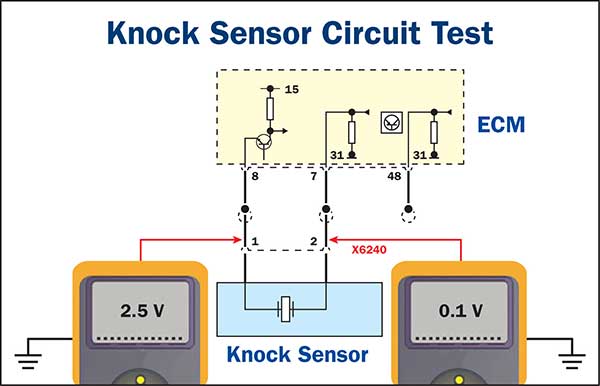
An oil pressure switch or sender is installed in an oil passage rather than a coolant passage. A knock sensor is normally mounted against the engine structure and detects vibration rather than coolant temperature. Some vehicles also use a separate temperature sender for the dashboard gauge, while others combine multiple temperature functions in one sensor assembly.
A vehicle-specific wiring diagram is the most reliable way to determine which connector belongs to the engine coolant temperature circuit. This is especially useful when multiple sensors are located close together.
Source: i.ytimg.com
ECT sensor
Installed in or directly connected to an engine coolant passage and provides temperature information to the relevant control circuit.
Oil pressure sender
Installed in an engine oil passage and measures or switches oil-pressure information.
Knock sensor
Mounted to the engine and detects vibration associated with combustion knock rather than measuring coolant.
Gauge temperature sender
Some vehicles use a separate temperature sender or separate circuit for the instrument-cluster temperature display.
Can a Car Have More Than One Coolant Temperature Sensor?
Yes. Some vehicles use more than one temperature-sensing circuit or sensor. One may provide information to the engine control module while another serves the instrument cluster or another control function. Other designs combine multiple functions in a single multi-pin sensor.
Because of these variations, finding one temperature-related sensor does not automatically prove that it is the only coolant temperature sensor on the vehicle.
Single sensor design
One sensor can supply temperature information to multiple vehicle systems through separate circuits.
Multiple sensor design
Separate sensors may be installed for engine management, the dashboard gauge, or other control functions.
Does the Coolant Temperature Sensor Location Change by Vehicle?
Yes. The coolant temperature sensor location can change between manufacturers, models, engines, and model years. Even two engines installed in the same vehicle model can use different sensor locations because their coolant passages and engine-management systems are different.
Service documentation provides clear examples of this variation. Some applications place the ECT sensor in the thermostat housing, while others place it in a coolant passage near the thermostat or directly in the engine block or cylinder head. This means a generic online photograph should be treated as a location clue rather than proof of the correct position for a particular vehicle.
Access can also differ dramatically. A sensor may be exposed and easy to reach on one engine but hidden beneath an intake manifold or other components on another. If replacement is required, the manufacturer’s removal procedure should be followed because some applications require coolant draining before the sensor is removed.
Source: i.ebayimg.com
Engine configuration
Inline, V-type, and other engine layouts can place coolant passages and sensors in different areas.
Thermostat design
The thermostat may be housed at different points in the cooling system, affecting where the temperature sensor is mounted.
Model year
A manufacturer can change engine hardware or sensor placement during a model revision, so year-specific information matters.
Engine option
Different engines offered in the same vehicle can have different sensor locations and access procedures.
The Best Way to Confirm the Exact Location
Use the vehicle’s exact year, make, model, engine size, and engine code when searching for component-location information. A factory service manual or reliable vehicle-specific repair database can show the sensor position and connector identification more accurately than a generic location guide.
If the vehicle has diagnostic trouble codes, a scan tool can also help confirm whether the engine control module is receiving a plausible coolant-temperature signal. A diagnostic code by itself, however, does not prove that the sensor is physically defective because wiring, connector, reference-voltage, ground, or coolant-related problems can produce similar symptoms.
Safety Before Inspecting or Removing the Coolant Temperature Sensor
The most important safety rule is to work on a cold engine. A running or recently operated cooling system can contain hot coolant under pressure. Removing a sensor, hose, radiator cap, or other pressurized component while the system is hot can release scalding coolant or steam.
If the sensor must be removed, follow the vehicle-specific procedure for coolant drainage, connector disconnection, sealing, torque, coolant refilling, and air bleeding. Some service procedures require the coolant level to be lowered below the sensor before removal, while others have different requirements.
After any cooling-system repair, check the coolant level and inspect for leaks once the engine has cooled as required by the manufacturer’s procedure. If the system has been opened, use the specified refill and bleeding method because trapped air can interfere with cooling-system operation and temperature readings.
Source: easycarelectrics.com
Never work on a hot pressurized system
Allow the engine and cooling system to cool before opening or removing components.
Protect against coolant exposure
Avoid skin and eye contact with coolant, clean spills promptly, and keep coolant away from children and animals.
Use the correct service procedure
Follow the vehicle-specific instructions for draining, sensor removal, sealing, tightening, refilling, and bleeding.
Check for leaks
After service, verify that the sensor and surrounding coolant connections remain dry and secure.
When You Should Stop and Get Professional Help
Professional diagnosis is appropriate when the sensor is inaccessible without removing major engine components, when the cooling system repeatedly loses coolant, when the engine overheats, or when you cannot identify the correct sensor with confidence.
If the vehicle is overheating, do not continue driving simply because the coolant temperature sensor appears easy to reach. An inaccurate temperature reading can be a symptom of a broader cooling-system problem, and overheating can cause severe engine damage.
Frequently Asked Questions
Q
Where is the coolant temperature sensor located on most cars?
On many vehicles, the coolant temperature sensor is near the thermostat housing or coolant outlet, often close to where the upper radiator hose connects to the engine. However, some engines place it in the cylinder head, engine block, intake-manifold area, or another coolant passage.
Q
Can I find the coolant temperature sensor by following the radiator hose?
Following the upper radiator hose from the radiator to the engine is a useful starting point because it often leads to the thermostat housing or coolant outlet. The sensor may be installed in that housing or nearby, but the method is not universal.
Q
What does a coolant temperature sensor look like?
It is usually a small threaded component installed in a coolant passage and fitted with an electrical connector. Many ECT sensors have two wires, while some vehicle designs use three or four terminals. Connector color and shape should not be used as the only identification method.
Q
Is the coolant temperature sensor the same as the temperature gauge sender?
Not always. Some vehicles use one sensor with multiple electrical circuits, while others use separate sensors for engine-management and dashboard temperature information. Vehicle-specific wiring information can identify which component serves each function.
Q
Can I remove the coolant temperature sensor while the engine is hot?
No. Do not remove a coolant temperature sensor from a hot, pressurized cooling system. Hot coolant or steam can escape when the sensor is loosened. Allow the engine to cool completely and follow the manufacturer’s removal procedure.
✦ Wrapping Up
Conclusion
The coolant temperature sensor is generally installed in an engine coolant passage where it can measure engine coolant temperature. The thermostat housing or nearby coolant outlet is a common location, but the sensor may instead be installed in the cylinder head, engine block, intake-manifold area, or another coolant housing depending on the vehicle.
For the fastest and most reliable search, start with the upper radiator hose and inspect the engine-side coolant housing, then check the cylinder head and other coolant passages if the sensor is not there. Confirm the exact location using the vehicle’s year, make, model, engine, and service information before removing any component.
If you are diagnosing a temperature-related problem, remember that a coolant-temperature fault does not automatically mean the sensor itself has failed. Wiring, connectors, coolant level, trapped air, thermostat operation, and other cooling-system faults can also affect the reported temperature.
💡 Key Takeaway
Let the engine cool completely, trace the upper radiator hose to the engine, inspect the thermostat housing and nearby coolant passages for the electrical temperature sensor, and verify the exact component location with vehicle-specific service information before removal.
Ethan Brooks is an automotive writer at Auto News 7, covering car news, vehicle maintenance, new model updates, recalls, and practical buying guides. He focuses on clear, useful information that helps drivers understand their vehicles and make better ownership decisions.
Learn how to test a GM knock sensor using a multimeter, scan tool, and practical diagnostic steps. Discover common symptoms, testing methods, and troubleshooting tips for Chevrolet, GMC, Cadillac, and Buick vehicles.
Learn whether camshaft sensors are interchangeable, how to identify compatible sensors, common mistakes to avoid, and how to choose the correct replacement for your vehicle.