Replace a crankshaft position sensor when testing confirms the sensor or its signal circuit has failed.
For drivers in the United States, there is usually no fixed mileage interval for replacing a crankshaft position sensor. The sensor is generally replaced when it fails, produces an unreliable signal, or cannot meet the vehicle manufacturer’s test specifications. A warning light, hard starting, stalling, or an engine that suddenly refuses to start can point to a crankshaft position sensor problem, but these symptoms can have other causes.
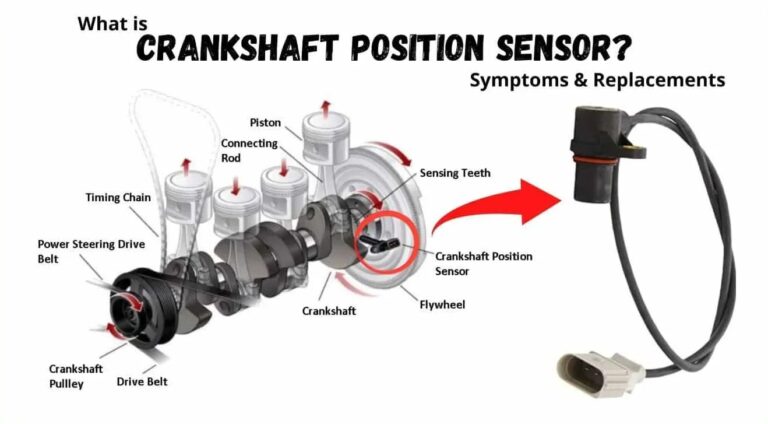
The crankshaft position sensor, often called the CKP sensor, tells the engine computer where the crankshaft is and how fast it is turning. That information helps the powertrain control module manage ignition and fuel injection. Because the signal is important to engine operation, a confirmed CKP failure should be repaired promptly rather than treated as a routine maintenance item.
Source: autotoride.com
When Should You Replace a Crankshaft Position Sensor?
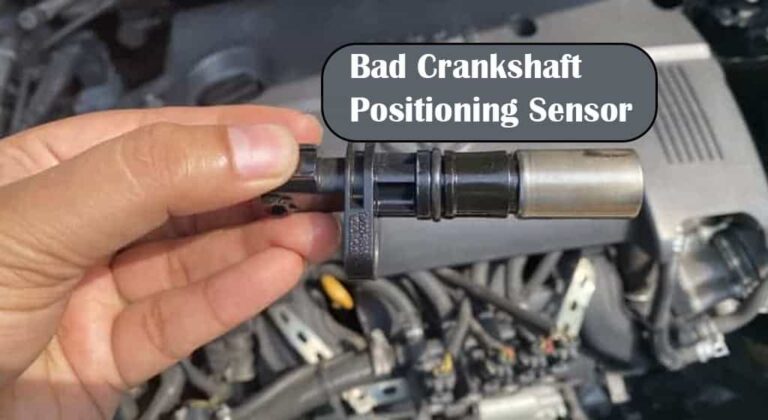
You should replace a crankshaft position sensor when diagnostic testing shows that the sensor is defective, its output is outside the manufacturer’s specifications, or the sensor has physical damage that affects its operation. Some vehicles also have manufacturer-specific procedures that identify a CKP sensor as the cause of a fault before replacement.
There is no single mileage number that applies to every vehicle. A CKP sensor may last for many years, while another may fail earlier because of heat, vibration, contamination, wiring problems, or damage. The correct replacement point depends on the vehicle and the evidence found during diagnosis.
Source: mechlesson.com
Confirmed sensor failure
Testing shows that the CKP sensor does not produce the required signal or does not meet the vehicle manufacturer’s specifications.
Repeated signal loss
The sensor signal cuts out intermittently and testing identifies the sensor as the source rather than the wiring or another component.
Physical sensor damage
The sensor housing, sensing tip, connector, or mounting area is damaged in a way that can affect the signal.
Manufacturer-directed replacement
Vehicle-specific service information identifies sensor replacement as the appropriate repair after the required diagnostic checks.
Do Crankshaft Position Sensors Have a Replacement Interval?
Most vehicles do not call for routine CKP sensor replacement at a specific mileage. Unlike engine oil, filters, or some timing components, the crankshaft position sensor is generally replaced because of a diagnosed fault rather than because the odometer reaches a predetermined number.
If your owner’s maintenance schedule does not list CKP sensor replacement, do not replace the sensor simply because the vehicle has high mileage. A high-mileage vehicle can still have a functioning original sensor.
What Does a Crankshaft Position Sensor Do?
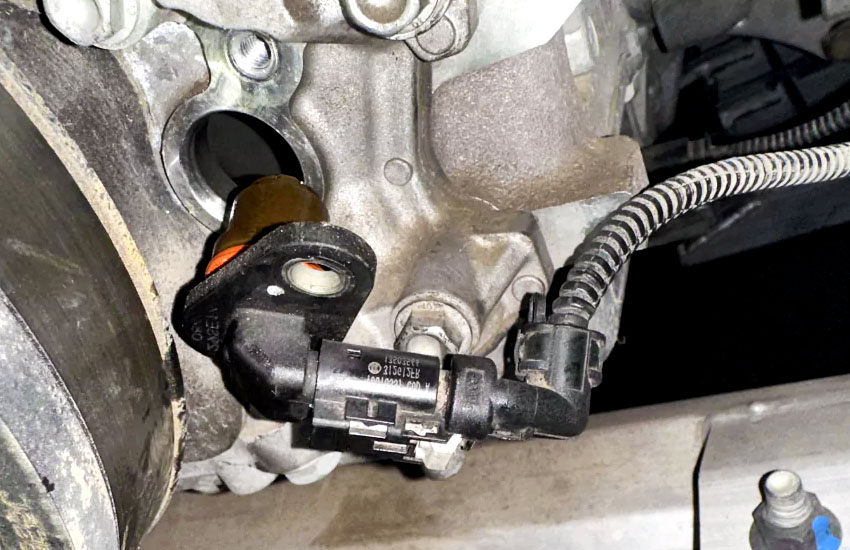
The crankshaft position sensor monitors crankshaft position and rotational speed. The engine computer uses this information to coordinate events such as ignition and fuel injection with the movement of the engine.
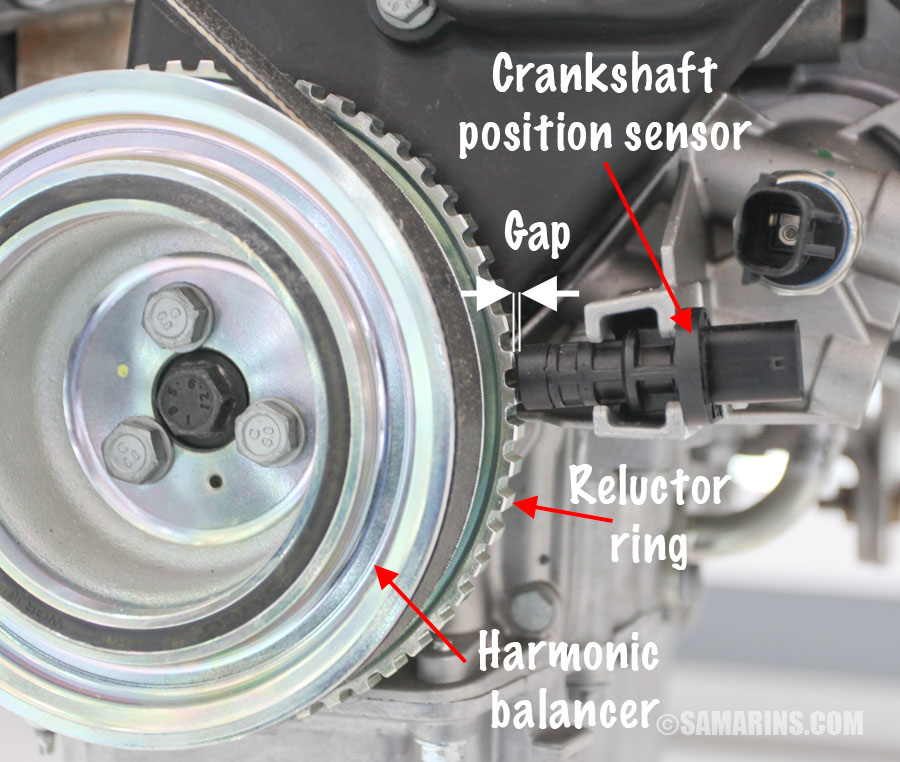
The sensor works with a rotating trigger wheel, reluctor, or similar target associated with the crankshaft. As the target passes the sensor, it produces a changing electrical signal. The engine computer interprets that signal to determine crankshaft speed and position.
A missing or unreliable CKP signal can therefore affect starting and engine operation. The exact effect depends on the vehicle’s control strategy and how the engine computer responds to a lost signal.
Source: brrlt.org
Position reference
The sensor supplies information used by the engine computer to determine crankshaft position.
Engine speed reference
The signal provides information about crankshaft rotation speed, including during engine cranking.
Timing input
The engine computer can use the CKP signal as an important reference for ignition and fuel-injection timing.
Why a CKP Failure Can Prevent Starting
During starting, the engine computer needs reliable information about crankshaft movement. If the CKP signal is missing or implausible, some vehicles may be unable to establish the timing information needed to operate the engine correctly.
That is why an intermittent CKP problem can produce a confusing pattern: the vehicle may start normally one moment, stall later, and then restart after the sensor or surrounding components cool down or the electrical connection changes.
Signs That a Crankshaft Position Sensor May Need Replacement
The strongest reason to replace a crankshaft position sensor is a confirmed diagnostic fault, but symptoms can tell you when the system needs attention. A failing CKP sensor can cause problems that appear during starting, idling, acceleration, or normal driving.
No single symptom proves that the sensor is bad. Several unrelated engine and electrical faults can produce similar behavior. Use the symptoms to guide diagnosis rather than treating them as proof of sensor failure.
Source: safetyfic.com
Hard starting
The engine may crank for longer than normal before starting, especially when the sensor signal becomes unreliable.
Intermittent no-start
The starter may turn the engine normally while the engine fails to start because the control system is not receiving a usable crankshaft signal.
Unexpected stalling
A CKP signal that drops out while driving can cause the engine to stop running on some vehicles.
Rough running or hesitation
An incorrect or intermittent position signal can contribute to poor engine operation.
Check engine light
The vehicle computer may store a diagnostic trouble code when it detects a crankshaft position circuit or signal problem.
Intermittent symptoms
A sensor or circuit affected by temperature, vibration, or a loose connection may work normally at some times and fail at others.
Symptoms That Deserve Immediate Attention
An engine that stalls unexpectedly deserves prompt attention, especially if the stall occurs in traffic. If the vehicle repeatedly loses power or cannot restart reliably, avoid driving it until the cause is diagnosed.
A flashing warning light, severe engine misfire, or other major drivability problem can also indicate a broader engine-management issue. The CKP sensor should not be blamed without checking the complete system.
How to Diagnose a Crankshaft Position Sensor Before Replacing It
Diagnosis should come before replacement because a CKP fault code can identify a problem in the sensor circuit without proving that the sensor itself has failed. A damaged wire, poor connector contact, incorrect sensor gap, damaged trigger wheel, or another control-system problem can produce a similar result.
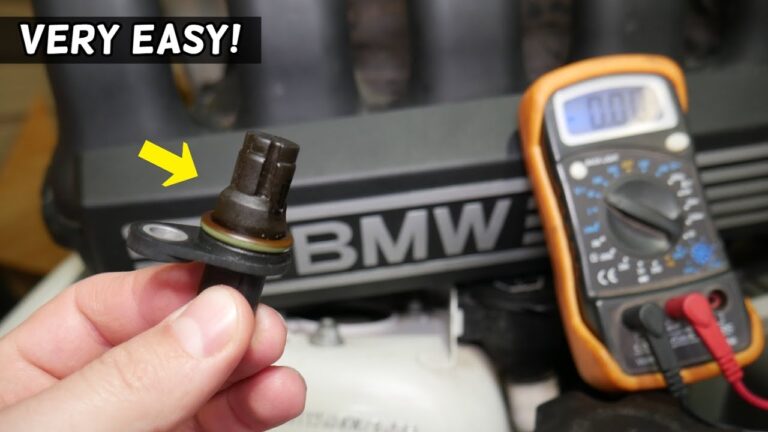
Start with the vehicle-specific diagnostic procedure. The exact test method varies by sensor type, engine design, and manufacturer.
Source: youtube.com
1. Scan for diagnostic trouble codes
Use a compatible scan tool to identify stored or pending codes and record all relevant codes before clearing anything.
2. Check the symptoms
Note whether the problem occurs during starting, when the engine is hot, under acceleration, at idle, or randomly.
3. Inspect the wiring
Look for damaged insulation, corrosion, loose terminals, oil contamination, chafing, or connectors that are not fully secured.
4. Inspect the sensor and target
Check for physical damage, contamination, incorrect installation, and problems with the reluctor or trigger wheel when accessible.
5. Test the signal
Follow the manufacturer’s procedure using the specified test equipment and expected signal values.
6. Repair the actual fault
Replace the sensor only when the evidence identifies it as the failed component.
Why a Crankshaft Sensor Code Does Not Always Mean a Bad Sensor
A diagnostic trouble code is a starting point, not always a final diagnosis. For example, a crankshaft position circuit code can result from a defective sensor, damaged wiring, poor electrical connections, or a problem with the mechanical target that the sensor reads.
Vehicle service information may also require additional checks before a sensor is condemned. On some vehicles, the repair may involve checking sensor position or gap and performing a crankshaft position variation relearn after the repair.
Avoid parts swapping
Replacing the sensor first can waste money if the actual problem is wiring, a connector, a damaged trigger wheel, or an unrelated engine fault.
Use vehicle-specific information
Testing procedures and acceptable readings differ between makes, models, engines, and sensor designs.
When a Wiring Problem Is More Likely Than a Bad Sensor
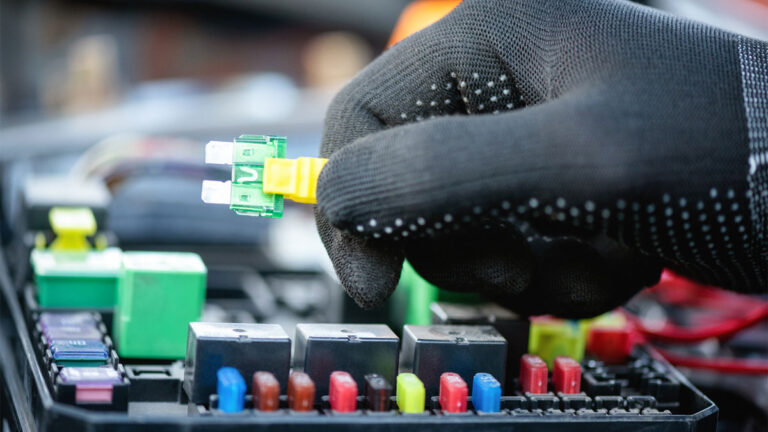
A damaged electrical connection can create the same symptoms as a failed CKP sensor. Before installing a new sensor, inspect the connector and wiring carefully, particularly if the problem started after engine work, an impact, water exposure, or repeated vibration.
A connector that is loose or has poor terminal contact can interrupt the sensor signal. Damaged insulation can also allow a circuit to short or become intermittent.
Source: hitchesguide.com
Loose connector
A connector that is not fully seated can interrupt the sensor circuit.
Corroded terminals
Corrosion can increase electrical resistance or prevent reliable contact.
Damaged wiring
Chafed, stretched, burned, or broken wiring can cause intermittent or permanent signal loss.
Poor routing
Wiring that contacts hot or moving components can become damaged over time.
What About the Reluctor or Trigger Wheel?
The CKP sensor reads a rotating target, so the target itself matters. Depending on the engine, this component may be called a reluctor wheel, tone ring, trigger wheel, or another manufacturer-specific name.
A damaged, incorrectly positioned, or mechanically misaligned target can create an incorrect CKP signal even when the sensor is functioning. This is one reason a complete diagnosis is preferable to replacing the sensor based only on a trouble code.
How Often Should You Replace a Crankshaft Position Sensor?
There is no universal replacement schedule for a crankshaft position sensor. If the sensor is working correctly and the manufacturer does not specify preventive replacement, it generally does not need to be changed simply because the vehicle reaches a certain mileage.
Instead, monitor for symptoms and respond to diagnostic trouble codes. If the vehicle has a known manufacturer service campaign, technical bulletin, or specific maintenance instruction involving the CKP system, follow the information for the exact vehicle.
Source: 1aauto.com
No routine interval
Most CKP sensors are replaced because of a diagnosed problem rather than at a universal mileage interval.
Vehicle condition matters
Heat, vibration, contamination, wiring damage, and mechanical problems can affect sensor reliability.
Vehicle-specific instructions matter
Some models have special diagnostic, installation, or relearn requirements that do not apply to other vehicles.
Should You Replace the Sensor Preventively on a High-Mileage Car?
High mileage alone is not enough reason to replace a functioning CKP sensor. Preventive replacement may make sense only when the vehicle manufacturer specifically recommends it or when inspection shows deterioration that warrants replacement.
If a high-mileage vehicle develops intermittent starting or stalling problems, diagnosis is more useful than replacing the sensor solely because of its age or mileage.
What to Check After Replacing the Crankshaft Position Sensor
After replacement, follow the vehicle manufacturer’s installation and verification procedure. Some vehicles require a crankshaft position variation learn or similar relearn procedure after the sensor or related components are serviced.
Do not assume that clearing the trouble code completes the repair. Start the engine, verify that the expected signal is present, and check whether the original fault returns. If a relearn is required, complete it using the specified procedure and equipment.
Source: 1aauto.com
Verify the connector
Make sure the electrical connector is fully seated and the wiring is routed correctly.
Check for leaks or interference
Confirm that the sensor is installed correctly and is not contacting a rotating component.
Perform required relearn procedures
Complete any manufacturer-specified crankshaft position variation or related calibration procedure.
Recheck diagnostic codes
Scan the vehicle again after the repair and confirm that the original fault does not return.
Verify normal operation
Confirm reliable starting, stable operation, and normal drivability under the conditions that originally produced the fault.
Why a Relearn May Be Necessary
Some engine computers use a crankshaft position variation procedure to learn small differences in the crankshaft and trigger-wheel signal. The exact requirement depends on the vehicle.
A replacement sensor does not automatically mean a relearn is required on every vehicle. Check the service information for the exact year, make, model, engine, and control system before performing or skipping the procedure.
Common Mistakes When Replacing a Crankshaft Position Sensor
The most common mistake is replacing the sensor without confirming that the sensor is actually defective. Because CKP-related symptoms overlap with other engine and electrical problems, parts replacement without diagnosis can leave the original problem unresolved.
Another mistake is ignoring vehicle-specific installation requirements. Sensor location, mounting method, air gap, wiring route, tightening specification, and relearn requirements can differ substantially between vehicles.
Source: 1aauto.com
Replacing the sensor from the code alone
A trouble code can point to a circuit or signal problem without proving that the sensor itself has failed.
Ignoring the connector
Loose or damaged terminals can create intermittent CKP faults.
Skipping manufacturer specifications
Incorrect installation, sensor positioning, or tightening can create a new problem.
Skipping a required relearn
Some vehicles require a crankshaft position variation or related learning procedure after service.
Continuing to drive after repeated stalling
An engine that unexpectedly shuts off can create a serious traffic hazard, so repeated stalling should be diagnosed promptly.
When Professional Diagnosis Makes Sense
Professional diagnosis is appropriate when the engine stalls while driving, the vehicle has an intermittent no-start condition, the wiring is difficult to access, or diagnostic testing requires equipment you do not have.
A trained technician can compare the CKP signal with other engine signals, inspect the circuit, follow the manufacturer’s diagnostic tree, and determine whether the sensor or another component is actually responsible.
A Simple Decision Guide for CKP Sensor Replacement
The practical decision is straightforward: symptoms tell you that the engine needs attention, diagnostic testing identifies the system involved, and vehicle-specific testing determines whether the CKP sensor itself should be replaced.
Use the following sequence instead of treating mileage or one diagnostic code as an automatic replacement trigger.
Source: 1aauto.com
The vehicle has no symptoms and no fault
Do not replace the CKP sensor solely because the vehicle has high mileage unless the manufacturer specifies preventive replacement.
The vehicle has CKP-related symptoms
Scan for diagnostic trouble codes and inspect the sensor circuit and related components.
A CKP code is present
Follow the vehicle-specific diagnostic procedure before condemning the sensor.
Testing confirms sensor failure
Replace the sensor using the correct part and manufacturer installation procedure.
Testing identifies wiring or target damage
Repair the actual fault rather than replacing a sensor that may still be functional.
The engine continues to stall
Stop relying on repeated restarts and arrange professional diagnosis, particularly if the vehicle stalls in traffic.
What the Evidence Tells You
The most useful evidence is the combination of symptoms, diagnostic codes, physical inspection, and measured sensor behavior. Any one of these pieces can be misleading when considered alone.
This approach also helps avoid unnecessary parts replacement. A CKP sensor should be treated as one possible cause within the engine position-sensing system, not as the automatic answer to every starting or stalling complaint.
Frequently Asked Questions
Q
How do I know when to replace a crankshaft position sensor?
Replace the sensor when diagnostic testing confirms that it has failed, its signal is outside the vehicle manufacturer’s specifications, or vehicle-specific service information directs replacement after the required checks. Hard starting, stalling, intermittent no-start conditions, and a check engine light can indicate a CKP problem, but they do not prove that the sensor is defective.
Q
How long does a crankshaft position sensor last?
There is no universal lifespan that applies to every crankshaft position sensor. Service life depends on the vehicle, sensor design, operating conditions, heat exposure, vibration, contamination, and the condition of the surrounding wiring and components.
Q
Can a bad crankshaft position sensor cause a car not to start?
Yes. On some vehicles, loss of a usable crankshaft position signal can prevent the engine computer from establishing the information needed for normal engine operation during starting. However, a no-start condition has many possible causes, so the CKP system should be tested rather than assumed to be the problem.
Q
Can I drive with a bad crankshaft position sensor?
Driving with a suspected failing CKP sensor can be risky if the engine may stall unexpectedly. If the vehicle repeatedly stalls, loses power, or becomes difficult to restart, have it diagnosed rather than continuing to drive it in traffic.
Q
Does a crankshaft position sensor code mean the sensor needs to be replaced?
Not necessarily. A CKP-related code can be caused by the sensor, wiring, connector problems, sensor installation, the trigger or reluctor wheel, or another fault affecting the signal. Diagnosis should identify the actual cause before the sensor is replaced.
Q
Does a new crankshaft position sensor need to be programmed?
A CKP sensor itself is not universally programmed like a control module. However, some vehicles require a crankshaft position variation learn or related relearn procedure after replacement. Check the service procedure for the exact vehicle because requirements vary.
Q
Should I replace the crankshaft position sensor as preventive maintenance?
Usually, there is no universal mileage-based reason to replace a functioning CKP sensor. Follow the manufacturer’s maintenance instructions for the specific vehicle and replace the sensor when testing or documented service information shows that replacement is warranted.
✦ Wrapping Up
Conclusion
Knowing when to replace a crankshaft position sensor is less about mileage and more about diagnosis. A sensor should generally be replaced when testing confirms failure or when the vehicle manufacturer’s service procedure identifies it as the cause of the problem.
Hard starting, unexpected stalling, intermittent no-start conditions, rough running, and a check engine light can all justify checking the CKP system. Before buying a replacement sensor, inspect the wiring and connector, check related components, and follow the correct diagnostic procedure for the vehicle.
💡 Key Takeaway
If your vehicle shows CKP-related symptoms, scan for codes and inspect the sensor circuit first. Replace the crankshaft position sensor only after the evidence identifies it as the faulty component, then complete any required relearn and verification procedure.
Ethan Brooks is an automotive writer at Auto News 7, covering car news, vehicle maintenance, new model updates, recalls, and practical buying guides. He focuses on clear, useful information that helps drivers understand their vehicles and make better ownership decisions.
Learn how to test a GM crankshaft position sensor with a multimeter, scan tool, and visual checks. Find bad sensors, wiring faults, and signal problems safely.
Can a crankshaft position sensor cause transmission problems? Learn how a faulty CKP sensor can affect shifting, symptoms to watch for, and how to diagnose it.
Learn whether there is a fuse for a camshaft position sensor, where to find it, how to diagnose related electrical problems, and what to check before replacing the sensor.
Learn what are symptoms of a bad crankshaft position sensor, including hard starting, stalling, misfires, poor acceleration, and check engine light warnings.