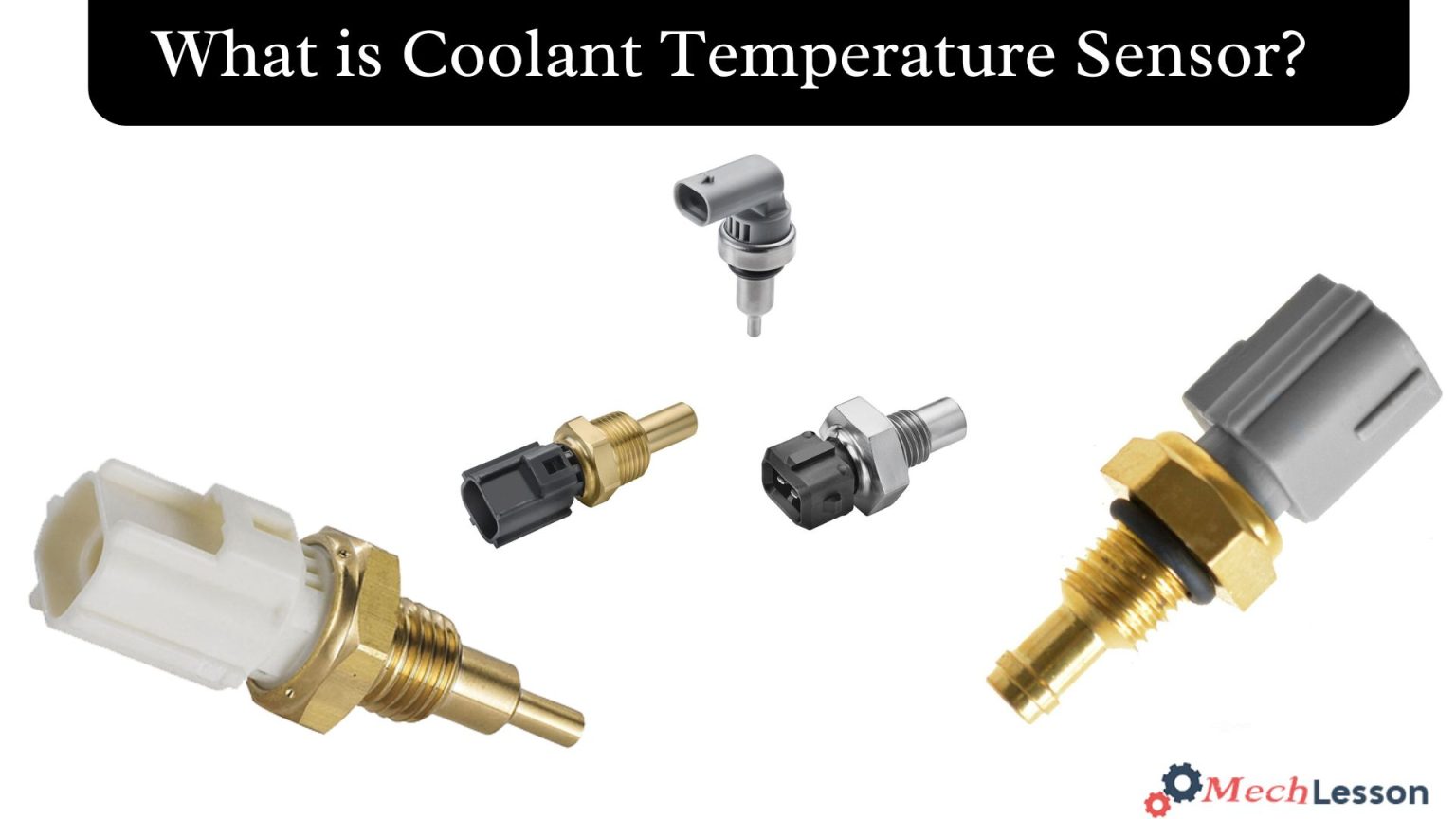
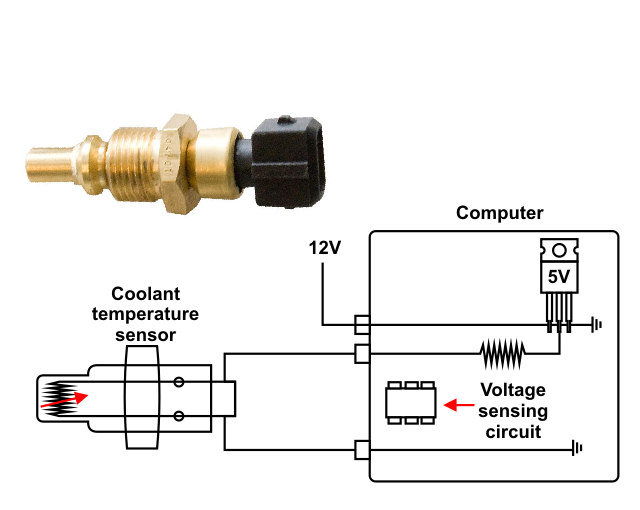
A coolant temperature sensor is used to measure engine coolant temperature and send that information to the vehicle’s engine control computer. The computer can use the reading to adjust fuel injection, ignition timing, emissions-related functions, and, on many vehicles, electric cooling-fan operation. The sensor may also provide information used by the dashboard temperature gauge.
For drivers in the United States, the engine coolant temperature sensor is a small component with an important role in modern gasoline and diesel vehicle operation. The sensor monitors the temperature of the coolant around the engine and communicates that information to the engine control unit, engine control module, or powertrain control module, depending on the vehicle.
The sensor does not physically regulate coolant flow. Instead, it provides temperature information that other systems can use to make decisions. A vehicle may rely on this information when determining how much fuel to inject during a cold start, how to adjust ignition timing, when to operate an electric cooling fan, and whether the engine has reached the temperature required for certain control strategies. Because the exact configuration varies by year, make, model, and engine, the vehicle’s service information should be used when diagnosing a specific system.
Source: mechlesson.com
What Is a Coolant Temperature Sensor?
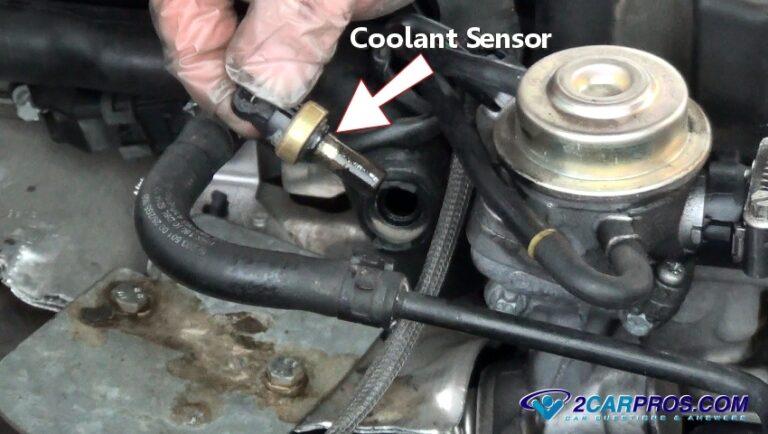
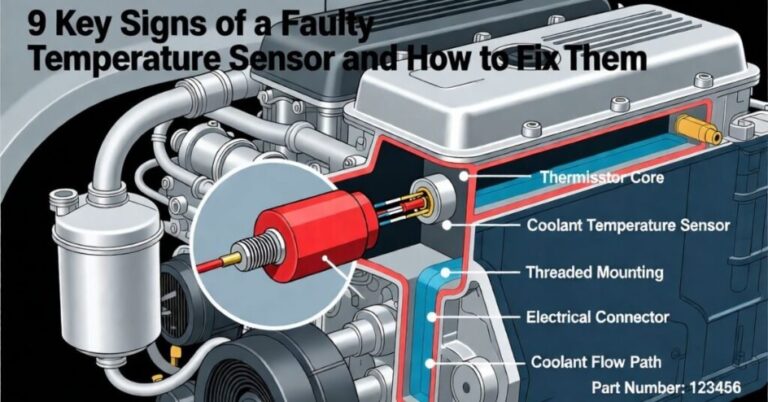
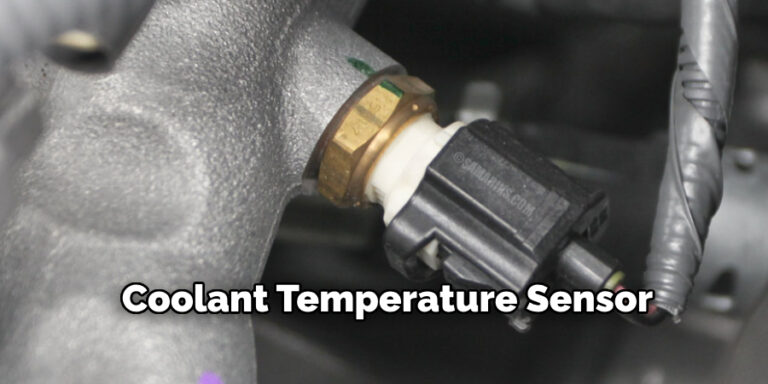
A coolant temperature sensor, commonly called an engine coolant temperature sensor or ECT sensor, is an electronic temperature-sensing device that monitors the temperature of the coolant circulating through or around the engine. It is generally installed where it can accurately sense engine coolant temperature, often near the thermostat housing, cylinder head, or another coolant passage.
Most automotive coolant temperature sensors use a thermistor. A thermistor changes electrical resistance as its temperature changes. The vehicle’s engine control computer interprets the sensor’s electrical signal and converts it into a temperature value that can be used by engine-management strategies.
The sensor is therefore best understood as an information source rather than a device that directly cools the engine. It tells the control system what temperature condition the engine is experiencing so the computer can make appropriate adjustments.
Source: i.ytimg.com
Common names
The component may be called an engine coolant temperature sensor, coolant temperature sensor, ECT sensor, CTS, or engine temperature sensor. Vehicle terminology varies.
Typical location
Many vehicles place the sensor near the thermostat housing or in a coolant passage, but the exact location depends on the engine design.
Main purpose
Its primary purpose is to provide an accurate coolant-temperature signal to vehicle systems that need to know the engine’s thermal condition.
How Does the Sensor Measure Temperature?
A common ECT sensor uses a negative-temperature-coefficient thermistor. Its electrical resistance generally decreases as temperature rises. The engine control computer supplies and monitors an electrical circuit, then uses the resulting signal to determine coolant temperature.
The exact voltage or resistance value is not universal across vehicles. For that reason, a reading that appears normal on one vehicle cannot automatically be treated as correct for another. Manufacturer service specifications are the appropriate reference for electrical testing.
Cold engine
The sensor normally presents a different electrical resistance than it does at operating temperature, allowing the control computer to recognize that the engine is cold.
Warm engine
As coolant temperature increases, the sensor’s electrical characteristics change and the computer can recognize the higher temperature.
What Is a Coolant Temperature Sensor Used For?
The coolant temperature sensor is primarily used to provide the engine control computer with engine-temperature information. That information can affect several operating decisions, especially during engine warm-up and when the engine reaches normal operating temperature.
The exact functions vary between vehicles. Some vehicles use one sensor for multiple systems, while others use separate temperature sensors or separate sensing circuits for different purposes. Always verify the configuration for the specific vehicle before diagnosing or replacing a component.
Source: i.ytimg.com
Fuel injection control
The engine control computer can use coolant temperature as an input when determining fuel delivery. A cold engine generally requires different fueling than a fully warmed engine.
Ignition timing control
Coolant temperature can be one of the inputs used to determine appropriate ignition timing under different operating conditions.
Cooling fan control
On many vehicles, coolant-temperature information contributes to electric cooling-fan control. The computer can command fan operation when conditions require additional airflow through the radiator.
Emissions control
Coolant temperature can influence engine-management functions related to warm-up and emissions control because many strategies change as the engine reaches operating temperature.
Dashboard temperature information
Depending on the vehicle design, coolant-temperature information may also be used to operate the dashboard temperature gauge or warning system.
Why Is Coolant Temperature Important for Fuel Control?
An engine does not operate under exactly the same conditions immediately after a cold start as it does after reaching normal operating temperature. The engine control computer can use coolant temperature to recognize this difference and modify fuel delivery accordingly.
If the sensor reports an incorrect temperature, the computer may make an inappropriate fueling decision. Depending on the fault and vehicle strategy, this can contribute to difficult starting, rough idle, poor fuel economy, or other drivability problems.
Can the Sensor Control the Cooling Fan?
It can contribute to cooling-fan control on many modern vehicles, but it is not correct to assume that every vehicle uses the coolant temperature sensor in exactly the same way. Some systems use the engine control module to interpret coolant temperature and command a fan relay or electronic fan module.
The sensor itself does not normally supply the electrical power that drives a large cooling fan. Instead, it supplies temperature information that a control system can use to determine whether fan operation is required.
What Happens When the Coolant Temperature Sensor Fails?
A failed coolant temperature sensor can produce incorrect temperature information, which can cause the engine control computer to make inappropriate adjustments. The resulting symptoms depend on whether the sensor signal is too high, too low, intermittent, or otherwise implausible, and on how the particular vehicle responds to the fault.
A sensor problem does not automatically mean the sensor itself has failed. Damaged wiring, corrosion, a poor electrical connection, coolant contamination, a thermostat problem, or another cooling-system issue can create similar symptoms. Diagnosis should therefore confirm the cause before parts are replaced.
Source: 2carpros.com
Hard starting
An incorrect coolant-temperature signal can interfere with cold-start or warm-engine fueling strategies and may contribute to difficult starting.
Poor fuel economy
If the computer receives an incorrect temperature signal, fuel control can be affected and fuel consumption may increase.
Rough or unstable idle
Incorrect temperature information can contribute to an inappropriate engine-management strategy, which may affect idle quality.
Cooling fan problems
On vehicles that use coolant-temperature information for fan control, an incorrect signal can contribute to fan operation that occurs too early, too late, or not as expected.
Temperature gauge problems
If the gauge depends on the same sensor or signal, an electrical or sensor fault can cause an inaccurate temperature indication.
Check engine light
The engine control computer can set diagnostic trouble codes when the temperature signal or sensor circuit is outside expected operating conditions.
Symptoms That Can Point to a Sensor Problem
A combination of symptoms is more useful than any single symptom. For example, a difficult cold start accompanied by an implausible coolant-temperature reading on a scan tool gives a stronger reason to investigate the ECT circuit than a difficult start by itself.
Common diagnostic trouble codes associated with coolant-temperature sensor circuits include P0115, P0116, P0117, and P0119, although code assignments and additional codes vary by vehicle.
Unexpected temperature reading
A scan tool may show a coolant temperature that does not make sense compared with the engine’s actual condition.
Unusual fan behavior
A cooling fan may run when the engine is not hot or fail to operate when the vehicle’s control strategy calls for it.
Related diagnostic code
A scan tool may identify a temperature-sensor circuit, range, performance, or intermittent fault.
Coolant Temperature Sensor vs. Thermostat
The coolant temperature sensor and thermostat both relate to engine temperature, but they perform different jobs. The sensor measures or reports temperature. A conventional thermostat regulates coolant flow through the cooling system based on temperature.
A thermostat is generally a mechanical temperature-control device. As the coolant warms, the thermostat opens according to its design and allows more coolant to flow toward the radiator. The coolant temperature sensor, by contrast, supplies temperature information to electronic control systems.
This distinction matters when diagnosing an engine that runs too hot or too cold. Replacing the sensor will not repair a thermostat that is mechanically stuck, and replacing the thermostat will not correct a damaged sensor circuit.
Source: autoexplain.com
Coolant temperature sensor
Measures coolant temperature and provides an electrical signal that electronic control systems can interpret.
Thermostat
Regulates coolant flow through the engine cooling circuit in conventional systems.
Cooling fan
Moves air through the radiator when additional airflow is required, with control methods varying by vehicle.
Why This Difference Matters During Diagnosis
If an engine takes unusually long to reach operating temperature, the thermostat may be a more relevant suspect than the temperature sensor. If a scan tool reports an implausible coolant temperature while the engine is known to be cold or warm, the sensor circuit deserves closer examination.
The symptoms can overlap, so a proper diagnosis should compare the reported coolant temperature with the actual conditions and check related components rather than assuming the first suspected part is defective.
How to Check a Coolant Temperature Sensor Problem
The most useful first step is to determine whether the temperature information reaching the engine control computer is plausible. A scan tool can often display the coolant-temperature value reported by the sensor, making it possible to compare the reading with the engine’s actual temperature condition.
For example, after a vehicle has been parked long enough for the engine to become fully cold, the reported coolant temperature should generally be reasonably consistent with the surrounding conditions. A dramatically implausible reading can justify checking the sensor circuit, connector, and related wiring.
Electrical testing can also be performed when the manufacturer’s specifications are available. Because resistance and voltage specifications differ between sensors, testing should follow the service information for the exact vehicle rather than relying on a generic value found online.
Source: i.ytimg.com
Start with the scan tool
Check the coolant-temperature data and compare it with the vehicle’s known temperature condition.
Inspect the connector
Look for loose connections, corrosion, damaged terminals, broken locking mechanisms, or contamination that could interfere with the sensor signal.
Inspect the wiring
Check for broken, rubbed-through, melted, or otherwise damaged wires between the sensor and the engine control system.
Check the cooling system
Verify that coolant level and other basic cooling-system conditions are appropriate before concluding that the sensor is responsible.
Compare electrical values with specifications
If resistance or voltage testing is required, use the exact manufacturer’s specifications for the vehicle and test conditions.
When Should You Stop DIY Diagnosis?
Stop and seek qualified repair assistance if the engine is overheating, coolant is leaking, the cooling system must be opened while hot, electrical testing is outside your experience, or the diagnosis requires procedures specified by the manufacturer that you cannot safely perform.
Never remove a pressurized radiator cap or coolant-system component while the engine is hot. Hot coolant and steam can cause serious burns. Allow the system to cool and follow the vehicle manufacturer’s safety procedures before opening it.
Overheating
An overheating engine should be treated as a cooling-system problem requiring prompt diagnosis rather than assuming the temperature sensor is the cause.
Pressurized coolant
Do not open a hot, pressurized cooling system. Wait until it has cooled sufficiently and follow the vehicle’s specified procedure.
Uncertain diagnosis
If sensor data, wiring tests, and cooling-system behavior do not clearly identify the fault, professional diagnosis can prevent unnecessary parts replacement.
Common Mistakes When Diagnosing a Coolant Temperature Sensor
The most common diagnostic mistake is treating every temperature-related symptom as proof that the sensor has failed. Engine temperature is affected by several components, including the thermostat, coolant level, radiator, cooling fan, water pump, wiring, and engine control system.
Another mistake is assuming that all vehicles use the same sensor arrangement. Some vehicles have more than one temperature-related sensor or use separate sensors for different functions. A replacement part should therefore be selected using the vehicle’s exact year, make, model, engine, and applicable parts information.
Source: i.ytimg.com
Replacing the sensor without testing
A symptom or trouble code alone does not always prove the sensor is defective. The circuit and related components should be considered.
Confusing the sensor with the thermostat
The sensor reports temperature, while the thermostat controls coolant flow in a conventional system.
Ignoring wiring faults
A damaged connector or wire can produce an incorrect sensor signal even when the sensor itself is functional.
Using generic electrical specifications
Sensor resistance and signal specifications vary by vehicle, so generic values can lead to an incorrect diagnosis.
Opening a hot cooling system
Pressurized hot coolant can cause severe burns. Cooling-system work should be performed only under safe temperature and pressure conditions.
Does Every Car Use the Sensor for the Same Functions?
No. Vehicle manufacturers can design the engine-management and cooling systems differently. One vehicle may use a coolant-temperature signal for several engine-control functions, while another may divide temperature measurement between multiple sensors or use different control strategies.
This is why general information can explain the sensor’s role but cannot substitute for the service information for a particular vehicle.
What Should You Do If You Suspect a Bad Coolant Temperature Sensor?
Begin with the vehicle’s symptoms and any diagnostic trouble codes, then determine whether the reported coolant temperature is plausible. A scan tool can provide useful information, while a visual inspection can identify obvious connector or wiring problems.
If the sensor signal is clearly incorrect, the next step is to verify the sensor circuit and compare measured values with the manufacturer’s specifications. If the sensor tests correctly, investigate other possible causes such as the thermostat, coolant level, wiring, or cooling-system components.
Do not continue driving an overheating vehicle simply because a coolant temperature sensor is suspected. An actual overheating condition can damage the engine, and the underlying cause needs to be identified promptly.
Source: i.ytimg.com
First action
Check for warning lights, temperature-gauge behavior, stored diagnostic codes, and obvious cooling-system problems.
Next action
Use scan data and vehicle-specific testing procedures to determine whether the coolant-temperature signal is accurate.
Final action
Repair the confirmed fault rather than replacing the sensor solely because the symptoms appear temperature-related.
When Is Professional Diagnosis Recommended?
Professional diagnosis is appropriate when the engine overheats, the fault is intermittent, wiring damage is difficult to access, multiple temperature-related codes are present, or the available test results do not identify a clear cause. A qualified technician can use vehicle-specific diagnostic information and equipment to distinguish a sensor fault from a broader engine-management or cooling-system problem.
Frequently Asked Questions
Q
What is the main purpose of a coolant temperature sensor?
Its main purpose is to measure engine coolant temperature and provide that information to the vehicle’s electronic control system. The information can then be used for engine-management and cooling-system decisions.
Q
Does a coolant temperature sensor control the thermostat?
Usually, no. A conventional thermostat is a mechanical device that regulates coolant flow according to temperature. The coolant temperature sensor measures temperature and sends an electrical signal to the vehicle’s control system.
Q
Can a bad coolant temperature sensor cause poor fuel economy?
Yes. If the sensor reports an incorrect temperature, the engine control computer may make inappropriate fueling adjustments. The resulting effect on fuel economy depends on the type of sensor fault and the vehicle’s control strategy.
Q
Can a coolant temperature sensor cause the cooling fan to stop working?
It can contribute to fan-control problems on vehicles that use coolant-temperature information to command the electric cooling fan. However, fan problems can also be caused by relays, fuses, fan motors, wiring, control modules, or other components.
Q
How do I know whether the sensor or thermostat is bad?
The symptoms can overlap, so testing is more reliable than guessing. Scan-tool temperature data, cooling-system behavior, wiring inspection, and vehicle-specific electrical specifications can help distinguish a sensor problem from a thermostat or other cooling-system fault.
✦ Wrapping Up
Conclusion
A coolant temperature sensor is used to tell the vehicle’s engine control system how hot or cold the engine coolant is. That information can affect fuel injection, ignition timing, emissions-related functions, cooling-fan operation, and temperature information presented to the driver, depending on the vehicle.
The sensor should not be confused with the thermostat. The sensor provides temperature information, while the thermostat regulates coolant flow in a conventional cooling system. When a temperature-related problem occurs, checking the sensor, wiring, connector, coolant condition, thermostat, and other related components is more reliable than replacing a part based on symptoms alone.
💡 Key Takeaway
If you suspect a coolant temperature sensor problem, start by checking diagnostic codes and comparing scan-tool coolant-temperature data with the engine’s actual condition. Use the vehicle’s service specifications for electrical testing, and do not open a hot pressurized cooling system.
Ethan Brooks is an automotive writer at Auto News 7, covering car news, vehicle maintenance, new model updates, recalls, and practical buying guides. He focuses on clear, useful information that helps drivers understand their vehicles and make better ownership decisions.
Learn how to install a coolant temperature sensor safely. Follow this step-by-step guide for removal, installation, coolant refill, leak checks, and troubleshooting.
Learn how the engine coolant temperature sensor can affect car AC operation, compressor control, cooling fans, symptoms of failure, and practical diagnostic steps.
Learn what a coolant temperature sensor is, how it works, why it matters, common failure symptoms, testing methods, and when replacement may be necessary.