Yes, a coolant temperature sensor can affect your car’s AC, but the extent depends on the vehicle. The engine control module may use coolant temperature information to manage compressor operation, engine protection strategies, idle control, and cooling-fan operation. A faulty sensor or circuit can therefore contribute to an AC compressor that will not engage or AC performance that changes with engine temperature.
For drivers in the United States, a malfunctioning air conditioner on a hot summer commute can be more than an inconvenience. The engine coolant temperature sensor, commonly called the ECT sensor, is one of the inputs modern vehicles use to determine engine operating conditions. Its primary job is to report coolant temperature to the engine computer, but that information can indirectly influence other systems, including air conditioning on some vehicle designs.
The key point is that the coolant temperature sensor is not normally the component that directly creates cold air. The AC system has its own refrigerant circuit, compressor controls, pressure sensors, evaporator controls, and cabin temperature inputs. However, the vehicle computer can use engine temperature as a condition for allowing or limiting compressor operation. If the sensor reports an implausible temperature, the computer may respond differently from what the driver expects.
This means a bad coolant temperature sensor can sometimes be associated with AC problems, but it should not automatically be blamed when the AC stops cooling. Low refrigerant, compressor faults, electrical problems, pressure-sensor faults, condenser airflow problems, cooling-fan failures, and HVAC control faults are also common possibilities. Diagnosis should identify which system is actually preventing normal AC operation.
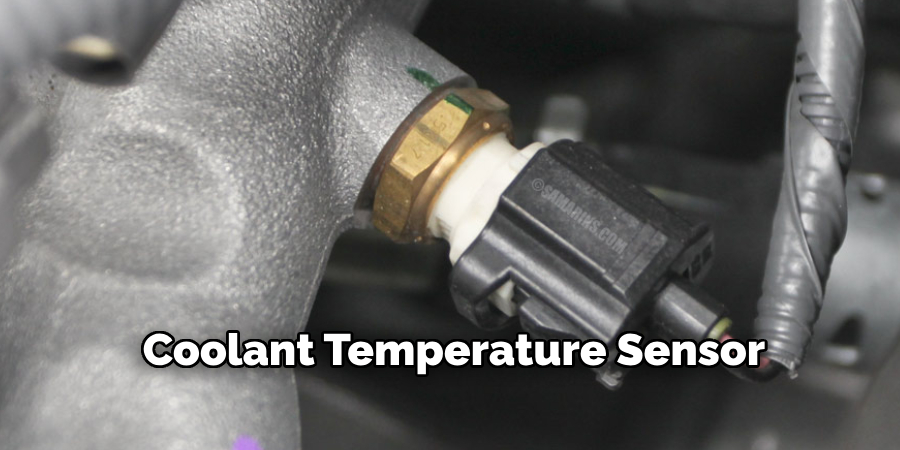
Source: safetyfic.com
How the Coolant Temperature Sensor Can Affect AC Operation
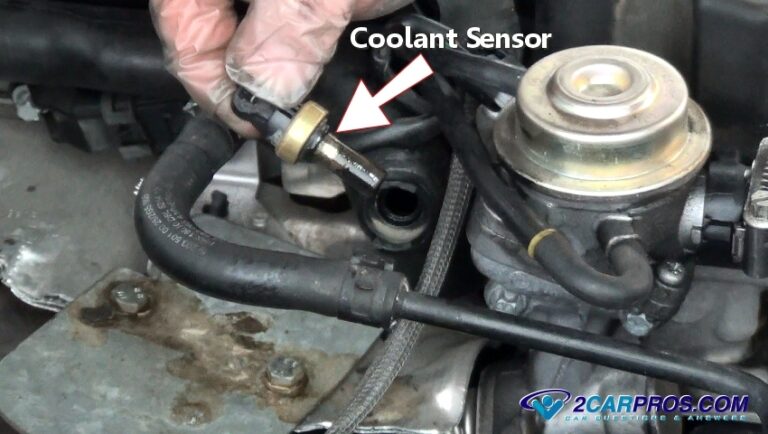
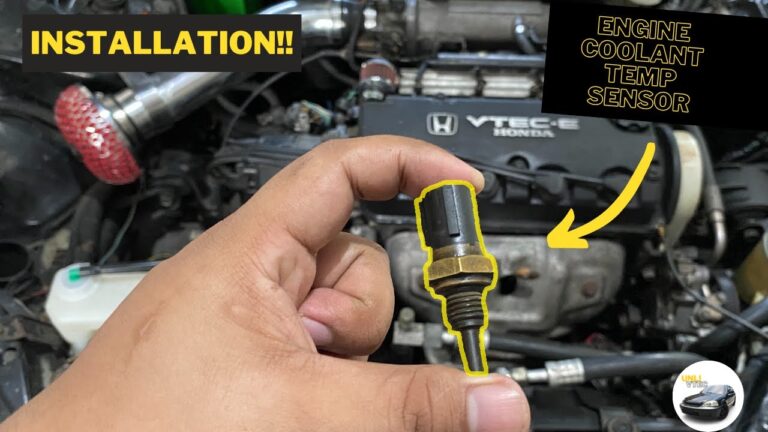
The engine coolant temperature sensor measures the temperature of the coolant and sends an electrical signal to the powertrain control module or another vehicle computer. The computer uses that information for engine management and, depending on the vehicle, may also use it when deciding whether the AC compressor should operate.
AC compressor operation places an additional load on the engine. If the engine is overheating, operating outside a permitted temperature range, or receiving an implausible coolant-temperature signal, the vehicle may modify or temporarily disable compressor operation to protect the engine or maintain stable operation. The exact strategy varies by manufacturer, model, engine, and climate-control system.
The coolant sensor can also affect the electric cooling fans indirectly. Many modern vehicles use the engine coolant temperature signal, along with AC-related information and other inputs, to determine when and how strongly the cooling fans should operate. Because the AC condenser needs adequate airflow, a cooling-fan control problem can reduce AC performance even when the refrigerant circuit itself is healthy.
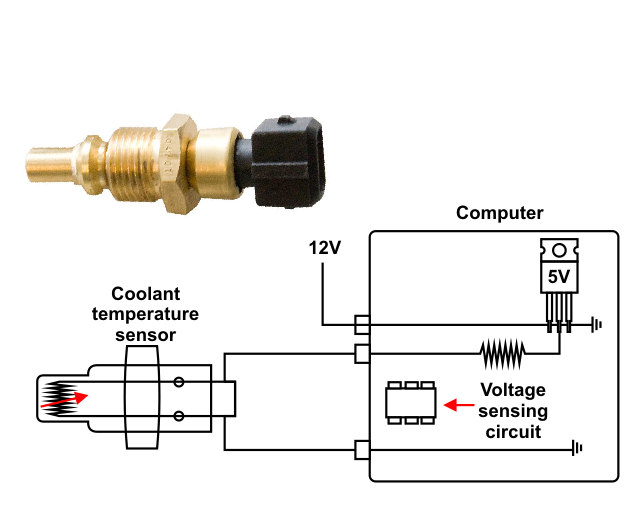
Source: storage.googleapis.com
Direct effect
The coolant temperature sensor does not normally control refrigerant flow or directly produce cold air. Its principal role is measuring engine coolant temperature.
Electronic control effect
The engine computer can use coolant temperature as one condition for controlling or permitting AC compressor operation on some vehicles.
Cooling-fan effect
The temperature signal can contribute to cooling-fan decisions. A faulty signal may therefore affect the airflow available to the AC condenser.
Vehicle-specific behavior
There is no universal rule that every vehicle disables AC when its coolant temperature sensor fails. The exact strategy must be verified for the specific vehicle.
What the Engine Computer Does With the Temperature Signal
The coolant temperature sensor is commonly a thermistor whose electrical characteristics change with temperature. The engine computer interprets that signal as a temperature value. When the engine is cold, the reported temperature should generally be close to the surrounding temperature. As the engine warms, the reported value should rise in a plausible manner.
If the computer sees a signal that is open, shorted, implausible, or inconsistent with other operating conditions, it can substitute a calculated value or enter a fault strategy. Depending on the vehicle, that strategy may alter fuel control, idle behavior, cooling-fan operation, emissions functions, and AC-related controls.
Normal signal
The reported coolant temperature changes smoothly as the engine warms and remains plausible for the actual operating condition.
Implausible signal
A reading that remains extremely cold, extremely hot, or otherwise disagrees with the engine’s actual condition can indicate a sensor or circuit problem.
Can a Bad Coolant Temperature Sensor Cause the AC Compressor Not to Engage?
It can on some vehicles, but this should be treated as a vehicle-specific possibility rather than a universal diagnosis. The compressor is controlled through an electrical and electronic system that may include the engine computer, HVAC control module, pressure sensors, relays, clutch controls, or a variable-displacement compressor control valve.
If the vehicle’s control strategy requires a valid engine-temperature signal before allowing compressor operation, an incorrect coolant-temperature signal can become one reason for compressor inhibition. The same symptom, however, can result from many other causes. A low refrigerant charge may prevent compressor engagement through pressure protection, while a failed relay, fuse, clutch, wiring connection, pressure sensor, or control module can also interrupt the command.
For that reason, replacing the coolant temperature sensor simply because the AC compressor does not engage is poor diagnostic practice. The more useful question is whether the vehicle’s computer has detected a coolant-temperature problem and whether the AC control system is actually withholding the compressor command because of it.
Source: storage.googleapis.com
Check for fault codes
Scan the engine and HVAC-related modules when supported. A coolant-temperature sensor code can strengthen the case for investigating the sensor circuit.
Check live temperature data
Compare the scan-tool coolant-temperature reading with the actual engine condition and ambient temperature, especially after the vehicle has been sitting overnight.
Check compressor command
If diagnostic equipment can display AC request and compressor-command data, determine whether the computer is requesting operation or deliberately withholding it.
Do not bypass protections
Avoid forcing compressor operation with improvised wiring. Refrigerant pressure and compressor-control protections exist to prevent component damage and unsafe operating conditions.
Why the Same AC Symptom Can Have Several Causes
An AC compressor that does not engage tells you that compressor operation is being prevented or that the compressor circuit cannot carry out the command. It does not identify which component is responsible.
A useful diagnostic sequence is to establish whether the AC system is requesting cooling, whether the computer permits compressor operation, whether the compressor receives the appropriate command, and whether refrigerant pressure and other operating conditions are within the manufacturer’s permitted range.
Possible cause
Low refrigerant or an abnormal refrigerant-pressure condition can prevent compressor operation through pressure protection.
Possible cause
Electrical faults involving fuses, relays, wiring, grounds, clutch circuits, or compressor control components can interrupt operation.
Possible cause
A faulty coolant temperature signal can matter when the vehicle’s control strategy uses engine temperature as a compressor operating condition.
Symptoms That May Point to a Coolant Temperature Sensor Problem
A coolant temperature sensor problem usually produces more clues than an AC complaint alone. Because the sensor supplies information used by the engine management system, a failed sensor or damaged circuit can affect engine behavior as well as temperature-related controls.
The exact symptoms depend on whether the sensor is biased high, biased low, electrically open, shorted, or affected by a wiring or connector problem. A scan tool is usually more informative than relying only on the dashboard temperature gauge, because some vehicles use separate sensors or different signals for the gauge and engine computer.
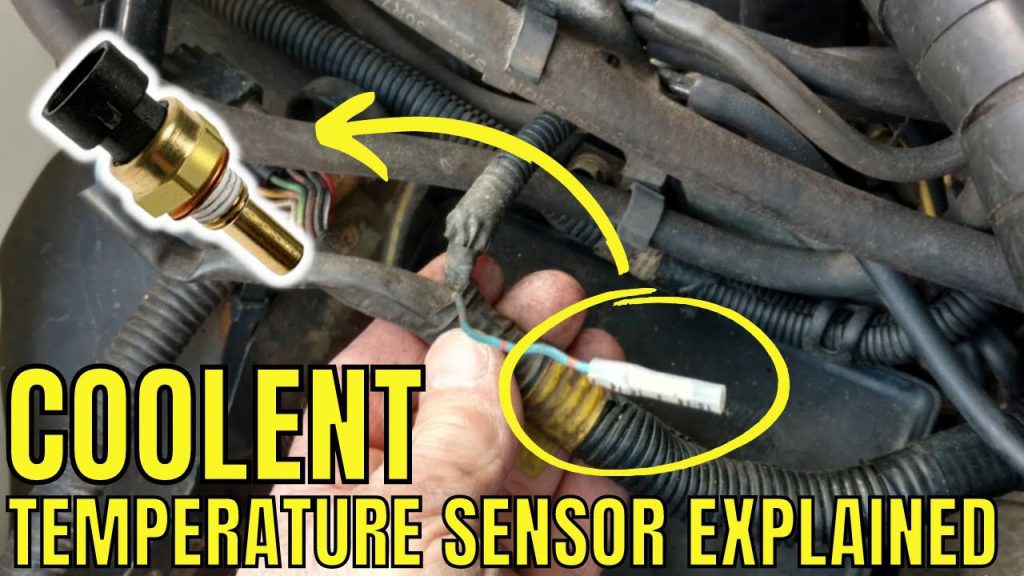
Source: www.youtube.com > FixIT
AC behavior changes
On vehicles that use coolant temperature in AC control logic, an incorrect signal may contribute to compressor inhibition or unusual AC behavior.
Cooling fan behavior
The fan may run at unexpected times, fail to operate when required, or operate according to a fail-safe strategy, depending on the vehicle.
Poor engine operation
A faulty temperature signal can affect fuel-control calculations and may contribute to difficult starting, unstable operation, or abnormal fuel consumption.
Incorrect temperature data
A scan tool may show a temperature that does not make sense compared with ambient conditions or actual engine temperature.
Check engine light
A sensor or circuit fault may trigger a diagnostic trouble code, although the absence of a code does not prove that the sensor is functioning correctly.
A Bad Sensor Is Not the Same as a Bad Thermostat
The coolant temperature sensor and thermostat perform different jobs. The sensor reports temperature to the vehicle computer, while the thermostat regulates coolant flow through the engine’s cooling system. A thermostat that remains open can keep engine temperature lower than intended, while a sensor problem can make the computer believe the engine is at an incorrect temperature.
Both problems can produce unusual temperature behavior, but the repair and diagnosis are different. If the AC concern occurs with an engine that is actually running too cold or too hot, the cooling system should be evaluated rather than assuming the sensor itself is defective.
Sensor
Measures coolant temperature and provides an electrical signal to the vehicle’s control system.
Thermostat
Mechanically regulates coolant circulation according to temperature.
How to Diagnose Whether the Coolant Temperature Sensor Is Affecting the AC
Start with evidence rather than replacing parts. The goal is to determine whether the coolant-temperature signal is incorrect and whether that signal is actually involved in the AC control problem.
Because automotive AC systems contain pressurized refrigerant and can involve high electrical currents and rotating components, basic observations are appropriate for many owners, but refrigerant recovery, charging, pressure testing, and certain electrical tests should follow the vehicle manufacturer’s procedures and applicable professional-service requirements.
Source: storage.googleapis.com
Step 1: Confirm the AC symptom
Determine whether the complaint is warm air, intermittent cooling, a compressor that never engages, or cooling that disappears under particular engine conditions. These symptoms point toward different diagnostic paths.
Step 2: Check engine temperature information
Use a suitable scan tool to read the engine coolant temperature. When the engine is cold after sitting, the value should be reasonably consistent with ambient temperature. As the engine warms, the value should rise plausibly.
Step 3: Scan for diagnostic codes
Look for coolant-temperature sensor and circuit codes as well as AC, pressure, compressor, or HVAC control codes. Record the codes before clearing them.
Step 4: Inspect the sensor circuit
With the ignition off when appropriate, inspect the sensor connector and wiring for corrosion, loose terminals, broken insulation, coolant contamination, or damaged conductors. A visual inspection can reveal problems that a sensor replacement alone will not fix.
Step 5: Verify the AC control decision
If the vehicle provides appropriate scan-tool data, determine whether the AC request is present and whether the compressor is being commanded on. This helps distinguish a control decision from a compressor-circuit failure.
Step 6: Check the rest of the AC system
If the coolant-temperature signal is plausible, investigate refrigerant charge, pressure readings, compressor operation, electrical supply, condenser airflow, cooling-fan operation, and HVAC controls instead of continuing to focus on the coolant sensor.
What a Healthy Coolant Temperature Reading Should Look Like
A cold-engine reading should generally be close to the surrounding temperature. After the engine reaches operating temperature, the reading should increase and stabilize within a range appropriate for that vehicle. A scan tool that shows an implausible value, such as a dramatically incorrect temperature immediately after an overnight cold soak, warrants further investigation.
Exact operating temperatures vary by vehicle, engine, thermostat, load, ambient conditions, and cooling strategy. Do not use a generic temperature number as a substitute for the manufacturer’s specifications.
Cold soak comparison
Compare the scan-tool coolant temperature with ambient temperature before starting a cold engine.
Warm-up trend
Watch whether the temperature rises smoothly as the engine warms rather than remaining fixed or jumping unpredictably.
Circuit verification
If the reading is implausible, test the sensor resistance and circuit according to the vehicle’s service information instead of relying on a generic resistance chart.
Other Reasons Your AC May Stop Cooling
If the coolant temperature sensor checks out, the AC problem should be diagnosed as an AC-system problem unless other evidence points elsewhere. Warm air from the vents has many possible causes, and the coolant sensor is only one possible contributor on certain vehicles.
Low refrigerant is a common cause of poor cooling and can also prevent compressor engagement when pressure falls outside the permitted range. Other possibilities include a failed compressor or clutch, electrical faults, pressure-sensor problems, blocked airflow through the condenser, an inoperative cooling fan, HVAC blend-door problems, or faults in automatic climate-control sensors and modules.
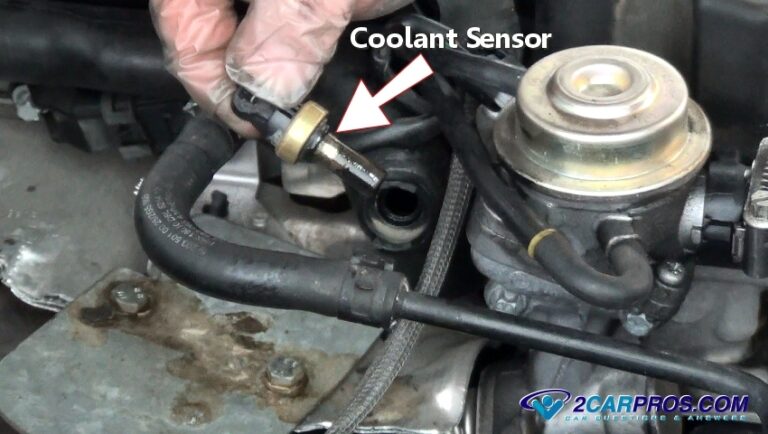
Source: papasroadtrip.com
Low refrigerant
A leak or insufficient charge can reduce cooling performance and may cause the compressor control system to prevent operation.
Compressor or clutch fault
A mechanical compressor problem, clutch failure, or compressor control fault can leave the system unable to circulate refrigerant correctly.
Pressure sensor or switch
The AC system can use refrigerant pressure information to protect the compressor and regulate operation.
Cooling fan problem
Insufficient airflow through the condenser can cause poor cooling, especially at low vehicle speeds, and can contribute to excessive system pressure.
HVAC control fault
A blend-door actuator, interior temperature sensor, evaporator sensor, control module, or related wiring problem can cause warm air even when the refrigeration circuit is functioning.
Why AC Can Work While Driving but Get Warm at Idle
AC performance that improves at road speed but becomes warm at idle can point toward airflow or system-pressure issues rather than a coolant temperature sensor alone. Vehicle speed naturally increases airflow through the condenser, while a stationary vehicle depends heavily on its electric or mechanically driven cooling fan.
If the fan does not operate correctly when AC is requested, condenser temperature and pressure can rise. Depending on the vehicle’s control strategy, the system may reduce or stop compressor operation to protect components. The cooling fan should therefore be checked whenever AC performance changes substantially with vehicle speed.
At road speed
Natural airflow through the condenser can improve heat rejection.
At idle
The vehicle depends more heavily on the cooling fan to move air through the radiator and condenser.
Common Mistakes When Diagnosing a Coolant Sensor and AC Problem
The most common diagnostic mistake is assuming that two symptoms must have the same cause. A vehicle can have an unrelated coolant sensor fault and an AC refrigeration problem at the same time. Good diagnosis establishes a connection through scan data, wiring tests, system commands, or manufacturer-specific diagnostic procedures.
Another mistake is replacing the sensor because it is inexpensive or because the AC compressor is not engaging. Parts replacement without confirming the failure can leave the original problem unresolved. A damaged connector, broken wire, low refrigerant charge, pressure fault, or compressor-control problem may remain after a new sensor is installed.
Source: hitchesguide.com
Mistake: assuming the sensor directly controls the AC
The coolant sensor primarily reports engine temperature. The exact path from that signal to AC operation depends on the vehicle’s electronic control strategy.
Mistake: ignoring refrigerant pressure
AC systems have pressure-related protections that can prevent compressor operation even when the coolant sensor is working correctly.
Mistake: relying only on the dashboard gauge
The dashboard temperature display may not provide the same information used by the engine computer. Scan-tool data is more useful when investigating an electronically controlled coolant-temperature signal.
Mistake: jumping the compressor circuit
Forcing compressor operation can bypass protective controls and may cause damage or expose the technician to electrical and refrigerant hazards.
Mistake: using generic specifications
Sensor resistance values, compressor controls, refrigerant specifications, and normal temperatures vary by vehicle. Manufacturer-specific service information should take priority.
When Professional Diagnosis Makes Sense
Professional help is appropriate when the diagnosis requires refrigerant recovery or charging, pressure measurements, advanced scan-tool functions, wiring-circuit testing, or access to manufacturer-specific HVAC data. A qualified automotive technician can determine whether the engine computer is intentionally preventing compressor operation or whether the AC system has an independent fault.
Seek prompt attention if the AC problem occurs with engine overheating, a rapidly rising temperature gauge, coolant loss, steam, unusual engine noises, or other signs of a cooling-system failure. Continuing to operate an overheating engine can cause serious engine damage.
Refrigerant service
Use appropriate recovery and charging equipment and the specified refrigerant type and quantity for the vehicle.
Electrical diagnosis
Use wiring diagrams and manufacturer test procedures when testing compressor controls, sensor circuits, relays, or modules.
Overheating
Treat an overheating engine as a separate priority rather than focusing only on restoring AC performance.
Does the Coolant Temperature Sensor Control the Cooling Fan for the AC?
On many modern vehicles, engine coolant temperature is one of the inputs used to determine cooling-fan operation, but AC operation can also create its own reason for fan activation. The condenser must reject heat from the refrigerant, and adequate airflow is particularly important when the vehicle is stationary.
This creates an important relationship between the coolant sensor, cooling fan, and AC system. A faulty coolant temperature signal may affect when the engine computer requests fan operation. At the same time, the AC system may have separate logic that requests fan operation when compressor or pressure conditions require it.
Because fan-control strategies vary, a vehicle can have a functioning AC system even if the engine coolant sensor is not the direct cause of a fan-related AC problem. Conversely, a fault in the fan circuit can make the AC perform poorly even when the coolant sensor is accurate.
Source: storage.googleapis.com
Coolant temperature input
The engine computer may use coolant temperature to determine when engine cooling assistance is required.
AC input
The climate-control or engine-control system may request additional condenser airflow when AC operation requires it.
Pressure input
Some vehicles use refrigerant pressure information as another factor in compressor and fan control.
What This Means for AC Troubleshooting
If the AC is cold at highway speed but warm at idle, inspect fan operation and condenser airflow as part of the diagnosis. If the AC compressor never receives an operating command and the scan tool shows an implausible coolant temperature, investigate the coolant sensor circuit and the vehicle’s specific compressor-enable conditions.
These observations are more useful than replacing a sensor based solely on the fact that the AC is not cold. The objective is to establish whether the temperature signal is wrong and whether the vehicle is using that signal to make the AC control decision.
Strong clue
Incorrect coolant-temperature data plus a related diagnostic code and an AC control condition can provide a logical connection.
Weak clue
Warm AC alone does not establish that the coolant temperature sensor is defective.
A Practical Decision Guide
The fastest way to narrow the problem is to combine the AC symptom with engine-temperature information. The following guide is not a substitute for model-specific service information, but it can help determine which area deserves attention first.
Source: storage.googleapis.com
AC warm and coolant reading is implausible
Prioritize diagnosis of the coolant temperature sensor, connector, wiring, and the vehicle’s compressor-enable strategy.
Check condenser airflow and cooling-fan operation along with refrigerant pressure and compressor performance.
AC and engine are both behaving abnormally
Look for a common electrical, cooling-system, sensor, or control problem instead of treating the AC symptom in isolation.
Engine is overheating
Address the cooling-system problem first. Do not continue driving an overheating vehicle simply because the AC is the immediate complaint.
What Counts as a Strong Diagnosis
A strong diagnosis connects the symptom to measurable evidence. For example, an implausible coolant-temperature value can be verified against a cold-soak condition, followed by electrical testing of the sensor circuit. If the vehicle’s diagnostic data then shows that the AC compressor is being inhibited because of the temperature input, the relationship is substantially stronger than simply observing that the AC is warm.
By contrast, replacing the coolant sensor and seeing no improvement indicates that the original assumption may have been wrong, although it does not by itself prove the old sensor was good. Diagnostic testing should be used to establish the failure before replacement whenever practical.
Evidence first
Use scan data, fault codes, electrical measurements, and system behavior to establish the cause.
Vehicle-specific information
Use the service information for the exact year, make, model, engine, and AC system.
Frequently Asked Questions
Q
Can a bad coolant temperature sensor make the AC blow warm air?
Yes, it can on some vehicles if the engine computer uses coolant temperature as part of its AC compressor or engine-protection strategy. However, a bad coolant sensor is only one possible cause of warm AC. Low refrigerant, compressor problems, pressure-control faults, electrical issues, cooling-fan failures, and HVAC faults can produce the same symptom.
Q
Will the AC work if the coolant temperature sensor is bad?
It may. Some vehicles can continue operating the AC using a substitute temperature value or a fail-safe strategy, while others may restrict compressor operation when the coolant-temperature signal is missing or implausible. The behavior depends on the vehicle’s control system.
Q
Can a coolant temperature sensor cause the AC compressor not to engage?
It can if the vehicle’s compressor-control logic uses engine coolant temperature as an operating condition. Before replacing the sensor, check diagnostic codes and scan-tool temperature data and determine whether the computer is actually withholding the compressor command because of the temperature signal.
Q
Can a bad coolant sensor cause the AC fan not to work?
A faulty coolant-temperature signal can affect cooling-fan control on vehicles that use that signal to determine fan operation. However, AC-related fan operation may also depend on compressor status, refrigerant pressure, vehicle speed, ambient temperature, and separate fan-control logic. A fan failure should therefore be diagnosed from the vehicle’s wiring and control strategy.
Q
How can I tell whether my coolant temperature sensor is bad?
A scan tool can often display the coolant temperature reported to the engine computer. Compare the reading with ambient temperature when the engine is cold and observe the temperature trend as the engine warms. If the value is implausible or a related diagnostic code is present, test the sensor, connector, and wiring according to the manufacturer’s specifications.
✦ Wrapping Up
Conclusion
The coolant temperature sensor can affect AC operation, but it is not normally the component that directly produces cabin cooling. Its influence comes through the vehicle’s electronic control strategy. Depending on the design, the engine computer may use coolant temperature to determine compressor availability, protect the engine, and manage cooling-fan operation.
If your AC is not working, do not assume the coolant sensor is the cause simply because the symptoms appeared together. Start by checking the coolant-temperature signal, diagnostic codes, compressor command, refrigerant-related conditions, cooling-fan operation, and the electrical controls that apply to your specific vehicle.
The strongest diagnosis is one that demonstrates a faulty temperature signal and establishes that the signal is affecting the AC control decision. If the engine is overheating, refrigerant service is required, or advanced electrical and HVAC diagnostics are necessary, use qualified professional service and the manufacturer’s procedures.
💡 Key Takeaway
If your car has warm AC and you suspect the coolant temperature sensor, first check the engine computer’s coolant-temperature reading and related diagnostic codes. If that data is normal, shift the diagnosis toward refrigerant charge, compressor operation, pressure controls, cooling fans, electrical circuits, and HVAC components.
Ethan Brooks is an automotive writer at Auto News 7, covering car news, vehicle maintenance, new model updates, recalls, and practical buying guides. He focuses on clear, useful information that helps drivers understand their vehicles and make better ownership decisions.
Learn how to test a Ford coolant temperature sensor with a multimeter and scan tool. Check resistance, voltage, wiring, sensor response, and common faults safely.
Learn what the coolant temperature sensor controls, including fuel mixture, ignition timing, cooling fans, cold starts, emissions, and engine protection.
Learn how to check an engine coolant temperature sensor with a multimeter or OBD-II scanner. Follow safe testing steps, resistance checks, symptoms, and troubleshooting tips.
Learn how to replace a coolant temperature sensor safely, including tools, sensor removal, installation, coolant refill, bleeding, testing, and common mistakes.
Learn how to replace the coolant temperature sensor on a Honda Civic, including tools, safety steps, sensor removal, coolant refill, bleeding, testing, and common mistakes.