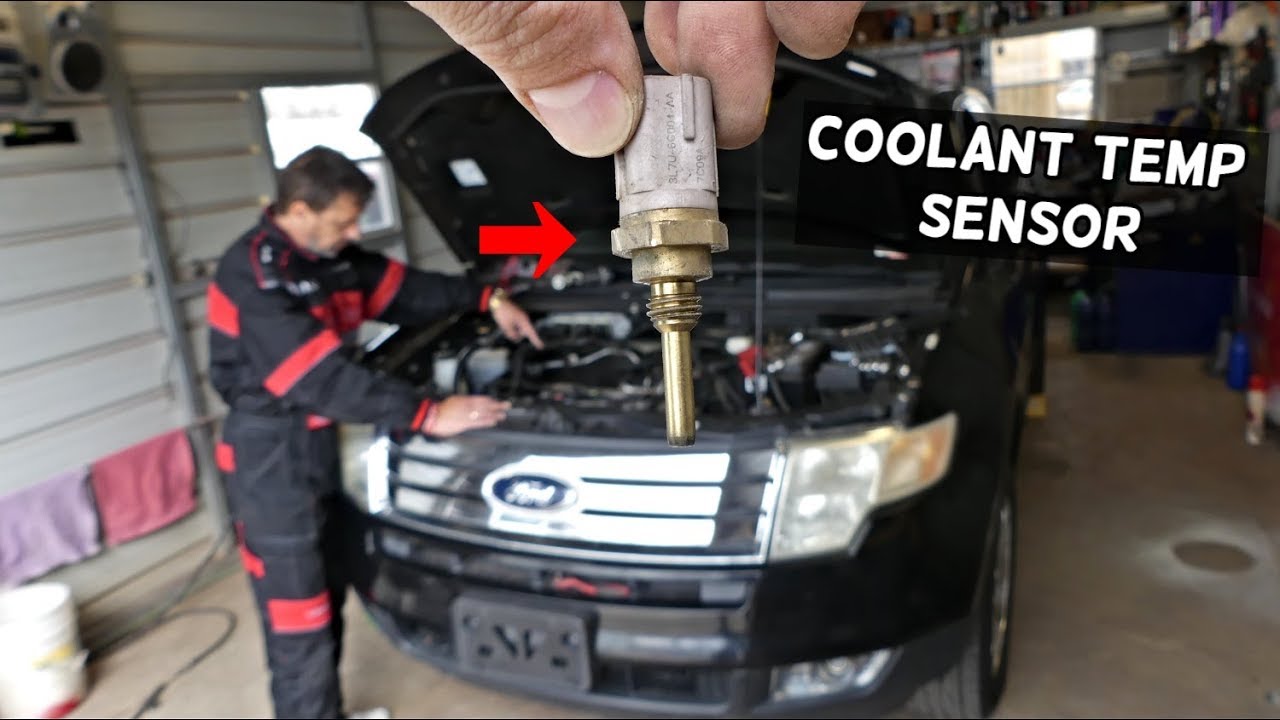
The most reliable way to test a Ford coolant temperature sensor is to compare its resistance or signal voltage with the specifications for the exact Ford engine, then verify that the temperature reading changes smoothly as the engine warms.
For Ford vehicles sold in the United States, the engine coolant temperature sensor helps the powertrain control module determine engine temperature and adjust functions such as fueling, ignition strategy, emissions control, and cooling-system operation. A faulty sensor, connector, or wiring circuit can produce symptoms that look like a thermostat, cooling fan, or fuel-system problem.
Before replacing a sensor, test the complete circuit. Ford uses different sensor designs and specifications across model years and engines, and some applications use a cylinder head temperature sensor rather than a conventional coolant temperature sensor. The exact resistance values, connector terminals, sensor location, and test procedure therefore need to be matched to the vehicle’s year, model, engine, and service information.
Source: i.ytimg.com
What Is a Ford Coolant Temperature Sensor?
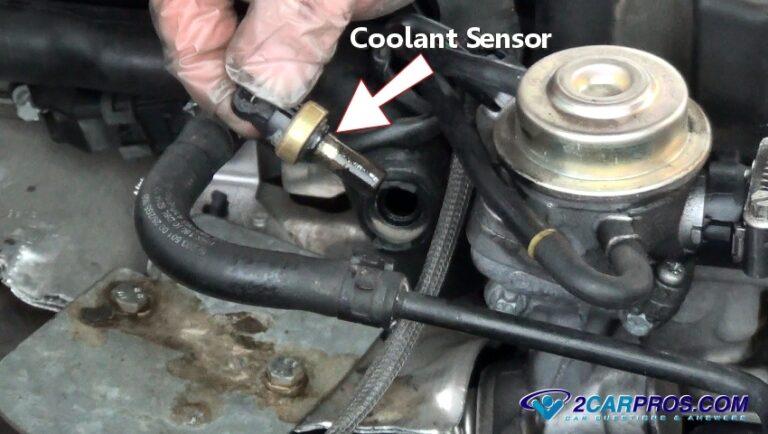
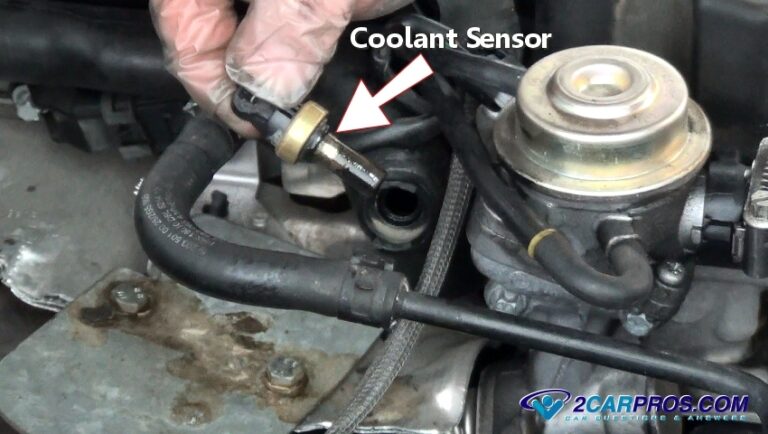
The engine coolant temperature sensor, commonly called the ECT sensor, monitors engine temperature and sends an electrical signal to the powertrain control module. The PCM uses that information for engine-management decisions and diagnostic monitoring.
Most conventional ECT sensors use a thermistor whose electrical resistance changes with temperature. As coolant temperature rises, resistance normally falls. The PCM interprets the changing electrical signal as a temperature value.
Ford has used different temperature-sensing arrangements across engines and model years. Some Ford applications use an ECT sensor immersed in coolant, while other applications use a cylinder head temperature sensor. Do not assume that every Ford with an engine-temperature problem has the same sensor or test values.
Source: i.ytimg.com
ECT sensor
Normally measures engine coolant temperature and provides the PCM with a temperature-dependent electrical signal.
Cylinder head temperature sensor
Used on some Ford engines to monitor cylinder-head temperature rather than directly measuring coolant temperature.
Sensor circuit
Includes the sensor, connector, reference circuit, signal circuit, ground or return path, wiring, and PCM input.
Why the Sensor Matters
An incorrect temperature signal can cause the PCM to interpret a cold engine as warm or a warm engine as cold. Depending on the fault and vehicle strategy, that can contribute to hard starting, poor fuel economy, rough running, an inaccurate temperature indication, cooling-fan problems, or an illuminated check-engine light.
A bad temperature reading does not automatically prove that the sensor itself has failed. The same symptoms can result from a damaged connector, corroded terminals, an open or shorted wire, poor electrical connections, low coolant, trapped air, or another cooling-system fault.
What You Need Before Testing a Ford Coolant Temperature Sensor
Gather the vehicle-specific service information before connecting a meter. The most important specification is the resistance or voltage expected at particular temperatures for the exact engine. Ford specifications can differ substantially between applications.
A digital multimeter is sufficient for many basic electrical tests. A scan tool that can display live data makes diagnosis easier because you can compare the reported temperature with the actual engine condition and observe the signal while the engine warms.
Source: i.ytimg.com
Digital multimeter
Use a meter capable of measuring resistance and DC voltage.
Vehicle-specific service information
Use the correct wiring diagram, connector pinout, sensor specification, and test conditions for the Ford year, model, engine, and configuration.
Scan tool
Useful for reading diagnostic trouble codes and monitoring ECT or related temperature data.
Infrared thermometer
Optional. It can provide an independent surface-temperature reference, although surface temperature is not necessarily identical to coolant temperature at the sensor.
Safety Before Testing
Do not remove a coolant sensor from a hot, pressurized cooling system unless the manufacturer’s procedure specifically permits it and the system has been made safe. Hot coolant can cause severe burns.
For a resistance test, turn the ignition off and disconnect the sensor from its electrical circuit before measuring resistance. Never use an ohmmeter on an energized circuit.
Keep hands, clothing, and test leads away from belts, fans, pulleys, and other moving components when performing running-engine voltage or scan-tool checks.
How to Test a Ford Coolant Temperature Sensor With a Multimeter
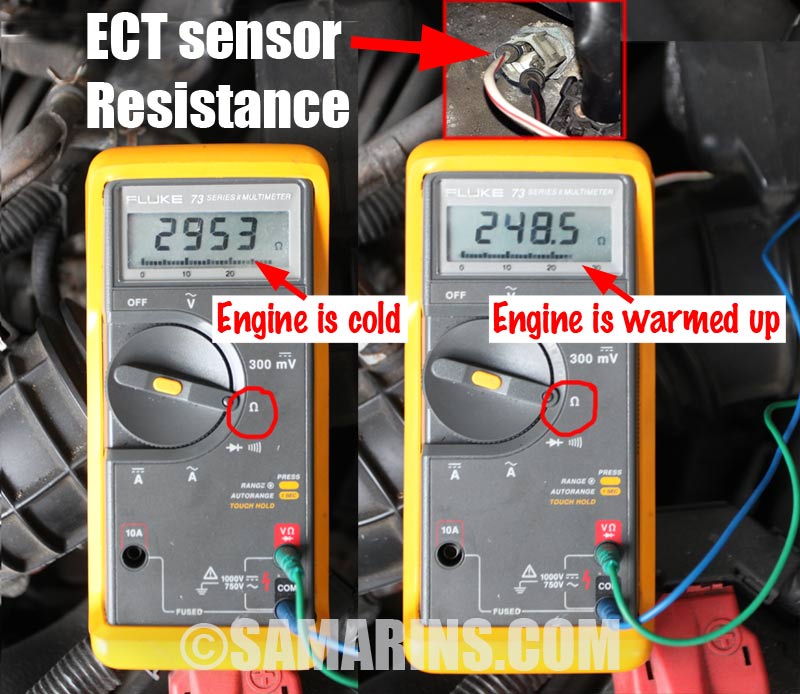
A resistance test is one of the most useful ways to evaluate a conventional Ford ECT sensor. The basic method is to measure the sensor at a known temperature, compare the result with the Ford specification, and then verify that resistance changes in the expected direction as temperature changes.
Do not judge the sensor by a generic resistance number found for another vehicle. The correct Ford specification is the deciding reference because sensor calibration varies by application.
Source: samarins.com
Step 1: Identify the Correct Sensor
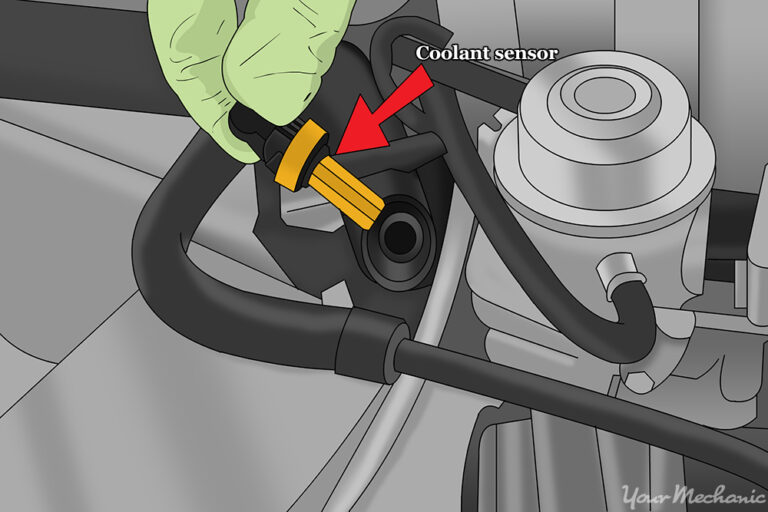
Locate the temperature sensor using the service information for the exact Ford vehicle. Confirm whether the component is an ECT sensor or a cylinder head temperature sensor before testing.
Check the connector and wiring before disconnecting anything. Look for broken insulation, pulled wires, corrosion, coolant contamination, loose terminals, or evidence that the harness has rubbed against an engine component.
Step 2: Allow the Engine to Reach a Known Temperature
For a cold-engine resistance check, allow the vehicle to sit long enough for the engine temperature to stabilize near ambient temperature. Record the approximate ambient temperature because resistance specifications are temperature-dependent.
For a second comparison, the sensor can be evaluated at another known temperature if the service procedure permits. Do not remove a sensor from a hot pressurized system simply to perform this test.
Step 3: Disconnect the Sensor
Turn the ignition off and disconnect the electrical connector from the sensor. Inspect the terminals before connecting the meter. Resistance testing must be performed on the sensor itself rather than through the powered vehicle circuit.
Step 4: Measure Resistance
Set the multimeter to the resistance range appropriate for the specification. Touch one probe to each required sensor terminal. If the sensor has more than two terminals, use the Ford wiring diagram to identify the correct pair rather than guessing.
Record the measured resistance and the actual sensor temperature. Compare both values with the Ford service specification. A reading that is clearly outside the specified range at a known temperature can indicate a defective sensor.
For a conventional NTC sensor, resistance should decrease as temperature increases. A reading that remains unchanged while temperature changes, becomes intermittent, or moves contrary to the specified characteristic is a strong reason for further diagnosis or sensor replacement.
Step 5: Check the Sensor at More Than One Temperature
A sensor can appear acceptable at one temperature yet behave incorrectly across its operating range. If the service procedure provides multiple temperature and resistance checkpoints, test more than one point.
The useful result is not simply a single resistance number. You are checking whether the sensor follows the specified temperature-to-resistance relationship smoothly and consistently.
How to Test the Ford ECT Sensor Voltage and Wiring
If the resistance test does not identify a problem, test the sensor circuit. A conventional ECT circuit typically receives a reference voltage from the PCM and produces a temperature-dependent signal. The exact terminal arrangement depends on the Ford application.
The circuit should be tested against the wiring diagram rather than by assuming that a particular pin is power or ground. A correct sensor connected to a faulty circuit can produce the same symptoms as a defective sensor.
Source: samarins.com
Check Reference Voltage
With the connector disconnected and the ignition in the required test position, measure the specified reference circuit using the Ford wiring diagram. Many automotive temperature-sensor circuits use a nominal 5-volt reference, but the vehicle-specific service information is the controlling specification.
If the expected reference voltage is missing, do not replace the sensor yet. Continue with circuit diagnosis because the problem may be in the wiring, connector, power supply, sensor reference circuit, or PCM.
Check Signal Voltage
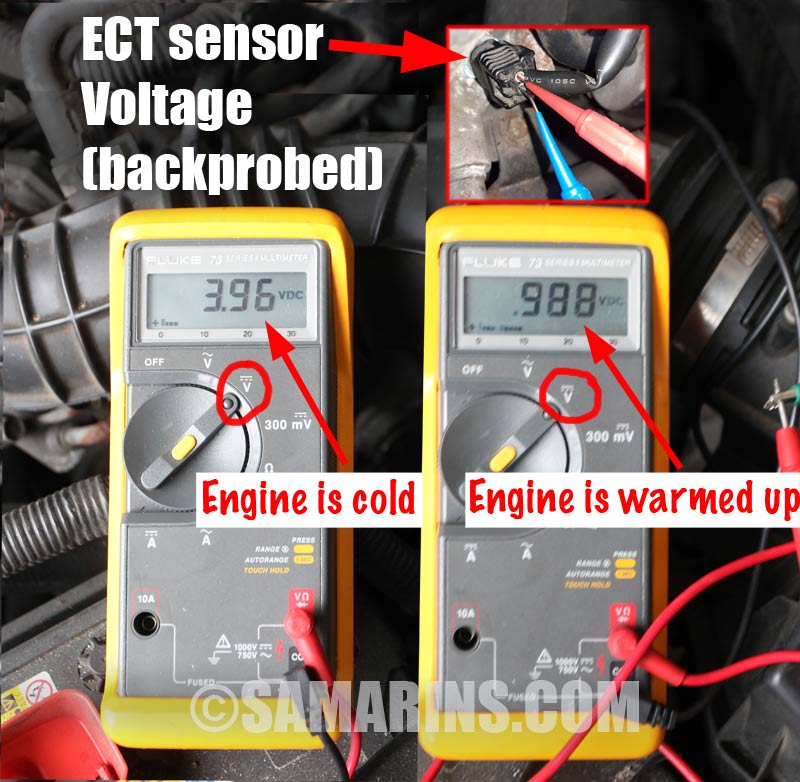
With the sensor connected as required by the diagnostic procedure, measure the signal using an appropriate back-probing technique or approved test adapter. The signal from a conventional NTC ECT sensor generally changes as engine temperature changes.
A cold engine commonly produces a higher sensor signal voltage than a fully warmed engine in a conventional pull-up ECT circuit. The exact voltage range is vehicle-specific, so compare the measured value with Ford’s specification rather than applying a universal voltage threshold.
Check for Opens, Shorts, and Intermittent Faults
If the sensor resistance is correct but the scan-tool reading is wrong, inspect the complete circuit. Check for continuity where specified, unwanted resistance, shorts to ground or power, damaged insulation, loose terminals, and poor connector engagement.
An intermittent fault may appear only when the harness moves or the engine vibrates. With the scan tool monitoring temperature, carefully move the connector and harness as permitted by the service procedure. A sudden temperature change without a corresponding engine-temperature change can point toward a wiring or connection problem.
How to Test a Ford Coolant Temperature Sensor With a Scan Tool
A scan tool can often test the temperature signal without removing the sensor. This is especially useful when diagnosing intermittent faults or deciding whether a sensor reading is plausible.
Start with the engine cold and compare the scan-tool temperature reading with the known ambient temperature. The reading should be reasonably plausible for a vehicle that has been sitting long enough for the engine to reach ambient temperature. As the engine warms, the reported temperature should rise in a logical, generally smooth manner.
Source: i.ytimg.com
Cold-start comparison
Compare the initial temperature PID with the actual ambient conditions. A dramatically implausible reading deserves circuit and sensor diagnosis.
Warm-up response
Monitor the temperature as the engine warms. An erratic, frozen, or abruptly changing value can indicate a sensor or circuit problem.
Diagnostic trouble codes
Use stored and pending codes together with freeze-frame data when available. A code identifies a monitored fault condition, not automatically a failed sensor.
Wiggle-test observation
If permitted by the service procedure, monitor the live temperature value while carefully checking the connector and harness for an intermittent change.
What a -40-Degree Reading Can Mean
On many vehicles, an open temperature-sensor circuit can cause the control module or scan tool to display an extremely low temperature, commonly around -40 degrees. This behavior is useful diagnostically, but it should not be treated as proof that the sensor itself is defective.
An open circuit can result from the sensor, connector, terminal, or wiring. Confirm the circuit before replacing components.
How to Interpret Ford Coolant Temperature Sensor Test Results
The result should be interpreted by separating the sensor from the circuit. A resistance value outside the Ford specification points toward the sensor, while a correct sensor combined with an incorrect circuit voltage points toward wiring, terminals, power, ground, or control-module diagnosis.
The table below provides a diagnostic framework rather than universal Ford specifications. Actual resistance and voltage values must come from the service information for the specific vehicle.
Source: i.ytimg.com
Ford ECT Diagnostic Decision Guide
Use the following decision path after completing the applicable tests.
Resistance outside specification
The sensor is a primary suspect. Confirm the test temperature, meter setup, terminals, and specification before replacement.
Resistance within specification but scan data is wrong
Check the connector, reference circuit, signal circuit, sensor return or ground path, wiring, and PCM-related diagnostics.
No reference voltage
Investigate the reference circuit and related wiring before condemning the sensor.
Temperature changes abruptly
Look for an intermittent connector or wiring fault, although a failing sensor can also produce an unstable signal.
Temperature remains implausibly low or high
Check the sensor signal and circuit, then consider other cooling-system or engine-management causes.
Sensor and circuit test correctly
Do not replace the sensor simply because the vehicle has an overheating, gauge, or drivability symptom. Continue diagnosing the thermostat, coolant level, cooling fans, wiring, instrument display, or other relevant systems.
Common Mistakes When Testing a Ford Temperature Sensor
The most common diagnostic mistake is replacing the sensor before verifying the circuit. A temperature sensor is only one part of the electrical system, and a wiring fault can create nearly identical symptoms.
Another common mistake is using a resistance chart from a different Ford engine. Even when two sensors look similar, their electrical characteristics and connector configurations may differ.
Source: i.ytimg.com
Using the wrong sensor specification
Always match the test data to the exact Ford year, model, engine, and sensor type.
Measuring resistance on a powered circuit
Turn the ignition off and disconnect the sensor before performing a resistance test.
Ignoring coolant level
Low coolant or air around the sensor can produce misleading temperature behavior because the sensor needs the intended thermal environment.
Assuming a trouble code means sensor failure
A diagnostic code can identify an electrical or plausibility fault without proving that the sensor itself is defective.
Testing a hot pressurized system unsafely
Do not open or remove components from a hot pressurized cooling system without following the appropriate safety procedure.
Confusing ECT and CHT sensors
Some Ford engines use cylinder head temperature sensing rather than a conventional coolant temperature sensor. Confirm the component before testing.
Symptoms That Can Point to a Ford Coolant Temperature Sensor Problem
A faulty temperature signal can cause several engine-management or cooling-system symptoms, but none of these symptoms alone proves that the sensor has failed. Ford identifies symptoms such as an abnormal temperature-gauge reading and cooling-fan behavior among possible signs associated with a failed engine coolant temperature sensor.
Use symptoms to decide where to begin testing, not as a substitute for electrical and scan-data checks.
Source: i.ytimg.com
Temperature gauge behaves abnormally
The gauge may remain unusually low, rise unexpectedly, or fail to reflect the actual engine condition depending on the vehicle’s design.
Cooling fan behavior changes
Incorrect temperature information can affect cooling-fan control on systems that use the temperature signal for fan management.
Hard starting or poor running
An implausible temperature signal can affect engine-management calculations, particularly during cold-start and warm-up operation.
Check-engine light
The PCM may store a diagnostic trouble code when it detects an electrical or plausibility problem involving the temperature circuit.
Fuel economy changes
An incorrect temperature signal can influence engine-control strategies and may contribute to abnormal fuel consumption.
When the Problem May Not Be the Sensor
If the engine is genuinely overheating, do not assume the temperature sensor caused the problem. A thermostat, cooling fan, coolant leak, water pump, radiator restriction, low coolant level, or other cooling-system issue can create a real temperature problem even when the sensor works correctly.
Likewise, a temperature reading that looks wrong can be caused by wiring or connector faults. The correct diagnosis comes from comparing the sensor’s electrical behavior, circuit integrity, scan data, and actual engine conditions.
When Should You Replace the Ford Coolant Temperature Sensor?
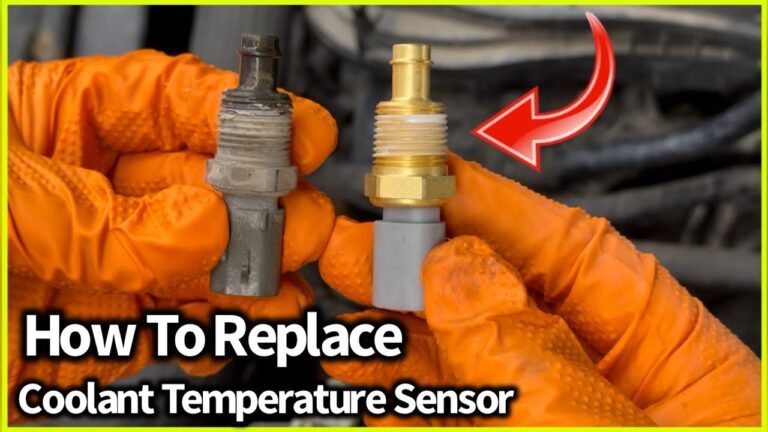
Replace the sensor when the vehicle-specific diagnostic procedure establishes that the sensor does not meet specification or has an internal fault. A replacement is also appropriate when the sensor is physically damaged or its electrical characteristics remain incorrect after confirming the test conditions.
If the sensor passes testing, replacing it is unlikely to solve a problem caused by the connector, wiring, cooling system, thermostat, fan control, or another component. Diagnose the complete system before buying parts.
Source: i.ytimg.com
Replace after a confirmed sensor fault
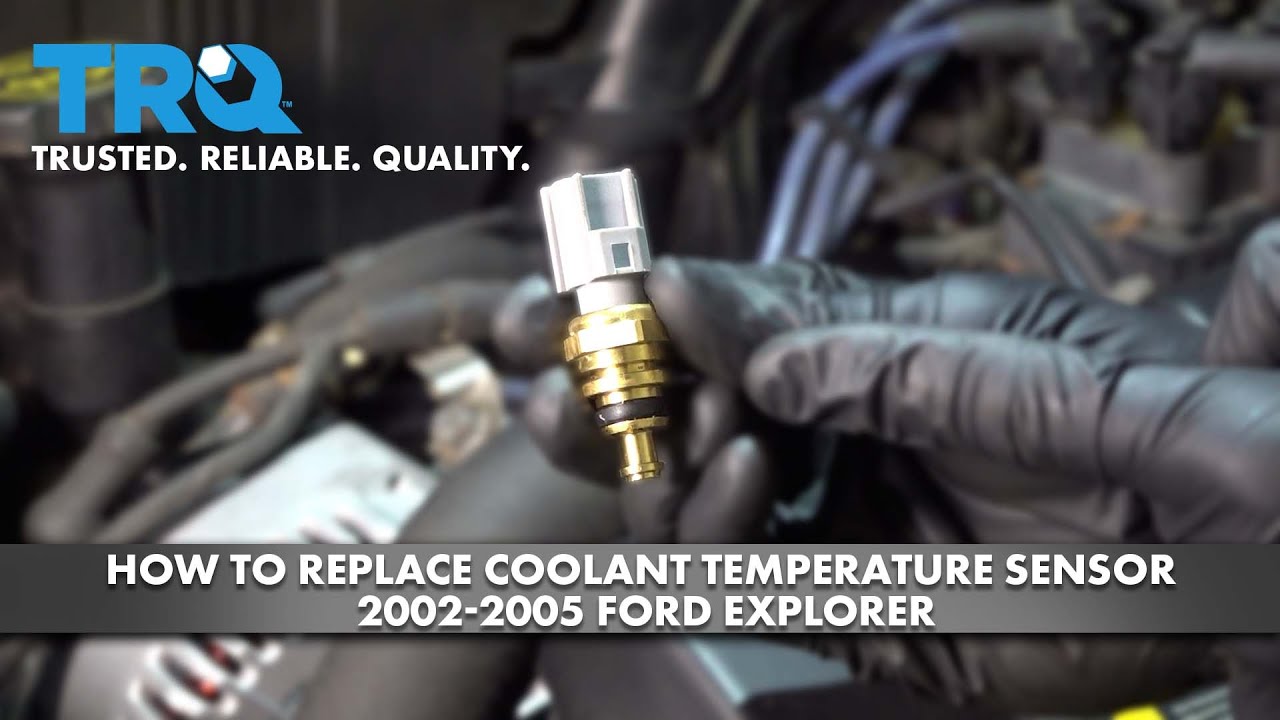
Use the correct replacement specified for the exact Ford application and follow the applicable installation procedure.
Repair the circuit when necessary
A damaged terminal, connector, or wire should be repaired according to appropriate automotive wiring practices rather than automatically replacing the sensor.
Verify the repair
After repair, clear codes if appropriate, restart the vehicle, monitor temperature data, and confirm that the original symptom does not return.
Frequently Asked Questions
Q
How do I know if my Ford coolant temperature sensor is bad?
The strongest evidence is a sensor resistance or signal that fails the Ford specification at a known temperature. An implausible scan-tool reading, erratic temperature signal, or related diagnostic code can support the diagnosis, but the sensor should be distinguished from wiring and connector faults.
Q
What resistance should a Ford coolant temperature sensor have?
There is no single resistance value that applies to every Ford coolant temperature sensor. The correct value depends on the sensor design, engine, and temperature. Use the resistance-versus-temperature specification for the exact Ford application rather than a generic online chart.
Q
Can I test a Ford coolant temperature sensor without removing it?
Yes. A scan tool can monitor the temperature signal while the engine warms, and voltage testing can be performed with the sensor connected when the service procedure provides an appropriate method. Resistance testing, however, normally requires disconnecting the sensor from the circuit.
Q
What does a very low temperature reading mean on a Ford scan tool?
An extremely low reading, commonly around -40 degrees on many systems, can indicate an open temperature-sensor circuit. The cause may be the sensor, connector, terminal, or wiring, so the circuit should be tested before replacing the sensor.
Q
Can a bad coolant temperature sensor cause overheating?
A faulty temperature signal can affect cooling-fan control on systems that use that signal, but actual overheating has many possible causes. Check coolant level, thermostat operation, cooling fans, leaks, radiator condition, water-pump operation, and the temperature-sensor circuit rather than assuming the sensor is responsible.
✦ Wrapping Up
Conclusion
Testing a Ford coolant temperature sensor is most reliable when you evaluate the sensor and its circuit together. Begin by identifying the exact engine and sensor type, inspect the connector and wiring, then perform the appropriate resistance, voltage, and scan-tool checks using Ford-specific specifications.
A good sensor should produce a temperature-dependent signal that matches the specified behavior. If the sensor passes but the temperature data remains incorrect, continue with circuit and cooling-system diagnosis instead of replacing parts based only on symptoms or a diagnostic code.
💡 Key Takeaway
For an accurate diagnosis, record the Ford year, model, engine, sensor type, measured temperature, resistance or voltage, scan-tool temperature, and diagnostic codes before deciding whether the sensor needs replacement.
Ethan Brooks is an automotive writer at Auto News 7, covering car news, vehicle maintenance, new model updates, recalls, and practical buying guides. He focuses on clear, useful information that helps drivers understand their vehicles and make better ownership decisions.
Learn how to install a coolant temperature sensor safely. Follow this step-by-step guide for removal, installation, coolant refill, leak checks, and troubleshooting.
Learn how to replace a coolant temperature sensor connector safely, including diagnosis, wire splicing, connector installation, testing, and common mistakes.
Learn how to check a 2002 Toyota Camry coolant temperature sensor with a multimeter, including resistance specifications for the 2.4L 2AZ-FE and 3.0L 1MZ-FE engines.
Learn how to reset a coolant temperature sensor on a Chevy Silverado, clear related trouble codes, verify sensor operation, and avoid common diagnostic mistakes.
Learn how to change a coolant temperature sensor harness safely, diagnose wiring faults, splice a replacement pigtail, and verify the ECT circuit after repair.
Learn how to replace a coolant temperature sensor safely, including tools, sensor removal, installation, coolant refill, bleeding, testing, and common mistakes.