A faulty oil pressure sensor can sometimes contribute to transmission-related symptoms indirectly, but it usually does not directly control transmission shifting. On most vehicles, a bad engine oil pressure sensor is more likely to cause incorrect oil pressure readings, warning lights, or engine management issues. Transmission problems often involve separate transmission fluid, pressure, speed, or control-system faults.
For drivers in the United States, an illuminated oil pressure warning light or a transmission that suddenly shifts poorly can create an immediate concern about repair costs and vehicle safety. These symptoms can occur at the same time without sharing the same cause. The first step is to distinguish the engine’s oil pressure monitoring system from the transmission’s fluid pressure and electronic control systems.
An engine oil pressure sensor monitors pressure in the engine lubrication system and sends a signal to the vehicle’s instrument cluster or engine control module, depending on the design. The transmission may use its own pressure sensors, solenoids, fluid temperature sensors, and speed sensors. Some vehicles share information between control modules, so the exact effects of a sensor fault depend on the make, model, engine, transmission, and control strategy.
Before replacing a sensor or approving a transmission repair, check the warning lights, diagnostic trouble codes, engine oil level, transmission fluid condition where applicable, and the vehicle manufacturer’s diagnostic procedures. If the oil pressure warning remains on while the engine is running, stop safely and shut off the engine. Continuing to drive with genuinely low oil pressure can cause severe engine damage.
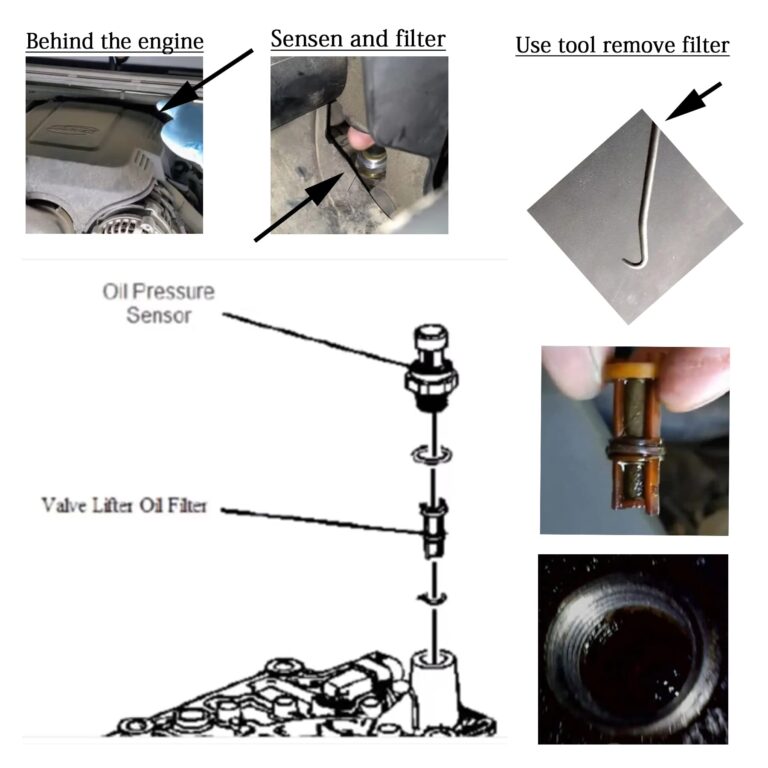
Source: i.ytimg.com
Can an Oil Pressure Sensor Cause Transmission Problems?
In most vehicles, a faulty engine oil pressure sensor does not directly cause transmission problems because the engine lubrication system and transmission control system perform different jobs. The engine oil pressure sensor reports the pressure of the oil circulating through the engine. The transmission uses its own hydraulic circuits and control components to select gears and transfer power.
However, a sensor fault can sometimes be associated with transmission-like symptoms. An inaccurate signal may trigger an engine warning, contribute to an engine management problem, or coincide with another electrical fault. Depending on the vehicle, reduced engine power or abnormal engine operation can feel like delayed acceleration, hesitation, or poor shifting.
The distinction matters because an engine that loses power can feel similar to a transmission that slips. A vehicle may accelerate slowly even when the transmission remains in the correct gear. Conversely, a transmission that flares in engine speed between shifts or fails to engage a gear may have a genuine transmission fault that an engine oil pressure sensor will not repair.
There is no universal rule that a bad oil pressure sensor causes a transmission to enter limp mode. Some vehicles use fail-safe strategies in response to specific engine or transmission faults, but the response depends on the manufacturer’s design and the fault detected.
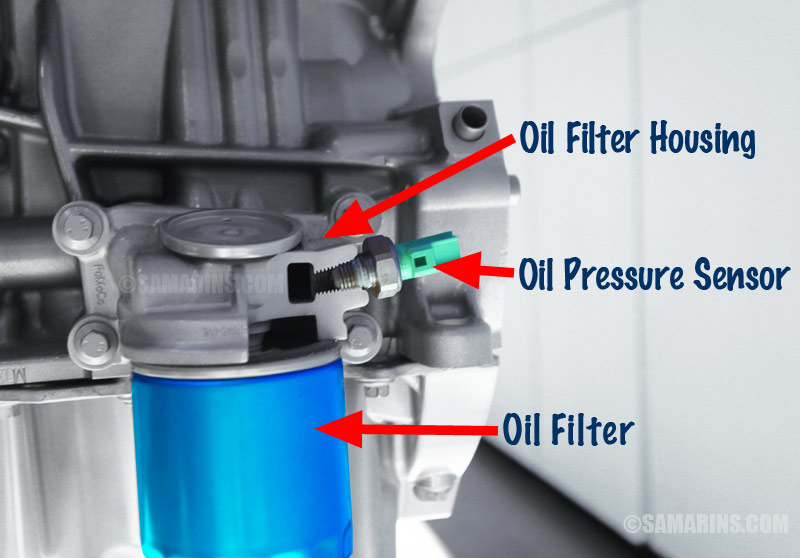
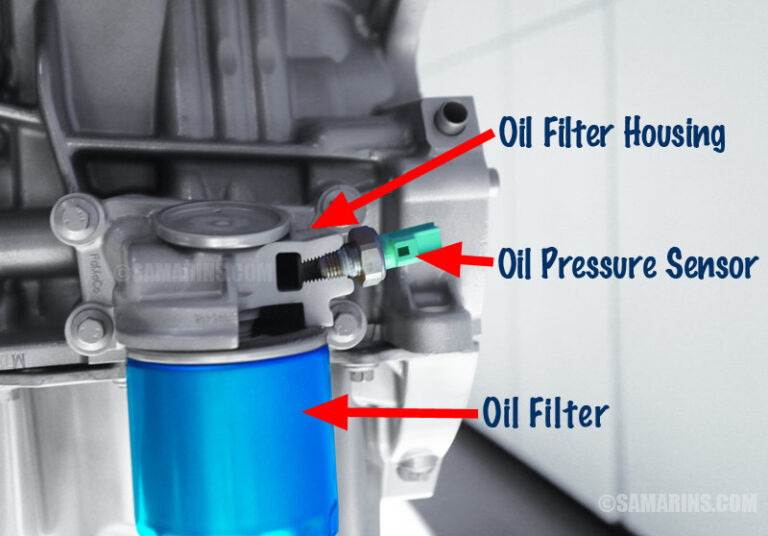
Source: samarins.com
Direct effect
A failed engine oil pressure sensor can report incorrect engine oil pressure, illuminate a warning light, or set a related diagnostic code. It normally does not control transmission hydraulic pressure or gear selection.
Indirect effect
A related wiring fault, engine control issue, or vehicle-specific protection strategy may reduce performance or change drivability. Confirm the mechanism using the service information for the exact vehicle.
Unrelated or simultaneous fault
A failing transmission sensor, low transmission fluid, damaged wiring, or mechanical wear may explain the shifting symptoms while the engine oil pressure warning has a separate cause.
When Could the Sensor Fault Affect Drivability?
A faulty oil pressure sensor can affect drivability if the vehicle’s engine management system responds to the fault or if the problem is part of a wider electrical or mechanical issue. For example, an engine may have an oil pressure warning and poor acceleration at the same time. That combination does not prove the sensor caused the acceleration problem, so both conditions need separate diagnosis.
A damaged wiring harness or poor electrical connection can also create several warning lights or trouble codes. If the sensor circuit shares wiring, grounds, or connectors with other systems, a broader electrical issue may affect multiple modules. The wiring diagram and diagnostic trouble codes are needed to establish whether those systems are connected.
Look for supporting evidence
Check whether the engine warning, reduced power, and shifting symptoms began together and whether diagnostic codes identify a shared electrical or control-system problem.
Avoid assuming causation
Two faults occurring at the same time do not establish that one caused the other. Confirm each fault before replacing components.
Engine Oil Pressure Sensors vs. Transmission Pressure Sensors
An engine oil pressure sensor and a transmission pressure sensor monitor different systems. Understanding the difference prevents unnecessary parts replacement and helps identify the correct diagnostic procedure.
Engine oil lubricates bearings, camshafts, and other internal engine components. The oil pressure sensor or switch monitors the pressure in that lubrication system. Automatic transmission fluid, by contrast, lubricates transmission components and supports hydraulic operation, including clutch application and gear changes. Many automatic transmissions use electronic sensors and solenoids to monitor or regulate hydraulic pressure.
Some vehicles use a simple oil pressure switch that changes electrical state when pressure crosses a threshold. Others use a variable-output sensor that provides pressure information to a control module. A transmission may use one or more pressure switches or transducers, depending on its design. These components are not interchangeable merely because their names include the word pressure.
Source: b.fridayparts.com
Engine oil pressure sensor
Monitors engine lubrication pressure and supports the oil pressure warning or related engine control functions.
Transmission fluid pressure sensor
Monitors a specified hydraulic pressure within the transmission. Its signal may help the transmission control module manage or diagnose shifting.
Transmission speed sensor
Measures the speed of a transmission shaft or related component. Incorrect speed signals can affect shift timing, gear selection, or fault detection.
Transmission pressure control solenoid
Regulates hydraulic pressure in response to electronic commands. A faulty solenoid can contribute to harsh shifts, slipping, or incorrect gear engagement.
Why the Difference Matters During Diagnosis
If the transmission shifts harshly and a diagnostic scanner reports a transmission pressure sensor or solenoid code, investigate that circuit and the transmission’s hydraulic condition. Replacing the engine oil pressure sensor is not a substitute for following the diagnostic procedure associated with the transmission code.
Likewise, if the oil pressure warning light appears, do not assume the transmission is responsible. Verify engine oil level and determine whether actual engine oil pressure is within the manufacturer’s specifications. A faulty sensor can give a false warning, but genuine low oil pressure is also possible.
Match the code to the system
Use the exact diagnostic trouble code and the manufacturer’s description to determine whether it identifies an engine oil pressure circuit, transmission pressure circuit, or another component.
Check the correct fluid
Engine oil and transmission fluid have different specifications and service procedures. Checking one does not establish the condition of the other.
Symptoms That May Appear With a Faulty Oil Pressure Sensor
A faulty engine oil pressure sensor is more likely to produce an oil pressure warning, an implausible pressure reading, or an engine-related diagnostic code than a specific transmission failure. Recognizing the difference helps determine which system to inspect first.
Symptoms vary by vehicle because some models display only a warning light, while others provide a numerical pressure reading or use the signal in engine control strategies. The symptoms below are clues, not proof that the sensor itself has failed.
Source: i.ytimg.com
Oil pressure warning light stays on
The light may indicate a defective sensor or circuit, but it can also signal dangerously low engine oil pressure. Stop the engine safely and verify the cause before driving again.
Oil pressure reading jumps or appears implausible
An intermittent sensor, damaged connector, wiring problem, or genuine pressure fluctuation may produce an unstable reading.
Check engine light appears
Some vehicles monitor the sensor circuit electronically and may store an engine-related diagnostic code. A code identifies a diagnostic direction, not automatically a failed part.
Oil leakage around the sensor
A damaged sensor body, sealing washer, threaded seal, or nearby component may leak oil. Oil contamination can also affect an electrical connector.
Engine performance changes
Reduced power or abnormal engine operation may occur alongside an oil pressure fault, but the cause could be a separate engine problem or a vehicle-specific control strategy.
Symptoms More Suggestive of a Transmission Fault
Certain symptoms point more directly toward the transmission than the engine oil pressure sensor. These include engine speed rising without a matching increase in vehicle speed, delayed engagement when selecting Drive or Reverse, repeated harsh shifts, missing gears, or a transmission warning message.
These symptoms still require testing because engine performance problems, driveline faults, and transmission problems can overlap. A diagnostic scan that can access the transmission control module is often more useful than relying only on a basic engine-code reader.
Transmission slipping
Engine speed rises while the vehicle fails to accelerate proportionally. Possible causes include low fluid, internal clutch wear, hydraulic pressure problems, or control faults.
Delayed or harsh shifting
Possible causes include fluid problems, solenoid faults, sensor errors, adaptation issues, or internal mechanical wear.
Loss of a gear or limp mode
The control system may limit available gears after detecting a fault. Read transmission-specific codes and follow the manufacturer’s diagnostic procedure.
How to Diagnose Transmission Problems When the Oil Pressure Light Is On
Diagnose the oil pressure warning and the transmission symptoms as separate concerns first, then look for evidence that links them. This approach avoids replacing an inexpensive sensor while overlooking a serious lubrication problem or a transmission fault.
You will need the vehicle’s owner information, a suitable diagnostic scanner if available, and the correct service specifications. Actual oil pressure testing may require a mechanical pressure gauge and vehicle-specific procedures. Do not work near hot, moving, or pressurized engine components without the appropriate tools and precautions.
Source: i.ytimg.com
Step 1: Decide whether the vehicle is safe to operate
If the oil pressure warning remains on while the engine is running, shut off the engine as soon as it is safe. If the transmission loses drive, slips severely, or prevents safe control of the vehicle, stop driving and arrange appropriate assistance.
Step 2: Check the engine oil level
Park on a level surface, shut off the engine, and follow the owner’s manual for the correct waiting period and dipstick procedure. If the oil is low, identify why before assuming that adding oil resolves the problem. Do not restart an engine with signs of severe oil starvation or mechanical damage.
Step 3: Scan the relevant control modules
Read stored and pending engine codes and transmission codes when the vehicle supports them. Record the codes and freeze-frame data before clearing anything. A basic code reader may not access the transmission control module.
Step 4: Inspect the sensor and its circuit
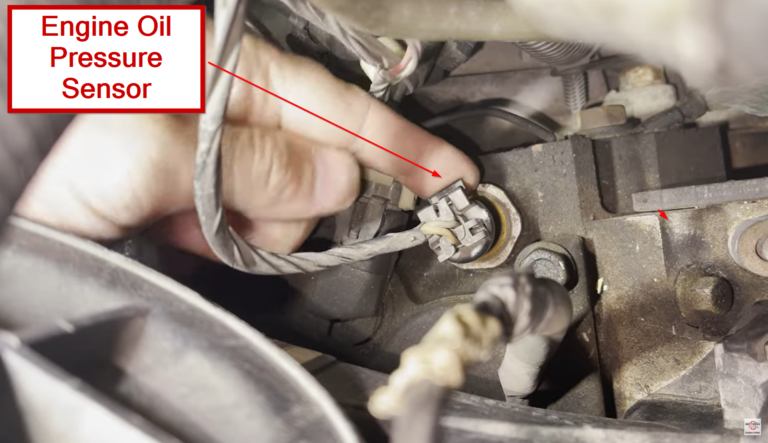
With the engine off and the relevant safety precautions observed, inspect the oil pressure sensor connector and accessible wiring for loose connections, corrosion, damaged insulation, or oil contamination. Follow the wiring diagram and manufacturer test values rather than applying generic voltage assumptions.
Step 5: Verify actual engine oil pressure
If the warning could indicate low pressure, have actual pressure measured with an appropriate gauge using the manufacturer’s specified engine temperature, speed, and test procedure. A pressure reading that is genuinely low requires diagnosis of the lubrication system, not simply sensor replacement.
Step 6: Check the transmission system independently
Inspect transmission codes, fluid level and condition where the design permits, wiring, connectors, and relevant sensors. Use the manufacturer’s specified fluid-check procedure because many transmissions require a particular fluid temperature, vehicle position, and operating state.
Step 7: Confirm the repair
After the identified fault is repaired, repeat the required checks and confirm that warnings and symptoms have been resolved. Clear codes only when appropriate and check whether they return. A road test should occur only after the vehicle is safe to operate.
What the Diagnostic Results Mean
If a mechanical gauge confirms normal engine oil pressure but the dashboard reading is incorrect, a sensor, connector, wiring, or display fault becomes more likely. The exact circuit still needs testing before the sensor is condemned.
If measured oil pressure is below specification, the problem may involve low oil level, an unsuitable oil grade, a restricted pickup, a worn oil pump, excessive bearing clearance, or another lubrication-system fault. The sensor may be reporting the problem accurately.
If engine oil pressure is normal and the transmission stores its own fault codes, focus on the transmission diagnostic path. The presence of an oil pressure warning does not justify skipping transmission testing.
Normal measured pressure with a false warning
Investigate the sensor signal, connector, wiring, instrument display, and applicable control-module logic.
Low measured engine oil pressure
Stop operating the engine until the cause and appropriate repair are established.
Transmission-specific codes or repeatable shift faults
Follow the transmission manufacturer’s diagnostic sequence, including fluid, electrical, hydraulic, and mechanical checks as applicable.
Can a Bad Oil Pressure Sensor Put a Transmission Into Limp Mode?
A bad engine oil pressure sensor does not automatically put a vehicle into transmission limp mode. Limp mode is a protective operating strategy that limits certain functions after the vehicle’s control system detects a condition requiring restricted operation. The exact response varies by manufacturer and vehicle design.
A transmission may enter a reduced-function mode because of a transmission pressure sensor fault, speed sensor problem, solenoid issue, wiring fault, overheating condition, or another monitored failure. Engine faults can also affect power delivery and, on some vehicles, influence transmission control decisions.
If the vehicle displays a transmission warning or loses access to certain gears, retrieve the transmission control module codes before deciding that the engine oil pressure sensor is responsible. Do not repeatedly clear codes or disconnect the battery to force normal operation. Doing so can remove useful diagnostic information without correcting the underlying fault.
Source: automotivian.com
Check the exact warning message
An oil pressure warning, check engine light, and transmission warning have different meanings. Record each message and when it appears.
Read manufacturer-specific codes
Use a scan tool that supports the relevant control modules and consult the service information for the exact vehicle.
Avoid driving through a serious fault
A vehicle that cannot accelerate predictably, engage gears reliably, or maintain safe operation should be transported for diagnosis rather than driven to a repair shop.
Common Mistakes When Troubleshooting Oil Pressure and Transmission Faults
The most expensive diagnostic mistake is replacing parts based on a symptom alone. An oil pressure warning and a shifting problem can occur together, but each needs evidence-based testing before a repair decision is made.
Avoid these common errors when investigating the problem.
Source: i.ytimg.com
Assuming every oil pressure warning means a bad sensor
A warning may reflect real low engine oil pressure. Verify the pressure when the symptoms or diagnostic procedure require it.
Confusing engine oil with transmission fluid
The fluids serve different purposes and have different specifications. Use the correct procedure for each system.
Replacing the engine sensor to fix transmission slipping
Slipping generally calls for transmission-specific diagnosis, including fluid condition, pressure control, clutch operation, and electronic faults as appropriate.
Ignoring wiring and connector faults
Corrosion, loose pins, damaged insulation, or poor electrical connections can create misleading readings and multiple codes.
Clearing diagnostic codes before recording them
Stored codes and freeze-frame information may help identify the conditions under which the fault occurred. Record the information before clearing codes.
Continuing to drive with an oil pressure warning
A genuine lubrication failure can damage an engine quickly. Shut it off safely and arrange diagnosis instead of relying on the absence of unusual noises.
When Professional Diagnosis Is the Better Option
Seek qualified automotive help if actual oil pressure needs to be measured, the warning persists despite a correct oil level, the transmission slips or loses gears, or several control modules report faults. Some tests require specialized scan tools, pressure gauges, wiring diagrams, and vehicle-specific procedures.
If the engine makes new knocking or severe ticking noises, the oil pressure warning stays on, or the vehicle loses drive in traffic, prioritize safety. Shut the vehicle down when safe and arrange towing if continued operation could cause damage or create a hazard.
Immediate concern
Persistent low oil pressure warnings, abnormal engine noises, severe transmission slipping, or loss of drive require prompt attention.
Complex electrical diagnosis
Intermittent faults affecting multiple modules may require professional circuit testing and manufacturer-specific diagnostic equipment.
Frequently Asked Questions
Q
Can a bad oil pressure sensor cause an automatic transmission to shift hard?
Usually, a faulty engine oil pressure sensor does not directly cause hard shifting. Harsh shifts more commonly involve transmission fluid problems, solenoids, pressure control, speed sensors, wiring, or internal wear. Some vehicles may have indirect interactions between engine management and transmission control, so scan both systems and verify the manufacturer’s diagnostic procedure.
Q
Can a bad oil pressure sensor cause transmission slipping?
A bad engine oil pressure sensor is not a typical direct cause of transmission slipping. Slipping can result from low or incorrect transmission fluid, worn clutch components, hydraulic pressure problems, or electronic control faults. If engine speed rises without a matching increase in vehicle speed, avoid continued driving and have the transmission inspected.
Q
Can low engine oil pressure affect transmission performance?
Low engine oil pressure threatens engine lubrication and can cause serious engine damage. It does not ordinarily reduce the hydraulic pressure inside an automatic transmission because the two systems are separate. However, resulting engine problems or vehicle-specific control strategies may affect overall drivability. Stop the engine if the oil pressure warning remains on and verify the cause before operating the vehicle again.
Q
Will replacing the oil pressure sensor fix transmission problems?
Replacing the engine oil pressure sensor will fix a transmission symptom only if testing establishes a specific indirect connection between that sensor fault and the symptom. It will not repair worn transmission clutches, low transmission fluid, a faulty transmission pressure sensor, or a failed solenoid. Diagnose the underlying problem before buying replacement parts.
Q
Can a bad oil pressure sensor trigger limp mode?
It depends on the vehicle’s design and the fault detected. An engine oil pressure sensor fault does not universally trigger transmission limp mode. A transmission control module may restrict operation because of its own sensor, solenoid, pressure, or electrical faults. Read the stored codes from the relevant modules and consult the service information for the exact model.
Q
How can I tell whether the oil pressure sensor or transmission is faulty?
Start by recording the warning lights and diagnostic trouble codes, then check the engine oil level and assess whether the vehicle is safe to operate. If an oil pressure warning persists, verify actual engine oil pressure with the specified test procedure. For shifting problems, scan the transmission control module and inspect the transmission system. A code alone does not prove that the named component has failed.
Q
Is it safe to drive with an oil pressure warning and transmission problems?
Do not continue driving if the engine oil pressure warning stays on while the engine is running. Shut off the engine as soon as it is safe and arrange diagnosis or towing. Transmission slipping, unpredictable shifts, or loss of drive can also make driving unsafe. If both symptoms occur together, do not assume one is harmless because the other appears to explain it.
✦ Wrapping Up
Conclusion
A faulty engine oil pressure sensor usually does not directly cause transmission problems because the engine lubrication system and transmission control system perform different functions. It may contribute indirectly to drivability symptoms on certain vehicles, particularly when engine management strategies or a broader electrical fault are involved. The same symptoms can also result from two unrelated faults occurring at the same time.
The most reliable approach is to identify which system is reporting a problem, check the appropriate diagnostic codes, verify actual engine oil pressure when necessary, and inspect the transmission independently. Avoid replacing the oil pressure sensor based only on harsh shifting, slipping, or delayed gear engagement. If engine oil pressure may be dangerously low, stop operating the vehicle until the cause is established.
💡 Key Takeaway
Record all warning lights and diagnostic codes, check the engine oil level, and do not drive with a persistent oil pressure warning. If the transmission shifts abnormally, obtain a transmission-capable diagnostic scan and follow the vehicle manufacturer’s testing procedures before replacing parts.
Ethan Brooks is an automotive writer at Auto News 7, covering car news, vehicle maintenance, new model updates, recalls, and practical buying guides. He focuses on clear, useful information that helps drivers understand their vehicles and make better ownership decisions.
Learn whether camshaft sensors are interchangeable, how to identify compatible sensors, common mistakes to avoid, and how to choose the correct replacement for your vehicle.
Learn when to replace a camshaft position sensor, the warning signs of failure, diagnostic tips, replacement timing, costs, and whether it is safe to keep driving.
Learn how to clean oil pressure sensor screen deposits, remove the sensor safely, inspect the filter screen, and avoid damage or false oil pressure readings.
Learn how tight an oil pressure sensor should be, why torque specifications vary, how to install it correctly, and how to prevent leaks or thread damage.
Learn whether a knock sensor code can fail an emissions test, how inspection programs work, common OBD-II rules, and what to do before testing your vehicle.