An oil pressure sensor switch is an engine component that monitors oil pressure and sends an electrical signal to the vehicle’s warning system or engine control module. A basic switch typically opens or closes an electrical circuit at a specified pressure, while a variable-output sensor measures pressure across a range.
In the United States, drivers may see an oil pressure warning light on the dashboard of a passenger car, pickup truck, SUV, or van when the engine lubrication system needs attention. The oil pressure sensor switch helps the vehicle detect pressure conditions that may threaten engine lubrication. Depending on the vehicle, it may activate a warning light, send a signal to an electronic control module, or provide pressure information to a gauge.
The terms oil pressure sensor and oil pressure switch are often used interchangeably, but they do not always describe the same electrical device. A switch generally responds to a pressure threshold, whereas a sensor may produce a changing voltage or other signal that represents measured pressure. Understanding the difference helps you identify the correct replacement part and avoid mistaking a faulty electrical component for a genuine engine oil pressure problem.
Source: storage.googleapis.com
What Is an Oil Pressure Sensor Switch?
An oil pressure sensor switch is an electrical component that responds to pressure in the engine’s lubrication system. It monitors whether oil pressure is within a condition that the vehicle is designed to detect and communicates that information through an electrical circuit or signal.
Engine oil circulates through internal passages to lubricate bearings, camshafts, and other moving components. The oil pump creates the pressure needed to move oil through the lubrication system. The sensor or switch monitors pressure at a designated point, allowing the vehicle to alert the driver or help an electronic control system respond to the measured condition.
The exact function depends on the vehicle. Some engines use a simple pressure switch connected to a dashboard warning light. Others use an electronic pressure sensor that supplies a changing signal to a control module or instrument cluster. Certain vehicles use multiple pressure-related devices for different monitoring functions.
Source: narodnatribuna.info
Main purpose
Detect oil pressure conditions and communicate them to the vehicle’s warning or monitoring system.
Typical location
Mounted in an engine oil gallery, cylinder block, cylinder head, oil filter housing, or another manufacturer-designated oil passage.
Electrical connection
Uses one or more terminals connected to vehicle wiring, depending on the component design.
Important limitation
A pressure warning signal does not identify the underlying cause by itself. Mechanical oil pressure testing may be necessary.
Is an Oil Pressure Sensor the Same as an Oil Pressure Switch?
Not necessarily. An oil pressure switch generally changes between electrical states when pressure crosses a specified threshold. For example, a switch designed to operate a low-pressure warning light may close its circuit when pressure falls below its switching point and open the circuit when pressure rises. The precise behavior depends on the design and wiring.
A variable-output oil pressure sensor measures pressure over a range and produces a signal that changes with the measurement. A control module or instrument cluster interprets that signal. This design can provide more information than a simple on-or-off switch, although the actual capabilities depend on the vehicle.
Some manufacturers and parts catalogs use the word sensor for components that function primarily as switches. Before ordering a replacement, check the vehicle’s exact application and the manufacturer’s parts information rather than relying on the component name alone.
Pressure switch
Usually changes electrical state when pressure crosses a specified threshold.
Variable-output pressure sensor
Produces an electrical signal that represents changing pressure measurements.
How Does an Oil Pressure Sensor Switch Work?
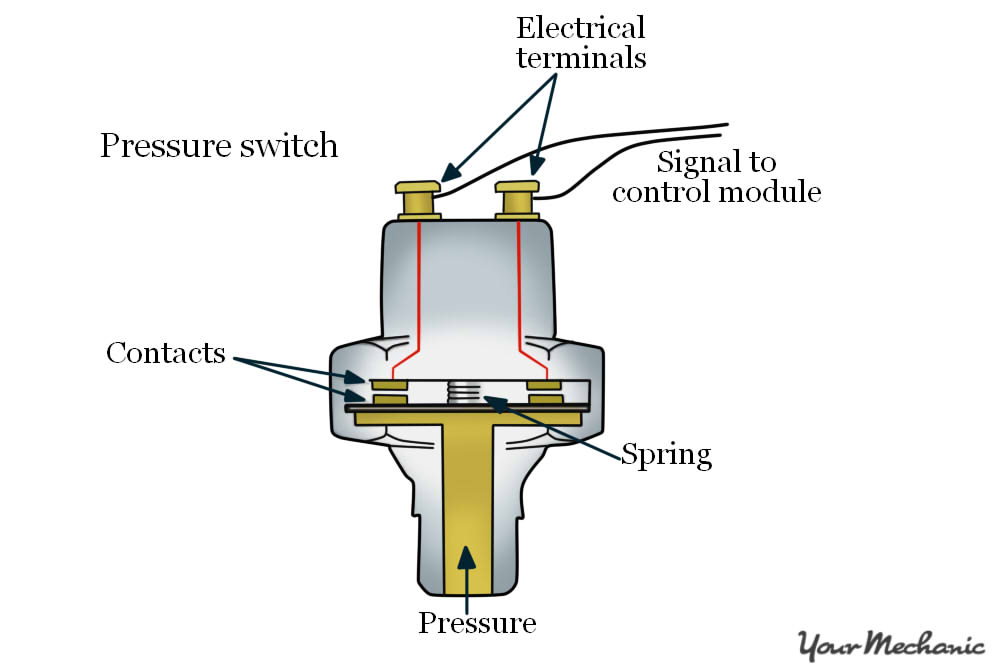
An oil pressure sensor switch works by responding to the force exerted by engine oil within a designated passage. That pressure affects an internal mechanical element or sensing element, which changes an electrical circuit or generates a signal for the vehicle’s monitoring system.
When the engine starts, the oil pump draws oil from the oil pan and circulates it through the lubrication system. Pressure develops as the pump moves oil through the system’s passages and clearances. The pressure switch or sensor monitors pressure at its mounting point and communicates the detected condition to the vehicle.
The monitoring system then uses the electrical information according to the vehicle’s design. A basic circuit may illuminate a warning light when pressure is too low. An electronic system may compare the signal with expected conditions and display a warning or store a diagnostic trouble code if it detects a fault.
Source: ebay.com
Engine starts
The oil pump begins circulating oil, and pressure develops in the lubrication system.
Pressure is detected
The switch or sensor responds to the oil pressure at its installation point.
An electrical signal is produced
The device changes circuit state or sends a pressure-dependent electrical signal.
The vehicle responds
The warning light, gauge, instrument cluster, or control module interprets the signal according to the vehicle’s design.
What Happens When Oil Pressure Drops?
If pressure falls below the operating threshold of a warning switch, the switch may activate the oil pressure warning circuit. In a vehicle with an electronic sensor, the monitoring system may identify a low-pressure reading and display a warning. Some vehicles also use protective control strategies, but an automatic engine shutdown is not a universal feature.
Low oil pressure can result from an insufficient oil level, incorrect oil viscosity, an oil leak, a worn oil pump, excessive internal engine clearances, a restricted oil pickup, or other lubrication problems. A faulty switch or damaged wire can also cause a warning even when actual pressure is acceptable.
Because these causes require different repairs, do not assume that replacing the switch will solve the problem. If the warning appears while the engine is running, shut the engine off as soon as it is safe and verify the condition before restarting.
Low oil level
The pump may not receive an adequate oil supply, depending on the engine and operating conditions.
Mechanical pressure problem
Pump wear, internal leakage, or a restriction may prevent the lubrication system from maintaining the required pressure.
Electrical or sensor fault
A failed switch, damaged connector, short circuit, or wiring fault may create an inaccurate warning.
Where Is the Oil Pressure Sensor Switch Located?
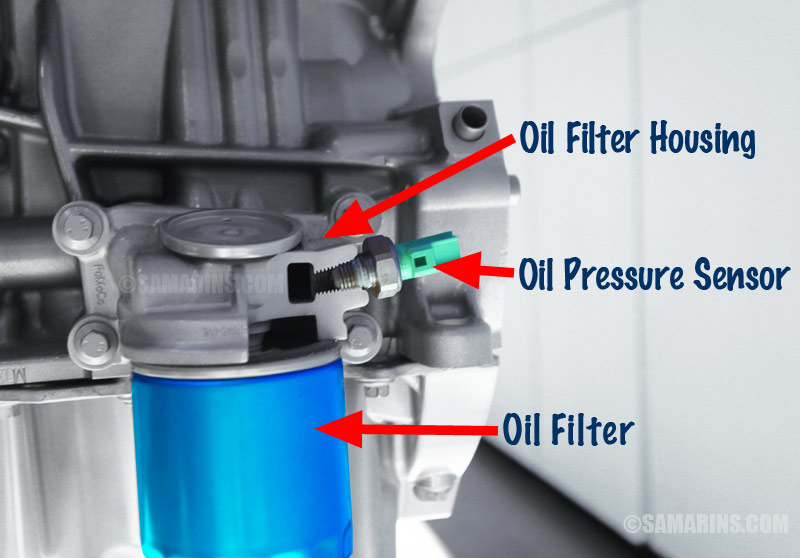
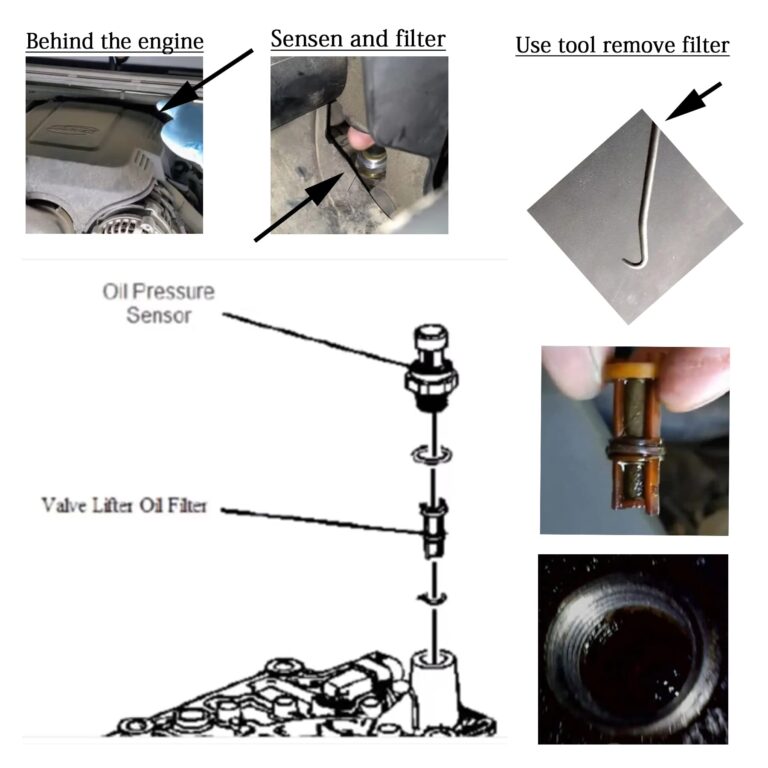
The oil pressure sensor switch is commonly mounted directly in an engine oil passage, but its exact location varies by vehicle and engine design. It may be installed in the engine block, cylinder head, oil filter housing, or a dedicated oil gallery. Some engines place it near the oil filter, while others require access from above or beneath the vehicle.
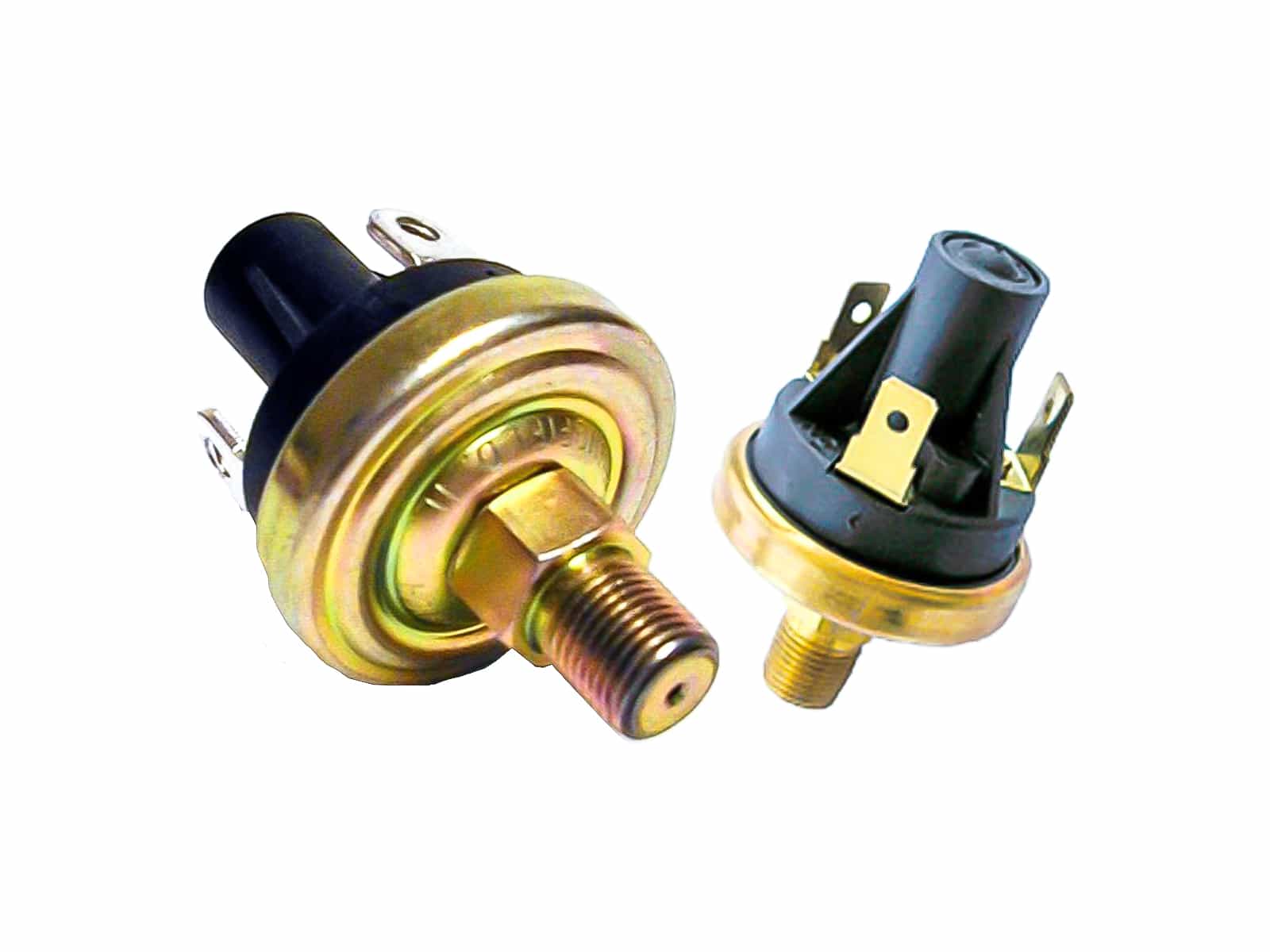
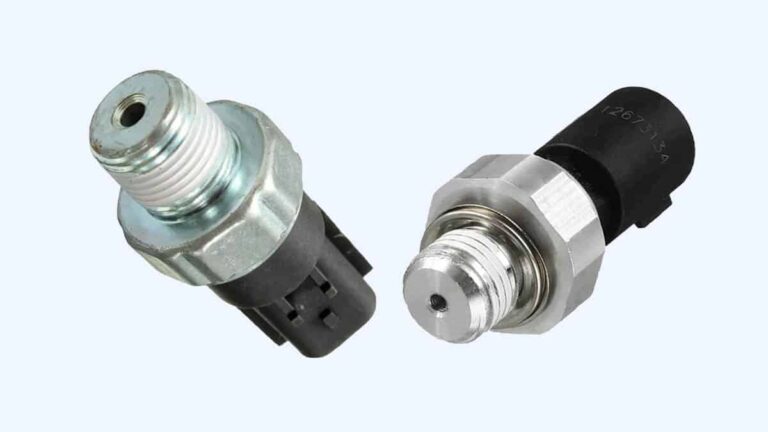
On many vehicles, the component has a threaded metal body and an electrical connector. Its appearance and position can help you identify it, but appearance alone is not enough to distinguish an oil pressure switch from other nearby sensors.
Use the service information for the exact model year and engine to locate the correct component. A parts diagram, repair manual, or manufacturer service procedure can identify the mounting point and connector arrangement before you begin work.
Source: masterparts.com
Engine block
Some switches screw directly into an oil passage in the block.
Oil filter housing
Certain engines mount the sensor in or near the housing that supports the oil filter.
Cylinder head or another oil gallery
Other designs use a dedicated passage in a different engine location.
How to Identify the Correct Component
Start with the vehicle’s owner’s manual or service information and look for the oil pressure switch or engine oil pressure sensor location. Compare the illustration with the installed component and verify the electrical connector and part number where available.
Do not remove a nearby component merely because it resembles an oil pressure switch. Oil temperature sensors, variable valve timing components, and other threaded electrical devices may be located in the same general area but serve different purposes.
Check the engine specification
Confirm the engine size, engine code, and model year because location can change between configurations.
Inspect the connector
Compare its shape and terminal arrangement with the service diagram or replacement part.
Verify access requirements
Determine whether covers, an air intake component, or other parts must be removed for safe access.
What Are the Symptoms of a Bad Oil Pressure Sensor Switch?
A failing oil pressure sensor switch may cause an oil pressure warning light to remain on, illuminate intermittently, or behave inconsistently with actual engine conditions. A faulty variable-output sensor may also cause an inaccurate pressure gauge reading or trigger a diagnostic trouble code.
These symptoms do not prove that the sensor is defective. The same warning can occur when engine oil pressure is genuinely low, and that condition can damage the engine quickly. Diagnosis should establish whether the pressure is correct before the component is condemned.
Source: www.autozone.com
Oil pressure warning light stays on
Possible causes include low oil pressure, a defective switch, damaged wiring, or a problem in the warning circuit.
Warning light flickers
The cause may be changing oil pressure, an intermittent electrical connection, or a faulty switch. Flickering should not be dismissed as harmless.
Oil pressure gauge reads incorrectly
On vehicles with an electronic pressure sensor, a faulty sensor or wiring problem may produce an implausible reading.
Oil leaks around the component
A damaged sensor body, failed seal, loose connection, or mounting problem may allow oil to escape.
Diagnostic trouble code appears
Some vehicles record a code when the pressure signal or circuit falls outside expected conditions. The code identifies a diagnostic direction, not necessarily a failed sensor.
Can a Bad Oil Pressure Switch Damage the Engine?
A defective switch does not normally reduce oil pressure mechanically, but it can prevent the driver from receiving an accurate warning. If actual oil pressure is low and the faulty switch fails to alert the driver, the engine may continue running without adequate lubrication.
A switch that produces a false warning can also cause unnecessary concern and repairs. The critical distinction is whether the engine has a real pressure problem or whether the electrical monitoring system is reporting incorrectly.
If the oil pressure warning light is illuminated while the engine is running, stop safely and shut off the engine. Check the oil level according to the owner’s manual, but remember that a correct oil level does not prove adequate pressure. Arrange professional diagnosis or towing if the warning persists or the engine makes unusual knocking or tapping noises.
Do not ignore a warning
Low oil pressure can cause severe internal engine damage.
Do not replace parts by symptoms alone
Confirm the actual pressure and inspect the electrical circuit before deciding what to replace.
How to Diagnose an Oil Pressure Sensor Switch Problem
The safest diagnostic approach is to check the oil supply, inspect the electrical connections, retrieve applicable diagnostic codes, and verify actual oil pressure when necessary. This sequence helps separate a real lubrication problem from a sensor or circuit fault.
The correct testing method depends on whether the vehicle uses a simple pressure switch or a variable-output sensor. Some switches can be checked for continuity as pressure changes, while other sensors require the specified reference voltage, ground, signal measurements, or a scan-tool data check. Follow the manufacturer’s test procedure rather than applying a universal voltage or pressure value.
Source: mechlesson.com
Step 1: Check the oil level
Park on a level surface and follow the owner’s manual procedure for checking the dipstick or electronic oil-level display. Add the specified oil if the level is low, and inspect for leaks.
Step 2: Inspect the sensor and wiring
With the engine off and cool enough to work around safely, inspect the connector, wiring insulation, mounting area, and signs of oil leakage or corrosion.
Step 3: Read diagnostic information
Use a compatible scan tool if the vehicle supports relevant engine data or diagnostic trouble codes. Compare the readings with the manufacturer’s specifications.
Step 4: Verify actual oil pressure
When a real pressure problem cannot be ruled out, a qualified technician can install a suitable mechanical pressure gauge and compare the reading with the service specifications.
Step 5: Test the switch or sensor circuit
Check the component’s switching behavior or electrical output using the approved procedure, tools, and specifications for the exact vehicle.
Why Mechanical Oil Pressure Testing Matters
A mechanical pressure gauge measures pressure directly at the test point, independently of the vehicle’s electrical pressure signal. Comparing that reading with the manufacturer’s specifications helps determine whether the problem is mechanical or electrical.
Oil pressure specifications can vary with engine temperature, engine speed, oil grade, and engine design. A reading taken at cold idle cannot automatically be compared with a specification for a fully warmed engine at a specified RPM.
If measured pressure is below specification, investigate the lubrication system instead of assuming the sensor is responsible. If pressure is correct but the warning or reading remains abnormal, focus on the switch, sensor, wiring, connector, instrument cluster, or control module as appropriate.
Normal measured pressure with an abnormal warning
Supports further investigation of the electrical monitoring circuit, although the test conditions and measurement accuracy must be verified.
Low measured pressure
Requires investigation of the oil supply, pump, pickup, restrictions, internal engine clearances, and other mechanical causes.
Intermittent or implausible readings
May justify checking connector tension, wiring damage, grounds, signal integrity, and sensor performance.
Oil Pressure Sensor Switch vs. Other Engine Sensors
An oil pressure sensor switch monitors pressure in the engine lubrication system. It is different from sensors that monitor oil temperature, coolant temperature, engine speed, or pressure in other vehicle systems.
Distinguishing these components matters when interpreting a warning light or choosing a replacement. A transmission oil pressure switch, for example, monitors a hydraulic pressure condition within the transmission system rather than engine oil pressure. The parts may look similar but are not automatically interchangeable.
Source: kladbkzab.blob.core.windows.net
Engine oil pressure switch
Detects a pressure threshold in the engine lubrication system and typically operates a warning circuit.
Engine oil pressure sensor
May measure a range of engine oil pressures and send a variable electrical signal to a monitoring system.
Oil temperature sensor
Measures oil temperature rather than oil pressure.
Transmission pressure switch or sensor
Monitors pressure associated with transmission operation, depending on the design.
Coolant temperature sensor
Measures engine coolant temperature and serves a different monitoring function.
Can You Replace an Oil Pressure Sensor Switch Yourself?
A mechanically accessible oil pressure switch can be a manageable repair for someone with suitable tools and vehicle-specific instructions. However, the difficulty varies significantly by engine. Some switches are easy to reach, while others sit behind intake components or in cramped areas that make removal more complicated.
Before beginning, identify the exact replacement part, obtain the correct socket or removal tool, and confirm the manufacturer’s installation procedure. You may also need a new specified seal or gasket. Some components seal through their threads, while others use a sealing washer or O-ring, so do not apply thread sealant unless the manufacturer permits it.
Work with the engine off, the vehicle secured, and the relevant components cool enough to handle safely. If access requires lifting the vehicle, use properly rated jack stands on a suitable surface. Never rely on a hydraulic jack alone, and never work beneath a vehicle supported only by a jack.
Source: ca.shein.com
Prepare the vehicle
Park securely, switch off the ignition, allow the engine to cool, and follow the service procedure for electrical disconnection if required.
Disconnect the electrical connector
Release the connector lock carefully and avoid pulling on the wires.
Remove the old component
Use the correct tool and follow the specified removal procedure to avoid damaging the threads or surrounding parts.
Install the replacement
Use the correct part, sealing method, and specified tightening torque. Do not overtighten the component.
Check the repair
Reconnect the wiring, start the engine only when safe, confirm the warning system behaves correctly, and inspect for leaks. Stop the engine immediately if the oil pressure warning remains on.
What If the Warning Light Remains On After Replacement?
A new sensor or switch will not correct low oil pressure caused by a mechanical fault. If the warning remains after installation, verify the part number, connector fit, wiring condition, installation and sealing method, and the actual oil pressure.
If the warning light stays on with the engine running, shut the engine off. Do not keep restarting it to see whether the warning clears. Have the pressure checked and arrange towing when the cause cannot be established safely.
Verify compatibility
Confirm the replacement matches the exact engine and electrical specification.
Inspect the circuit
Look for damaged wires, poor terminal contact, shorts, and connector problems.
Confirm actual pressure
Use the manufacturer’s diagnostic procedure and a suitable pressure gauge when required.
Common Mistakes When Diagnosing an Oil Pressure Switch
The most serious diagnostic mistake is treating every oil pressure warning as a bad sensor. Because low pressure can damage engine bearings and other lubricated components, the actual pressure must be considered before the vehicle is driven again.
Another common mistake is assuming that a normal oil level proves the lubrication system is working properly. Oil level and oil pressure are different measurements. An engine can have enough oil in the pan yet still develop inadequate pressure because of pump problems, restrictions, excessive internal clearances, or other faults.
Source: storage.googleapis.com
Replacing the switch without testing
This can waste money and leave a genuine lubrication problem unresolved.
Ignoring unusual engine noises
Knocking or pronounced tapping together with an oil pressure warning may indicate serious lubrication trouble.
Using an incorrect replacement
A part that fits the threads may still have the wrong switching threshold, connector, or signal characteristics.
Overtightening the sensor
Excessive torque can damage the threads, sealing surfaces, or component body.
Assuming every sensor uses the same test
Switches, variable-output sensors, and vehicle monitoring circuits require different diagnostic procedures.
Frequently Asked Questions
Q
What does an oil pressure sensor switch do?
An oil pressure sensor switch monitors pressure in the engine lubrication system and sends an electrical signal to the vehicle’s warning or monitoring system. A basic switch typically changes circuit state at a pressure threshold, while some sensor designs provide a changing signal that represents measured pressure.
Q
Can I drive with a bad oil pressure sensor switch?
Driving may be unsafe because a faulty switch can hide genuinely low oil pressure or produce a misleading warning. If the red oil pressure warning light stays on while the engine is running, stop safely and shut off the engine. Check the oil level and arrange diagnosis before driving again if the warning persists.
Q
Will a bad oil pressure switch cause the check engine light to come on?
It can on vehicles whose engine management system monitors the switch or related pressure circuit, but the result depends on the vehicle’s design. Some vehicles use a separate dashboard oil pressure warning light without illuminating the check engine light. A diagnostic trouble code can help narrow the possibilities but does not prove the switch itself has failed.
Q
Does an oil pressure sensor switch control the oil pump?
A conventional oil pressure switch usually monitors pressure rather than controlling the oil pump. However, some engines use electronically controlled lubrication systems in which pressure sensors provide information to a control system that adjusts pump operation. Check the vehicle’s service information to determine which design it uses.
Q
How do I know whether the oil pressure sensor or the oil pump is bad?
The most reliable way to distinguish an electrical sensor fault from a mechanical pressure problem is to measure actual oil pressure under the conditions specified by the manufacturer. If pressure is within specification but the electrical reading is incorrect, investigate the sensor and its circuit. If pressure is below specification, the oil supply, pump, pickup, internal engine clearances, and other mechanical causes need investigation.
Q
Where is the oil pressure sensor switch on a car?
It is commonly installed in an engine oil passage in the engine block, cylinder head, or oil filter housing. The exact location depends on the make, model, year, and engine. Use a vehicle-specific service manual or parts diagram to identify the correct component before removing anything.
Q
Are oil pressure switches universal?
No. Oil pressure switches can differ in thread size, connector design, switching pressure, electrical behavior, sealing method, and vehicle compatibility. Select a replacement using the exact vehicle and engine specifications or a verified manufacturer part number.
✦ Wrapping Up
Conclusion
An oil pressure sensor switch is an important part of an engine’s lubrication monitoring system. It detects a pressure condition and communicates that information to a warning light, gauge, or control module. Although the terms sensor and switch are sometimes used interchangeably, a basic switch and a variable-output pressure sensor may operate differently and require different tests.
A warning light, flickering indicator, inaccurate gauge, or oil leak near the component can point to a sensor or wiring fault, but none of these symptoms proves that the engine’s oil pressure is normal. Checking the oil level, inspecting the circuit, and measuring actual pressure when necessary helps prevent unnecessary parts replacement and potentially serious engine damage.
💡 Key Takeaway
If your vehicle displays an oil pressure warning while the engine is running, stop safely and shut off the engine. Check the oil level according to the owner’s manual, then arrange a proper pressure and electrical diagnosis if the warning persists. Use vehicle-specific service information to identify the correct switch or sensor before replacing it.
Ethan Brooks is an automotive writer at Auto News 7, covering car news, vehicle maintenance, new model updates, recalls, and practical buying guides. He focuses on clear, useful information that helps drivers understand their vehicles and make better ownership decisions.
Learn how to replace camshaft position sensor connector wiring safely. Follow step-by-step instructions, tools needed, troubleshooting tips, and common mistakes to avoid.
Learn how to clean oil pressure sensor screen deposits, remove the sensor safely, inspect the filter screen, and avoid damage or false oil pressure readings.
Learn whether camshaft sensors are interchangeable, how to identify compatible sensors, common mistakes to avoid, and how to choose the correct replacement for your vehicle.
Learn how to disconnect an oil pressure sensor safely, identify the connector, release the locking tab, avoid damage, and troubleshoot common problems.