Yes, an open coolant temperature sensor can contribute to a lean condition on some vehicles, but it is not the usual result. In many U.S. vehicles, an open ECT circuit makes the engine computer interpret the engine as extremely cold, which generally causes excessive fuel enrichment and a rich condition. The exact result depends on the vehicle’s fail-safe strategy and the temperature value the ECU substitutes when the sensor signal is lost.
For drivers in the United States, an open engine coolant temperature sensor circuit can be especially confusing because the same fault may produce different drivability symptoms depending on the vehicle’s engine-control calibration. Modern OBD-II systems use the engine coolant temperature sensor, or ECT sensor, as an input for cold-start fueling, fuel-trim strategy, ignition control, emissions functions, and other temperature-dependent operations. A fault in that input can therefore affect the air-fuel mixture even though the sensor does not directly measure fuel or air.
On many gasoline engines, an open ECT circuit produces a very high electrical resistance or high signal voltage that the ECU interprets as an extremely cold engine. That normally increases injector pulse width and creates a rich mixture rather than a lean one. However, some control systems use a substitute temperature or change their fueling strategy when an ECT fault is detected. If that substitute value is warmer than the actual engine temperature during a cold start, the engine may receive less fuel than it needs and run lean. For that reason, an ECT fault should be diagnosed from live data and the vehicle’s service information rather than from the fault code alone.
Source: carfromjapan.com
How an Open Coolant Temperature Sensor Can Affect Fuel Mixture
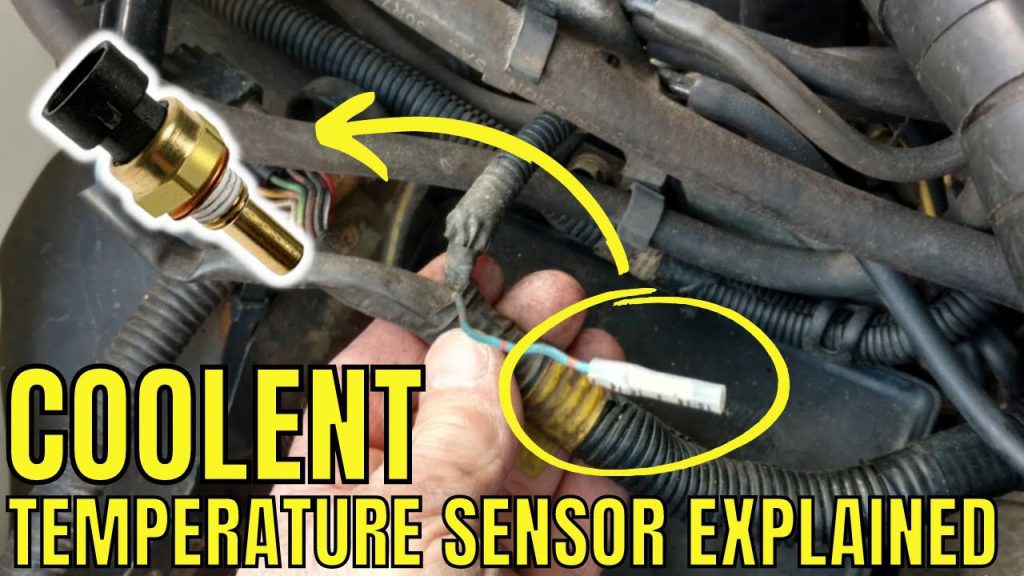
The ECT sensor tells the engine control module how warm the engine coolant is. Most automotive ECT sensors use a negative temperature coefficient thermistor, meaning their electrical resistance decreases as temperature increases. The ECU supplies a reference voltage and interprets the resulting signal as coolant temperature.
The ECU uses that temperature information to determine how much fuel the engine needs during different operating conditions. A cold engine generally requires additional fuel during startup and warm-up. As the engine reaches operating temperature, the ECU reduces cold-start enrichment and relies more heavily on feedback from oxygen or air-fuel sensors.
When the ECT circuit opens, the ECU no longer receives a normal resistance or voltage signal. On many vehicles, the open circuit is interpreted as an extremely cold temperature. Some Toyota and Lexus service information, for example, documents an ECT live-data value of approximately -40°F when the circuit is open. Other manufacturers use different substitute values and strategies.
This distinction explains why an open ECT sensor does not have one universal effect on fuel mixture. The electrical fault is similar, but the ECU response is manufacturer- and calibration-specific.
Source: detroitchinatown.org
Normal cold engine
The ECU sees a genuinely cold temperature and increases fuel delivery to support stable combustion.
Normal warm engine
The ECU sees increasing coolant temperature and gradually removes cold-start enrichment as operating conditions stabilize.
Open ECT circuit
The ECU receives an implausible signal and applies a fault strategy that may command additional fuel, use a fixed substitute temperature, or alter other engine controls.
Why the Usual Result Is a Rich Condition
If an open ECT circuit is interpreted as an extremely cold engine, the ECU may continue applying cold-start enrichment even after the engine has warmed. That can increase injector pulse width and produce a rich mixture. Common symptoms include poor fuel economy, a strong fuel smell, rough running, difficult hot starts, black exhaust smoke on some engines, and spark-plug fouling.
This is why a P0118 or similar ECT high-input fault should not automatically be interpreted as the cause of a lean condition. The fault may actually be causing excessive fuel delivery while another problem is responsible for the lean code.
Typical direction
Open ECT circuit plus a cold-temperature fail-safe strategy usually pushes fueling toward rich rather than lean.
Important exception
A vehicle that substitutes a relatively warm temperature or changes its fueling strategy can behave differently, particularly during a cold start.
When an Open ECT Sensor Can Contribute to a Lean Condition
An open ECT sensor can contribute to lean running when the ECU’s substitute strategy results in less fuel than the engine actually needs. The clearest example is a cold engine that is incorrectly treated as already warm. Because a warm engine normally needs less enrichment than a cold engine, the ECU may command insufficient fuel during the warm-up period.
The effect can also depend on whether the vehicle permits closed-loop fuel control while the ECT fault is active. Some systems inhibit certain adaptive or closed-loop functions, while others continue using oxygen-sensor feedback under specific conditions. The resulting fuel mixture therefore cannot be predicted from the ECT fault code alone.
Older and newer vehicles can respond differently to the same type of ECT failure. A documented service procedure for a particular vehicle is more reliable than a generic rule such as ‘an open coolant sensor always makes the engine rich’ or ‘an open coolant sensor always makes it lean.’
Source: fity.club
Cold-start lean running
If the ECU substitutes a warm temperature for an actual cold engine, cold-start enrichment may be reduced and the engine can run lean during warm-up.
Fault strategy differences
Different manufacturers can use different default temperatures, fuel-control modes, and diagnostic strategies when ECT data becomes invalid.
Secondary effects
ECT faults can alter idle control, emissions functions, cooling-fan operation, ignition timing, and closed-loop entry, which can indirectly affect drivability and fuel-trim readings.
Why a Lean Code Does Not Prove the ECT Sensor Is the Cause
A lean diagnostic trouble code such as P0171 means the engine-control system has detected a fuel-trim condition consistent with too much oxygen in the exhaust or insufficient fuel relative to the expected mixture. It does not identify the failed component by itself.
Vacuum leaks, unmetered intake air, inaccurate MAF or MAP measurements, low fuel pressure, restricted injectors, exhaust leaks near an oxygen sensor, ignition problems, and sensor or wiring faults can all produce symptoms or fuel-trim readings associated with a lean condition. The ECT sensor should therefore be treated as one possible contributor rather than the automatic diagnosis.
P0171
This code generally indicates a system-too-lean condition on Bank 1. The ECT sensor can influence fuel control, but many other faults can set the same code.
P0118
This code generally indicates an ECT circuit high-input condition. An open sensor or open wiring can cause it, but the code itself does not prove the sensor body has failed.
Symptoms of an Open Coolant Temperature Sensor Circuit
The symptoms depend on the vehicle’s ECU strategy, but an open ECT circuit commonly produces a check-engine light and an implausible coolant-temperature reading. Because coolant temperature affects several engine-management functions, the driver may notice more than one symptom at the same time.
A lean condition caused or influenced by the ECT fault may be most noticeable during cold operation. The engine can hesitate, surge, stumble, or require more cranking before starting. If the ECU instead interprets the open circuit as extreme cold and adds excessive fuel, the same vehicle may show rich-running symptoms instead.
Source: uk.fridayparts.com
Check-engine light
An ECT circuit fault can trigger a diagnostic trouble code such as P0115, P0117, P0118, or P0119, depending on the vehicle and the exact electrical condition.
Implausible temperature reading
The scan tool may show an extremely low value when the circuit is open. Some Toyota and Lexus applications use approximately -40°F as the open-circuit indication.
Poor cold starting
Incorrect temperature information can disrupt the fuel enrichment required for a cold engine.
Rough or unstable idle
Incorrect temperature input can affect fueling and idle-control decisions during warm-up.
Fuel economy changes
Depending on the fail-safe strategy, the engine may consume excess fuel or operate with an incorrect mixture.
Cooling-fan behavior
Some vehicles use ECT information for fan control, so a sensor fault can cause unusual fan operation.
A Useful Symptom Pattern
If the engine starts poorly when cold, the scan tool reports an implausible coolant temperature, and the ECT circuit has a high-input fault, the ECT circuit deserves immediate attention. If the ECT data is normal but fuel trims are strongly positive, investigate air leaks, fuel delivery, and airflow measurement before replacing the coolant sensor.
Strong ECT clue
Coolant temperature data is implausible compared with ambient temperature before startup.
Weak ECT clue
A lean code is present but ECT live data tracks actual engine temperature normally.
How to Diagnose an Open ECT Sensor Before Replacing It
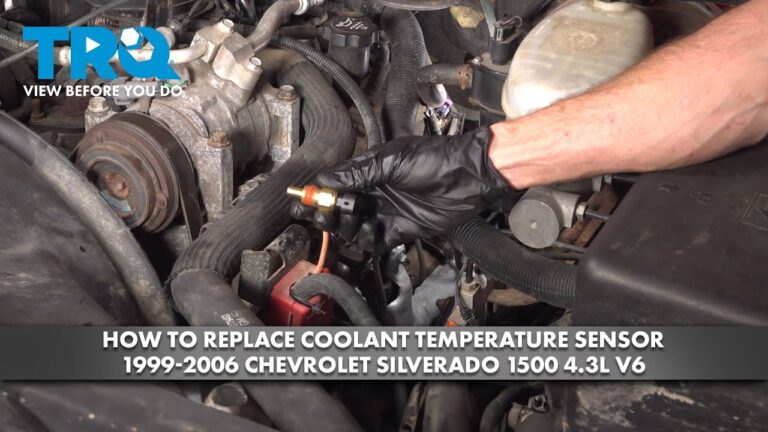
The most useful diagnostic approach is to confirm what the ECU sees, then determine whether the problem is the sensor itself or the wiring. An open circuit can be caused by a failed thermistor, disconnected connector, damaged terminal, broken wire, or a fault farther along the circuit.
Work with the engine cold whenever possible for the initial temperature comparison. Do not remove an ECT sensor from a hot, pressurized cooling system. Hot coolant can cause severe burns, so allow the engine to cool and follow the vehicle manufacturer’s service procedure.
Source: detroitchinatown.org
1. Scan for diagnostic trouble codes
Record ECT-related codes and any fuel-mixture codes before clearing them. Save freeze-frame information if the scan tool provides it.
2. Check ECT live data
With the engine cold and the vehicle sitting for several hours, compare the ECT reading with the approximate ambient temperature. A large unexplained difference is a warning sign.
3. Look for an open-circuit value
Some vehicles display approximately -40°F or -40°C when the ECT circuit is open. Do not assume this value is universal; verify the specification for the vehicle being diagnosed.
4. Inspect the connector
Check for a loose plug, corrosion, damaged terminals, broken locking tabs, or wiring that has pulled away from the connector.
5. Test the sensor
If the service manual specifies resistance testing, compare the measured sensor resistance with the manufacturer’s temperature-resistance chart.
6. Test the wiring
If the sensor tests correctly, check the signal and ground or return circuits between the sensor and ECU according to the wiring diagram and manufacturer procedure.
7. Recheck fuel trims
After repairing the ECT fault, verify coolant-temperature data and reassess short-term and long-term fuel trims. A remaining lean condition requires continued diagnosis rather than assuming the ECT repair solved everything.
What Good ECT Live Data Looks Like
On a cold start, ECT data should generally be reasonably close to the engine’s actual temperature and should rise progressively as the engine warms. Once the engine reaches normal operating temperature, the scan-tool reading should stabilize within the range specified by the manufacturer.
The exact normal temperature varies by engine, thermostat, operating conditions, and calibration. Avoid using one universal temperature as a pass-or-fail standard for every vehicle.
Before startup
ECT should be plausible relative to ambient temperature and other temperature sensors.
During warm-up
ECT should generally increase rather than remain fixed at an implausible extreme.
At operating temperature
ECT should reach and maintain a temperature consistent with the vehicle manufacturer’s specifications and thermostat strategy.
ECT Sensor vs. Other Common Causes of a Lean Condition
If the vehicle has a lean code, compare the ECT data with the other major inputs that determine air-fuel control. This prevents an ECT fault from becoming a parts-swapping diagnosis.
Fuel trims are particularly useful. Positive fuel trims generally indicate that the ECU is adding fuel in response to a perceived lean condition. The pattern matters: high trims mainly at idle often point toward an intake or vacuum leak, while high trims across a broader operating range can direct attention toward fuel delivery, airflow measurement, or other causes.
Source: fity.club
Vacuum or intake leak
Unmetered air entering the engine can make the actual mixture lean and is a common cause of positive fuel trims.
MAF sensor problem
An airflow sensor that underreports incoming air can cause the ECU to command too little fuel.
Low fuel pressure
Insufficient fuel pressure can reduce fuel delivery and create a genuine lean condition under load or across the operating range.
Restricted injectors
Reduced injector flow can leave the engine short of fuel even when the ECU is commanding the expected injector pulse.
Exhaust leak
An exhaust leak near an upstream oxygen or air-fuel sensor can allow outside oxygen into the exhaust stream and distort mixture feedback.
ECT sensor or circuit
An incorrect temperature input can change fueling strategy, particularly during cold operation, but it should be confirmed with live data and circuit testing.
A Simple Diagnostic Decision Table
Use the following pattern as a starting point rather than a substitute for the vehicle’s factory diagnostic procedure.
ECT reads extremely cold with a warm engine
Check for an open ECT sensor circuit, disconnected connector, broken wiring, or sensor failure.
ECT data is normal but P0171 remains
Prioritize intake leaks, MAF or MAP accuracy, fuel pressure, injector flow, exhaust leaks, and oxygen or air-fuel sensor diagnostics.
Lean condition occurs mainly during cold start
ECT data becomes more relevant because coolant temperature directly affects cold-start enrichment.
Lean condition occurs mainly under load
Investigate fuel pressure, injector capacity, airflow measurement, and ignition performance rather than assuming the ECT sensor is responsible.
Common Mistakes When Diagnosing an ECT-Related Lean Condition
The biggest diagnostic mistake is assuming that an ECT fault has a predictable rich-or-lean result on every vehicle. The ECU’s response is software-dependent, so the same electrical failure can produce different operating behavior across makes, models, and engine-management systems.
Another mistake is replacing the sensor without checking the connector and wiring. An open circuit is an electrical description, not proof that the sensor itself has failed. A broken wire or poor terminal connection can create exactly the same scan-tool symptom.
It is also a mistake to clear the codes and immediately assume the repair was successful. After correcting the ECT problem, confirm that live temperature data behaves normally and that the original fuel-trim problem has actually changed.
Source: storage.googleapis.com
Mistake: assuming P0118 means a bad sensor
An open circuit can exist in the connector or harness, so the complete circuit needs to be tested.
Mistake: assuming every open ECT circuit causes lean running
Most common fail-safe strategies tend to produce rich operation when the ECU interprets the engine as extremely cold.
Mistake: ignoring the actual ECT live-data value
The ECU’s reported temperature is often more informative than the code description alone.
Mistake: replacing the ECT sensor for a P0171 code
A lean code has many possible causes and should be diagnosed using fuel trims, airflow data, fuel pressure, intake inspection, and sensor testing.
When Professional Diagnosis Makes Sense
Professional diagnosis is appropriate when the wiring diagram is unclear, the ECU input cannot be tested confidently, multiple unrelated fault codes are present, the engine has severe drivability problems, or a cooling-system component must be removed while the system is hot or pressurized. A qualified technician can use the vehicle-specific service information and scan-tool data to distinguish a sensor fault from a wiring or control-module problem.
Use vehicle-specific specifications
Resistance values, reference voltages, normal ECT temperatures, and fail-safe strategies differ between applications.
Do not open a hot cooling system
Allow the engine to cool and follow the manufacturer’s safety procedure before removing the sensor or opening the cooling system.
Frequently Asked Questions
Q
Can a bad coolant temperature sensor cause a P0171 lean code?
It can contribute to a P0171 condition on some vehicles, but it is not the most direct or universal cause. The ECT sensor affects fuel-control calculations, and an incorrect temperature signal can alter the amount of fuel the ECU commands. However, P0171 can also result from vacuum leaks, inaccurate airflow measurement, low fuel pressure, restricted injectors, exhaust leaks, and other faults.
Q
Does an open coolant temperature sensor usually make an engine run rich or lean?
An open ECT circuit usually makes the ECU interpret the engine as extremely cold on many vehicles. That commonly increases fuel enrichment and produces a rich condition. However, some ECUs use a substitute temperature or different fail-safe strategy that can cause insufficient fueling under particular conditions. Always verify the specific vehicle’s strategy.
Q
What does an open ECT sensor show on a scan tool?
Some vehicles display approximately -40°F or -40°C when the ECT circuit is open because the ECU interprets the high-resistance condition as an extremely cold temperature. This is not universal. The exact value and diagnostic behavior depend on the vehicle’s engine-control system.
Q
Can an unplugged coolant temperature sensor cause a lean condition?
Unplugging the ECT sensor creates an open circuit, so it can change fueling strategy and cause abnormal running. Whether the mixture becomes lean or rich depends on the ECU’s fault response. Deliberately unplugging the sensor is not a reliable diagnostic method by itself; live-data checks and circuit testing provide better evidence.
Q
Should I replace the coolant temperature sensor if I have a lean code?
Not based on the lean code alone. First verify the ECT reading, inspect the connector and wiring, and compare the sensor signal with the manufacturer’s specifications. If ECT data is normal, investigate common lean-condition causes such as intake leaks, MAF or MAP errors, fuel-pressure problems, injector restrictions, exhaust leaks, and oxygen or air-fuel sensor faults.
✦ Wrapping Up
Conclusion
An open coolant temperature sensor can affect fuel mixture and can contribute to a lean condition on some vehicles, but that is not the typical outcome. In many U.S. OBD-II applications, an open ECT circuit is interpreted as an extremely cold engine, causing additional fuel enrichment and a rich condition instead. Other vehicles may use a different fail-safe temperature or fueling strategy, particularly during cold operation.
The most reliable way to determine whether the ECT fault is responsible is to check live coolant-temperature data, inspect the sensor connector and wiring, test the sensor against vehicle-specific specifications, and then reassess fuel trims after the repair. If the ECT data is accurate, a lean code should be diagnosed through the rest of the air, fuel, exhaust, and feedback systems rather than by replacing the coolant sensor based on the code alone.
💡 Key Takeaway
If your scan tool shows an implausibly cold ECT reading or an ECT circuit high-input fault, diagnose the open circuit first. If ECT data is normal but the engine still has a lean code, move on to intake leaks, airflow measurement, fuel delivery, injectors, exhaust leaks, and oxygen or air-fuel sensor operation.
Ethan Brooks is an automotive writer at Auto News 7, covering car news, vehicle maintenance, new model updates, recalls, and practical buying guides. He focuses on clear, useful information that helps drivers understand their vehicles and make better ownership decisions.
Learn how much a camshaft position sensor costs, typical replacement prices in the USA, labor charges, symptoms of failure, and when replacement makes sense.
Learn how to reset a coolant temperature sensor on a Chevy Silverado, clear related trouble codes, verify sensor operation, and avoid common diagnostic mistakes.
Can a crankshaft position sensor cause transmission problems? Learn how a faulty CKP sensor can affect shifting, symptoms to watch for, and how to diagnose it.
Learn whether there is a fuse for a camshaft position sensor, where to find it, how to diagnose related electrical problems, and what to check before replacing the sensor.
Learn whether knock sensors are universal, how compatibility works, and how to choose the correct knock sensor for your vehicle to avoid engine performance problems.
Learn how to replace a crankshaft position sensor with a detailed step-by-step guide, tools list, troubleshooting tips, safety advice, and signs of a successful repair.