Yes, a failed crankshaft position sensor can cause a U.S. vehicle to crank normally but fail to start.
If your car, truck, or SUV in the United States cranks when you turn the key or press the start button but the engine will not run, a bad crankshaft position sensor is one possible cause. The crankshaft position sensor, often called the CKP sensor, provides the engine computer with information about crankshaft speed and position. Without a usable signal, the engine control system may not have the information it needs to coordinate fuel injection and ignition.
A bad crankshaft sensor does not automatically mean the sensor itself is defective. Damaged wiring, a poor electrical connection, corrosion, contamination, or a damaged trigger wheel can create similar symptoms. That is why testing the complete sensor circuit is more reliable than replacing the sensor based only on a no-start condition.
The exact symptoms and diagnostic procedure vary by vehicle. Some vehicles may store a crankshaft-related trouble code, while others can have a failed sensor without an obvious warning light. A scan tool, live-data check, electrical testing, and visual inspection can help separate a CKP problem from a weak battery, starter problem, fuel issue, ignition fault, or another no-start cause.
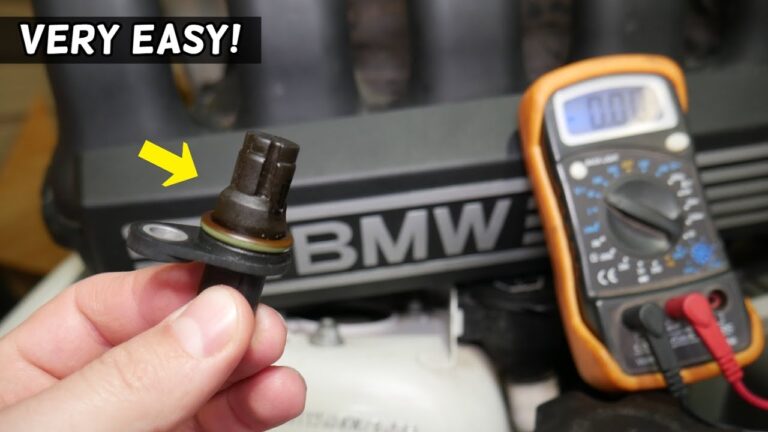
Source: bloom.calderleisure.co.uk
Can a bad crankshaft sensor cause a no-start condition?
Yes. A bad crankshaft sensor can cause a no-start condition, especially when the sensor stops producing a usable signal while the engine is being cranked. The engine control unit relies on crankshaft speed and position information to determine when important engine-control events should occur.
During starting, the crankshaft turns even though the engine has not yet begun running on its own. The CKP sensor detects that rotation and sends a signal to the engine computer. If the signal is missing, badly distorted, or intermittent, the computer may be unable to establish the correct timing needed for starting.
This is why a vehicle can have a healthy starter and battery yet still fail to start. The starter may spin the engine normally while combustion never begins.
However, the same crank-no-start symptom can result from many other problems. A diagnosis should therefore confirm the sensor signal and circuit instead of assuming the CKP sensor is responsible.
Source: hitchesguide.com
Cranks but does not start
The starter turns the engine, but the engine does not begin running. This is a classic symptom that can occur with a failed crankshaft position sensor.
Intermittent starting
The vehicle may start normally at one time and fail to start later. A sensor or connection that intermittently loses its signal can produce this pattern.
Engine stalls
A crankshaft sensor that loses its signal while the engine is running can contribute to sudden stalling on some vehicles.
Crankshaft-related trouble code
Some vehicles may store a diagnostic trouble code associated with the crankshaft position sensor circuit, but a code is not by itself proof that the sensor has failed.
What does the crankshaft position sensor do?
The crankshaft position sensor monitors the crankshaft’s rotational position and speed. The engine computer uses this information as part of its control strategy for fuel injection and ignition timing.
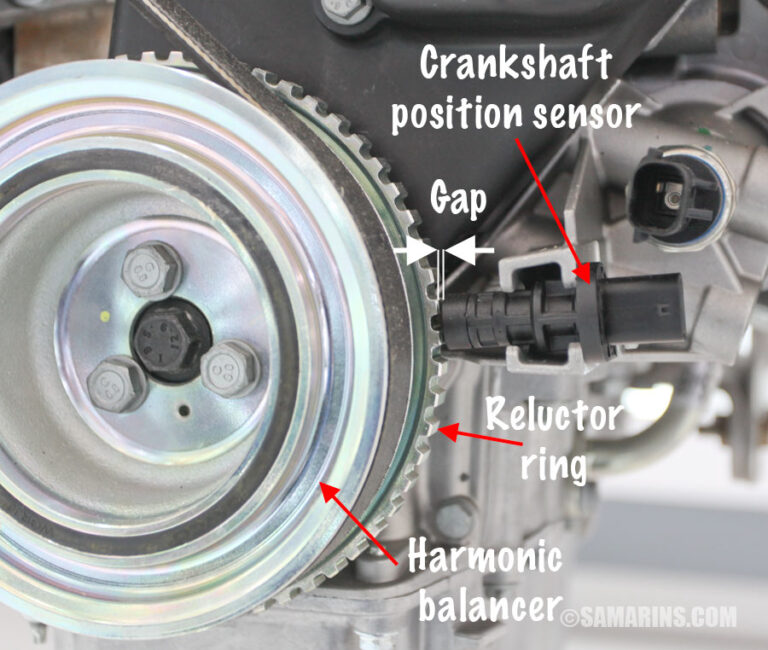
The sensor normally works with a toothed or otherwise patterned target wheel attached to the rotating engine assembly. As the target passes the sensor, the sensor produces an electrical signal. The engine computer interprets that signal to determine crankshaft position and rotational speed.
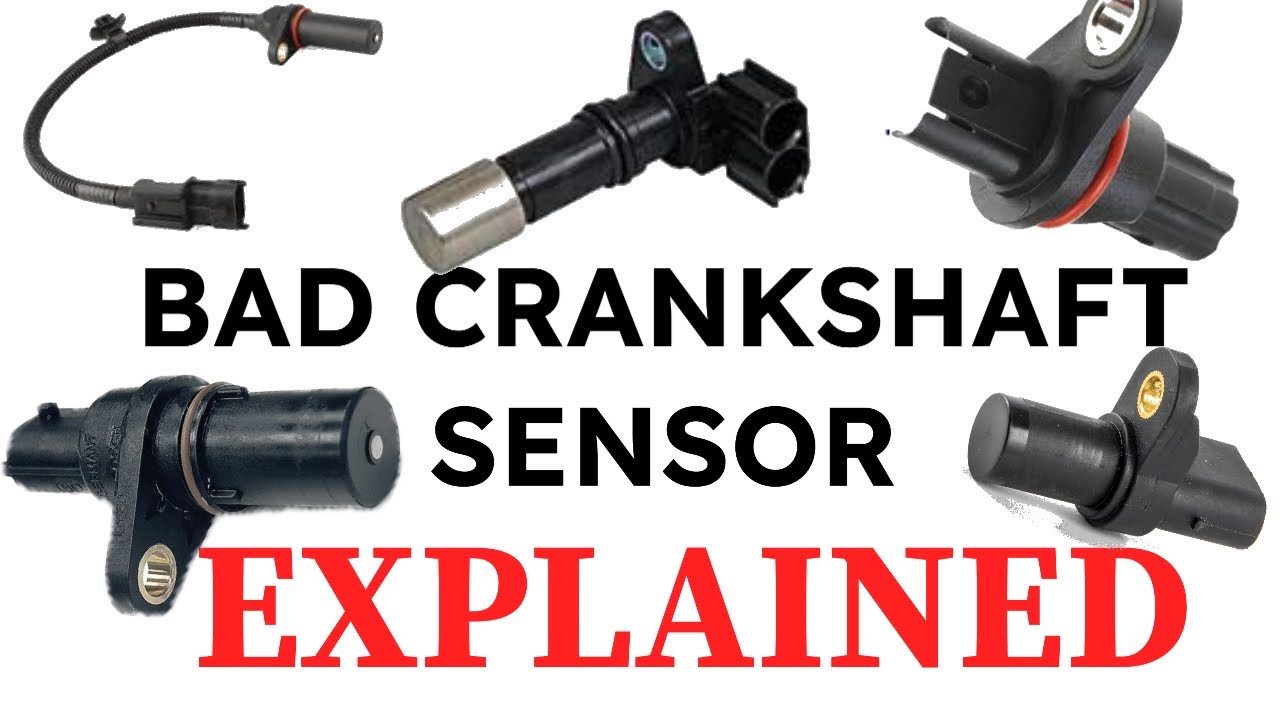
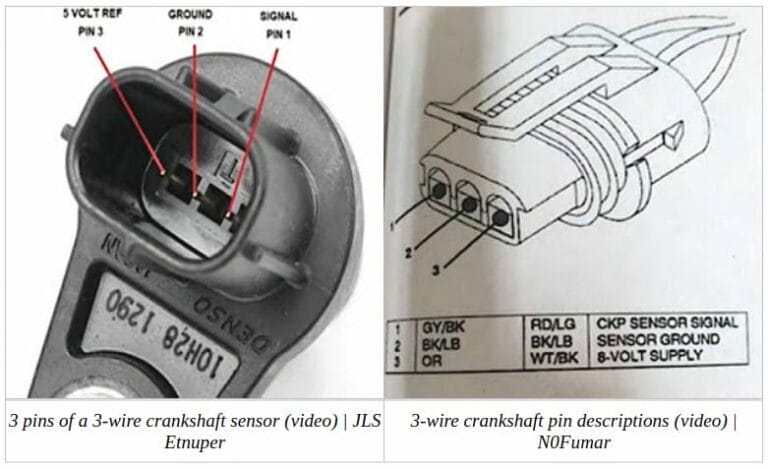
There are different crankshaft sensor designs, including inductive and Hall-effect types. Their electrical behavior and testing methods are not identical, so the correct procedure depends on the vehicle and sensor design.
Because the sensor is part of the engine management system, a failure can affect more than starting. Depending on the vehicle, it may contribute to stalling, rough running, misfires, poor acceleration, or difficult starting.
Source: youtube.com
Crankshaft speed
The sensor provides information about how fast the crankshaft is rotating, including during engine cranking.
Crankshaft position
The signal helps the engine computer determine where the crankshaft is in its rotation.
Engine timing control
Crankshaft information contributes to decisions involving fuel injection and ignition timing.
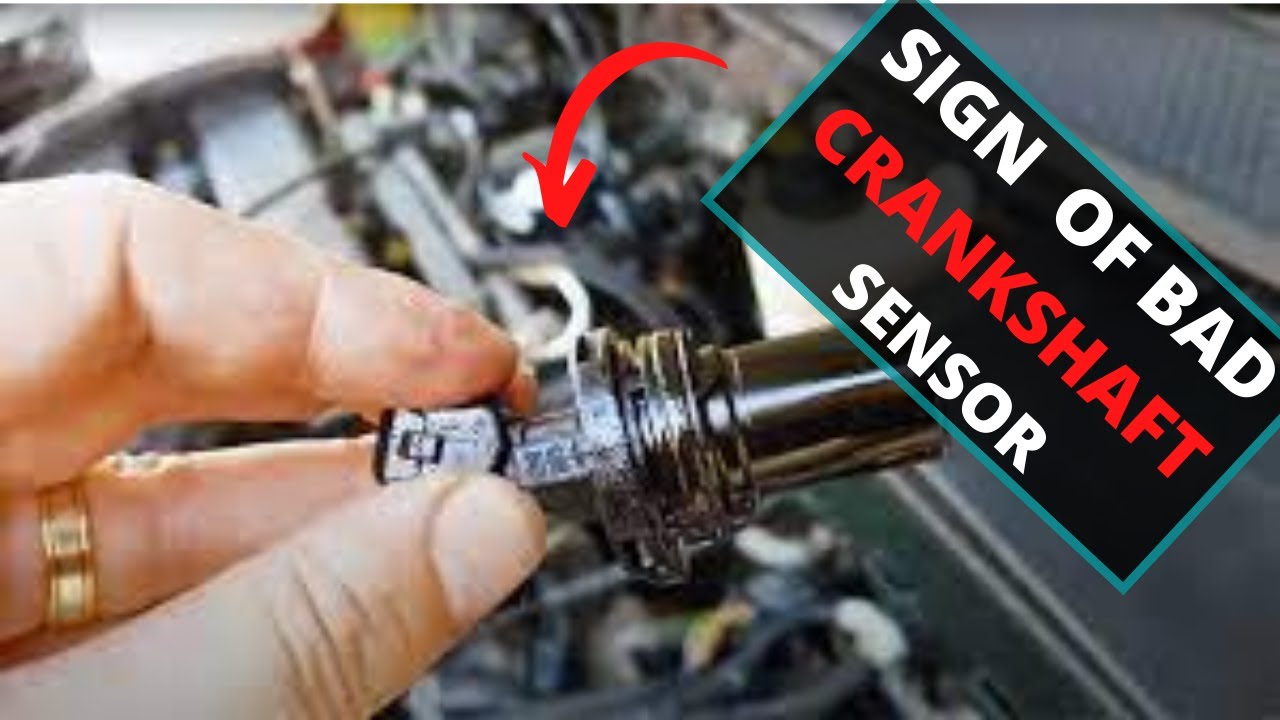
Symptoms of a bad crankshaft position sensor
A bad crankshaft sensor can produce several symptoms, but no single symptom proves that the sensor is defective. The most useful clues are the combination of the symptom, diagnostic data, and test results.
Starting trouble is especially relevant. A vehicle may crank longer than usual, fail to start intermittently, or suddenly refuse to start after previously operating normally. Some failures become more noticeable when the sensor or its surrounding components are exposed to heat.
A vehicle that stalls unexpectedly can also have a crankshaft sensor problem. If the engine computer suddenly loses the crankshaft signal, it may lose information needed for continued engine control.
Other possible symptoms include an engine warning light, misfiring, uneven operation, or reduced performance. These symptoms have many possible causes, so they should be used as clues rather than a diagnosis.
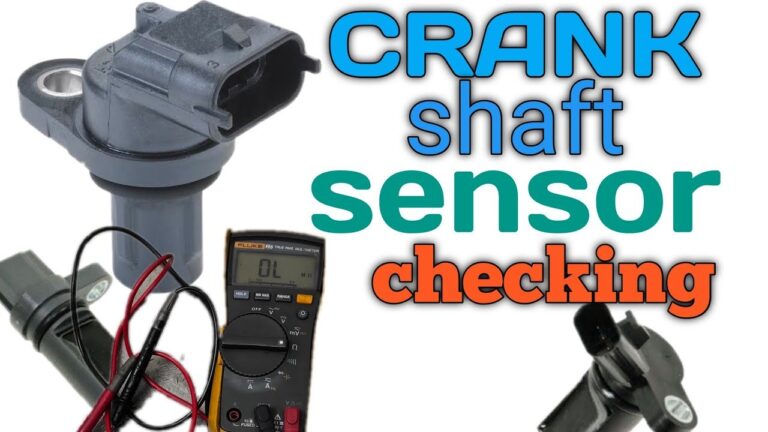
Source: youtube.com
Hard starting
The engine may require more cranking time before it starts.
Intermittent no-start
The vehicle may start on some attempts and fail on others.
Unexpected stalling
A sensor that intermittently loses its signal can contribute to engine shutdown on some vehicles.
Engine warning light
A fault code may be stored when the computer detects an abnormal crankshaft signal or circuit condition.
Rough running or misfire
Incorrect or missing crankshaft information can interfere with engine-control calculations on some vehicles.
How to diagnose a crankshaft sensor causing a no-start
Start by confirming whether the engine actually cranks. A failed crankshaft sensor usually relates to an engine that turns over but does not start. If the starter does not turn the engine at all, check the battery, starter circuit, connections, and related systems before focusing on the CKP sensor.
Next, connect a compatible scan tool and check for stored and pending diagnostic trouble codes. Crankshaft sensor-related codes can be useful evidence, but the code description should be treated as a starting point rather than automatic proof of a failed sensor.
Look at live data while the engine is cranking if the vehicle and scan tool support it. A missing or implausible engine-speed signal can provide a valuable clue because the crankshaft sensor is one of the components responsible for that information.
Inspect the sensor, connector, and wiring. Look for damaged insulation, loose terminals, corrosion, contamination, or wiring that has been pulled or rubbed against another component. A circuit fault can mimic a failed sensor.
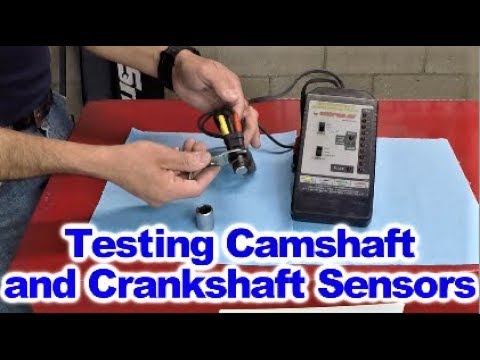
For a more definitive diagnosis, use the vehicle manufacturer’s specified electrical tests. Depending on the sensor type, testing may involve a multimeter or an oscilloscope. An oscilloscope can show the actual sensor waveform and reveal signal problems that a simple resistance test may not detect.
Do not apply a generic resistance specification to every crankshaft sensor. Different sensors have different designs and specifications. Use the service information for the exact year, make, model, engine, and sensor.
Source: autocornerd.com
Step 1: Confirm the symptom
Determine whether the engine cranks normally but fails to start. This separates a possible CKP problem from a starter or battery problem.
Step 2: Scan the vehicle
Check stored and pending codes and review available live data during cranking.
Step 3: Inspect the circuit
Check the sensor connector, terminals, wiring, power supply where applicable, and surrounding components.
Step 4: Test the signal
Use the manufacturer-approved test procedure for the specific sensor type. A waveform test may be appropriate when signal quality is uncertain.
Step 5: Verify the repair
After the repair, clear applicable fault codes if required, start the vehicle, and confirm that the original symptom has been resolved.
Why an OBD code does not automatically mean the sensor is bad
A crankshaft-related trouble code can identify a problem with the sensor signal or circuit, but it does not always identify the failed component. Wiring damage, connector problems, electrical faults, or mechanical problems involving the signal target can produce similar results.
For that reason, replacing the sensor immediately after seeing a crankshaft-related code can lead to an unnecessary repair. The code should be combined with visual inspection, live data, and the appropriate electrical or waveform tests.
Why testing methods vary by sensor type
Inductive and Hall-effect crankshaft sensors generate signals in different ways. Their expected voltage behavior, wiring arrangements, and diagnostic procedures can therefore differ. A test method that is correct for one design may be inappropriate for another.
Always identify the sensor type and follow the vehicle-specific service procedure before applying a meter or other test equipment.
Other causes of a crank-no-start condition
A bad crankshaft sensor is only one possible reason an engine cranks without starting. A useful diagnosis checks the basic requirements for combustion instead of replacing parts based on one symptom.
Battery voltage and starter performance matter because the engine must crank at an adequate speed for the control system and combustion process to work correctly. A weak battery or poor electrical connection can create a misleading no-start diagnosis.
Fuel delivery is another major area to check. Depending on the vehicle, problems can involve the fuel pump, fuel-pump power supply, fuel pressure, injectors, or fuel-control system.
Ignition problems can also prevent starting on gasoline engines. Possible causes include ignition coils, spark plugs, power supplies, control signals, and related wiring. Diesel engines have different requirements and should be diagnosed according to their specific fuel and engine-management system.
Camshaft position information can also affect starting on vehicles that use a camshaft sensor as part of their engine-control strategy. A crankshaft sensor problem and a camshaft sensor problem can produce overlapping symptoms, so scan data and vehicle-specific testing are useful.
Source: motorriderz.com
Battery and starter
Check whether the engine cranks at the expected speed and whether battery connections are clean and secure.
Fuel system
Consider fuel pressure, pump operation, injector operation, and fuel-system power supplies when appropriate.
Ignition system
On gasoline engines, check for the required ignition signal and spark when the diagnostic procedure calls for it.
Camshaft sensor
A camshaft position sensor or its circuit can also cause starting problems on some vehicles.
Engine timing
Mechanical timing problems can cause a no-start condition even when individual sensors test correctly.
What can make a crankshaft sensor fail?
Crankshaft sensor failures can result from electrical, mechanical, environmental, or contamination-related problems. The sensor itself can fail internally, but the surrounding circuit can also be responsible for the symptoms.
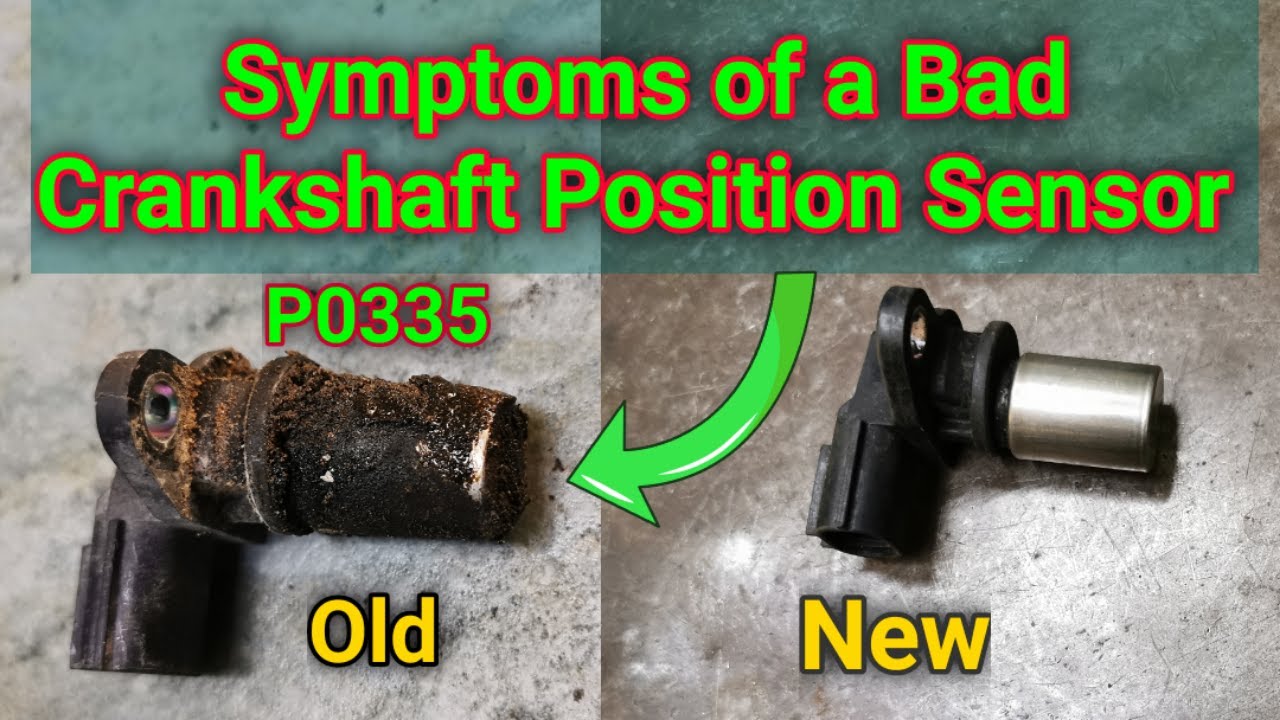
Common possibilities include internal electrical failure, damaged wiring, short circuits, connector corrosion, physical damage, and contamination. The target or encoder wheel that the sensor reads can also become damaged or create an incorrect signal.
Heat and vibration can place additional stress on engine-mounted electrical components. An intermittent problem may therefore be difficult to reproduce during a quick inspection.
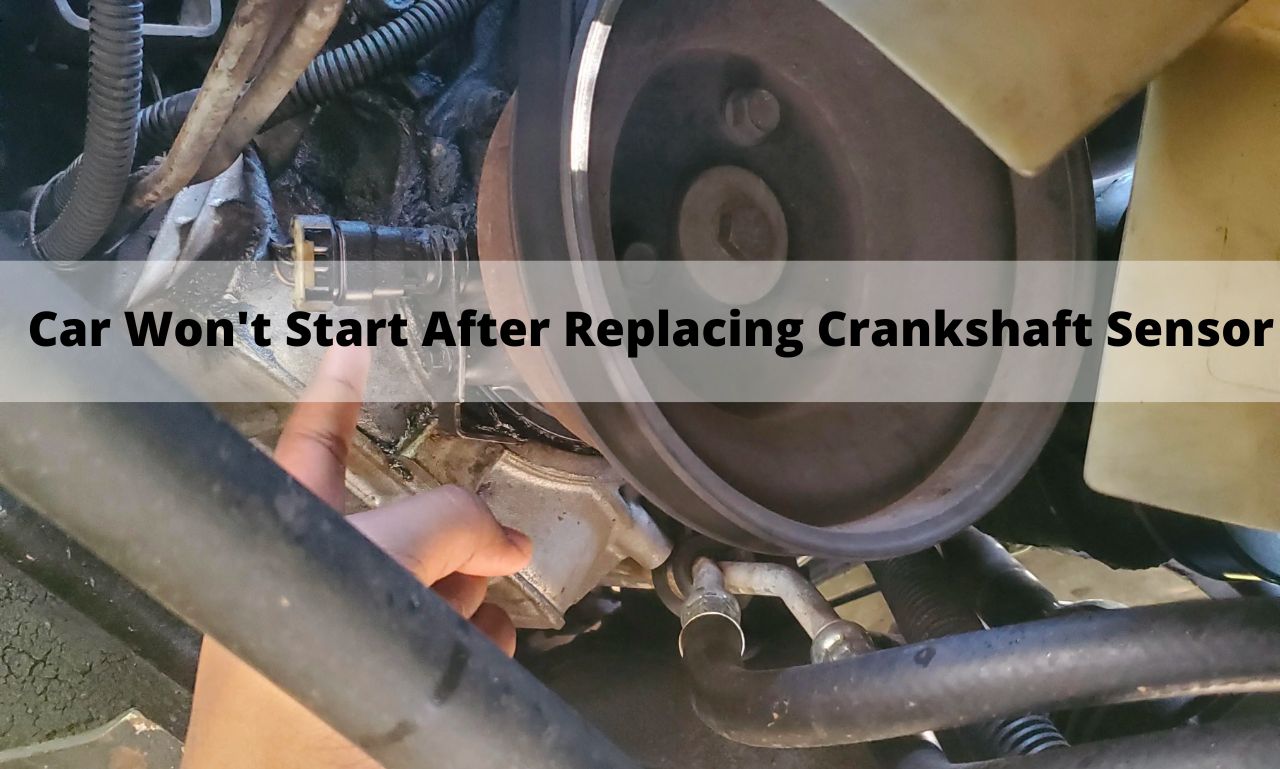
If the sensor has recently been replaced but the vehicle still will not start, do not automatically assume that another new sensor is required. Check the connector, wiring, sensor installation, signal target, and any required post-repair learning or relearn procedure for that vehicle.
Source: hitchesguide.com
Internal electrical failure
The sensor’s internal electronics or sensing element can fail and stop producing the expected signal.
Damaged wiring
An open circuit, short circuit, rubbed wire, or poor connection can interrupt the sensor signal.
Corrosion or contamination
Corrosion at electrical terminals or contamination near the sensing area can interfere with sensor operation.
Mechanical damage
Damage to the sensor or the engine’s signal target can produce an incorrect or missing signal.
Should you replace the crankshaft sensor yourself?
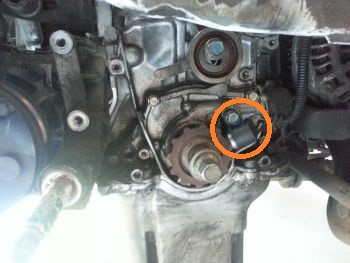
Replacing a crankshaft sensor can be straightforward on some vehicles and difficult on others. The sensor may be accessible from above the engine, underneath the vehicle, near the transmission bellhousing, or behind other components. The correct location and procedure depend on the vehicle.
Before replacement, identify the exact sensor and confirm the diagnosis. Some sensors are positioned close to hot exhaust components, moving parts, or other hazards. Allow hot components to cool and follow the vehicle’s service instructions.
After installation, some vehicles may require an electronic relearn or calibration procedure. The requirement depends on the vehicle’s engine-management system. If the vehicle still does not start after replacement, return to diagnosis rather than repeatedly replacing parts.
A professional repair facility may be the better option when access is difficult, the diagnostic results are unclear, specialized equipment is required, or the vehicle has a complex engine-management system.
Source: motorriderz.com
Confirm the part
Use the vehicle identification information and engine specification to verify the correct sensor.
Follow the service procedure
Use vehicle-specific instructions for removal, installation, sensor alignment, fastener requirements, and electrical connections.
Check for relearn requirements
Some vehicles may require a scan-tool procedure after sensor replacement.
Verify the original problem
Make sure the vehicle starts and operates normally after the repair instead of assuming that installing a new part solved the fault.
Common mistakes when diagnosing a bad crankshaft sensor
The biggest mistake is treating every crank-no-start condition as a bad crankshaft sensor. The symptom is compatible with a CKP failure, but it can also result from several unrelated problems.
Another mistake is replacing a sensor because a diagnostic code mentions it. A code can indicate that the engine computer detected an abnormal signal or circuit condition. It does not necessarily prove that the sensor itself is the failed component.
Testing the wrong specification is another common problem. Crankshaft sensors use different technologies, and the correct electrical test depends on the sensor and vehicle. Generic resistance values should not be used as a universal rule.
Finally, do not overlook the connector and wiring. A new sensor cannot correct an open circuit, damaged wire, poor terminal contact, or another problem between the sensor and engine computer.
Source: motorriderz.com
Mistake: replacing parts first
Replace the sensor only after the available evidence points to the sensor or its circuit as the cause.
Mistake: ignoring wiring
Inspect the complete circuit because wiring and connector faults can closely imitate sensor failure.
Mistake: using a generic test value
Use the specifications for the exact vehicle and sensor rather than relying on a universal resistance or voltage number.
Mistake: skipping post-repair verification
Confirm that the no-start condition has been corrected and complete any required diagnostic or relearn procedure.
Frequently Asked Questions
Q
Can a bad crankshaft sensor cause a car to crank but not start?
Yes. A failed crankshaft position sensor can prevent an engine from starting even though the starter turns the engine normally. The engine computer may not receive the crankshaft speed and position information needed for proper engine control.
However, other problems can create the same crank-no-start symptom, so testing should confirm the sensor or circuit fault.
Q
Will a bad crankshaft sensor always trigger a check engine light?
No. A faulty crankshaft sensor may store a diagnostic trouble code, but a warning light is not guaranteed in every situation. The behavior depends on the vehicle’s engine-management system and the specific failure.
A no-start condition should therefore be diagnosed using symptoms, scan data, electrical checks, and vehicle-specific testing rather than relying only on the dashboard warning light.
Q
What code usually indicates a crankshaft position sensor problem?
Codes in the P0335 family are commonly associated with crankshaft position sensor circuit or signal faults, but the exact code and diagnostic meaning depend on the vehicle.
A code should be interpreted with the manufacturer’s diagnostic information. It can point toward the crankshaft signal circuit without proving that the sensor itself is defective.
Q
Can a crankshaft sensor fail intermittently?
Yes. A crankshaft sensor or its wiring can produce an intermittent signal. The vehicle may start normally at one time and fail to start at another, and some faults can be affected by temperature or vibration.
Intermittent faults can be harder to diagnose, so scan data and signal testing while the problem is present can be particularly useful.
Q
Can you test a crankshaft position sensor with a multimeter?
A multimeter can be useful for certain crankshaft sensor tests, but the correct method depends on the sensor design. Some systems require checks of resistance, voltage, power, ground, or signal behavior.
An oscilloscope can provide additional information about the actual waveform. Always use the test procedure and specifications for the specific vehicle.
Q
Should I replace the crankshaft sensor if my car will not start?
Not based on the no-start symptom alone. A weak battery, starter issue, fuel problem, ignition fault, wiring problem, camshaft sensor issue, or mechanical timing problem can also prevent starting.
Confirm the CKP sensor diagnosis before replacing it. This reduces the chance of spending money on a part that does not address the actual fault.
Q
Can a bad crankshaft sensor cause a car to stall while driving?
Yes, a crankshaft sensor that loses its signal while the engine is running can contribute to stalling on some vehicles. The engine computer depends on crankshaft information for engine-control decisions.
If a vehicle stalls unexpectedly in traffic, have the cause diagnosed promptly because the underlying fault may affect safe operation.
✦ Wrapping Up
Conclusion
A bad crankshaft sensor can cause a no-start condition. When the sensor fails or its signal is interrupted, the engine computer may lose critical information about crankshaft speed and position, which can prevent the engine from starting.
The key point is that a crank-no-start condition does not prove the CKP sensor is bad. Wiring, connectors, power supply, trigger-wheel problems, fuel delivery, ignition, camshaft position information, and mechanical engine faults can produce similar symptoms.
The most reliable approach is to confirm the starting symptom, scan for diagnostic information, inspect the sensor circuit, and perform the vehicle-specific electrical or signal tests before replacing parts.
💡 Key Takeaway
If your vehicle cranks but will not start, check for crankshaft-related codes and inspect the CKP sensor circuit before replacing the sensor. If the diagnosis remains unclear, have a qualified technician test the crankshaft signal and related engine-control systems.
Ethan Brooks is an automotive writer at Auto News 7, covering car news, vehicle maintenance, new model updates, recalls, and practical buying guides. He focuses on clear, useful information that helps drivers understand their vehicles and make better ownership decisions.
Learn how to test a GM crankshaft position sensor with a multimeter, scan tool, and visual checks. Find bad sensors, wiring faults, and signal problems safely.