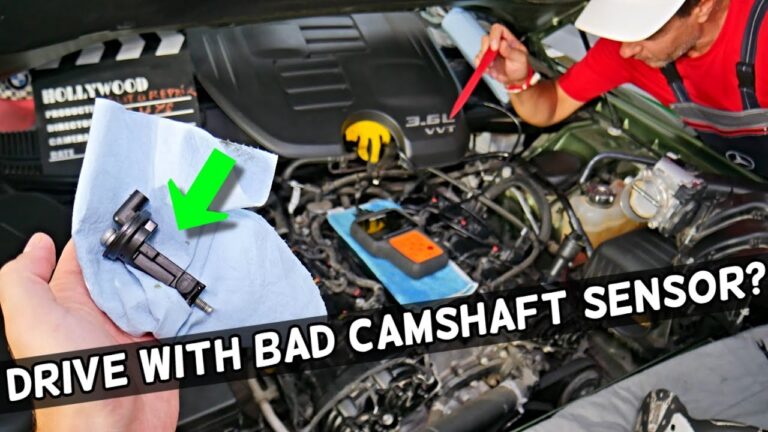
Yes, some cars can start without a working camshaft position sensor, but others may crank without starting. The result depends on the engine management system, available backup strategies, and whether the crankshaft position signal remains usable.
For drivers in the United States, this question most often comes up after a modern OBD-II vehicle develops a Check Engine Light, extended cranking, intermittent stalling, or an engine that suddenly cranks but refuses to start. U.S.-market gasoline engines commonly use both crankshaft and camshaft position information so the powertrain control module can identify engine position, coordinate fuel injection, manage ignition, and operate systems such as variable valve timing. Losing the camshaft signal therefore does not produce exactly the same result on every vehicle.
A vehicle may continue running or may eventually start using information from the crankshaft position sensor and a programmed fallback strategy. Another vehicle may require a valid camshaft signal during startup and refuse to fire when that signal is missing. That is why unplugging a camshaft sensor is not a reliable universal test. The useful approach is to determine whether the engine cranks normally, check diagnostic trouble codes and live data, inspect the sensor circuit, and rule out timing or crankshaft-sensor faults before replacing parts.
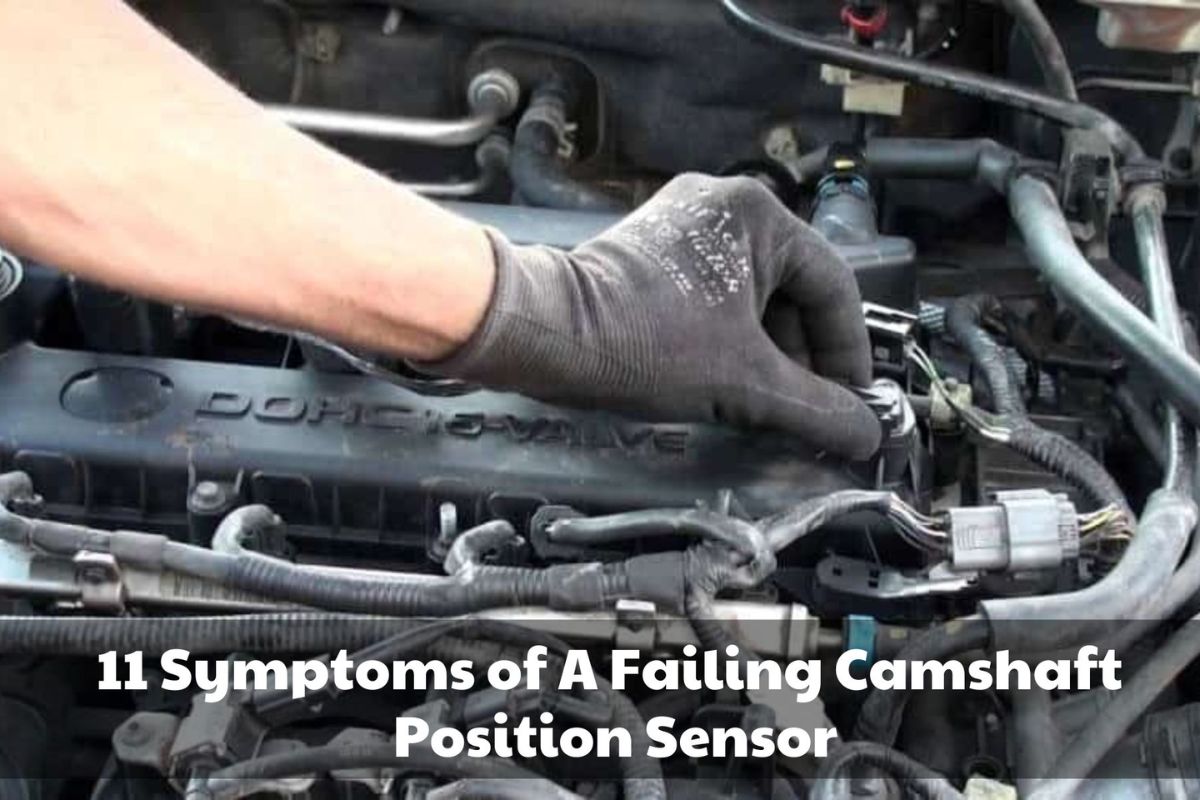
Source: bradscartunes.com
Can a Car Start Without Camshaft Sensor Input?
A car can sometimes start without camshaft sensor input, but there is no universal answer for every engine. The powertrain control module, commonly called the PCM or ECM, normally compares camshaft and crankshaft position signals to determine where the engine is in its operating cycle. When the camshaft signal disappears, the software may substitute another strategy, delay startup while it determines engine position from the crankshaft signal, or prevent the engine from starting.
This explains why two vehicles with apparently identical symptoms can behave differently. One engine may require several extra revolutions before firing. Another may start and operate with reduced performance. A third may only crank because its control strategy will not command normal fuel injection or ignition without reliable cylinder-position information.
The distinction between starting and continuing to run also matters. An engine that is already running may sometimes continue operating after the camshaft signal disappears because the PCM has already established synchronization. That does not mean the same engine will necessarily restart after it is shut off.
For U.S. vehicle owners, the correct answer is therefore vehicle-specific. The factory service information for the exact year, make, model, engine, and PCM calibration is more reliable than a general claim that every car will or will not start without the sensor.
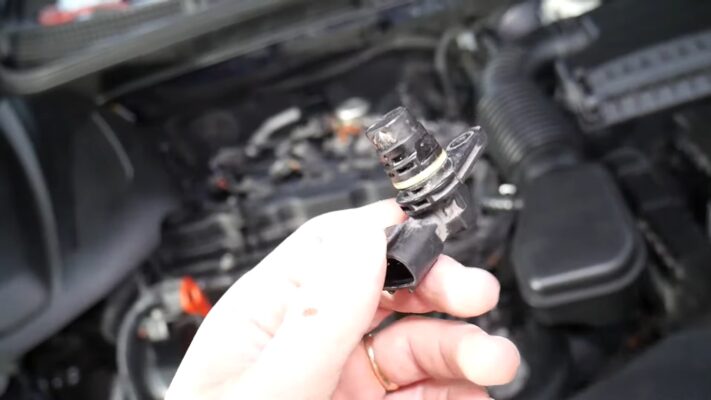
Source: southwestjournal.com
May start normally
Some engine-control systems can obtain enough information from the crankshaft signal to start despite the missing camshaft signal.
May require extended cranking
The starter may need to turn the engine longer while the PCM establishes a usable synchronization strategy.
May enter a fallback mode
The engine may run while storing a fault code and limiting certain functions.
May crank without starting
Some systems require valid camshaft information before normal injection or ignition operation can begin.
Why the Answer Changes From One Vehicle to Another
Engine design, fuel-injection strategy, ignition strategy, variable valve timing, the number of camshaft sensors, PCM programming, and the type of failure all affect what happens. A four-cylinder engine with one camshaft sensor may respond differently from a V6 or V8 using separate sensors for multiple camshafts or cylinder banks.
Complete signal loss
A disconnected sensor or open circuit can behave differently from a sensor producing an intermittent or implausible signal.
Crankshaft signal availability
A strong crankshaft position signal may allow fallback operation on some systems.
Mechanical timing
A camshaft-to-crankshaft correlation problem can prevent starting even when the sensors themselves are electrically functional.
Starting Without a Sensor Is Not the Same as Driving Normally
If the engine does start, that does not establish that the vehicle is operating normally or that continued driving is advisable. The PCM may lose accurate cylinder identification or variable valve timing control, resulting in longer starting times, reduced performance, rough operation, increased emissions, or additional diagnostic codes.
What the Camshaft Position Sensor Does During Starting
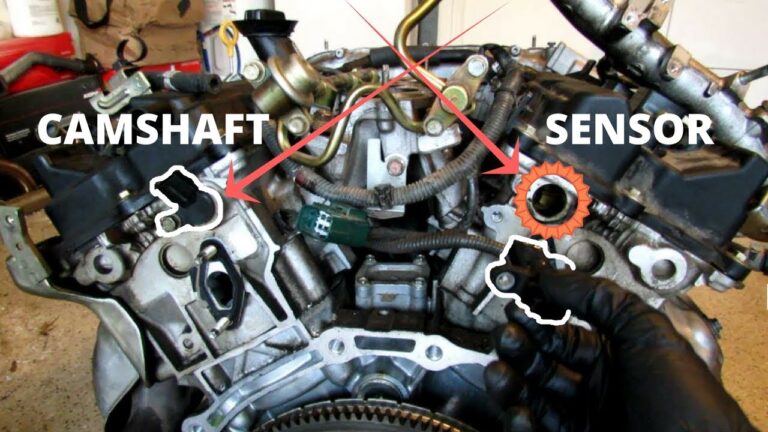
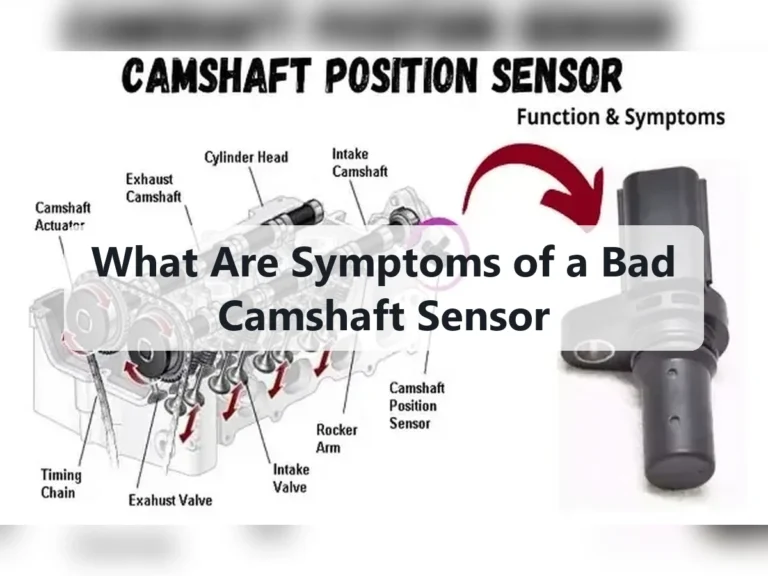
The camshaft position sensor tells the PCM where the camshaft is relative to the engine’s operating cycle. The crankshaft sensor reports crankshaft speed and position, while the camshaft signal helps the computer identify which cylinder is approaching the appropriate part of its four-stroke cycle.
That distinction is important because the crankshaft rotates twice for every single camshaft revolution in a conventional four-stroke engine. Crankshaft information can tell the PCM where the pistons are, but camshaft information helps distinguish the compression stroke from the exhaust stroke for a particular cylinder.
The PCM can use this information to coordinate sequential fuel injection and ignition strategies. On engines equipped with variable valve timing, camshaft position information also plays an important role in monitoring actual camshaft position relative to commanded timing.
The sensor itself does not physically make the engine crank. Turning the key or pressing the start button activates the starting system, and the starter rotates the engine. A missing camshaft signal becomes important when the PCM must decide how and when to operate fuel injection, ignition, and related engine controls.
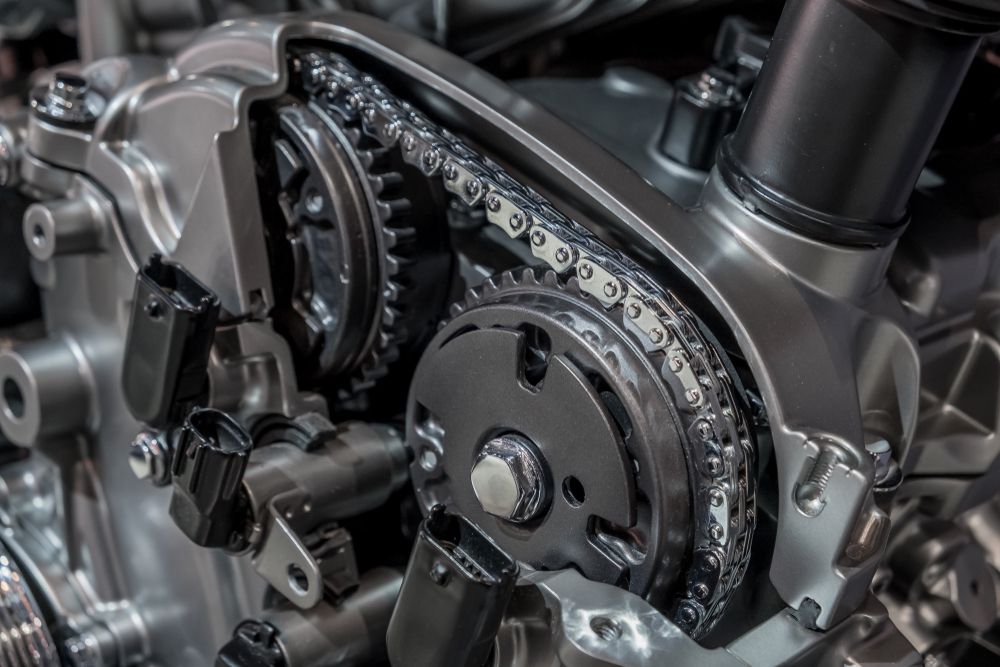
Source: ehcar.net
Cylinder identification
Camshaft position helps the PCM determine which cylinder is on the relevant stroke.
Fuel-injection timing
The signal supports accurate synchronization of sequential fuel injection.
Ignition management
Camshaft and crankshaft information can be used together when determining engine synchronization.
Variable valve timing
On equipped engines, camshaft position data helps the PCM monitor and control valve-timing operation.
Camshaft Sensor Versus Crankshaft Sensor
The two sensors are related but should not be treated as interchangeable. The crankshaft position sensor is generally essential for determining crankshaft speed and position. The camshaft position sensor supplies additional phase information that identifies camshaft position relative to the crankshaft. Depending on the vehicle, losing either signal can cause hard starting, stalling, or a complete no-start.
Crankshaft position sensor
Primarily provides crankshaft rotational position and engine-speed information.
Camshaft position sensor
Provides camshaft phase information used for cylinder identification and other engine-control functions.
What Happens When the Camshaft Sensor Is Missing or Fails?
A missing camshaft signal can produce anything from a Check Engine Light with few noticeable symptoms to a complete crank-no-start condition. The exact response depends on whether the PCM can establish synchronization another way and whether the failure is electrical, intermittent, or related to mechanical engine timing.
Extended cranking is particularly relevant. If the PCM needs additional crankshaft revolutions before it can determine a usable firing strategy, the driver may notice that an engine that normally starts almost immediately now cranks for several seconds.
Intermittent failures can be more confusing. A sensor or damaged circuit may function when cold but fail after engine-bay temperatures increase. The vehicle may stall, refuse to restart while hot, and then start again after cooling. Wiring movement and vibration can also make an intermittent circuit appear and disappear.
A failing camshaft sensor can also cause drivability symptoms after startup. Hesitation, unstable idle, reduced acceleration, stalling, poor running, and abnormal shifting behavior may occur on certain vehicles. None of these symptoms proves that the sensor is responsible, because several ignition, fuel, timing, electrical, and engine-management faults can produce similar behavior.
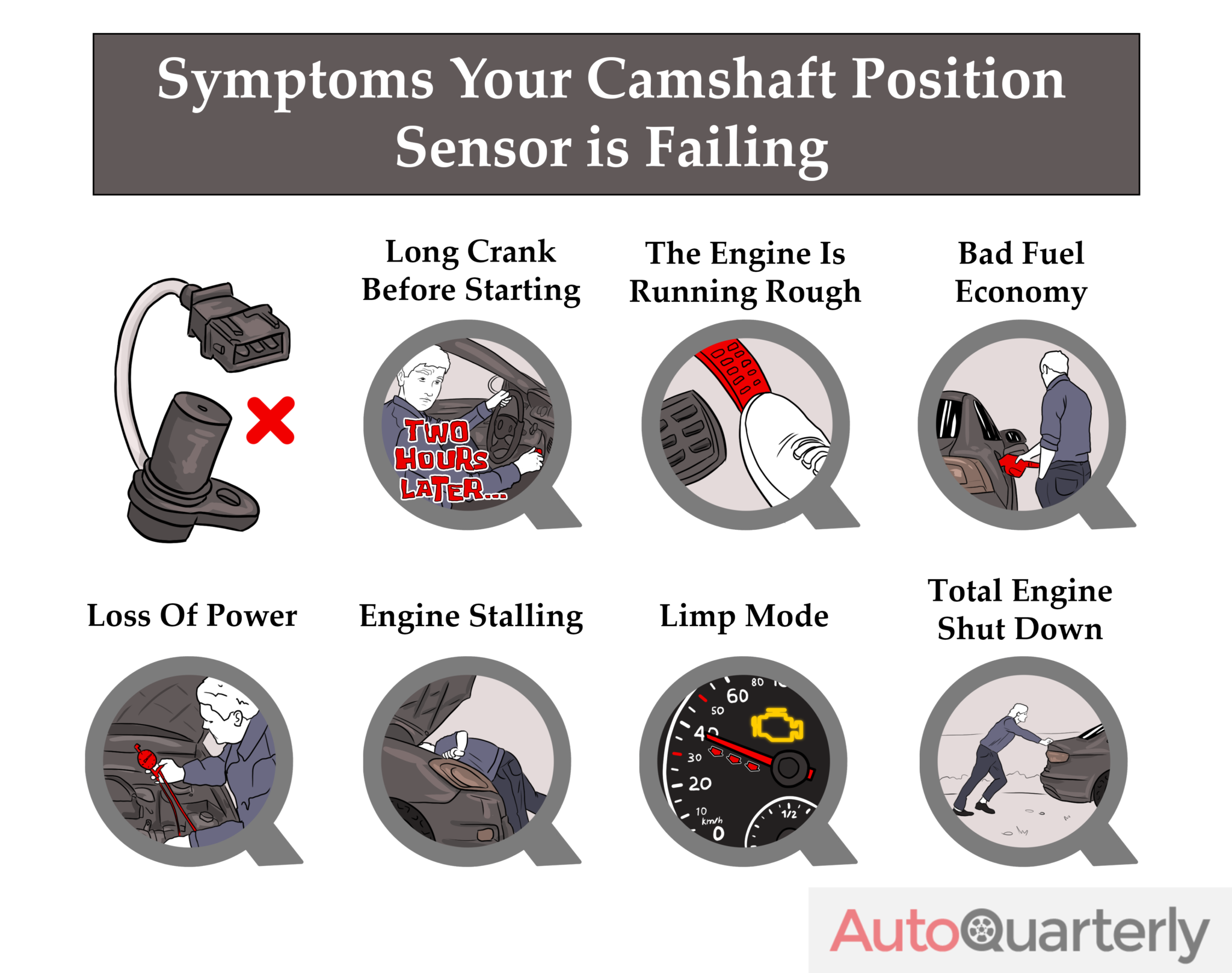
Source: storage.googleapis.com
Long crank before starting
The engine turns normally but takes considerably longer than usual to fire.
Crank but no start
The starter spins the engine, but combustion never begins.
Intermittent stalling
Loss of position information can cause some engines to shut down unexpectedly.
Check Engine Light
The PCM may store a camshaft position sensor circuit or performance code.
Reduced performance
Fallback operation can affect acceleration, idle quality, emissions control, or valve-timing operation.
Can the Engine Keep Running if the Sensor Fails While Driving?
Some engines can continue running if the camshaft signal disappears after synchronization has already been established. Others may hesitate or stall. Even when the engine continues running, shutting it off can change the situation because the PCM may need the missing signal again during the next startup.
Does Unplugging the Camshaft Sensor Prove It Is Bad?
No. Disconnecting the sensor is not a universal diagnostic test. A vehicle that behaves differently with the sensor unplugged may provide a diagnostic clue, but the result has to be interpreted using the vehicle’s specific control strategy. A damaged wire, poor ground, incorrect sensor signal, timing problem, or PCM input issue can produce misleading results.
How to Diagnose a Car That Will Not Start With a Camshaft Sensor Code
When an engine cranks but does not start and a camshaft-related code is present, diagnose the system before replacing the sensor. Diagnostic codes identify the circuit or operating condition the PCM detected; they do not automatically identify the defective component.
A practical troubleshooting sequence begins with the basics. Confirm that the battery has enough power to crank the engine at normal speed and listen to whether cranking sounds even and consistent. Then scan the PCM for stored, pending, and history codes. Record the codes before clearing anything because combinations of codes can provide useful clues.
Common generic camshaft-related codes include P0340 for a camshaft position sensor circuit malfunction, P0341 for a range or performance problem, and other P0340-series codes for low, high, or intermittent circuit conditions. Engines with multiple cylinder banks or camshafts may identify Sensor A, Sensor B, Bank 1, or Bank 2.
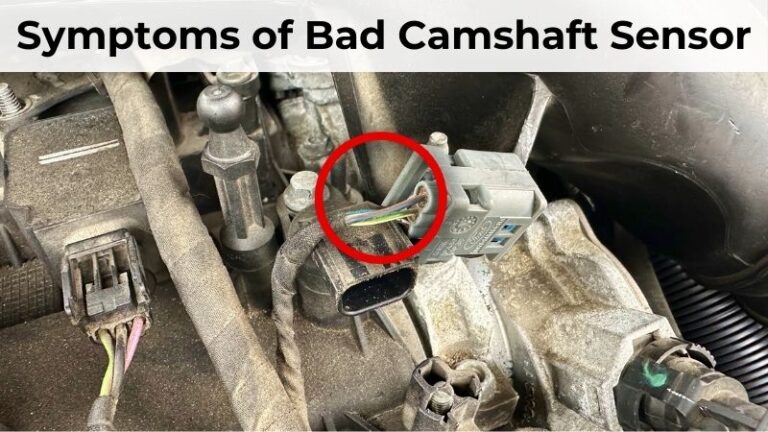
Next, inspect the electrical connector and nearby harness. Look for broken connector locks, backed-out terminals, corrosion, engine-oil contamination, melted insulation, wires rubbing against brackets, or damage caused during recent engine repairs. Depending on sensor design, professional testing can include checking the power supply, ground, signal circuit, waveform, and cam-to-crank synchronization.
If both camshaft and crankshaft signals appear abnormal, or correlation codes are present, consider mechanical timing. A stretched or jumped timing chain, damaged reluctor or trigger wheel, incorrect timing after engine work, or a variable valve timing problem can make a perfectly functional sensor report information the PCM considers incorrect.
Source: autopadre.com
Step 1: Verify normal cranking
A weak battery or unusually slow cranking can complicate diagnosis and should be addressed first.
Step 2: Scan all modules for codes
Record stored and pending codes instead of focusing on one code in isolation.
Step 3: Inspect the connector and harness
Check for corrosion, broken wiring, loose terminals, contamination, and heat damage.
Step 4: Check crankshaft information
A no-start that appears to involve the camshaft sensor may actually involve the crankshaft position circuit.
Step 5: Test the sensor circuit
Verify the required power, ground, and signal according to the exact vehicle service procedure.
Step 6: Check mechanical synchronization when indicated
Cam-to-crank correlation faults can result from timing-chain, timing-belt, trigger-wheel, or valve-timing problems.
Symptoms Versus Possible Causes
Separating symptoms from causes prevents unnecessary parts replacement. A crank-no-start condition tells you what the vehicle is doing, not which component has failed.
Cranks normally but will not start
Possible causes include camshaft or crankshaft signal loss, ignition problems, lack of fuel delivery, immobilizer issues, wiring faults, or mechanical timing problems.
Starts after long cranking
Possible causes include synchronization problems, weak position-sensor signals, fuel-pressure loss, electrical faults, or other engine-management problems.
Starts cold but not hot
Heat-sensitive sensors and electrical connections are possibilities, but testing while the fault is present is needed.
Camshaft code repeatedly returns
The cause may be the sensor, its circuit, a crankshaft-related fault, mechanical timing, or another condition affecting synchronization.
When Professional Diagnosis Makes Sense
Professional diagnosis is useful when basic visual checks do not reveal the cause, the engine will not start, correlation codes are present, or testing requires oscilloscope analysis of camshaft and crankshaft waveforms. Mechanical timing faults can cause engine damage on some designs, so repeated starting attempts are not appropriate when the engine suddenly sounds mechanically abnormal.
Should You Drive or Keep Starting the Car With a Bad Camshaft Sensor?
Do not treat successful startup as proof that the fault can safely be ignored. A vehicle operating without reliable camshaft position information can stall, become difficult to restart, run poorly, lose performance, or disable certain engine-control functions. An intermittent fault is especially inconvenient because the vehicle may appear normal until the signal disappears again.
If the engine runs smoothly enough to move the vehicle, the safest next step depends on the symptoms and the manufacturer’s guidance. A persistent Check Engine Light without severe symptoms is different from an engine that stalls in traffic, misfires heavily, makes new mechanical noises, or repeatedly fails to restart.
Avoid continued driving if the Check Engine Light is flashing, the engine is severely misfiring, oil-pressure warnings appear, abnormal mechanical rattling develops, or the engine repeatedly stalls. Those conditions can indicate problems beyond a simple sensor failure and may risk additional vehicle damage or create a road-safety issue.
Replacement should follow diagnosis rather than guesswork. Some camshaft sensors are easy to access, while others require removal of engine covers, intake components, or other hardware. The correct procedure, tightening specification, connector handling, and any required relearn procedure should come from service information for the exact U.S.-market vehicle.
Source: vehicleanswers.com
Do not rely on repeated restart attempts
Intermittent starting does not mean the underlying fault has disappeared.
Avoid unnecessary sensor replacement
Confirm wiring, power, ground, crankshaft signal, and timing-related conditions when applicable.
Use vehicle-specific service information
Sensor location, testing values, replacement procedures, and relearn requirements vary by vehicle.
Stop driving for severe symptoms
Repeated stalling, heavy misfiring, abnormal mechanical noise, or critical warning indicators require prompt attention.
Do You Need to Reset the Computer After Replacing a Camshaft Sensor?
Not every vehicle requires a special reset after camshaft sensor replacement. Some systems recognize the new signal automatically, while certain applications may specify a relearn, adaptation, code-clearing, or verification procedure. Follow the factory procedure for the specific year, model, engine, and control system rather than performing a generic reset.
What if a New Camshaft Sensor Does Not Fix the No-Start?
If a correctly installed sensor does not solve the problem, return to diagnosis. Verify the connector, wiring, power and ground, sensor signal, crankshaft position data, mechanical timing, trigger components, and any relevant PCM inputs. A replacement part cannot correct a broken wire or an engine that is mechanically out of time.
FAQs About Can a Car Start Without Camshaft Sensor
Q
Will a car crank with a bad camshaft position sensor?
Yes. The starter circuit can normally crank the engine even when the camshaft position sensor is faulty. Cranking and starting are different events. The starter physically rotates the engine, while the PCM still needs appropriate information, fuel, ignition, compression, and timing for combustion to begin.
Q
Can a bad camshaft sensor cause a crank-no-start condition?
Yes. On an engine that requires the camshaft signal to establish synchronization during startup, a missing or invalid signal can result in normal cranking with no start. On other engines, the same type of failure may cause only extended cranking or reduced-performance operation.
Q
Can a car run after the camshaft sensor is unplugged?
Some can, particularly if the engine was already running and the PCM had established synchronization before the signal disappeared. Other engines may stall immediately or operate poorly. Disconnecting the sensor should not be used as a universal test because vehicle strategies differ.
Q
Does code P0340 always mean the camshaft sensor needs replacement?
No. P0340 indicates that the PCM detected a problem involving the camshaft position sensor circuit or expected signal. Possible causes include the sensor, connector, wiring, power or ground supply, crankshaft-related problems, mechanical timing faults, or other synchronization issues. Testing is needed before replacing parts.
Q
Can a bad crankshaft sensor look like a bad camshaft sensor?
Yes. The PCM compares crankshaft and camshaft information, so a problem with either signal can create starting, stalling, synchronization, or correlation symptoms. This is one reason a no-start diagnosis should evaluate both signals instead of assuming that a camshaft-related code automatically identifies a failed camshaft sensor.
Q
Can a timing chain problem trigger a camshaft sensor code?
Yes. If a timing chain becomes sufficiently stretched or jumps position, actual camshaft timing may no longer match the crankshaft position expected by the PCM. That mismatch can produce camshaft performance or correlation faults even when the electrical sensor is still capable of generating a signal.
Q
Can a car start with the camshaft sensor disconnected but not connected?
That unusual behavior is possible on certain systems and can be a useful diagnostic clue, but it does not prove the sensor itself is defective. A corrupted or implausible signal may affect the PCM differently from a completely absent signal. Proper circuit testing and vehicle-specific diagnostic information are needed to identify the cause.
✦ Wrapping Up
Conclusion
So, can a car start without camshaft sensor input? Yes, some vehicles can. Their engine-control systems may use crankshaft position information and a programmed fallback strategy, although startup may take longer and normal performance may not be available. Other vehicles require a valid camshaft signal during startup and will crank without firing when that signal is missing.
For U.S. drivers dealing with a Check Engine Light, P0340-family code, hard starting, or a crank-no-start condition, avoid assuming the sensor itself is automatically responsible. Inspect the electrical connection, retrieve all diagnostic codes, evaluate camshaft and crankshaft information, and consider mechanical timing when the evidence points in that direction. Vehicle-specific factory service information remains the best reference because engine-management strategies differ substantially among makes, models, engines, and model years.
💡 Key Takeaway
If the engine cranks but will not start and a camshaft-related code is stored, record the codes, inspect the camshaft sensor connector and wiring, and verify camshaft and crankshaft signals before buying a replacement sensor.
Ethan Brooks is an automotive writer at Auto News 7, covering car news, vehicle maintenance, new model updates, recalls, and practical buying guides. He focuses on clear, useful information that helps drivers understand their vehicles and make better ownership decisions.