Replace a coolant temperature sensor when testing confirms that the sensor is giving an inaccurate or implausible temperature signal, or when the sensor has an internal or physical fault. Do not replace it based on one symptom alone because wiring problems, low coolant, trapped air, a faulty thermostat, or other cooling-system faults can produce similar symptoms.
For drivers in the United States, the engine coolant temperature sensor is a small component with an important role in modern engine management. The sensor measures coolant temperature and sends that information to the engine control unit, which can use it to adjust fuel injection and ignition timing. Depending on the vehicle, the signal may also help control the cooling fans and provide the temperature information displayed to the driver.
There is no universal mileage or age interval for replacing an engine coolant temperature sensor. Replacement is normally condition-based rather than routine maintenance. A check-engine light, poor fuel economy, hard starting, an inaccurate temperature reading, or unusual cooling-fan behavior can justify diagnosis, but none automatically proves that the sensor itself has failed. A diagnostic scan and comparison with the vehicle manufacturer’s specifications can help separate a failed sensor from a circuit or cooling-system problem.
Source: www.youtube.com
When Should You Replace a Coolant Temperature Sensor?
The best time to replace a coolant temperature sensor is when a proper diagnosis shows that the sensor is no longer producing a reliable temperature signal. Unlike engine oil, filters, or other scheduled maintenance items, coolant temperature sensors generally do not have one universal replacement interval. Their service life varies with vehicle design, operating conditions, heat exposure, coolant condition, and component quality.
A replacement becomes appropriate when the sensor’s measured value does not agree with the actual engine temperature or the manufacturer’s specified resistance or voltage range, when the signal is intermittent, or when the sensor has physical damage or an internal electrical fault. On many vehicles, scan-tool data can provide a useful first check because the engine computer can report the temperature it believes the sensor is measuring.
The key distinction is between a bad sensor and a bad sensor circuit. A fault code associated with engine coolant temperature can result from damaged wiring, a poor electrical connection, a thermostat problem, or another cooling-system condition. Replacing the sensor without checking those possibilities can leave the original problem unresolved.
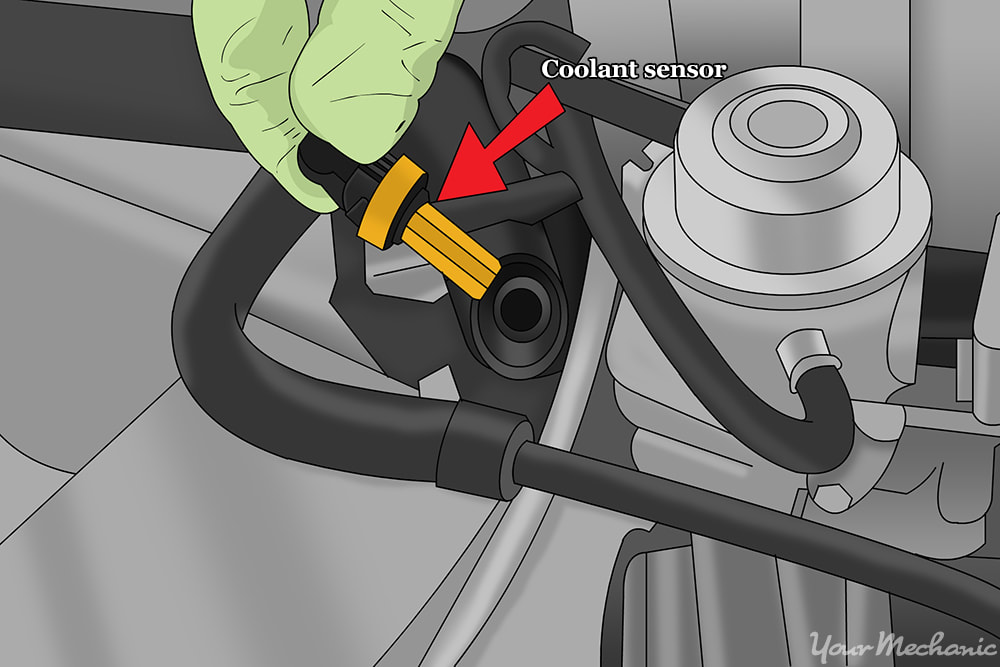
Source: YourMechanic
Replace after confirmation
Use the vehicle-specific service information and diagnostic procedure to confirm that the sensor itself is defective before installing a replacement.
Do not use mileage alone
A vehicle reaching a certain mileage does not automatically mean its coolant temperature sensor needs replacement.
Treat overheating separately
An overheating engine requires prompt cooling-system diagnosis because the underlying problem may be coolant loss, restricted circulation, a thermostat, radiator, fan, water pump, or another component.
Is There a Recommended Mileage for Coolant Temperature Sensor Replacement?
For most vehicles, there is no universal mileage interval for replacing the engine coolant temperature sensor. The sensor should normally be inspected or tested when symptoms or diagnostic information indicate a problem. Always check the maintenance schedule and repair information for the specific year, make, model, and engine because manufacturer procedures can differ.
Routine maintenance
Do not assume that a coolant temperature sensor must be replaced during every coolant service unless the vehicle manufacturer specifically calls for it.
Condition-based replacement
Replace the sensor when testing identifies a defective sensor or when manufacturer diagnostic procedures call for replacement.
Signs That a Coolant Temperature Sensor May Need Replacement
The strongest warning signs are abnormal temperature data, related diagnostic trouble codes, and engine-management symptoms that occur alongside evidence of an incorrect coolant-temperature signal. Because the sensor feeds information to the engine computer, a faulty reading can affect how the vehicle manages fuel and ignition and, on some vehicles, how it controls the electric cooling fans.
Symptoms alone are not enough to condemn the sensor. For example, an engine that takes unusually long to warm up may have a thermostat stuck open rather than a defective temperature sensor. Likewise, a temperature reading that behaves erratically can be caused by low coolant or trapped air as well as an electrical fault.
Source: grimmermotors.co.nz
Check-engine light
A malfunction indicator light can appear when the engine computer detects an implausible coolant-temperature signal or a problem in the sensor circuit.
Hard starting or poor drivability
An incorrect temperature signal can cause the engine computer to use an inappropriate fuel or ignition strategy, particularly during cold operation.
Poor fuel economy
An inaccurate coolant-temperature signal can interfere with engine-management decisions and may contribute to increased fuel consumption.
Incorrect temperature reading
A gauge or electronic temperature display that suddenly behaves abnormally can justify testing the sensor and its circuit.
Cooling-fan behavior that seems abnormal
On vehicles that use coolant-temperature data to control electronic cooling fans, a sensor or circuit fault can contribute to fan operation that does not match engine conditions.
Diagnostic trouble code
Codes such as P0116 can identify a coolant-temperature sensor or circuit performance problem, but the code still requires diagnosis before the sensor is replaced.
What Does a Bad Coolant Temperature Sensor Do?
A failed or inaccurate sensor can give the engine control unit a temperature value that does not reflect the actual coolant temperature. The computer may then adjust engine operation using incorrect information. Depending on the vehicle, this can affect fuel injection, ignition timing, transmission-related control, cooling-fan operation, and the temperature information presented to the driver.
Cold-engine errors
If the computer incorrectly believes the engine is warmer or colder than it really is, cold-start and warm-up fueling can be affected.
Temperature-management errors
On applicable vehicles, inaccurate temperature information can affect cooling-fan commands or other temperature-dependent strategies.
How to Tell Whether the Sensor or Something Else Is Bad
Before replacing the coolant temperature sensor, diagnose the fault in a logical order. Start with the vehicle’s diagnostic trouble codes and live data, then inspect the sensor connector and wiring, verify the coolant level and condition when the engine is cold, and consider thermostat operation and other cooling-system components.
A scan tool can be particularly useful because it may show the coolant-temperature value reported to the engine computer. A cold engine that has been sitting for several hours should report a temperature that is reasonably consistent with the surrounding conditions. A reading that is clearly implausible can point toward a sensor or circuit problem, although the exact diagnostic thresholds depend on the vehicle.
If a temperature code is present, do not assume the sensor is automatically responsible. Haynes identifies wiring faults, the coolant temperature sensor, thermostat, radiator fan, other cooling-system components, and even the engine control unit as possible causes of a P0116-type fault. That makes circuit and system checks an important part of diagnosis.
Source: hitchesguide.com
Step 1: Scan for codes
Read stored and pending diagnostic trouble codes and record freeze-frame information when available.
Step 2: Check live temperature data
Compare the reported coolant temperature with the known engine condition and the manufacturer’s specifications.
Step 3: Inspect the connector and wiring
Look for corrosion, loose terminals, damaged insulation, broken wires, or poor connections around the sensor.
Step 4: Check coolant level when cold
Low coolant can create abnormal temperature behavior and may expose the sensor or introduce air into the system.
Step 5: Evaluate the thermostat
An engine that stays unusually cool or takes too long to reach normal operating temperature may have a thermostat problem rather than a sensor problem.
Step 6: Test the sensor if required
Use the resistance, voltage, temperature, and testing procedure specified for the particular vehicle rather than relying on a generic value.
Sensor Problem Versus Thermostat Problem
The coolant temperature sensor measures temperature; the thermostat regulates coolant flow. They can produce overlapping symptoms but require different repairs. A thermostat stuck open can keep an engine from reaching normal operating temperature, while a sensor can falsely report a temperature that does not match the engine’s actual condition.
If the temperature gauge or scan data appears plausible but the engine physically takes too long to warm up, investigate the thermostat and cooling system rather than automatically replacing the sensor. If the reported temperature is implausible or does not respond correctly to changing engine conditions, sensor and circuit testing becomes more important.
Likely sensor direction
The reported temperature is implausible, erratic, frozen at an unrealistic value, or inconsistent with measured engine conditions and the circuit checks support a sensor fault.
Likely thermostat direction
The temperature data appears credible but the engine consistently warms too slowly or does not reach its expected operating temperature.
Can Low Coolant Make the Sensor Look Bad?
Yes. Low coolant or trapped air can cause abnormal temperature behavior and may make temperature readings difficult to interpret. Check coolant level only when the engine is safely cool and follow the vehicle manufacturer’s procedure for inspecting and filling the cooling system.
Check for leaks
If the coolant level is repeatedly low, identify and repair the leak instead of repeatedly topping off the system.
Bleed correctly
If the vehicle requires a specific air-bleeding procedure after cooling-system service, follow the manufacturer’s procedure.
When a Coolant Temperature Sensor Should Be Replaced Immediately
A confirmed sensor failure should be repaired promptly when it is affecting engine management, generating persistent fault codes, or producing clearly inaccurate temperature information. Delaying a known sensor fault can allow poor drivability, fuel-economy problems, or incorrect temperature-related control strategies to continue.
However, a sensor-related fault should not be confused with an engine that is actually overheating. If the temperature warning indicates overheating, the gauge enters the hot zone, steam is present, coolant is visibly escaping, or the engine shows other signs of excessive temperature, stop safely and allow the vehicle to cool. Do not open a hot pressurized cooling system.
Source: hitchesguide.com
Confirmed electrical failure
Replace the sensor when testing confirms an internal sensor fault or the sensor does not meet the applicable manufacturer specification.
Persistent inaccurate signal
A sensor that consistently reports an incorrect temperature can interfere with engine-management decisions and should not be left unresolved.
Physical damage or leakage
A damaged sensor, damaged sealing surface, or sensor that cannot maintain the required seal should be addressed using the vehicle-specific repair procedure.
Overheating condition
If the engine is actually overheating, prioritize cooling-system diagnosis and safe shutdown rather than simply replacing the temperature sensor.
Safety Before Removing the Sensor
Let the engine cool completely before opening or draining the cooling system. Hot coolant can be under pressure and can cause severe burns. Use the correct replacement sensor, sealing washer or O-ring when specified, and coolant type for the vehicle. After replacement, refill and bleed the cooling system according to the manufacturer’s instructions and verify that there are no leaks.
Never remove a hot pressure cap
A radiator or coolant-system pressure cap should not be opened while the system is hot.
Use the correct part
Sensor design, connector, thread, resistance characteristics, and sealing method can vary by vehicle.
Check for leaks afterward
After the repair and proper refill procedure, inspect the sensor area and cooling system for coolant leakage.
What Happens After You Replace the Coolant Temperature Sensor?
After replacement, the vehicle should be checked to confirm that the temperature signal is now plausible and stable, the original diagnostic fault does not immediately return, and the engine reaches and maintains its expected operating temperature. Some vehicles may require the fault codes to be cleared with a scan tool, while others will turn the warning light off after the computer completes its monitoring cycle if the fault no longer exists.
The cooling system may also need to be refilled or bled after sensor replacement, depending on the sensor’s location and the amount of coolant lost. A repair is not complete simply because the new sensor is installed. The final check should confirm correct coolant level, no leaks, stable temperature behavior, and normal engine operation.
Source: hitchesguide.com
Verify the live data
Confirm that the scan-tool temperature reading responds logically as the engine warms.
Check for leaks
Inspect the sensor and surrounding cooling-system components after the engine reaches operating temperature.
Confirm normal operation
Look for normal starting, idle quality, temperature behavior, and cooling-fan operation where applicable.
Recheck codes
Scan again if the warning light remains on or the original fault returns.
What If the Same Code Comes Back?
If the same coolant-temperature code returns after sensor replacement, stop replacing parts at random. Recheck the connector, wiring, power and ground circuits where applicable, coolant level, thermostat operation, and the manufacturer’s diagnostic procedure. A returning code can indicate that the original problem was not the sensor or that another fault remains in the circuit.
Do not assume the new sensor is defective
A repeated code can result from wiring, connector, coolant, thermostat, or control-module problems.
Use vehicle-specific specifications
Exact resistance, voltage, temperature ranges, and test methods vary by vehicle.
Common Mistakes When Deciding to Replace a Coolant Temperature Sensor
The most common mistake is treating a symptom or trouble code as proof that the sensor has failed. Coolant temperature is part of a larger system, and several faults can produce similar readings or drivability complaints. A more reliable approach is to confirm the symptom, inspect the basic conditions, and then test the sensor and circuit against vehicle-specific specifications.
Another mistake is assuming that a temperature gauge alone proves what the sensor is reporting. Modern vehicles can use multiple temperature inputs or different signal-processing strategies, so a gauge indication should be treated as one diagnostic clue rather than a complete test.
Source: hitchesguide.com
Replacing the sensor because of P0116 alone
P0116 indicates a coolant-temperature sensor or circuit performance issue, not necessarily a failed sensor.
Ignoring the thermostat
A thermostat that is stuck open or closed can cause temperature symptoms that resemble a sensor problem.
Ignoring wiring
Damaged wiring, corrosion, loose terminals, and poor connections can interrupt or distort the sensor signal.
Opening the cooling system while hot
Hot pressurized coolant can cause serious burns. Always allow the system to cool before opening it.
Using generic test values
Sensor resistance and voltage characteristics differ among applications, so use the specifications for the exact vehicle.
A Simple Replacement Decision Guide
Use the following decision path as a practical starting point: if the vehicle has no symptoms and no diagnostic evidence of a sensor problem, there is generally no reason to replace the sensor simply because of age or mileage. If a fault appears, diagnose the circuit and cooling system first. If testing confirms that the sensor itself is outside specification or internally faulty, replacement is justified.
No symptoms and no fault
Continue normal maintenance according to the vehicle manufacturer’s schedule.
Symptoms or fault code present
Diagnose the sensor, wiring, coolant level, thermostat, and related cooling-system components.
Sensor confirmed faulty
Replace the sensor using the correct vehicle-specific part and procedure.
Overheating confirmed
Stop driving when safe and diagnose the cooling system rather than assuming the sensor is the cause.
When to Have a Professional Diagnose the Problem
Professional diagnosis is the safer choice when the engine is overheating, coolant is leaking rapidly, the vehicle repeatedly loses coolant, the wiring is difficult to access, or the diagnostic results do not clearly identify the failed component. Cooling systems operate under pressure and can cause serious burns when handled incorrectly.
A professional can also be useful when the vehicle requires a manufacturer-specific scan procedure, an electronic cooling-fan strategy is involved, or the sensor is installed in a difficult location. For modern vehicles, accurate diagnosis can prevent unnecessary replacement of sensors, thermostats, wiring, or other components.
Source: hitchesguide.com
Seek help for overheating
Do not continue driving an engine that is overheating simply because a coolant temperature sensor fault code is present.
Seek help for repeated coolant loss
Repeatedly low coolant usually indicates a leak or another cooling-system problem that needs to be identified.
Seek help for unclear diagnosis
If sensor, wiring, thermostat, and coolant checks do not explain the symptoms, use vehicle-specific service information or professional diagnostic equipment.
Frequently Asked Questions
Q
How often should a coolant temperature sensor be replaced?
There is no universal replacement interval for a coolant temperature sensor. Most are replaced when diagnosis confirms a fault rather than at a predetermined mileage. Follow the maintenance and repair information for your specific vehicle.
Q
How do I know if my coolant temperature sensor is bad?
Common clues include an incorrect or unstable temperature reading, a check-engine light, poor fuel economy, hard starting, unusual engine-management behavior, or a related diagnostic trouble code. These symptoms are not conclusive by themselves, so test the sensor and circuit before replacement.
Q
Can I drive with a bad coolant temperature sensor?
A confirmed sensor fault should be repaired promptly because an inaccurate temperature signal can affect engine management and, on some vehicles, cooling-fan operation. If the engine is actually overheating, do not continue driving. Stop safely and allow the engine to cool before arranging diagnosis or repair.
Q
Does a P0116 code always mean I need a new coolant temperature sensor?
No. P0116 identifies a coolant-temperature sensor or circuit performance problem, but possible causes include the sensor, wiring, connectors, thermostat, cooling-system components, and other faults. Diagnosis should determine the failed component before parts are replaced.
Q
Can a thermostat cause symptoms that look like a bad coolant temperature sensor?
Yes. A thermostat stuck open can keep the engine from reaching normal operating temperature, while other thermostat faults can cause overheating. Because the thermostat controls coolant flow and the sensor measures temperature, their symptoms can overlap. Compare actual engine behavior with the sensor data and vehicle-specific diagnostic specifications.
✦ Wrapping Up
Conclusion
The right time to replace a coolant temperature sensor is when testing shows that the sensor is defective or its temperature signal is inaccurate. There is no single mileage interval that applies to every vehicle, so replacement should normally be based on condition and diagnosis rather than age alone.
Before installing a new sensor, check the diagnostic codes, live temperature data, connector and wiring, coolant level, and thermostat operation. This approach helps distinguish a failed sensor from a cooling-system or electrical problem and reduces unnecessary parts replacement.
If the engine is overheating, coolant is escaping, or you are unsure how to safely open or bleed the cooling system, have the vehicle inspected by a qualified technician. The sensor is only one part of the engine’s temperature-management system.
💡 Key Takeaway
If your vehicle shows symptoms of a coolant temperature sensor problem, scan for diagnostic codes and compare the reported coolant temperature with the engine’s actual condition before replacing the sensor. Replace it when vehicle-specific testing confirms the sensor is faulty.
Ethan Brooks is an automotive writer at Auto News 7, covering car news, vehicle maintenance, new model updates, recalls, and practical buying guides. He focuses on clear, useful information that helps drivers understand their vehicles and make better ownership decisions.
Learn whether a knock sensor affects performance, how it works, signs of failure, and what happens to engine power, fuel economy, and drivability when a knock sensor goes bad.
Learn how to replace intake camshaft position sensor with a detailed step-by-step guide, tools list, troubleshooting tips, safety advice, and common mistakes to avoid.
Learn whether a knock sensor can cause shifting problems, how engine management affects transmission operation, common symptoms, diagnosis steps, and when to replace a faulty knock sensor.
Learn whether a knock sensor can cause transmission problems, how engine and transmission systems interact, common symptoms, diagnosis steps, and when repairs are needed.
Learn whether a camshaft sensor needs to be programmed after replacement, when relearn procedures are required, common symptoms, troubleshooting steps, and what to expect during installation.
Learn whether a bad knock sensor can damage the engine, how it affects performance, warning signs to watch for, and when repairs are necessary to prevent costly engine problems.