A coolant temperature sensor is an electronic sensor that measures engine coolant temperature and sends that information to the vehicle’s engine control module. The module uses the temperature signal to manage functions such as cold-start fueling, ignition control, emissions operation, and, on some vehicles, cooling-fan operation.
For drivers in the United States, the coolant temperature sensor is a small component with a major role in modern gasoline and diesel engine management. Whether you drive a daily commuter, pickup truck, SUV, or performance car, the engine control system needs reliable temperature information to determine how the engine is operating. The sensor is commonly called an engine coolant temperature sensor, coolant temperature sensor, ECT sensor, or CTS.
Most automotive coolant temperature sensors use a negative temperature coefficient thermistor. Its electrical resistance changes as coolant temperature changes, allowing the engine control module to interpret the sensor signal as an engine temperature value. When the signal is inaccurate or the circuit fails, the vehicle may experience hard starting, increased fuel consumption, abnormal idle behavior, warning lights, or other drivability problems.
Understanding what the sensor does also helps prevent a common diagnostic mistake: assuming every overheating or temperature-related problem is caused by the sensor. A thermostat, cooling fan, wiring fault, connector problem, low coolant level, water pump, or another cooling-system component can produce similar symptoms. Correct diagnosis therefore starts with the temperature signal and the entire cooling system rather than replacing parts based on symptoms alone.
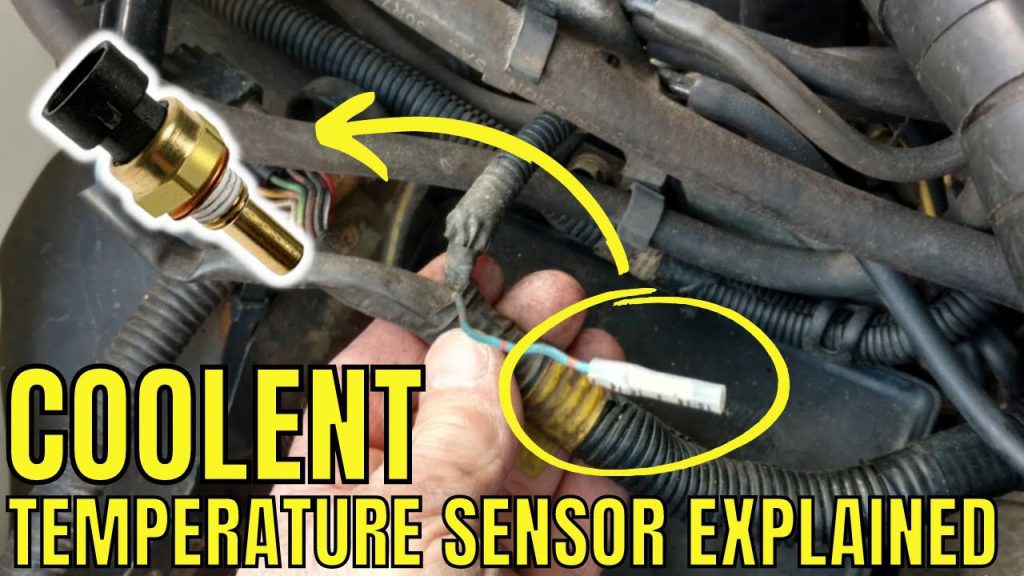
Source: napaechlin.com
What Is a Coolant Temperature Sensor?
A coolant temperature sensor is a temperature-sensing device installed in or near an engine coolant passage. Its primary job is to determine the temperature of the coolant surrounding the engine and convert that temperature into an electrical signal that the vehicle’s engine control module can interpret.
The engine control module, sometimes called the ECM or PCM, uses the coolant temperature signal as one input when controlling engine operation. Temperature affects how much fuel an engine needs, how ignition timing is managed, and how the engine transitions from a cold start to normal operating conditions.
The sensor is not the same thing as the thermostat. The thermostat is a mechanical or electronically controlled component that regulates coolant flow through the engine and radiator. The coolant temperature sensor measures temperature and reports information to the control system. Some vehicles have multiple temperature sensors or separate sensors for engine management and the instrument cluster.
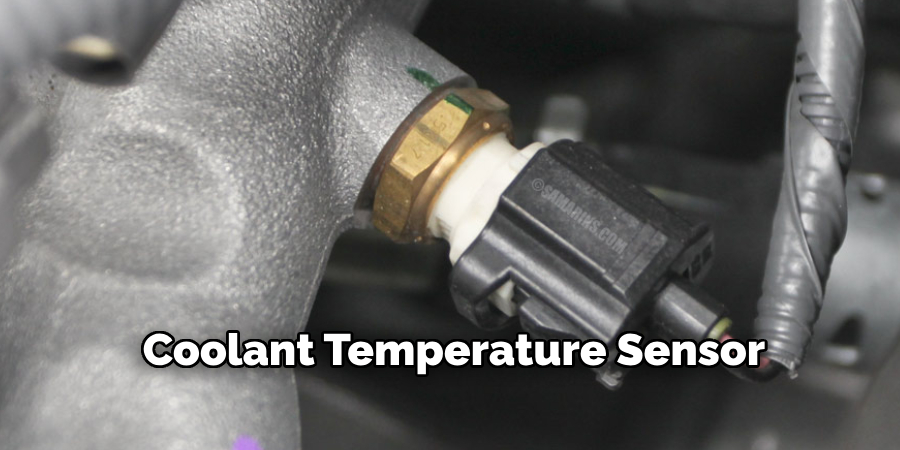
Source: carfromjapan.com
Common names
The same or closely related component may be called an engine coolant temperature sensor, ECT sensor, coolant temperature sensor, engine temperature sensor, or CTS. Exact terminology varies by manufacturer.
Primary role
The sensor provides temperature information used by electronic engine-management systems to adjust operation according to engine temperature.
Typical construction
Many automotive designs use a thermistor element inside a threaded or push-in housing with an electrical connector. Construction and connector design vary by vehicle.
Where Is the Coolant Temperature Sensor Located?
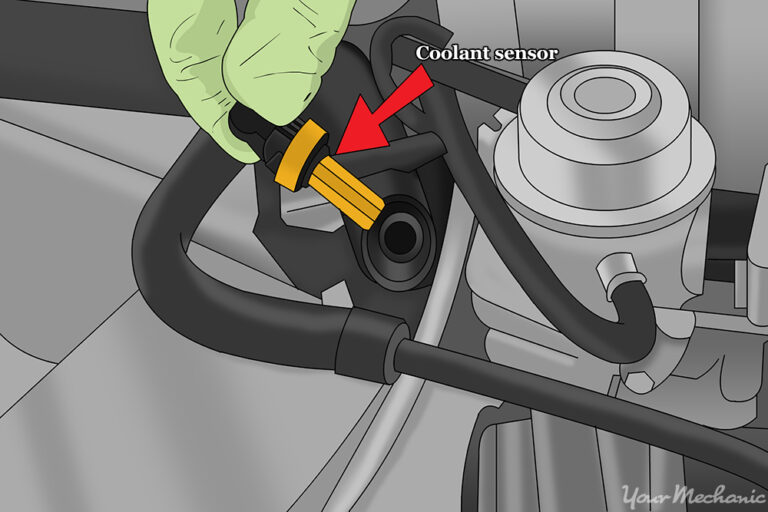
The sensor is normally positioned where it can accurately sense engine coolant temperature. Depending on the vehicle, it may be installed in a cylinder head, engine block, coolant outlet, intake manifold, thermostat housing, or another coolant passage. The exact location varies substantially between engines.
Because location is vehicle-specific, the correct repair manual or service information should be used before attempting removal. Some sensors are easy to reach from above the engine, while others may be positioned underneath components or near hot coolant passages.
Look for a threaded sensor
Many designs have a threaded metal or composite body installed directly into an engine coolant passage and an electrical connector attached to the top.
Do not assume the visible sensor is the only one
Some vehicles use separate temperature-sensing devices for the engine control system, dashboard gauge, cooling fan system, or other functions.
How Does a Coolant Temperature Sensor Work?
Most engine coolant temperature sensors work by changing electrical resistance as temperature changes. A common design uses an NTC, or negative temperature coefficient, thermistor. With an NTC thermistor, electrical resistance decreases as temperature rises and increases as temperature falls.
The engine control module supplies a reference voltage to the sensor circuit and monitors the resulting electrical signal. As coolant temperature changes, the sensor’s resistance changes and the circuit voltage changes. The control module interprets that signal using a temperature calibration programmed for the vehicle.
This arrangement allows the control module to distinguish a cold engine from a warmed engine. During a cold start, the system can use temperature information to apply an appropriate fueling strategy. As the engine warms, the control strategy changes toward normal operating conditions.
Source: safetyfic.com
Cold engine
The sensor generally has higher resistance when the coolant is cold, producing a signal that the control module interprets as a lower engine temperature.
Warming engine
As coolant temperature rises, sensor resistance normally falls, changing the electrical signal received by the control module.
Warm engine
A warmed engine produces a signal corresponding to a higher coolant temperature, allowing the control system to use its normal warm-engine strategies.
Why Does Temperature Information Matter?
Fuel behaves differently during cold operation than it does after the engine reaches operating temperature. The control module therefore needs temperature information when determining fueling and other engine-management parameters. Temperature data can also be used with information from other sensors to control emissions-related functions and engine cooling strategies.
On some vehicles, the coolant temperature signal also contributes to cooling-fan control or the temperature displayed on the dashboard. The exact functions depend on the vehicle’s electrical and engine-management architecture.
Fuel control
Coolant temperature can be used to modify fueling during cold operation and as the engine reaches normal temperature.
Ignition control
The engine control system can use coolant temperature as one factor when determining ignition timing.
Engine cooling
On some vehicles, temperature information is used as an input for electric cooling-fan operation or related cooling strategies.
What Does a Coolant Temperature Sensor Control?
The coolant temperature sensor does not directly control every system associated with engine temperature. Instead, it supplies temperature information that the engine control module can use when controlling several functions. The exact list depends on the vehicle’s design, software, engine type, and emissions system.
A particularly important role is cold-start management. A cold engine generally requires a different control strategy from a fully warmed engine. Accurate temperature information helps the control module select the appropriate strategy and transition as the engine warms.
The sensor can also contribute to diagnostic decisions. If the control module sees a temperature signal that is electrically implausible or inconsistent with other operating conditions, it may store a diagnostic trouble code and illuminate the check engine light.
Source: samarins.com
Cold-start operation
Temperature information helps the control module determine how the engine should be managed immediately after startup.
Fuel injection
The coolant temperature signal can influence fuel delivery, particularly during cold operation and warm-up.
Ignition timing
The engine control system can incorporate coolant temperature into ignition-control decisions.
Cooling fan operation
Some vehicles use engine temperature data to determine when electric radiator fans should operate.
Dashboard information
Depending on the vehicle architecture, temperature information may be used to provide a coolant temperature reading or warning to the driver.
Coolant Temperature Sensor vs. Temperature Gauge
A coolant temperature sensor and a dashboard temperature gauge are related but are not necessarily the same component. Some vehicles use one temperature signal for multiple purposes, while others use separate sensors or circuits. A gauge that reads incorrectly does not automatically prove that the engine control sensor is defective.
When diagnosing a temperature-reading problem, check the vehicle’s wiring diagram and service information to determine which sensor supplies the relevant signal.
Shared signal design
Some vehicles allow a single temperature sensor signal to support both engine management and driver information.
Separate sensor design
Other vehicles use different sensors or circuits for engine management and the instrument cluster.
What Are the Symptoms of a Bad Coolant Temperature Sensor?
A failed or inaccurate coolant temperature sensor can cause drivability and fuel-control problems because the engine control module may receive incorrect information about engine temperature. Common symptoms include hard starting, elevated idle speed, increased fuel consumption, poor engine operation, and a check engine light.
The symptom pattern depends on how the sensor or its circuit fails. An open circuit, short circuit, contaminated connector, damaged wiring, or sensor whose resistance no longer follows the expected temperature curve can produce different readings.
A temperature-related diagnostic trouble code does not automatically mean the sensor itself has failed. The same fault can sometimes be caused by wiring, connector corrosion, a circuit problem, or another cooling-system issue.
Source: i.ytimg.com
Hard starting
An incorrect temperature signal can cause the control system to use an unsuitable starting strategy, potentially making the engine difficult to start.
Increased fuel consumption
If the system incorrectly interprets the engine as colder than it really is, fueling may remain richer than appropriate for normal operation.
High or abnormal idle
Incorrect temperature information can affect warm-up and idle-control strategies.
Check engine light
The control module may store a diagnostic trouble code when the temperature signal is outside expected electrical or rational limits.
Incorrect temperature reading
If the vehicle’s temperature display uses the affected signal, the dashboard indication may be unusually low, high, or otherwise inconsistent with actual engine temperature.
Symptoms That Can Have Other Causes
Overheating should not automatically be blamed on a coolant temperature sensor. A sensor reports temperature; it does not remove heat from the engine. Low coolant, a failed thermostat, radiator restriction, water-pump problems, cooling-fan faults, air trapped in the cooling system, or other issues can cause genuine overheating.
Likewise, poor fuel economy or hard starting can have many causes unrelated to the coolant temperature sensor. A diagnostic scan, visual inspection, and appropriate electrical testing are more reliable than replacing the sensor based solely on symptoms.
Overheating
Check the complete cooling system instead of assuming the temperature sensor is responsible.
Poor fuel economy
Consider other engine-management and maintenance issues if the coolant temperature signal is normal.
Temperature warning
A warning indicator can represent an actual overheating condition, a sensor or circuit problem, or another vehicle-specific fault.
How Do You Test a Coolant Temperature Sensor?
Testing a coolant temperature sensor normally involves checking the diagnostic trouble codes, inspecting the connector and wiring, comparing sensor data with actual coolant temperature, and, when appropriate, measuring sensor resistance or circuit voltage. The exact procedure and specifications are vehicle-specific.
A scan tool can be especially useful because it may display the coolant temperature value reported to the engine control module. When the engine is completely cold after sitting for several hours, the reported coolant temperature should generally be plausible relative to the surrounding temperature. As the engine warms, the displayed value should change in a logical manner rather than remaining fixed or jumping unpredictably.
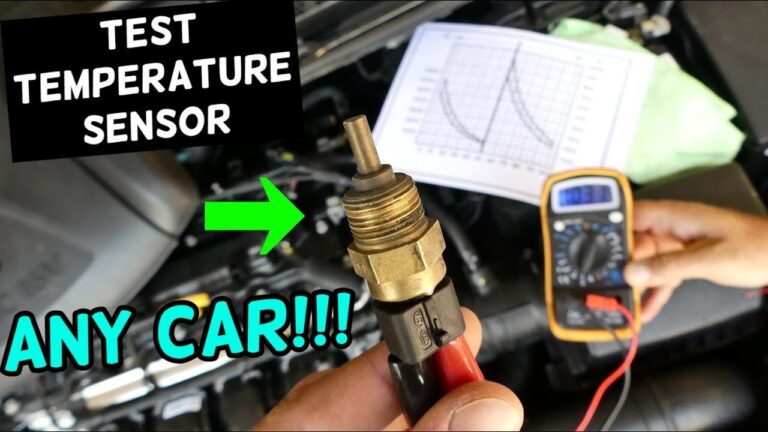
A multimeter can also be used on many conventional thermistor-type sensors. With the sensor disconnected and the component tested according to the manufacturer’s procedure, resistance can be compared with the specified value for the measured temperature. Generic resistance figures should not be substituted for the vehicle manufacturer’s specifications because sensor calibration differs between applications.
Source: i.ytimg.com
Start with fault codes
Use a suitable scan tool to identify stored or pending diagnostic trouble codes and review the coolant temperature data if available.
Inspect the connector
Look for loose terminals, corrosion, damaged locking mechanisms, coolant contamination, or other connector problems.
Inspect the wiring
Check for broken wires, damaged insulation, shorts, poor connections, or harness damage near the sensor.
Compare temperature data
Compare scan-tool temperature information with the engine’s actual temperature and observe whether the reading changes logically during warm-up.
Measure resistance when specified
For applicable thermistor sensors, compare measured resistance at a known temperature with the manufacturer’s specified resistance range.
Why Generic Resistance Charts Can Mislead You
There is no single resistance value that applies to every coolant temperature sensor. Different sensors can have different resistance curves, connector configurations, and calibration characteristics. A value that is normal for one application can be incorrect for another.
For accurate diagnosis, obtain the service specification for the exact vehicle, engine, model year, and sensor application. Also consider the temperature at which the measurement is taken because thermistor resistance changes continuously with temperature.
Use exact specifications
Follow the service information for the specific vehicle rather than relying on a universal resistance chart.
Control the test conditions
Record the coolant or sensor temperature when taking resistance measurements because resistance is temperature-dependent.
Check the circuit too
A sensor that tests correctly can still produce an incorrect control-module reading if the connector or wiring is damaged.
What Should You Check Before Replacing the Sensor?
Before replacing a coolant temperature sensor, confirm that the sensor is actually the source of the problem. A proper diagnosis should distinguish a failed sensing element from an electrical circuit fault and from a genuine cooling-system problem.
Start with the simplest checks that can explain the observed symptom. Verify coolant level when the engine is completely cold, inspect the sensor connector and wiring, read diagnostic trouble codes, and review live temperature data if available. If the engine is genuinely overheating, address the overheating condition rather than treating the sensor as the cause without evidence.
If sensor removal is required, allow the engine to cool completely. Opening a pressurized cooling system while the engine is hot can release scalding coolant and steam. Follow the vehicle manufacturer’s procedure for depressurizing the system, replacing the sensor, restoring coolant level, and removing any trapped air when required.
Source: hella.com
Coolant level
Check the coolant level only when the engine is safely cool and follow the vehicle manufacturer’s instructions for the correct coolant and filling procedure.
Sensor connector
Inspect for corrosion, damaged terminals, loose connections, and signs of coolant or oil contamination.
Wiring harness
Check the wires between the sensor and control module for continuity, shorts, damage, and poor connections according to the wiring diagram.
Thermostat
A thermostat that remains open or closed can create temperature behavior that resembles a sensor problem.
Cooling system
If the engine is actually overheating, inspect the radiator, cooling fans, coolant pump, hoses, coolant level, and other relevant components.
When Is Professional Diagnosis Appropriate?
Professional diagnosis is appropriate when the engine is overheating, coolant is leaking, the cooling system cannot be safely depressurized, electrical testing requires circuit diagrams or specialized equipment, or the cause remains unclear after basic checks. Modern vehicles can integrate temperature information into multiple control systems, so a misleading sensor signal may require scan-tool data and manufacturer-specific diagnostic procedures.
If a warning indicates severe overheating, stop operating the vehicle when it is safe to do so. Continuing to drive an overheating engine can cause serious engine damage regardless of whether the temperature sensor itself is faulty.
Stop for severe overheating
Do not continue driving an engine that is showing signs of serious overheating simply because a coolant temperature sensor may be suspected.
Avoid hot coolant exposure
Never remove a pressurized radiator cap or coolant-system component while the engine is hot unless the manufacturer provides a specific safe procedure.
Use vehicle-specific information
Follow the service manual for sensor location, wiring, resistance values, voltage tests, torque specifications, coolant type, and bleeding procedures.
Frequently Asked Questions
Q
Is a coolant temperature sensor the same as an ECT sensor?
In automotive terminology, ECT usually means Engine Coolant Temperature. An ECT sensor is therefore generally a coolant temperature sensor used to report engine coolant temperature to the vehicle’s control system. Exact terminology can vary by manufacturer.
Q
Can a bad coolant temperature sensor cause overheating?
A faulty sensor can cause an incorrect temperature signal and may affect cooling-related control functions on vehicles that use the sensor for fan management. However, a failed sensor does not physically remove heat from the engine. Actual overheating can also result from low coolant, thermostat problems, cooling-fan faults, radiator problems, water-pump issues, or other cooling-system failures.
Q
Can a coolant temperature sensor cause poor fuel economy?
Yes. An incorrect coolant temperature signal can cause the engine control system to use an inappropriate fueling strategy. For example, if the system incorrectly interprets a warm engine as cold, fuel delivery may remain richer than necessary. Poor fuel economy has many other possible causes, so diagnosis should confirm the temperature signal before replacing the sensor.
Q
How long does a coolant temperature sensor last?
There is no universal service interval for coolant temperature sensors. Their service life depends on the vehicle, sensor design, coolant condition, engine environment, and other factors. A sensor generally should be replaced when testing shows that it has failed or when the manufacturer specifies replacement as part of a particular repair.
Q
Can I replace a coolant temperature sensor myself?
Replacement can be a manageable repair on some vehicles, but difficulty varies widely by engine design and sensor location. The engine must be cool before opening the cooling system, and the correct procedure may require coolant recovery, refilling, bleeding air, or special tools. Always follow the service procedure for the exact vehicle.
✦ Wrapping Up
Conclusion
A coolant temperature sensor is a key input device in modern engine management. It measures coolant temperature and converts that information into an electrical signal that the engine control module can use for cold-start operation, fuel control, ignition management, emissions-related functions, and, on some vehicles, cooling-fan control.
Because symptoms such as hard starting, poor fuel economy, abnormal idle, warning lights, and temperature problems can have multiple causes, replacing the sensor without testing can lead to an unnecessary repair. A better approach is to check diagnostic codes, review live temperature data when available, inspect the connector and wiring, and compare sensor measurements with vehicle-specific specifications.
If the vehicle is actually overheating, treat that condition as a cooling-system problem that requires prompt attention. The coolant temperature sensor provides information; it is not a substitute for a functioning thermostat, radiator, coolant pump, fan, coolant supply, and properly maintained cooling system.
💡 Key Takeaway
If you suspect a coolant temperature sensor problem, begin with a scan for diagnostic trouble codes and a visual inspection of the sensor connector and wiring. Then compare the reported or measured temperature with the exact specifications for your vehicle before deciding whether the sensor needs replacement.
Ethan Brooks is an automotive writer at Auto News 7, covering car news, vehicle maintenance, new model updates, recalls, and practical buying guides. He focuses on clear, useful information that helps drivers understand their vehicles and make better ownership decisions.
Learn how to test a coolant temperature sensor with a multimeter or scan tool. Follow safe steps to check resistance, voltage, wiring, and sensor accuracy.
Learn how to change a coolant temperature sensor harness safely, diagnose wiring faults, splice a replacement pigtail, and verify the ECT circuit after repair.
Learn what a knock sensor is, how it works, where it is located, common symptoms of failure, and why it is essential for engine performance and protection.
Learn how to test a Ford coolant temperature sensor with a multimeter and scan tool. Check resistance, voltage, wiring, sensor response, and common faults safely.
Learn how to replace the coolant temperature sensor on a Chevy Malibu, including tools, safety steps, sensor location, installation, coolant refill, and troubleshooting.