What Happens When You Press the Brake Pedal?
Pressing the brake pedal turns your foot pressure into clamping force at the wheels, slowing your car through friction. In a typical hydraulic brake system, fluid carries that pressure from the pedal to the brakes at each wheel.
Does your pedal ever feel softer or harder than you expect? Or have you wondered how a small movement of your foot can slow a car weighing thousands of pounds?
I once rushed through a brake check and focused on the pedal alone, missing how much the car pulled to one side during a slow stop. That detail mattered more than my quick pedal test, and it’s a common mistake, not a dumb one.
I wrote this to trace the braking process in plain English, from your foot to the road. It’s for drivers who want to know what their brakes are doing, spot changes early, and talk with a mechanic without feeling lost.
If you understand the sequence, you can recognize normal pedal feel, catch warning signs sooner, and avoid treating a serious brake problem like a harmless quirk. Skip the warning signs, and you could keep driving with less stopping power than you think.
This takes about 9 minutes to read. By the end, you’ll know how to:
- Follow braking force from your foot to the tires.
- Tell what the master cylinder and brake fluid do.
- Recognize how ABS changes pedal feel.
- Sort normal pedal behavior from signs that need a shop.
What Happens When You Press the Brake Pedal
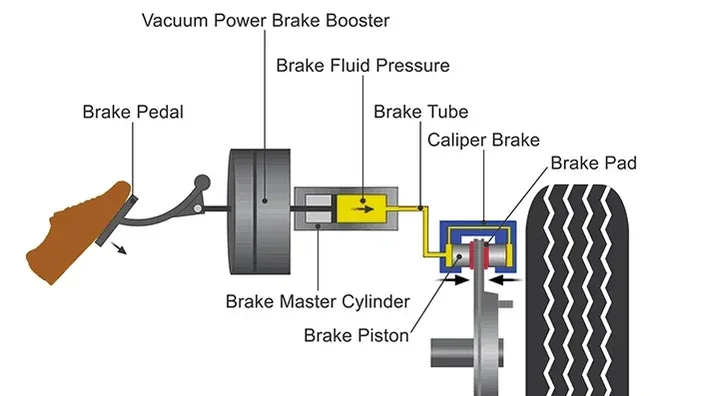
When you press the brake pedal, a lever pushes a piston in the master cylinder, which sends pressurized brake fluid through the brake lines. That pressure operates the brakes at each wheel, where pads or shoes create friction to slow the rotating wheels and tires.
The basic sequence is: your foot moves the pedal, the master cylinder builds pressure, the fluid carries that pressure, and the wheel brakes create friction. As the tires slow against the road, the car loses speed. Each part passes force along, like a row of connected links.
The pedal gives you leverage, so your foot doesn’t have to push with the same force the brakes apply at the wheels. A brake booster on many cars adds assistance, making the pedal easier to press. The exact parts vary by vehicle, but the aim is the same: controlled stopping without your leg doing all the heavy lifting.
The braking sequence, step by step
- Your foot presses the pedal.
- The pedal linkage moves the master cylinder piston.
- The piston pressurizes brake fluid in the hydraulic circuits.
- Fluid pressure moves the caliper pistons or wheel-cylinder pistons.
- Brake pads clamp a rotor, or brake shoes press against a drum.
- Friction slows the wheel, and the tire’s contact with the road slows the car.
The stages happen quickly, but they’re not magic. A firm pedal is part of the chain, not proof by itself that every brake is working well.
How Hydraulic Pressure Reaches Each Wheel
In most cars, brake fluid transmits pressure through sealed lines from the master cylinder to the wheel brakes. The system uses fluid because it can carry pressure through small passages and around the car without needing a separate mechanical rod running to every wheel.
The master cylinder usually feeds two hydraulic circuits, or separate routes for brake fluid. This split helps preserve some braking ability if one circuit develops a leak, though the car may stop poorly and should not be driven normally. The layout can vary, so a vehicle’s service information is the right source for its specific design.
The broader process behind this system is explained in how hydraulic brakes work. Here, the key point is that pressure moves through the fluid and operates the brake mechanism at each wheel.
When you press the pedal, the master cylinder piston reduces the space available to the fluid in its bore. Since the system is sealed, the pressure moves through the lines toward the calipers or wheel cylinders. At the wheel, pistons push the friction material against the rotor or drum.
What brake fluid does, and what it can’t do
Brake fluid transfers force; it doesn’t create friction at the tire. The brake pads or shoes make friction at the wheel, and the tires then grip the road. That distinction matters because a car can have firm hydraulic pressure but still stop poorly if the friction parts are worn, contaminated, overheated, or on a slick surface.
Fluid also needs to stay in good condition. Many brake fluids absorb moisture over time, which can lower the fluid’s boiling point. Under heavy braking, overheated fluid may form vapor; vapor compresses more easily than liquid, and the pedal can feel soft or travel farther than usual.
The details of that pressure transfer are covered in how brake fluid transfers pressure. Your car’s owner’s manual specifies the correct fluid type, and the cap or service information may list it too. Don’t choose a fluid by color or by what happens to be on a garage shelf.
Important Tip: Never top off brake fluid just to hide a falling level. Low fluid can point to worn brake pads or a leak, and a leak needs prompt inspection.
What Happens at the Wheels
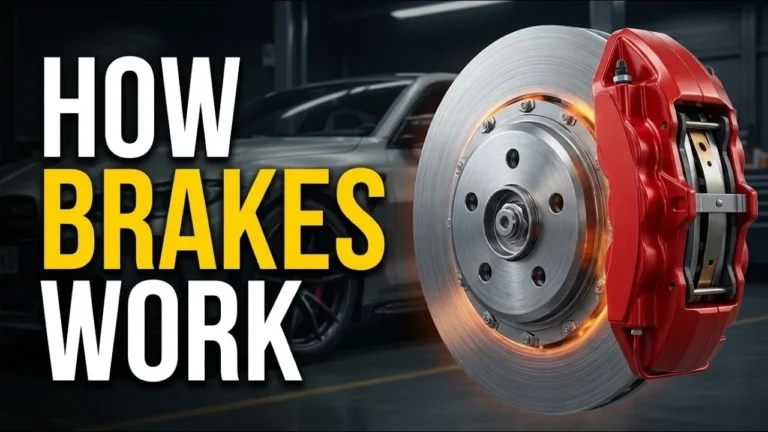
At each wheel, hydraulic pressure moves a piston that presses friction material against a rotating part. Disc brakes use pads and a rotor; drum brakes use shoes that press outward against the inside of a drum.
Most passenger cars use disc brakes at the front. Many also use rear disc brakes, while some have rear drums. Disc brakes shed heat differently from drum brakes, but both rely on friction to slow the wheel. The exact setup depends on the vehicle.
When a pad squeezes a rotor, the rotor slows. That slows the wheel, but the tire still has to grip the pavement for the car to slow in a controlled way. If the road is icy, wet, or covered in loose gravel, tire grip may be the limiting factor, not the pressure in the brake lines.
Can you stop faster just by pressing harder? Not always. Pressing harder can help up to the point where the tires approach their grip limit; beyond that, a wheel may lock if the car doesn’t have working anti-lock brakes. Keep a safe following distance instead of relying on a last-second pedal stomp.
I once saw how easy it is to focus on shiny brake parts and forget the tires, too. A clean rotor can’t make up for poor tire grip, so the whole path from pedal to pavement matters.
A car’s front brakes often handle more braking force because weight shifts forward as the car slows. That doesn’t mean the rear brakes are optional: they help keep the car stable and contribute to stopping. A problem at one wheel can cause pulling, uneven wear, noise, or a change in stopping distance.
How ABS Changes Braking
Anti-lock braking system (ABS) helps keep the wheels from staying locked during hard braking. Wheel-speed sensors detect when a wheel is slowing too quickly, and the system adjusts brake pressure to help the driver keep steering control.
During ABS operation, you may feel rapid pulsing through the brake pedal or hear a buzzing sound. Keep steady, firm pressure on the pedal and steer where you need the car to go. Don’t pump the pedal; the ABS is already adjusting pressure.
NHTSA’s anti-lock brake system guidance explains how ABS supports steering control during hard braking. ABS can help you steer while braking, but it can’t give your tires extra grip or guarantee a shorter stop on every surface.
Does a pulsing pedal always mean something is broken? No. Pulsing during a hard stop can be normal ABS operation; pulsing during ordinary gentle braking may point to a brake or rotor issue that needs a mechanic’s inspection.
Pro Tip: If the ABS warning light stays on after the car starts, the regular brakes may still work, but ABS may not. Check the owner’s manual and arrange service rather than assuming the system will step in during a hard stop.
What Brake Pedal Feel Can Tell You
A steady pedal that feels consistent from one stop to the next is usually reassuring, but pedal feel alone can’t confirm that the brakes are in good shape. Changes in pedal travel, resistance, sound, or how the car behaves deserve attention.
| What you notice | Possible reason | What to do |
|---|---|---|
| Soft or spongy pedal | Air or moisture-related vapor in the hydraulic system, or a leak | Stop somewhere safe and arrange prompt inspection |
| Pedal slowly sinks while held | Possible hydraulic leak or master cylinder problem | Don’t keep driving; get professional help |
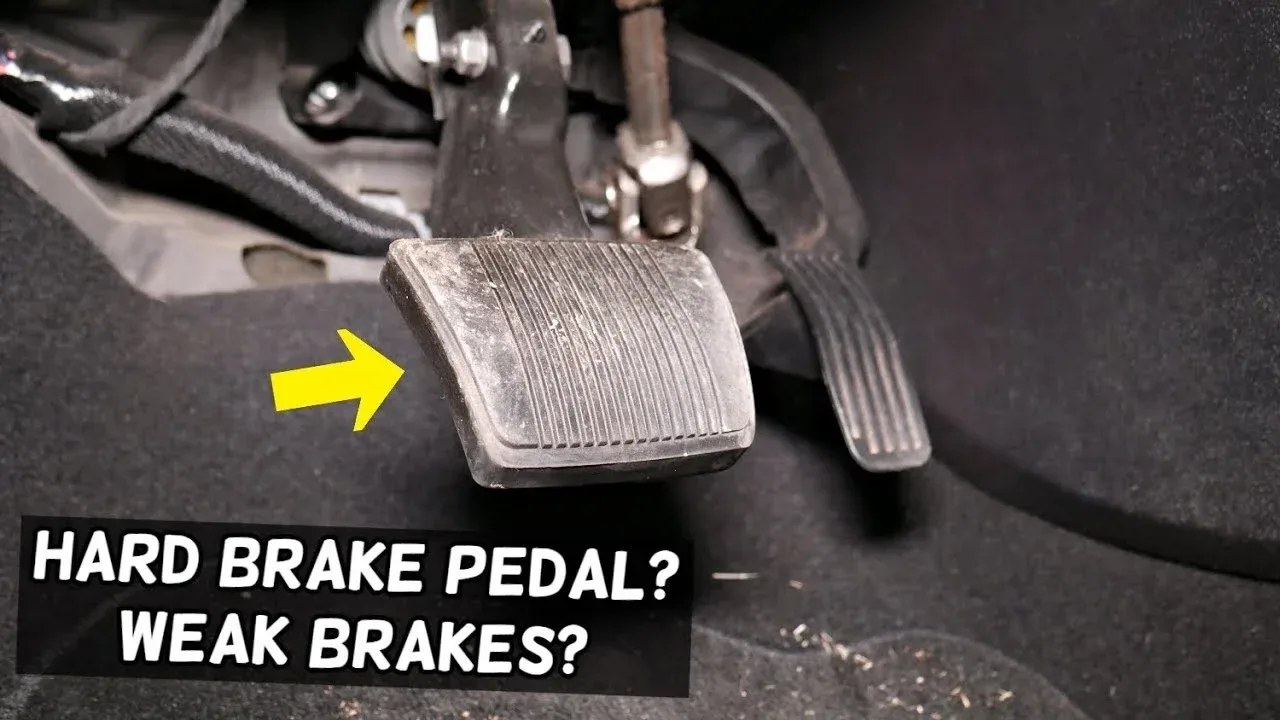
| Pedal feels unusually hard | Brake assist may not be working as expected | Check the owner’s manual and have the system inspected |
| Grinding noise | Friction material may be badly worn, or parts may be damaged | Avoid continued driving and arrange service |
| Car pulls while braking | Uneven braking, a tire issue, or another fault | Have the cause checked soon |
| ABS pedal pulses during a hard stop | ABS may be operating | Keep steady pedal pressure and steer smoothly |
A small amount of pedal travel before the brakes engage can be normal, and the exact feel varies by vehicle. A sudden change is more meaningful than comparing your car with a different model.
What should you do if the pedal sinks toward the floor? Pull over safely and stop driving if you can’t brake normally. A sinking pedal can mean the hydraulic system isn’t holding pressure, and guessing your way to the shop isn’t a good bet.
Safety Tip: If you see brake fluid leaking, the pedal feels soft, or stopping ability drops, don’t drive the car. Use roadside assistance or have a qualified mechanic inspect it.
Common Brake-Pedal Mistakes and Safe Next Steps
The safest response to a brake change is to notice it, avoid risky testing, and get the car checked when the symptoms suggest a fault. Don’t wait for a warning light; some brake problems show up through feel, sound, or vehicle behavior first.
A few common mistakes make diagnosis harder:
- Pumping a pedal that feels soft: The pedal may firm briefly, but that doesn’t repair a leak or remove air from the system.
- Adding the wrong brake fluid: Use only the type listed for your vehicle. Mixing the wrong fluid can damage brake-system parts.
- Assuming every noise means worn pads: A sound can have more than one cause, so don’t replace parts based on a guess.
- Treating an ABS pulse as a reason to release the pedal: During a hard stop, keep firm pressure and steer with care.
- Testing at speed: A quiet parking lot is no place for improvised emergency-stop experiments, either.
If a warning appears or pedal behavior changes, check the owner’s manual for the warning-light meaning and any instructions for your vehicle. When the car pulls, grinds, leaks fluid, or won’t stop as expected, have a mechanic inspect it. A professional can check the hydraulic system, brake pads and rotors, tires, and ABS faults instead of treating one symptom in isolation.
If a shop says the brake pedal feels normal, should you ignore an intermittent warning? No. Tell the mechanic when it happens, whether the brakes are hot or cold, and what the car does during the stop. A specific description can help reproduce a problem that doesn’t show up every time.
Key Takeaways:
- The brake pedal starts a chain that ends in tire grip against the road.
- Brake fluid carries pressure, while pads or shoes create wheel friction.
- New sounds, pulling, leaks, or a changed pedal feel deserve attention.
FAQs About What Happens When You Press the Brake Pedal
Why does the brake pedal feel firm?
A firm brake pedal usually means the pedal and hydraulic system are resisting your foot as pressure builds. Some vehicles have a firmer feel than others. If your pedal suddenly becomes much harder than usual, or the car takes more effort to stop, have the brake assist and hydraulic system inspected.
Why does my brake pedal go down when I start the car?
A small pedal movement after starting can happen as brake assist begins working. That movement alone doesn’t prove a problem. If the pedal keeps sinking while you hold it, feels soft, or travels much farther than usual, stop driving when safe and ask a mechanic to check for a hydraulic fault.
Can I drive with the brake warning light on?
No, not without checking what the warning means and whether the brakes work normally. A brake warning light can relate to the parking brake or a brake-system problem, depending on the car. Read the owner’s manual, and don’t drive if the pedal feels wrong, fluid is leaking, or stopping power has changed.
Why do brakes make a grinding noise?
Grinding can mean worn friction material or damage between brake parts, but the sound alone can’t confirm the cause. Because continued driving may worsen the damage or reduce braking, arrange an inspection soon. If the car also pulls or stops poorly, don’t drive it to the shop.
Does ABS stop a car faster?
Not in every situation. ABS helps prevent sustained wheel lock so you can steer during hard braking, but stopping distance depends on speed, tires, road surface, and other conditions. Keep firm pressure on the pedal when ABS activates, and leave extra space when the road is slippery.
What should I do if my brake pedal feels soft?
Stop in a safe place and don’t continue driving if the brakes feel weak or the pedal travels unusually far. A soft pedal can point to air, vapor, or a leak in the hydraulic system. Arrange professional inspection, since pressing harder won’t fix the cause.
The Brake Pedal Is Only the Start
Pressing the brake pedal starts a chain of events: pedal force becomes hydraulic pressure, wheel brakes create friction, and tire grip slows the car. If one link weakens, you may notice a softer pedal, new noise, pulling, or a change in how the car stops.
My practical advice is to pay attention to changes rather than trying to diagnose a brake system by feel alone. A steady pedal is useful information, but it isn’t a complete inspection. When a warning light appears or the car brakes differently, check the owner’s manual and get a qualified mechanic involved if anything feels unsafe.
The clearest next step is simple: on your next normal drive, notice how your brake pedal feels and whether the car stops straight and smoothly. If something has changed, don’t shrug it off.