How Car Braking Systems Work: A Complete Overview
A car slows down when its brakes turn motion into heat and the tires pass that braking force to the road. The pedal, hydraulic parts, brake pads or shoes, and electronic controls work together to make that happen.
Have you ever pressed the brake pedal and wondered why it felt soft, pulsed, or harder than usual? Or heard a squeal and worried you were one stop away from an expensive repair?
I once rushed through a brake inspection and focused on the pad material without checking how the caliper moved. The pads looked fine, but one wheel dragged and wore unevenly. That kind of shortcut is common, not dumb; braking systems have several parts that can hide a problem from a quick glance.
I wrote this guide to explain how the system works from your foot to the road, in plain language. It’s for drivers who want to understand what their car is doing, spot trouble earlier, and make better repair decisions without needing a mechanic’s vocabulary.
When you understand the basics, a strange pedal or warning light becomes less mysterious, and a shop’s explanation is easier to judge. Skip the early signs, though, and you may end up with longer stopping distances, extra damage, or a car you shouldn’t drive.
This takes about 18 minutes to read. By the end, you’ll be able to:
- Trace the force from the brake pedal to the tires.
- Tell disc brakes, drum brakes, ABS, and regenerative braking apart.
- Recognize common brake warning signs and what they can mean.
- Know which checks are reasonable at home and when to call a professional.
How Car Braking Systems Work from Pedal to Road
How car braking systems work comes down to a chain: your foot moves the pedal, the car amplifies and sends that force, the brakes create friction, and the tires grip the road to slow the car. If any part of that chain can’t do its job, the car may take longer to stop or behave differently under braking.
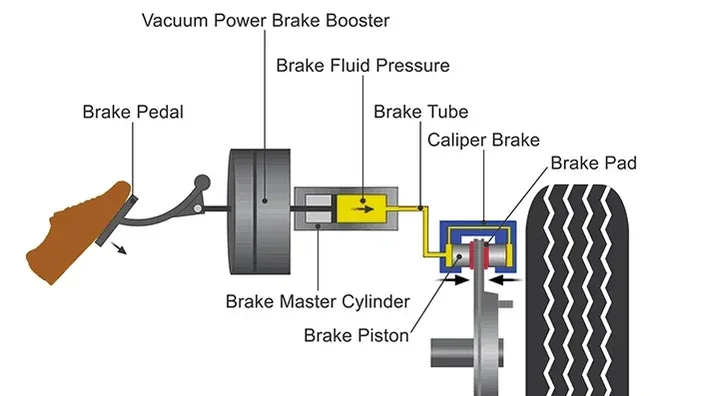
When you press the pedal, a lever inside the car pushes on a rod connected to the brake booster and master cylinder. The booster helps multiply your input. The master cylinder converts that movement into pressure in brake fluid, which travels through lines to the brakes at the wheels.
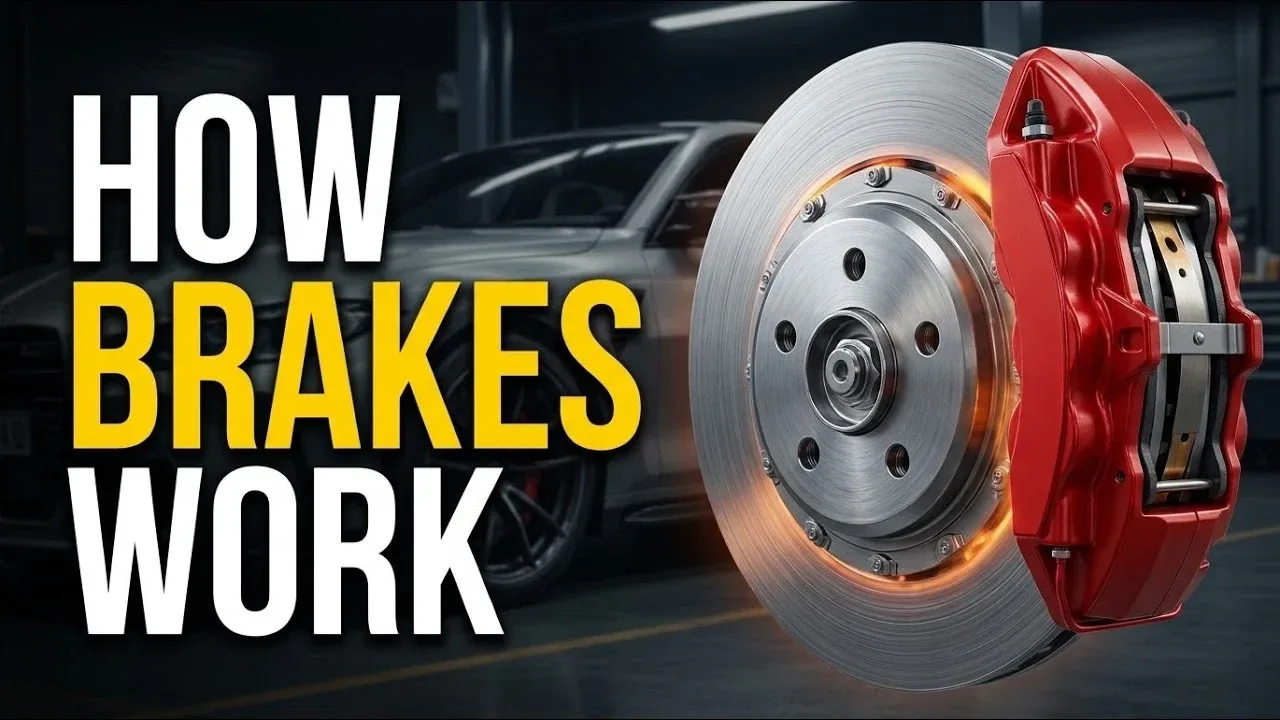
At each wheel, pressure makes a caliper squeeze brake pads against a rotating disc, called a rotor, or makes wheel cylinders push brake shoes against a rotating drum. Friction slows the rotating parts. The tires then use their grip on the road to slow the car itself.
Here’s the whole path in plain terms:
- Your foot pushes the brake pedal.
- The booster helps increase the pedal force.
- The master cylinder creates hydraulic pressure.
- Brake fluid carries pressure through the lines.
- Calipers or wheel cylinders apply the pads or shoes.
- Friction between the brake parts slows the wheels.
- The tires transfer that force to the road, slowing the car.
That last step matters more than people often realize. Brakes can slow a wheel, but the tires have to grip the pavement for the car to slow down. A car with worn tires can struggle to stop even if its brake parts are in good shape, especially on wet pavement.
Braking also makes heat. When brake pads rub on rotors, they turn some of the car’s moving energy into heat. A typical stop spreads that heat across the brake parts and surrounding air. Repeated hard stops, riding the brakes down a long hill, or towing heavy loads can build more heat than the system can shed quickly.
If the wheels slow too abruptly for the available tire grip, they can lock up. A locked tire can slide rather than roll, and the driver may lose some steering control. Anti-lock braking systems, usually called ABS, help reduce that risk by controlling brake pressure when a wheel is about to lock.
A useful mental picture is a bicycle: the hand lever pulls a cable or moves fluid, the brake pads grab the wheel, and the tire’s contact with the ground finishes the job. A car uses more power, more parts, and electronic controls, but the basic idea is similar.
Pro Tip: A stopping problem isn’t always a brake-part problem. If the car pulls or takes longer to stop, tire pressure, tire wear, road conditions, load, and brake condition can all play a part.
Key Takeaways:
- The brake system turns vehicle motion into heat through friction.
- Hydraulic pressure moves force from the pedal to the brakes at the wheels.
- Tires need enough grip to turn brake force into a controlled stop.
How Hydraulic Brakes Work in a Car
Hydraulic brakes use brake fluid to carry pressure from the master cylinder to the wheel brakes. Fluid pressure lets a relatively small pedal movement apply strong, even force at multiple wheels.
The master cylinder contains a piston that moves when you press the pedal. That piston pushes brake fluid into the brake lines. The lines branch toward the wheels, where hydraulic pressure moves a caliper piston or a wheel-cylinder piston. Those pistons push pads or shoes into contact with the rotor or drum.
Brake fluid works because it’s designed to transmit pressure through a closed system. Unlike air, fluid doesn’t compress much under normal brake-system conditions. If air enters the system, the pedal can feel spongy because part of your pedal movement compresses the air rather than applying the brakes directly.
Hydraulic brakes have safeguards against certain leaks. Most modern passenger cars use a dual-circuit system, which divides the brakes into two circuits. The exact split depends on the vehicle. If one circuit loses pressure, the other may still provide some braking, but the pedal may travel farther and the car may take longer to stop. That’s an emergency condition, not a reason to keep driving as usual.
For a closer look at the fluid, master cylinder, and wheel-end parts, the guide to how hydraulic brakes work explains the hydraulic side in more detail.
Brake fluid also needs the right type and condition. The type is specified by the vehicle maker, often on the reservoir cap or in the owner’s manual. Brake fluid can absorb moisture over time, which can lower its resistance to heat. The service interval varies by vehicle and fluid type, so check the manual instead of guessing based on color alone.
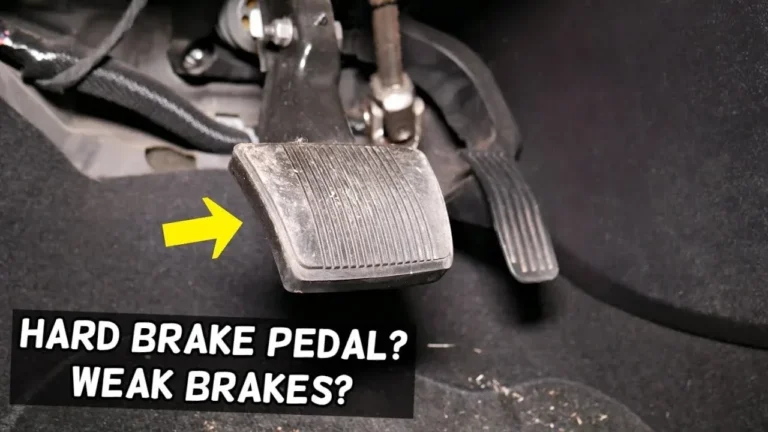
Why does a hydraulic brake pedal feel soft? A soft or spongy pedal can point to air in the brake lines, a fluid leak, a failing master cylinder, or another hydraulic fault. It needs prompt inspection, especially if the pedal sinks, the fluid level is low, or braking has changed suddenly.
I once saw a car with a pedal that felt wrong after brake work, even though the visible parts looked tidy. The key issue was trapped air, not a bad-looking pad or rotor. A brake system can appear clean and still need a careful bleed.
Warning: If the pedal sinks toward the floor, brake fluid is leaking, or the brake warning light stays on with changed pedal feel, don’t drive the car. Arrange a tow or professional help.
A routine fluid check can catch a low level, but topping off isn’t a repair. Fluid drops as brake pads wear, yet a sudden drop may mean a leak. If the reservoir is below its mark, find out why before adding fluid and driving.
Key Takeaways:
- Brake fluid transfers pressure, while air in the lines can make the pedal spongy.
- A dual-circuit design may preserve partial braking after one circuit fails.
- Use the fluid type and service interval listed for your car.
Disc Brakes and Drum Brakes: What’S at Each Wheel?
Disc brakes slow a wheel by squeezing pads onto a rotor, while drum brakes slow a wheel by pressing shoes against the inside of a drum. Many cars use discs on the front wheels and may use discs or drums at the rear.
A disc brake has a rotor attached to the wheel hub. The rotor turns with the wheel. When you press the brake pedal, hydraulic pressure moves the caliper pistons and squeezes the pads against both sides of the rotor. The rubbing force slows the rotor and the wheel.
Disc brakes are open to airflow, which helps them shed heat. Their design also makes it easier for water to clear from the friction surfaces. But a disc brake still depends on correct pad contact, smooth caliper movement, sound hoses and lines, and a rotor within the maker’s limits.
A drum brake has a drum that turns with the wheel. Inside it, curved brake shoes press outward against the drum’s inner surface. Drum brakes can be compact and can incorporate a parking brake. Their enclosed design can hold heat and brake dust, so inspection may take more work than a quick look at an exposed disc brake.
| Part | Disc brake | Drum brake |
|---|---|---|
| Friction surface | Rotor faces | Inside of the drum |
| Friction material | Brake pads | Brake shoes |
| Applying part | Caliper and pistons | Wheel cylinder and shoes |
| Common location | Front or rear wheels | Often rear wheels on some cars |
| What you can spot easily | Pad and rotor surfaces | Most parts sit inside the drum |
The front brakes often do more of the work during a stop because a car’s weight shifts forward as it slows. That doesn’t mean the rear brakes are optional. Rear brakes help balance the car, and their design affects parking-brake operation and stability.
A caliper can have one piston or more than one, depending on the vehicle. A floating caliper moves on guide pins so the pads can clamp the rotor from both sides. If those pins seize or bind, the pads may wear unevenly, the wheel may run hot, or the car may pull.
Brake pads and shoes are made from friction materials chosen for the vehicle’s design and use. Different materials can vary in noise, dust, wear, and performance when cold or hot. A quiet pad isn’t automatically the best pad for every car, and a high-performance part doesn’t make sense for every daily driver.
Does a brake squeal always mean the pads are worn out? No. A squeal can come from a wear indicator, dust, moisture, pad material, or a problem with fit or movement. A grinding sound is more concerning because friction material may be gone or a part may be contacting the rotor. Have new or worsening noises checked rather than guessing.
Important Tip: Brake parts on the same axle are normally serviced as a pair. Replacing only one side can create uneven braking, and the correct approach depends on the vehicle maker’s instructions and the condition of both sides.
A rotor can develop surface marks, heat spots, or thickness variation. A driver may feel that as vibration through the pedal or steering wheel during braking. The cause needs checking: tire or suspension issues can also create vibration, so replacing rotors by guesswork can waste money.
ABS, Traction Control, and Stability Control
ABS helps keep wheels from locking during hard braking by adjusting brake pressure when a wheel is about to stop turning. Traction control and electronic stability control use related wheel and vehicle sensors, but they address different kinds of wheel slip and vehicle motion.
Each wheel’s wheel-speed sensor reports how quickly that wheel is turning. If the ABS control unit detects a wheel slowing much faster than the others during braking, it can reduce and reapply pressure to that wheel. This process may happen many times in a short span.
During a hard stop, ABS can make the pedal pulse or buzz. That sensation can feel alarming if you haven’t felt it before, but it can be normal during an ABS event. Keep firm, steady pressure on the pedal and steer where you need the car to go. Don’t pump the brake pedal in a car with working ABS.
ABS helps reduce wheel lock, but it can’t create tire grip that isn’t there. Loose gravel, snow, slush, standing water, worn tires, and high speed can still lead to a long stop. The system is a helpful tool, not a force field.
Traction control can reduce wheel spin when the car accelerates. Depending on the design, the car may brake a spinning wheel, adjust engine power, or do both. Electronic stability control can detect when the car isn’t following the driver’s intended direction and apply braking at selected wheels, sometimes while reducing engine power.
A dashboard light helps distinguish some system states. A stability-control light that flashes during a slippery start may mean the system is working. A light that stays on can indicate a fault or a system turned off, depending on the vehicle. The owner’s manual explains what each light means on your car.
What should you do if ABS kicks in during an emergency stop? Press the brake pedal firmly and keep steering toward a safe path. The pedal may pulse or make noise as the system manages pressure. Releasing the pedal because the vibration feels strange can reduce braking force when you need it most.
Safety Tip: Practice the basic emergency response mentally before you need it: brake firmly, look toward a safe path, and steer smoothly. Don’t test ABS on public roads.
An illuminated ABS warning light doesn’t always mean the basic hydraulic brakes have stopped working, but it can mean anti-lock protection is unavailable. Drive cautiously only if the pedal feels normal and the owner’s manual permits it, then arrange a prompt inspection. If braking feels weak, uneven, or unpredictable, stop driving and get help.
For a technical description of the performance rules that apply to passenger-car brake systems, the federal standard is available in the FMVSS 135 braking requirements. Those rules set test requirements for vehicle braking; they don’t replace your car’s manual or diagnose a warning light.
Pro Tip: If the ABS light comes on after a wheel or tire repair, tell the shop what work was done. A sensor wire can be damaged, left disconnected, or affected by debris near the sensor.
Parking Brakes and Regenerative Braking
A parking brake holds a parked vehicle in place, while regenerative braking uses an electric motor to slow some electric and hybrid vehicles and recover energy. Both can affect how a car feels, but neither replaces the regular friction brakes.
A parking brake may be operated by a hand lever, a foot pedal, or an electronic switch. Older systems commonly use cables to apply the rear brakes. Electronic parking brakes use a motorized mechanism controlled by a switch and vehicle electronics. The owner’s manual explains how your system works and what to do if the battery is low or the car won’t release the brake.
Use the parking brake when parking, especially on a slope, and follow the instructions for your transmission and vehicle. In many cars, selecting Park locks part of the transmission, while the parking brake holds the wheels through the brake system. Using both can reduce strain on the parking mechanism when parked on an incline. Check the manual for the correct sequence.
An electronic parking brake may release automatically when you start moving, or it may need to be released with a switch. If a warning light stays on or the brake won’t release, don’t force the car forward. A dragging parking brake can overheat parts and damage the brakes.
Regenerative braking is common in hybrids and electric vehicles. The electric motor resists wheel movement and acts as a generator, sending energy back to the battery. This slows the vehicle while reducing some of the work done by the friction brakes.
The feel of regenerative braking varies by vehicle. Some cars coast when you lift off the accelerator; others slow more strongly and may offer one-pedal driving. The regular brake pedal still controls braking, and friction brakes remain available when more stopping force is needed or the battery and system conditions limit regeneration.
Can regenerative braking replace brake pads? No. Regeneration can reduce how often friction brakes are used, but the car still has friction brakes for stops, low-speed operation, system limits, and emergencies. Less frequent use can also mean the friction parts need inspection for corrosion or sticking, not a free pass to ignore them.
I’ve found that drivers can mistake a change in regenerative braking for a brake fault, especially when switching between cars. The useful clue is whether the car’s response changes from its normal behavior or a warning appears. Learn the feel of your own vehicle before relying on one-pedal driving in traffic.
A brake system can blend regenerative and friction braking. The control system may change how much each contributes based on battery charge, speed, temperature, traction, and the amount of pedal input. That’s why the same pedal pressure can feel a little different in some hybrids and EVs.
Important Tip: If your hybrid or EV has been parked for a while, follow the maintenance schedule even if the brake pads seem to last a long time. Low use doesn’t prevent rust, corrosion, or a stuck caliper.
What Changes How Far a Car Takes to Stop?
Stopping distance depends on how quickly you react, how hard the brakes can slow the car, and how much grip the tires have on the road. Speed, road surface, tire condition, vehicle load, weather, and brake temperature all affect the result.
A car’s total stopping distance has two parts:
- Reaction distance: how far the car travels while you notice a hazard and begin braking.
- Braking distance: how far the car travels after braking starts.
The car keeps moving during reaction time. At higher speed, it covers more ground before your foot reaches the pedal. Braking distance also rises sharply as speed increases because the brakes must remove much more motion energy. A stop from 60 mph can take far more distance than a stop from 30 mph; it isn’t just twice the work.
Road grip can change in a heartbeat. Rain, snow, ice, loose gravel, leaves, or oil can reduce traction. Worn tires and incorrect inflation can make the problem worse. The same car may stop differently on dry pavement and a slick road, even when the brake system hasn’t changed.
Vehicle weight matters, too. Extra passengers, cargo, or a trailer increase the energy that has to be managed during a stop. The brakes may also heat up more during repeated downhill braking or towing. That’s why a driver should leave more room and use the vehicle’s recommended towing setup instead of assuming the brakes will feel the same under every load.
Why does a car sometimes pull to one side when braking? Uneven brake force, a sticking caliper, a damaged hose, tire differences, or suspension problems can all contribute. If the pull is new or strong, slow down safely and arrange an inspection rather than trying to correct it with steering input.
Pro Tip: Leave more following distance when the road is wet, visibility is poor, tires are worn, or the car is carrying a heavy load. Space gives you time to react before the brakes have to do all the work.
Brake fade is a reduction in braking performance after the brakes get too hot. The pedal may feel different, or the car may not slow as strongly as usual. The cause can involve the friction materials, brake fluid, driving conditions, or a mechanical issue. If braking fades on a long descent, downshift as the vehicle maker recommends and stop somewhere safe if the car’s braking doesn’t return to normal.
A driver’s habits also affect brake wear and temperature. Following too closely leads to late, hard stops. Riding the brake downhill keeps heat building. Smooth early braking usually gives the system more time to manage heat, but leave enough distance and don’t coast in a way that reduces control.
Key Takeaways:
- Reaction time adds distance before braking even begins.
- Speed, traction, load, and heat all affect stopping performance.
- Leave more space when road or vehicle conditions reduce grip.
Brake Warning Signs, Maintenance, and Inspections
Brake noises, warning lights, fluid changes, and pedal changes can signal wear or a fault, and a new or worsening change deserves attention. Some checks are simple, but brake repairs and hydraulic work need the right tools, parts, and procedures.
Pay attention to how the car feels from one trip to the next. Common signs include:
| Sign | Possible causes | What to do |
|---|---|---|
| High-pitched squeal | Wear indicator, dust, moisture, or pad fit | Arrange an inspection if it continues |
| Grinding or scraping | Worn friction material or metal contact | Stop driving if safe and get prompt help |
| Soft or sinking pedal | Air, fluid leak, or hydraulic fault | Don’t drive if braking feels unsafe |
| Pulling during braking | Uneven brake force, tire, or suspension issue | Have the cause checked soon |
| Pedal or steering vibration | Rotor variation, wheel issue, or other fault | Book an inspection |
| Brake warning light | Parking brake engaged, low fluid, or fault | Check the manual; don’t ignore a persistent light |
| Burning smell or one hot wheel | Dragging brake or overheating | Stop safely and seek professional help |
The table offers clues, not a diagnosis. A squeal may be minor, while a leak may be hidden. A mechanic needs to inspect the full system, including the lines, hoses, friction material, rotors or drums, calipers or wheel cylinders, and electronic controls.
Routine maintenance starts with your owner’s manual. It lists the recommended inspections and brake-fluid service for your vehicle. Driving style, road salt, dust, frequent towing, steep hills, and stop-and-go traffic can change how quickly parts wear. There isn’t one mileage number that fits every car.
You can check the brake warning lights, look for fluid under the car, and note changes in pedal feel or noise. If you look through the wheel, you may see some pad and rotor surface, but that view can’t confirm the inside pad condition or the state of the caliper. A proper inspection may require removing the wheel.
Can you check your brake fluid yourself? Yes, you can check the reservoir level if the owner’s manual shows where it is and how to inspect it safely. Don’t open the cap just to have a look, and don’t add fluid without confirming the correct type and why the level is low. A leak needs repair, not a top-off.
Keep the wheel area clean enough to notice leaks or damage, but don’t spray cleaners onto brake parts unless the product and car-maker instructions allow it. Brake dust can contain harmful material, so avoid blowing it around with compressed air or brushing it into the air. A professional shop has safer cleaning methods and proper disposal practices.
Safety Tip: Don’t crawl under a car supported only by a jack. If a repair requires lifting the vehicle, use the correct lift points and properly rated supports on firm, level ground. If you don’t have the right equipment, leave the job to a qualified shop.
I’ve seen how easy it is to read a brake inspection as “pads left” and miss what else matters. A useful inspection also checks whether parts move freely, whether the rotor or drum meets the vehicle’s limits, and whether both sides wear evenly. A single thickness number doesn’t tell the whole story.
A shop should be able to explain what failed, what needs replacement now, and what can wait. Ask for measurements or photos if that helps you understand the recommendation. If the explanation is vague, ask them to point to the affected part and connect it to the symptom you noticed.
Important Tip: Tell the technician when the symptom happens. “It vibrates” is a start; “the steering wheel shakes only during a firm stop from highway speed” gives a better clue.
Brake Repairs, Costs, and When to Call a Professional
Brake repair depends on which part has worn, failed, or been damaged, so the right fix starts with inspection rather than a parts guess. A pad replacement may be straightforward for a shop, while a hydraulic fault, ABS warning, or seized component can take more diagnosis.
Common brake service can include replacing pads or shoes, resurfacing or replacing rotors and drums where permitted, servicing calipers, replacing hoses or lines, bleeding the system, or diagnosing an ABS fault. The car’s design, parts quality, corrosion, and local labor rates affect the bill. For a useful estimate, ask the shop to separate parts, labor, and any extra work discovered during inspection.
Some brake jobs are often quoted as an axle set because both wheels on that axle need balanced friction. A quote should identify the parts being replaced and explain whether the rotors or drums are reusable. If a shop recommends more work than you expected, ask what measurement or observed fault supports it.
A proper repair uses parts that fit the vehicle and follows the maker’s procedures. Brake fluid type, torque values, bleeding order, electronic parking-brake service mode, and ABS bleeding steps can differ by model. A generic shortcut can leave air in the system or trigger a warning.
Should you replace brake pads at home? You can if you have the service information, correct tools, safe lifting equipment, and the skill to inspect related parts and follow the vehicle’s procedures. If you’re unsure about a caliper, brake hose, hydraulic leak, ABS fault, or safe support, a professional repair is the better call.
If a pad job involves an electronic parking brake, some vehicles require a service mode before the caliper is retracted. Forcing the piston can damage the motor or mechanism. The correct method depends on the car, so check the service procedure before starting.
After brake work, the pedal should feel firm and consistent before the car moves. A shop should check for leaks, confirm the warning lights behave as expected, and follow the maker’s bedding procedure if new pads or rotors require one. Bedding means controlled stops that help the new friction surfaces settle into contact; the exact steps vary by part and vehicle.
Warning: Never road-test a car with a soft pedal, a leak, a warning light that the repair procedure says must be cleared, or loose wheel hardware. If anything feels wrong after service, stop and have the work checked before driving farther.
Don’t judge repair quality by how shiny the rotor looks or by the cheapest quote alone. Ask whether the shop checked both sides, caliper movement, brake fluid condition, hoses and lines, and any related warning codes. Clear answers matter because the goal is balanced, predictable braking, not just fresh-looking parts.
Key Takeaways:
- A symptom points toward a cause but doesn’t prove which part failed.
- Repair methods and service intervals vary by vehicle.
- Stop driving if the pedal, fluid, or braking response feels unsafe.
FAQs About How Car Braking Systems Work
What happens when you press a car’s brake pedal?
Pressing the brake pedal moves the master-cylinder piston, which creates pressure in the brake fluid. That pressure reaches calipers or wheel cylinders and pushes pads or shoes against rotors or drums. Friction slows the wheels, and the tires transfer that force to the road.
Why does my brake pedal pulse when I stop?
A pulsing pedal can be normal when ABS activates during hard braking or on a slippery surface. The system rapidly adjusts pressure to reduce wheel lock. If the pedal pulses during ordinary stops, or the steering wheel shakes, arrange an inspection because rotor, wheel, or other faults may be involved.
Can I drive with the ABS light on?
A car may still have basic braking when the ABS light is on, but anti-lock braking may not work. Check the owner’s manual and arrange prompt diagnosis. Don’t drive if the pedal feels different, braking is weak, or another brake warning light appears with a system problem.
How often should brake fluid be changed?
Brake-fluid service intervals vary by vehicle, fluid type, and manufacturer instructions. Check the maintenance schedule in your owner’s manual instead of relying on a generic mileage rule. Moisture can enter brake fluid over time, so a normal-looking reservoir level doesn’t prove the fluid is in good condition.
Do electric cars have regular brakes?
Yes. Electric cars have friction brakes, usually with pads and rotors, along with regenerative braking that uses the motor to slow the car and recover energy. Regeneration can reduce friction-brake use, but it doesn’t replace the regular brakes or their need for inspection.
Why do my brakes squeal after rain?
A brief squeal after rain can come from moisture or light surface rust on the rotors, and it may fade after normal braking. Persistent squealing, grinding, or a change in pedal feel needs an inspection. Noise alone can’t tell you whether the pads are worn or another part is binding.
What’s the difference between ABS and traction control?
ABS manages brake pressure when a wheel is close to locking during braking. Traction control helps limit wheel spin during acceleration, often by reducing engine power or braking a spinning wheel. Both can use wheel-speed sensors, but they respond to different driving problems.
How can I tell if my brakes are overheating?
Brake overheating can cause a burning smell, reduced stopping power, unusual smoke, or a wheel that feels much hotter than the others. Don’t touch the wheel or brake parts to test temperature. Stop somewhere safe, let the system cool, and get help if braking doesn’t return to normal.
Make Your Next Stop a Safer One
Car brakes are easier to understand when you follow the force from your foot to the road. The pedal starts the process, hydraulic pressure carries it, friction slows the wheels, and tire grip finishes the job. ABS and regenerative braking can change how the system behaves, but neither makes worn parts or poor road grip disappear.
In my view, the best approach is to notice changes early and let the owner’s manual guide routine service. A new grinding sound, a sinking pedal, a leak, or a sudden change in braking isn’t a “wait and see” problem. If the car feels unsafe, don’t drive it to find out whether the feeling goes away.
Your clearest next step is simple: check your manual’s brake-maintenance schedule, then pay attention to how your pedal and car feel on your next normal drive. If something has changed, describe the symptom clearly and have the system inspected.