How Brake Fluid Transfers Pressure Through a Car
Brake fluid carries pressure from the master cylinder to the brakes at the wheels, where calipers or wheel cylinders turn that pressure into friction. The pedal, master cylinder, brake lines, and wheel brakes work as one hydraulic system.
Does your brake pedal feel soft, or are you trying to understand how pushing a pedal can slow a heavy car? It’s a smart question, especially if a change in pedal feel has you wondering whether the brakes are safe.
I once spent time chasing a soft pedal before checking the simplest clue: trapped air in the hydraulic system. The pedal felt springy instead of firm, and the extra troubleshooting took longer than it needed to. That kind of miss is common, not dumb.
I wrote this to walk you through the pressure path in plain English, from your shoe to the tires. You’ll also learn what can interrupt that path and which warning signs call for a mechanic.
Get the sequence right, and brake symptoms make a lot more sense. Miss a leak or air in the system, and stopping can take longer or become unpredictable.
This takes about 9 minutes to read. By the end, you’ll be able to:
- Trace pressure from the brake pedal to each wheel.
- Tell pressure apart from the force that clamps a brake rotor.
- Recognize how air, leaks, and ABS can affect brake feel.
- Know when a brake problem needs a professional inspection.
How Brake Fluid Transfers Pressure Through the Brake System
Brake fluid transfers pressure by carrying force from the master cylinder through sealed brake lines to the brakes at the wheels. The fluid doesn’t push the car to a stop by itself; it lets the wheel brakes create friction that slows the tires.
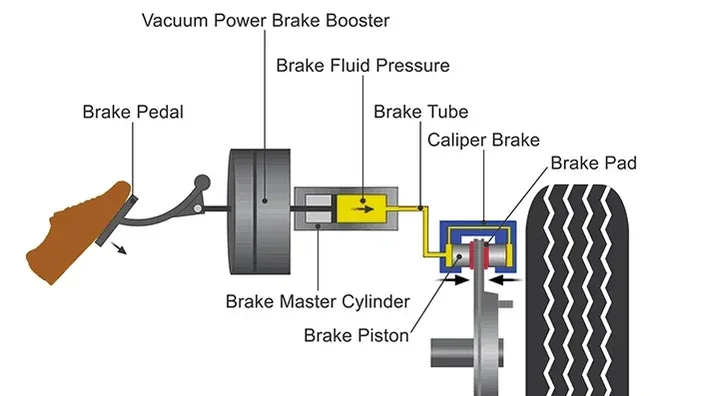
When you press the brake pedal, pedal leverage and, in most cars, a brake booster increase the force applied to the master cylinder. Inside that cylinder, pistons press on the brake fluid. Because the fluid is held in a closed system, pressure travels through the lines to the calipers or wheel cylinders.
A useful shorthand is pressure = force ÷ area. At the wheels, pressure acting on a piston produces force: force = pressure × piston area. A larger piston can produce more force from the same pressure, though brake design involves more than piston size alone.
Pressure in a connected fluid acts through the system, as explained by Pascal’s principle in fluids. In a car, valves, piston sizes, and system layout shape how that pressure becomes braking force.
Here’s the full path: your foot moves the pedal, the master cylinder pressurizes the fluid, and the fluid acts on pistons at the wheels. The pads or shoes then press against rotating parts, creating friction. That friction slows the wheels, while the tires grip the road and slow the car.
How the Pedal and Master Cylinder Build Pressure
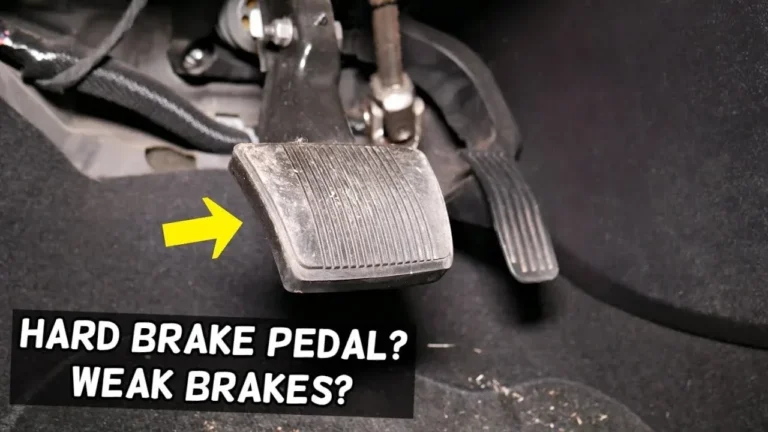
The brake pedal is a lever, and the master cylinder turns pedal movement into hydraulic pressure. A brake booster can reduce the effort your leg needs, but the master cylinder is the part that acts directly on the fluid.
When you press the pedal, a rod moves one or more pistons inside the master cylinder. Those pistons squeeze fluid in the cylinder’s working chambers. The force and travel depend on the pedal arrangement, booster, master-cylinder design, and the resistance at the wheels.
Most passenger vehicles use a tandem master cylinder, which has two hydraulic circuits in one unit. The split helps retain some braking ability if one circuit fails, though a failure can still make the car unsafe to drive. The exact circuit layout varies by vehicle.
The reservoir on top of the master cylinder stores fluid for the system. A low level can point to worn brake parts or a leak, so topping it off doesn’t fix the cause. If the level has dropped, have the system checked rather than treating the reservoir like a routine refill tank.
For a close look at the order of events, read about what happens when you press the brake pedal. That step-by-step sequence helps connect pedal travel to the pressure that reaches the wheels.
What does the brake booster do? It helps multiply the force you apply at the pedal, so you don’t need as much leg effort. The booster doesn’t carry brake fluid or create hydraulic pressure on its own; the master cylinder does that job.
The pedal can feel different if the engine is off, because power assist may not be available after stored assist is used up. That change alone doesn’t tell you whether the hydraulic system has a fault. A new soft or sinking pedal while driving deserves prompt attention.
How Pressure Turns Into Braking Force at the Wheels
Brake pressure moves pistons at the wheels, and those pistons press pads or shoes against rotating brake parts. The resulting friction slows wheel rotation; tire grip then helps slow the vehicle.
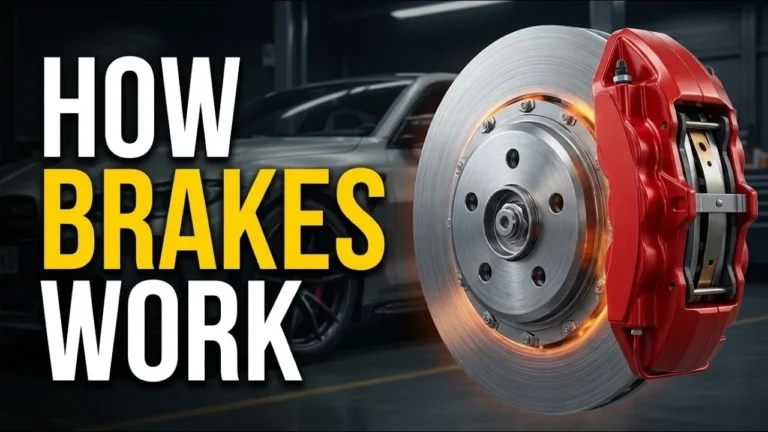
In a disc brake, hydraulic pressure pushes a piston in the caliper, the part that holds the brake pads around the rotor. The pads squeeze the rotor, a metal disc attached to the wheel. More pressure can create more clamping force, within the limits of the system and tire grip.
In a drum brake, pressure moves pistons in a wheel cylinder. The pistons push brake shoes outward against the inside of a rotating drum. Both designs use fluid pressure to move parts, but their hardware and maintenance needs differ.
Clamping force is the squeeze applied by pads or shoes. It’s not the same thing as hydraulic pressure: pressure acts on piston area to create force, and the brake parts turn that force into friction. Your tires still matter. If the road is slick or a tire has poor grip, the brakes can’t create more traction than the road allows.
You can think of the system like a set of connected syringes: pressure applied at one end moves a piston at another end. The car’s pedal leverage and piston areas affect the force and movement, while friction at the wheels does the actual slowing.
Pressure Is Not The Same As Pedal Travel
A firm pedal usually means the hydraulic system is resisting your foot, but pedal feel alone can’t prove that every brake is working correctly. A car can have other brake problems even when the pedal doesn’t feel dramatically different.
Likewise, pedal travel isn’t a direct pressure gauge. Excess travel can have several causes, including air, worn components, or a mechanical adjustment issue. A technician checks the full system instead of guessing from one sensation.
What Brake Lines, Fluid, and ABS Do
Brake lines carry pressure between the master cylinder and the wheels, while brake fluid transmits that pressure and lubricates certain internal components. The anti-lock braking system (ABS) can adjust pressure during hard braking to help prevent wheel lockup.
Most vehicles use rigid metal brake lines for much of the route and flexible hoses near moving wheels. The hoses let the suspension and steering move without pulling on the lines. A damaged or leaking line or hose can interrupt braking pressure, so don’t ignore wetness near a brake component.
ABS uses wheel-speed sensors and a hydraulic control unit to adjust braking at individual wheels when the system detects a wheel may lock. The control unit can hold, release, or restore pressure as needed. ABS doesn’t guarantee a shorter stop on every surface; its main job is to help keep the wheels from locking during hard braking.
What does ABS feel like during a hard stop? The pedal may pulse or buzz as the system adjusts pressure, and you may hear a rapid mechanical sound. That can be normal during ABS operation. A steady ABS warning light, or unusual behavior during ordinary braking, needs a proper inspection.
Brake-fluid specifications matter. Many cars call for glycol-based DOT 3, DOT 4, or DOT 5.1 fluid, while DOT 5 silicone fluid is a different type. Follow the owner’s manual and reservoir cap; don’t choose a fluid based on the label alone or mix types without confirming the vehicle’s requirements.
Pro Tip: Check the fluid type in your owner’s manual before buying a container. Brake fluid can damage paint, so wipe up spills promptly and keep the cap area clean when the system is serviced.
The larger system has more parts than just fluid and lines. A broader overview of how hydraulic brakes work can help you connect pressure transfer with the other components that make a car stop.
What Can Interrupt Brake Pressure
Leaks and trapped air can stop brake fluid from transmitting pressure as intended. Contamination, damaged parts, or a failing master cylinder can also affect braking, but the symptoms overlap, so a pedal sensation isn’t a complete diagnosis.
Brake fluid doesn’t compress much under normal conditions. Air does. If air gets into the hydraulic system, some pedal movement compresses that air instead of moving brake parts firmly, which can make the pedal feel soft or spongy.
A leak can lower the fluid level and reduce braking ability. Look for warning signs such as a brake warning light, fluid around a wheel, a pedal that sinks while you hold steady pressure, or a sudden change in braking. Don’t keep driving to test a serious symptom.
I’ve found that a soft pedal can tempt you to focus only on bleeding the brakes. That’s a bad shortcut if a leak or failing part is still present; the root cause needs attention before the system can work reliably.
Warning: If the pedal sinks, braking gets weaker, or you spot a brake-fluid leak, stop driving as soon as it’s safe. Arrange a tow or professional help rather than trying to reach a repair shop under your own power.
| Symptom | Possible cause | Sensible next step |
|---|---|---|
| Soft or spongy pedal | Air in the system, fluid leak, or another fault | Avoid driving; arrange an inspection |
| Pedal slowly sinks under steady pressure | Leak or master-cylinder problem | Stop driving and have the car checked |
| Low fluid level | Leak or worn brake components | Don’t just refill; have the cause checked |
| ABS warning light stays on | ABS fault or related issue | Follow the owner’s manual and get a diagnosis |
Can you keep driving with a soft brake pedal? No, not if the pedal has recently become soft or braking feels weaker than usual. Air, a leak, or a failed component may be involved, and the car may not stop as expected. Pull over safely and arrange a professional inspection or tow.
How to Respond to Brake Changes Safely
A change in brake feel deserves attention because the same symptom can come from different faults. A quick visual check may reveal an obvious warning, but it can’t confirm that the hydraulic system is safe.
If you notice a change, use this cautious sequence:
- Find a safe place to stop. If the brake pedal feels unusually soft, sinks, or braking is weak, don’t continue a normal trip.
- Check for warning lights. Use the owner’s manual to identify brake and ABS warnings. A light can point to a fault, but it won’t name every cause.
- Look for obvious fluid loss without touching hot or moving parts. A puddle near a wheel or under the car is a reason to stop driving and get help.
- Arrange a qualified inspection. A technician can check the fluid level, lines, hoses, master cylinder, wheel brakes, and ABS system as appropriate.
Don’t open brake lines or try to bleed the system unless you have the right tools, vehicle-specific procedure, and experience. Some vehicles require a scan tool to cycle ABS valves during bleeding. Guessing at the procedure can leave air trapped where ordinary bleeding won’t remove it.
Important Tip: A full reservoir doesn’t rule out a brake fault. A leak may be small, a component may be failing, or a warning may come from another part of the system. Treat the symptoms as a reason to diagnose, not as proof of one specific problem.
How can you tell whether a fluid leak is serious? Any suspected brake-fluid leak is serious enough to stop driving until the car has been checked. Brake fluid near a wheel, a falling reservoir level, or a new warning light can point to lost hydraulic pressure. Don’t rely on a short test drive to judge safety.
FAQs About How Brake Fluid Transfers Pressure
Does brake fluid create the force that stops a car?
No, brake fluid transmits pressure; the pistons at the wheels turn that pressure into force on pads or shoes. Friction slows the rotating brake parts, and tire grip slows the car. The fluid is a link in that chain, not the source of friction or road grip.
Does brake fluid move from the master cylinder to the wheels every time I brake?
A small amount of fluid movement operates the wheel pistons when you brake, but the system doesn’t send a fresh batch of fluid from the reservoir to the wheels each time. The closed hydraulic circuit uses fluid already in the lines and components, with the reservoir supplying fluid as needed.
Why does air make a brake pedal feel spongy?
Air compresses much more than brake fluid. When air is trapped in a brake line or component, part of your pedal movement compresses the air instead of moving the wheel pistons firmly. That can increase pedal travel and reduce braking response, so the cause needs a proper diagnosis.
Does ABS increase brake pressure?
ABS doesn’t simply raise pressure across the whole system. Its control unit can adjust pressure at individual wheels by holding, releasing, or restoring it when a wheel may lock. That action can create pedal pulsing during a hard stop, but ABS can’t overcome poor tire grip or a mechanical brake fault.
Can I use any brake fluid that fits the reservoir?
No, use the fluid specification listed in your owner’s manual or on the reservoir cap. DOT 3, DOT 4, DOT 5.1, and DOT 5 aren’t interchangeable by name alone. Using the wrong fluid can harm system materials or affect performance, so confirm the required type before service.
What does it mean if the brake pedal sinks while I hold it?
A brake pedal that slowly sinks under steady pressure can point to a hydraulic leak or a master-cylinder fault, among other problems. Don’t keep driving to see whether the symptom gets worse. Park safely and arrange a professional inspection, because braking may become unreliable.
Follow the Pressure Path Before Guessing at the Cause
Brake fluid transfers pressure from the master cylinder to the wheel brakes, but safe stopping depends on every link doing its job. Pedal leverage starts the process, fluid carries the pressure, pistons apply force, and friction at the wheels slows the car.
In my view, the useful part of knowing this chain is that it helps you take symptoms seriously without pretending you can diagnose every fault by feel. A soft pedal, falling fluid level, or leak deserves attention, not a hopeful top-off and another commute.
If you’re learning about the system, start with the owner’s manual and identify the specified brake fluid. If the pedal or braking has changed, the clearest next step is to park safely and have a qualified technician inspect the system.