To check the coolant temperature sensor on a 2002 Toyota Camry, disconnect the sensor connector and measure resistance across the sensor terminals with a digital multimeter. On the 2.4L 2AZ-FE engine, Toyota specifies about 2.29 to 2.60 kOhms at 68°F and 0.300 to 0.327 kOhms at 176°F. The resistance should decrease as the sensor gets hotter.
For owners and technicians working on a 2002 Toyota Camry in the United States, the most useful first test is an electrical resistance check of the engine coolant temperature sensor, commonly called the ECT sensor. The 2002 Camry was sold in the U.S. with different engines, including the 2.4L four-cylinder 2AZ-FE and 3.0L V6 1MZ-FE, so the correct specification depends on the engine installed in the vehicle.
A faulty ECT sensor can produce symptoms such as difficult starting, poor fuel economy, an unstable idle, incorrect temperature information, or a check-engine light. However, those symptoms can also come from wiring, connector, cooling-system, thermostat, or other engine-control problems. A resistance test therefore helps determine whether the sensor itself is behaving normally rather than automatically proving that the sensor is the cause.
Source: 1aauto.com
What You Need Before Testing the Camry ECT Sensor
The basic test requires only a digital multimeter and access to the coolant temperature sensor connector. If you plan to perform a temperature-versus-resistance test with the sensor removed, you will also need a suitable container of water, a thermometer capable of measuring the desired temperatures, and a controlled way to heat the water.
Work with a cold engine when disconnecting or removing the sensor. Hot engine coolant can cause severe burns and may be under pressure. Do not remove the radiator cap or open the cooling system while the engine and radiator are hot.
Before testing, identify the engine in the vehicle. The resistance figures below are specifically separated because the 2002 Camry’s engine options do not necessarily use identical published test procedures or specifications.
Source: storage.googleapis.com
Digital multimeter
Use a meter that can accurately measure resistance in the kilo-ohm range.
Vehicle information
Confirm whether the Camry has the 2.4L 2AZ-FE four-cylinder or 3.0L 1MZ-FE V6 engine.
Safety equipment
Allow the engine to cool completely before disconnecting or removing the sensor, and keep coolant away from skin and electrical terminals.
Why the Engine Matters
The 2.4L 2AZ-FE ECT sensor specification documented for the 2002 Camry is approximately 2.29 to 2.60 kOhms at 68°F and 0.300 to 0.327 kOhms at 176°F. Toyota service information for the 1MZ-FE also shows the same general thermistor behavior, with resistance dropping substantially as coolant temperature increases, but the exact test information should be matched to the engine and service documentation.
Do not judge a sensor using a specification copied from a different engine, model year, or aftermarket component without verifying compatibility.
How to Check a 2002 Camry Coolant Temperature Sensor
The simplest check is to measure resistance directly across the two terminals of the disconnected sensor. A cold sensor should have relatively high resistance, while a hot sensor should have much lower resistance.
For the 2.4L 2AZ-FE, Toyota service information specifies approximately 2.29 to 2.60 kOhms at 68°F and 0.300 to 0.327 kOhms at 176°F. These measurements provide two useful reference points for determining whether the thermistor is responding correctly.
Source: fity.club
Step 1: Let the engine cool
Park the Camry safely, switch the ignition off, and allow the engine and cooling system to cool before touching the sensor or connector.
Step 2: Locate the ECT sensor
Locate the engine coolant temperature sensor in the engine’s coolant passage area. The exact access point varies with the engine configuration.
Step 3: Disconnect the electrical connector
Release the connector carefully and inspect it for corrosion, damaged terminals, coolant contamination, or loose wiring.
Step 4: Set the multimeter
Set the digital multimeter to resistance, preferably using a kilo-ohm range if the meter is not autoranging.
Step 5: Measure resistance
Touch one meter probe to each sensor terminal. Record the resistance without allowing the probes to bridge other electrical components.
Step 6: Compare the result
For the 2.4L 2AZ-FE, compare the measurement with the applicable temperature specification. At approximately 68°F, the expected resistance is 2.29 to 2.60 kOhms.
Step 7: Check the hot value if necessary
At approximately 176°F, the 2AZ-FE sensor should measure about 0.300 to 0.327 kOhms. The resistance should fall as temperature rises.
What a Normal Reading Looks Like
The ECT sensor is a thermistor, meaning its electrical resistance changes with temperature. On the 2AZ-FE, a reading around 2.3 to 2.6 kOhms at 68°F is consistent with the documented specification. At 176°F, the resistance should be only about 0.300 to 0.327 kOhms.
The exact temperature matters when interpreting resistance. A sensor measured at 50°F should not be expected to match a specification listed for 68°F. The most useful diagnostic result comes from comparing the measured resistance with the specified value at a known sensor temperature.
At approximately 68°F
2.29 to 2.60 kOhms for the 2.4L 2AZ-FE.
At approximately 176°F
0.300 to 0.327 kOhms for the 2.4L 2AZ-FE.
Temperature trend
Resistance should decrease substantially as sensor temperature increases.
How to Perform a Temperature Test
For a more complete bench test, remove the sensor only if the vehicle-specific service procedure permits it and the cooling system is fully cool. Immerse the sensing portion in heated water while keeping the electrical terminals dry. Measure resistance at known temperatures and compare each reading with the appropriate service specification.
Use a thermometer to establish the water temperature instead of estimating it. The sensor should not be allowed to contact the bottom or sides of the heating container, because that can expose it to a temperature different from the surrounding water. After testing, keep moisture away from the connector and terminals.
How to Interpret a Bad Coolant Temperature Sensor Reading
A sensor should be considered suspect when its resistance is clearly outside the applicable specification at a known temperature, remains open or extremely high, remains near zero, or fails to change appropriately as temperature changes. A single unexpected reading, however, should be verified before replacing the sensor.
An open-circuit reading usually indicates an interruption inside the sensor or at the connection being measured. A near-zero reading can indicate an internal short. Either condition can cause the engine computer to receive an implausible coolant-temperature signal.
Source: 2CarPros
Open circuit
A meter may display OL or another indication of infinite resistance. Recheck probe contact and then inspect the sensor and connector.
Very low resistance
A reading close to zero when the sensor is at normal room temperature is inconsistent with the expected thermistor behavior.
Resistance outside specification
If the measured value is substantially outside the applicable specification at a known temperature, the sensor may be faulty.
No meaningful temperature response
If resistance does not decrease as the sensor warms, the sensor may not be responding correctly.
Check the Connector Before Replacing the Sensor
If the resistance test appears abnormal, inspect the connector and terminals before installing a replacement. Look for bent or pushed-back terminals, corrosion, broken wires, damaged insulation, or a connector that does not lock securely.
If the sensor itself produces a correct resistance reading but the engine computer reports an implausible temperature, the problem may be in the wiring or connector rather than the sensor. A diagnostic scan tool can also help compare the engine coolant temperature data with the actual engine temperature.
2.4L and 3.0L Camry Sensor Testing Differences
The 2002 Camry requires engine-specific attention because the U.S. model range included the 2.4L 2AZ-FE four-cylinder and 3.0L 1MZ-FE V6. The ECT sensor on each engine performs the same basic function for engine management, but the physical location and service procedure can differ.
For the 2.4L 2AZ-FE, Toyota documentation gives a particularly useful two-point resistance specification: 2.29 to 2.60 kOhms at approximately 68°F and 0.300 to 0.327 kOhms at approximately 176°F. For the 1MZ-FE, Toyota service information identifies the ECT sensor as a temperature-dependent resistor and provides resistance values that decrease as temperature increases. Use the 1MZ-FE-specific service information when testing that engine rather than assuming the 2AZ-FE range applies.
This distinction matters because replacing a sensor based solely on a generic resistance chart can produce an incorrect diagnosis. Match the test to the engine code and the actual sensor being tested.
Source: YouTube > HondaFix
2.4L 2AZ-FE
Use the documented 2AZ-FE resistance values and inspect the two-terminal ECT sensor circuit.
3.0L 1MZ-FE
Use 1MZ-FE-specific service information and confirm the sensor location and resistance specification for that engine.
Do not mix specifications
A resistance value from another Toyota engine or another model year should not be treated as the exact specification for a 2002 Camry without verification.
A Useful Resistance Trend for the 1MZ-FE
Toyota service information for the 1MZ-FE shows approximately 2.45 kOhms at 68°F and approximately 0.316 kOhms at 176°F in its service-hint data. The broader temperature table also shows the resistance falling progressively as temperature rises. This confirms the same basic diagnostic principle: the ECT sensor should not behave like a fixed resistor.
Because published service information can be organized differently between service-manual sections, use the engine-specific repair information for the final pass or fail decision rather than relying on a single generic chart.
Common Mistakes When Testing a 2002 Camry ECT Sensor
Most incorrect ECT diagnoses come from testing the wrong component, using the wrong specification, testing at an unknown temperature, or overlooking the connector and wiring. A methodical test avoids these problems.
The ECT sensor should also be distinguished from other temperature-related components. Some Camry configurations have separate temperature-sending functions for the instrument cluster, while the ECT sensor used by the engine-control system has its own circuit and purpose.
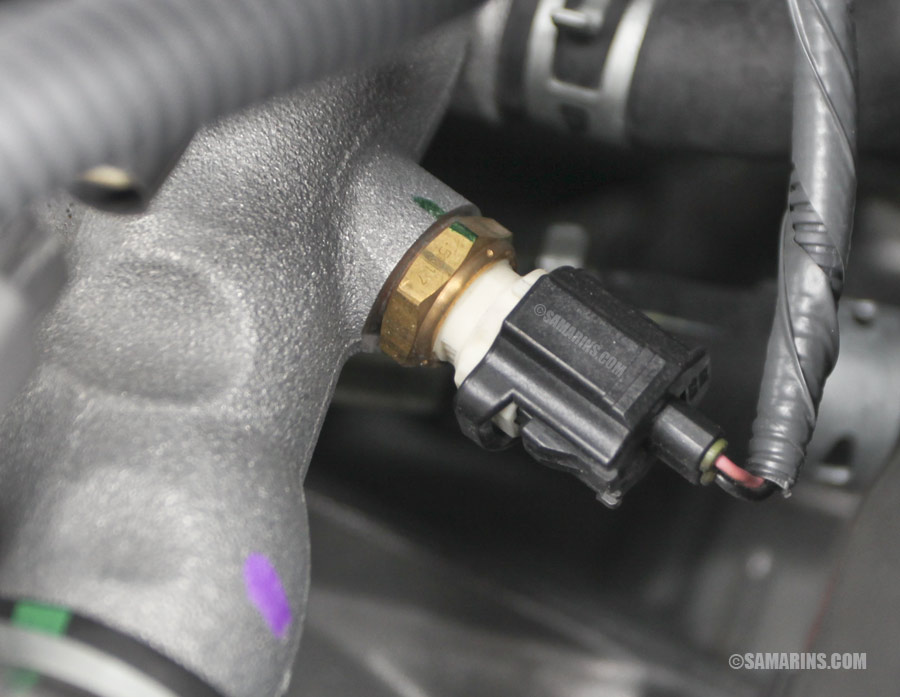
Source: samarins.com
Testing a hot cooling system
Do not remove a sensor or radiator cap from a hot, pressurized cooling system. Allow the vehicle to cool first.
Using an unknown temperature
Resistance is temperature dependent. Record or establish the sensor temperature before comparing a measurement with a specification.
Testing through the vehicle wiring
For a direct sensor-resistance test, disconnect the sensor connector so the meter measures the sensor rather than the rest of the circuit.
Ignoring connector damage
A good sensor cannot compensate for a loose, corroded, damaged, or broken electrical connection.
Replacing the sensor based on symptoms alone
Poor starting, fuel economy problems, or temperature-related diagnostic codes can have several causes. Verify the electrical test before condemning the sensor.
When the Sensor Tests Good but the Problem Remains
If the ECT sensor resistance is within specification, move to the connector and wiring. Check for damaged terminals, poor electrical contact, broken conductors, and corrosion. If those checks pass, use a scan tool to compare the reported coolant temperature with the actual engine temperature.
A coolant temperature problem can also be caused by a thermostat, cooling-system issue, air in the system, coolant-level problem, or another engine-control fault. The sensor should not be replaced simply because the dashboard temperature or engine behavior is abnormal.
What to Do After Testing the Sensor
If the sensor fails the applicable resistance test, replacement is the normal next step. Use the correct sensor for the specific engine and follow the vehicle-specific installation procedure. If the sensor is removed, coolant loss may occur, so the cooling system should be refilled and checked for leaks according to the applicable service procedure.
For the 2.4L 2AZ-FE, Toyota service information specifies 20 Nm, or about 15 ft-lb, for installation of the E.F.I. engine coolant temperature sensor with a new gasket. Confirm the exact procedure for the engine being serviced before applying a torque value.
After repair, reconnect the sensor securely, verify coolant level with the engine cold, start the vehicle, allow it to reach operating temperature, and check for coolant leaks or renewed symptoms. If a diagnostic trouble code was present, clear it only after the underlying fault has been corrected and verify whether it returns.
Source: www.reddit.com
Sensor failed
Replace the sensor with the correct engine-specific part and follow the applicable service procedure.
Sensor passed but code remains
Inspect the connector, wiring, reference circuit, ground circuit, and engine-control data before replacing another component.
Coolant was lost
Restore the coolant level using the appropriate coolant and bleeding or refill procedure for the vehicle.
Problem continues after repair
Use scan-tool data and additional cooling-system or engine-control diagnostics rather than repeatedly replacing the sensor.
When Professional Diagnosis Makes Sense
Professional diagnosis is appropriate if the sensor and connector tests are inconclusive, wiring faults are difficult to access, coolant leaks persist, the engine overheats, or the vehicle continues to show contradictory temperature data after repair. Overheating should not be ignored because continued operation can cause serious engine damage.
Frequently Asked Questions
Q
What resistance should a 2002 Camry coolant temperature sensor have?
For the 2.4L 2AZ-FE, Toyota specifies approximately 2.29 to 2.60 kOhms at 68°F and 0.300 to 0.327 kOhms at 176°F. The 3.0L 1MZ-FE has engine-specific service information, so verify the specification for that engine before deciding whether a reading is acceptable.
Q
How do I know if the Camry ECT sensor is bad?
A sensor is suspect if its resistance is clearly outside the specification at a known temperature, is open or shorted, or fails to decrease as the sensor becomes hotter. Confirm the measurement and inspect the connector before replacing the sensor.
Q
Can I test the coolant temperature sensor without removing it?
Yes. The basic resistance test can be performed with the sensor installed by disconnecting its electrical connector and measuring across the sensor terminals. A controlled hot-water test requires sensor removal and additional precautions.
Q
Does a bad coolant temperature sensor cause poor fuel economy?
It can. The engine-control system uses coolant-temperature information to adjust engine operation, so an incorrect temperature signal can contribute to poor fuel economy, difficult starting, unstable running, or emissions-related problems. These symptoms are not unique to the ECT sensor, so testing is necessary.
Q
What if the coolant temperature sensor tests correctly?
Inspect the sensor connector and wiring next. If the electrical circuit is sound, use scan-tool data and other cooling-system checks to determine whether the problem is actually the thermostat, coolant level, cooling system, engine-control circuit, or another component.
✦ Wrapping Up
Conclusion
Checking the coolant temperature sensor on a 2002 Toyota Camry is straightforward when the engine and temperature-specific specifications are identified first. Disconnect the sensor, measure resistance across its terminals, and compare the result with the specification for the engine and measured temperature.
For the 2.4L 2AZ-FE, approximately 2.29 to 2.60 kOhms at 68°F and 0.300 to 0.327 kOhms at 176°F are the key documented reference points. The resistance should decrease substantially as the sensor warms. If the result is abnormal, verify the connector and wiring before concluding that the sensor itself is the only fault.
💡 Key Takeaway
Start with a cold engine, identify the engine code, disconnect the ECT sensor, measure resistance with a digital multimeter, and compare the reading with the correct temperature-specific specification. If the sensor passes, continue diagnosis at the connector, wiring, and engine-control system instead of replacing the sensor unnecessarily.
Ethan Brooks is an automotive writer at Auto News 7, covering car news, vehicle maintenance, new model updates, recalls, and practical buying guides. He focuses on clear, useful information that helps drivers understand their vehicles and make better ownership decisions.
Learn how many ohms a camshaft sensor should have, why resistance varies by sensor type, and how to test a camshaft position sensor accurately with a multimeter.
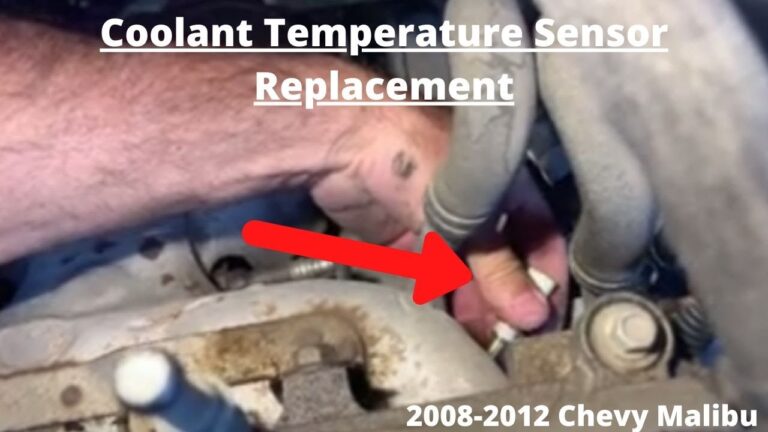
Learn how to replace the coolant temperature sensor on a Chevy Malibu, including tools, safety steps, sensor location, installation, coolant refill, and troubleshooting.
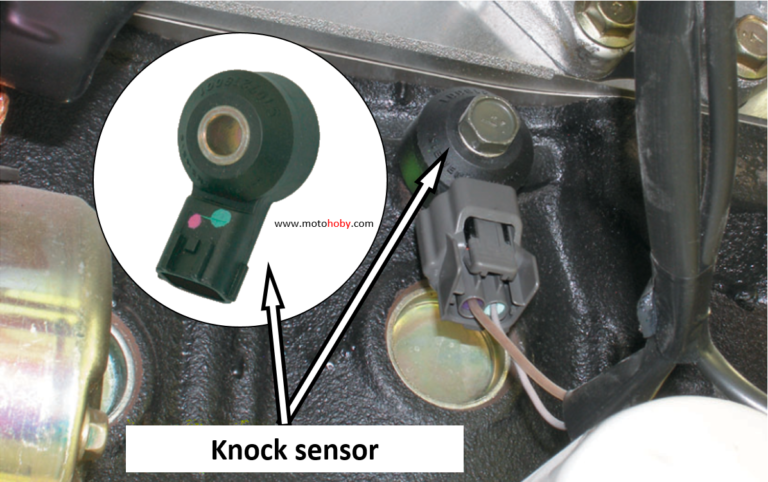
Learn how to test a Nissan knock sensor using a multimeter, scan tool, and visual inspection. Follow this step-by-step guide to diagnose knock sensor problems on Nissan vehicles.
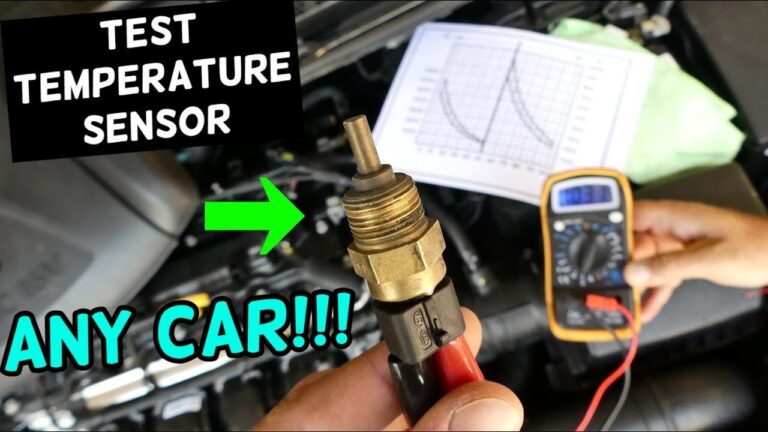
Learn how to test a coolant temperature sensor with a multimeter or scan tool. Follow safe steps to check resistance, voltage, wiring, and sensor accuracy.
Learn how to test a Toyota knock sensor using a multimeter, scan tool, and visual inspection. Follow a practical step-by-step process to diagnose knock sensor problems in Toyota vehicles.